

Victorian Hall Rack
A victorian hall rack offers the practical architecture for hats, coats, and umbrellas while grounding the entrance in period character.
Victorian Hall Rack
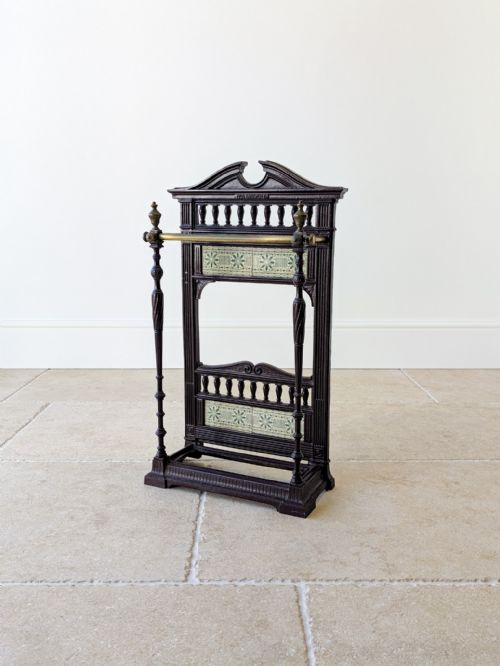
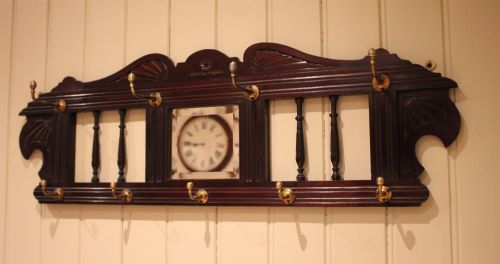
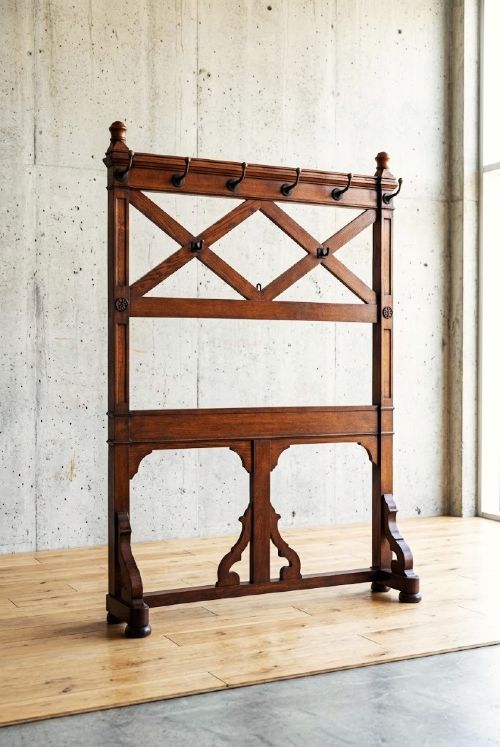
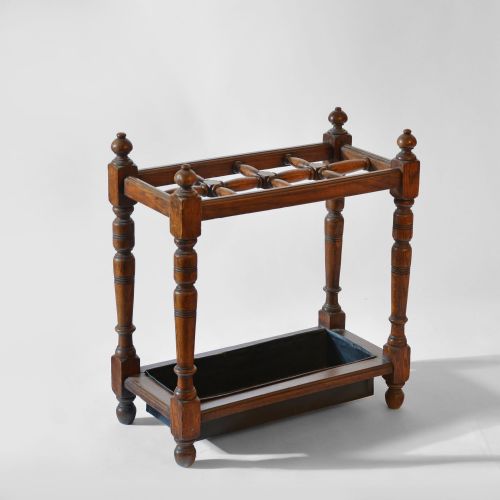
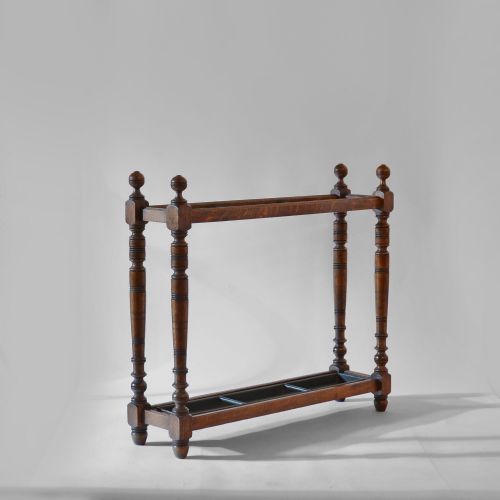
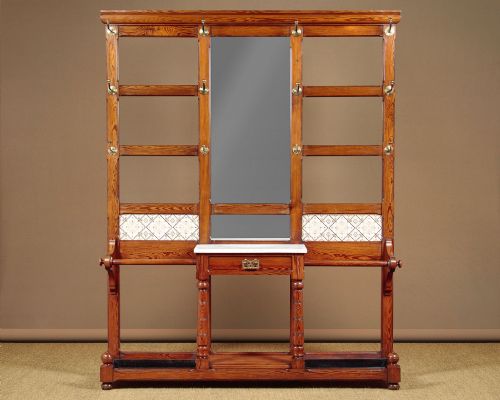
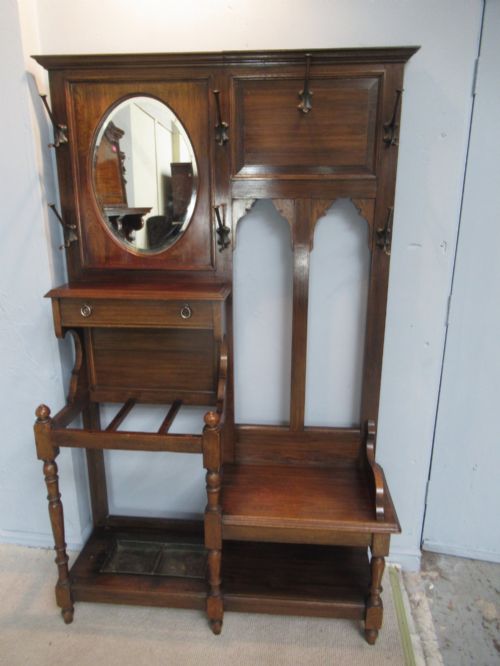
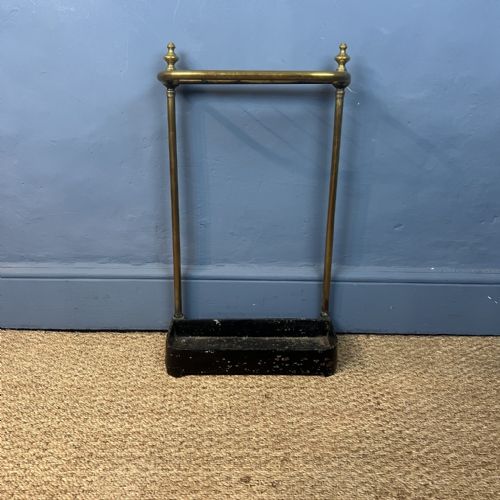
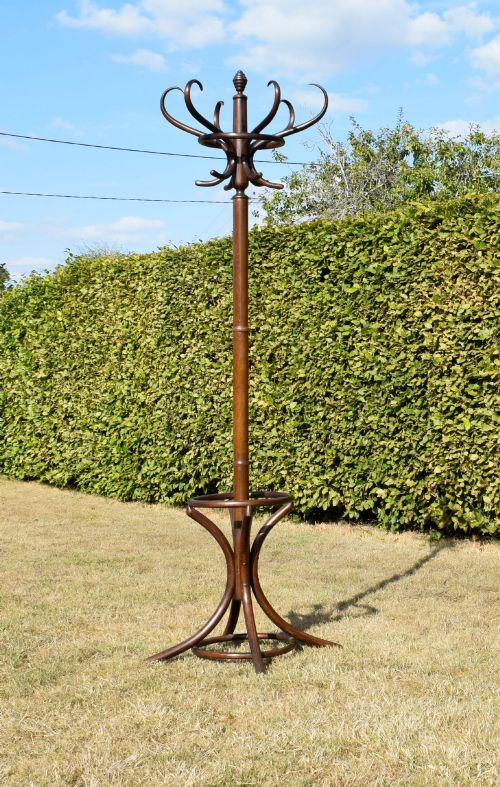
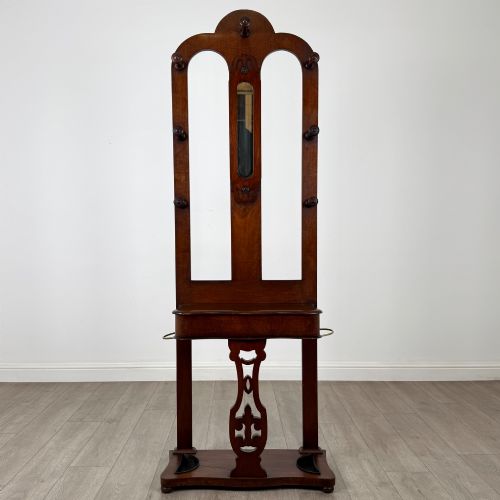
A victorian hall rack encompasses a variety of entrance furniture designed to manage outerwear, walking sticks, and umbrellas in domestic settings. The primary forms found on this page range from heavy timber standing units with built-in mirrors and seating to wall-mounted racks fitted with brass or ceramic hooks.
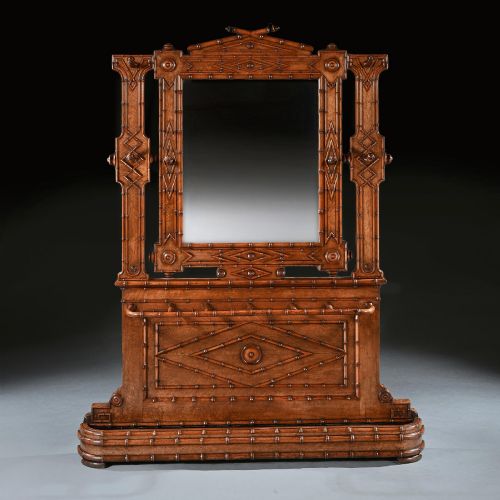
The assortment extends from Gothic Revival and Aesthetic Movement designs to simpler country house pine and French faux bamboo interpretations. Each style brings a distinct regional or aesthetic flavour to the domestic entrance, combining display surfaces with utilitarian storage.
How They Were Made
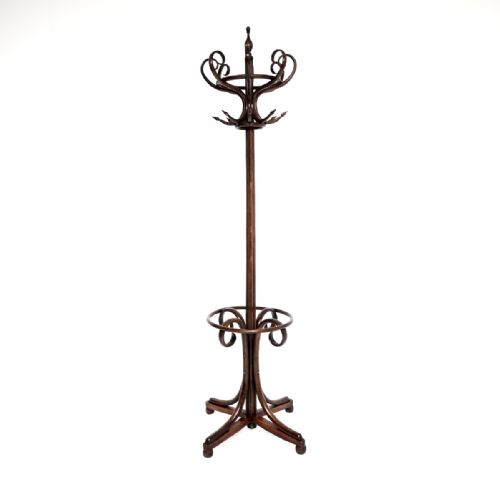
Makers utilised dense hardwoods such as oak and mahogany for structural stability, often employing turned wooden spindles, carved panels, and applied mouldings to enrich the surface. Bentwood techniques utilised steam-bent beech to create lightweight yet resilient curves for umbrella rings and hat crowns.
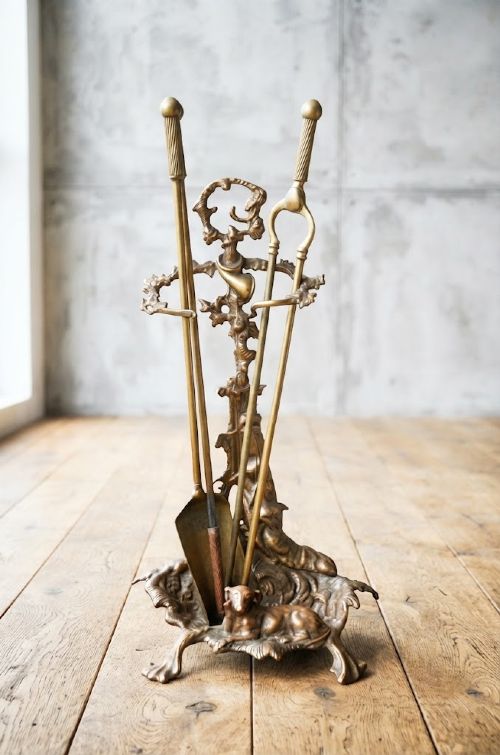
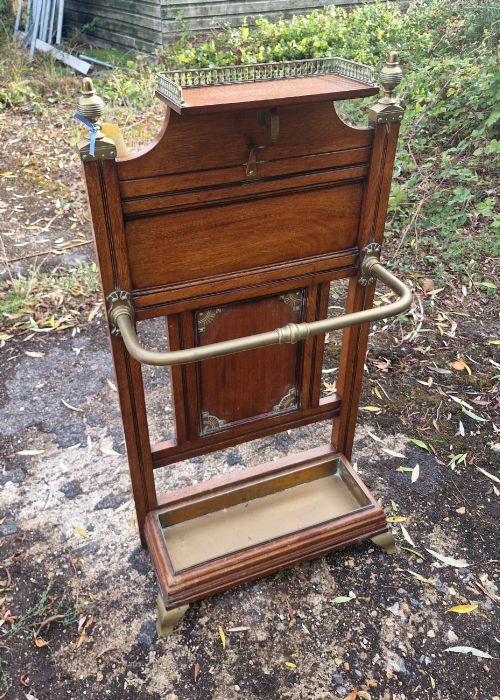
Metal components relied on foundry work, with cast iron and brass forming drip pans, umbrella dividers, and structural frames. Ceramic inserts and glazed tiles frequently appeared in umbrella wells to catch moisture, while brass and pewter hooks provided durable suspension for garments.
Stags' horns and antlers occasionally found their way into Victorian halls, holding hats with literal woodland authority.
What Varies in Quality
Quality rests in the integrity of the construction, the weight of the castings, and the selection of timber figure. Superior examples feature robust joinery, heavy-gauge brass or cast iron components, and well-figured mahogany or oak, whereas lesser pieces rely on thin veneers and lighter metalwork.
The presence of original drip pans, undamaged ceramic tiles, and intact mirror plates elevates a piece significantly. Finer makers invested skill in carving detail, crisp foundry marking, and balanced proportions that maintain stability under the weight of heavy coats and umbrellas.
Coalbrookdale·J. Parker of Woodstock·Martin Hall & Co·Charles Boyton·Walker & Hall
The Victorian Hall Rack Glossary
- Bentwood
- Wood that has been rendered pliable by steam and shaped into curves. This technique produced lightweight, durable furniture frames popular in the late nineteenth and early twentieth centuries.
- Faux bamboo
- A decorative finish where timber is carved or painted to resemble natural bamboo joints. This style gained favour during the Aesthetic Movement and French Japonisme periods.
- Stick stand
- A piece of furniture designed specifically to hold walking sticks and umbrellas upright. They often incorporate cast iron frames and metal or ceramic drip trays.
- Aesthetic Movement
- A late nineteenth-century design style that emphasised visual beauty over narrative or moral function. Pieces from this movement often feature clean lines and Japanese-inspired motifs.
- Gothic Revival
- An architectural and decorative style drawing inspiration from medieval forms. Such pieces display pointed arches, heavy linenfold carving, and structural oak.
Victorian Hall Rack: Frequently Asked Questions
What is the difference between a hall stand and a coat rack?
A hall stand is typically a freestanding piece of furniture that combines umbrella storage, coat hooks, and often a mirror or bench seat. A coat rack is usually a wall-mounted board fitted with hooks for hanging garments.
Freestanding hall stands anchor an entrance hall by providing a complete organizational unit for outerwear and accessories. Wall-mounted racks offer a more compact solution for smaller hallways while utilising vertical wall space.
How do I protect my floor from wet umbrellas?
Most period stick stands include removable metal drip pans positioned at the base to catch water from umbrellas and walking sticks. These pans protect wooden floors and carpets from moisture damage.
To maintain the stand, simply lift out the metal tray periodically to empty and dry it. Ensuring the interior remains free of standing water preserves the surrounding cast iron or wood.
Where should I place a heavy hall stand?
Hall stands require a stable surface near an entrance where guests can immediately deposit coats and umbrellas. Freestanding oak and mahogany versions need adequate clearance so that doors and mirrors remain fully accessible.
Because many tall hall stands carry significant weight, positioning them against a solid wall ensures maximum stability. Some larger standing units may also be secured to the wall for safety.