
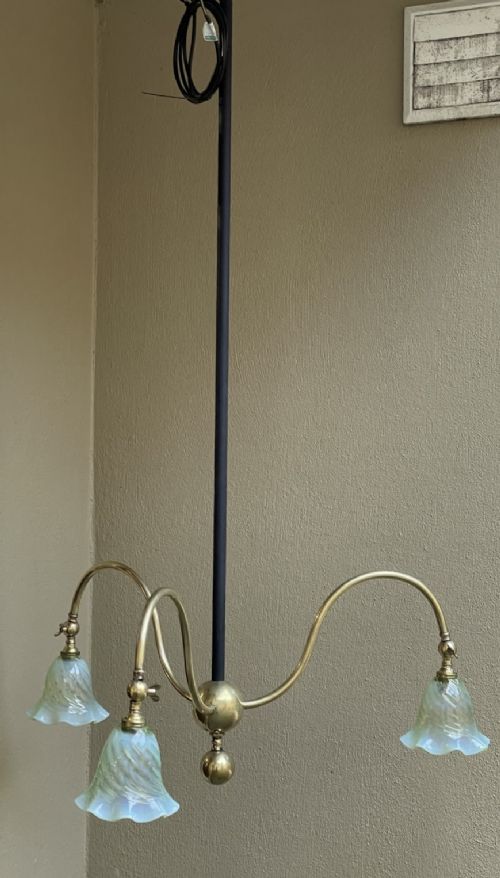
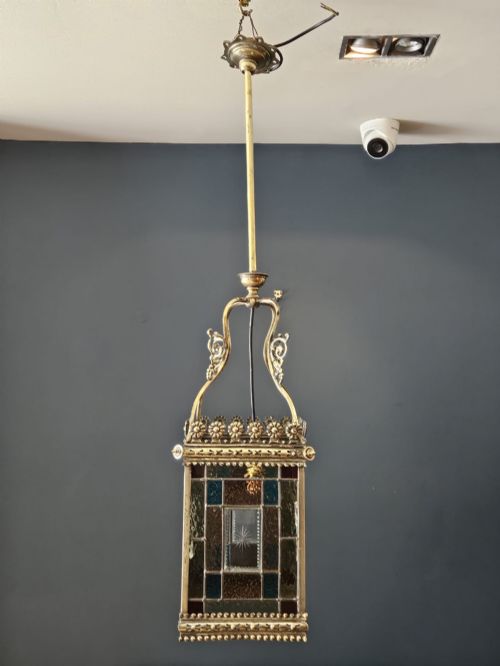
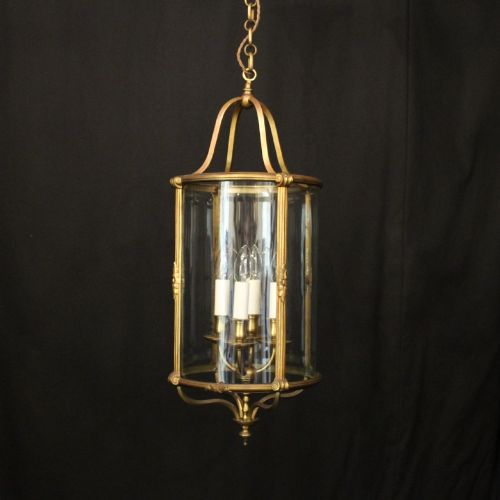
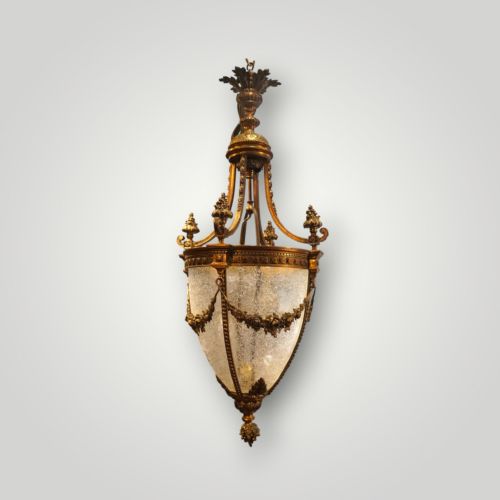

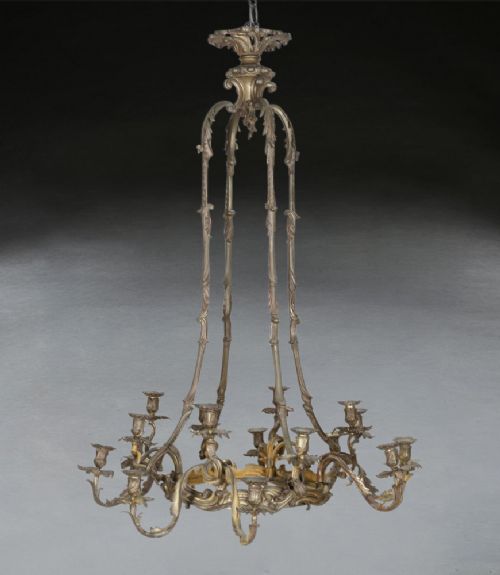

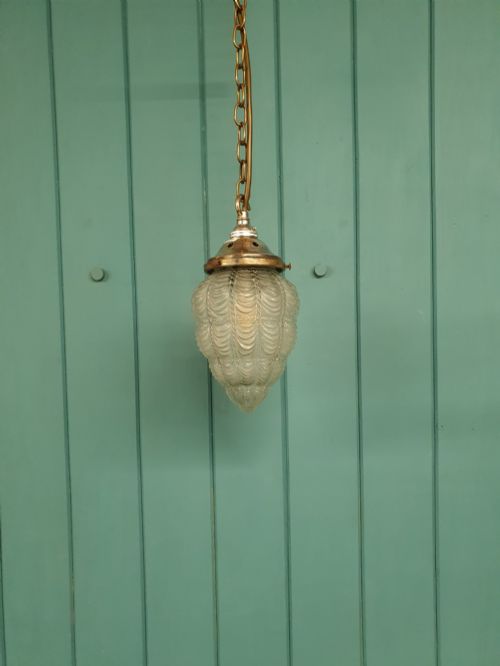
Victorian Hall Pendant
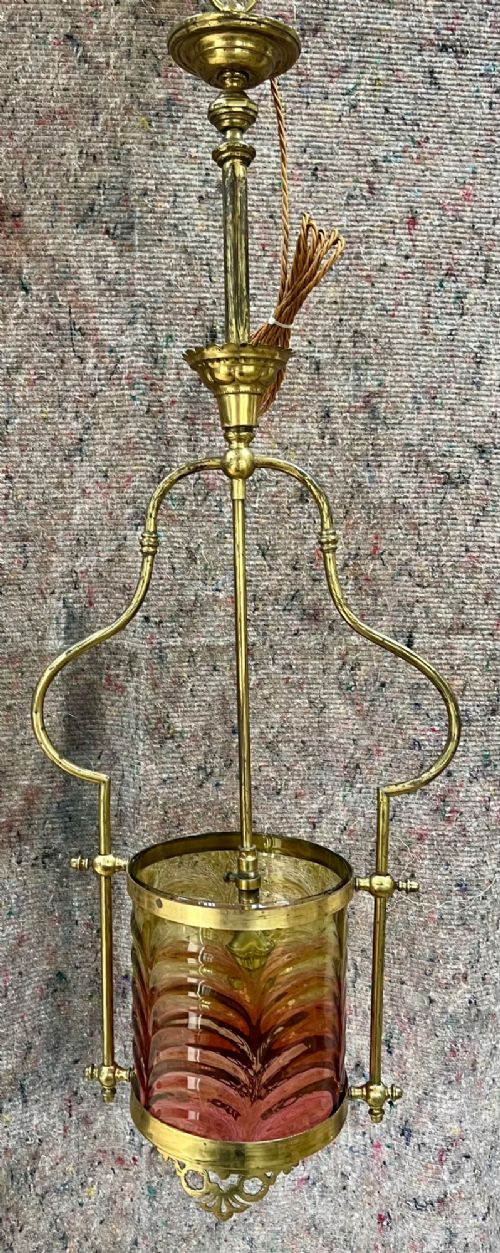
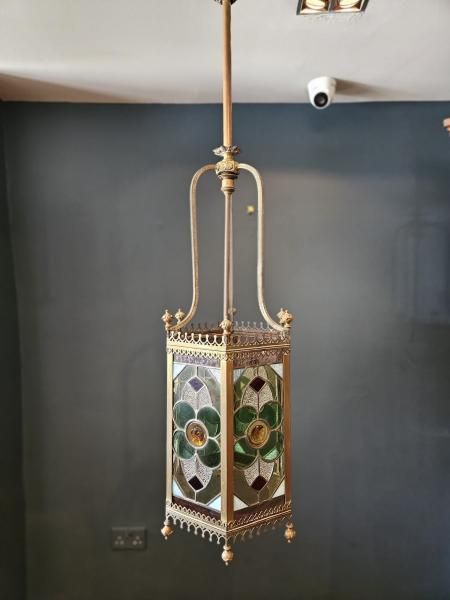
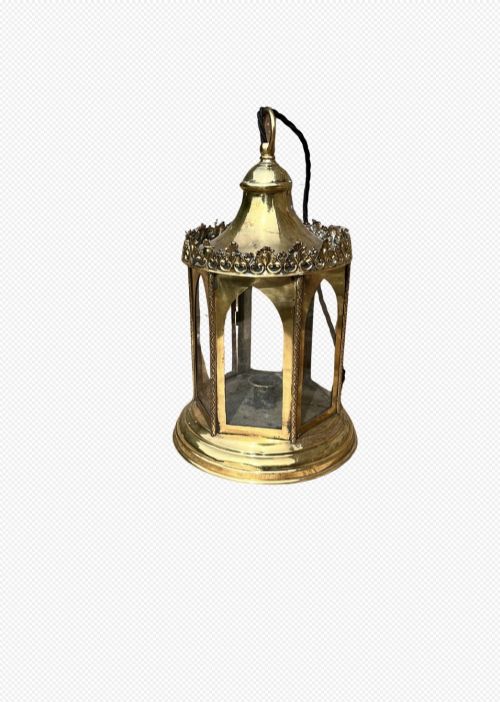
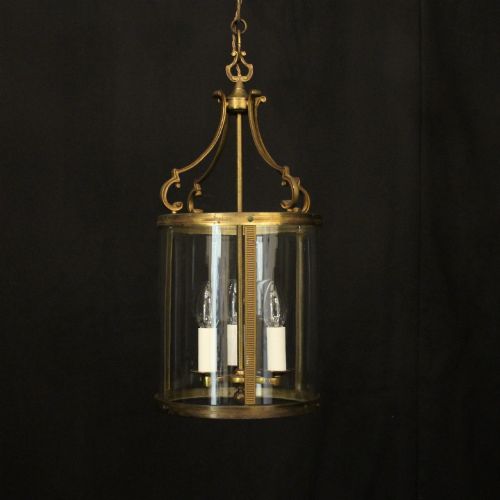
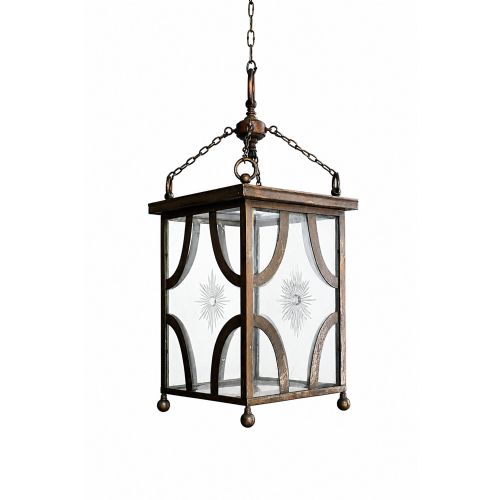
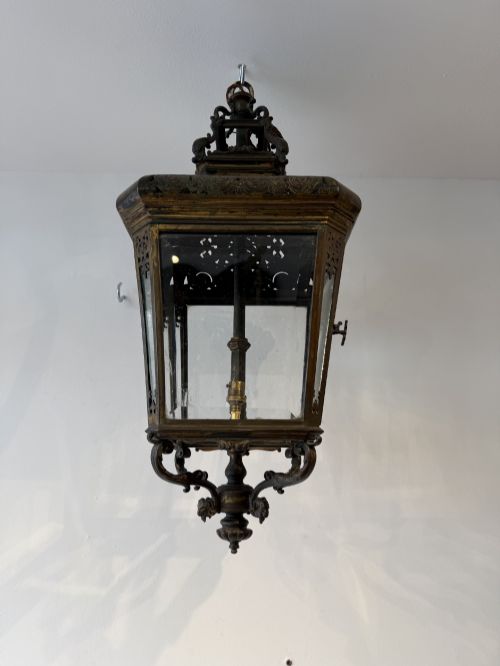
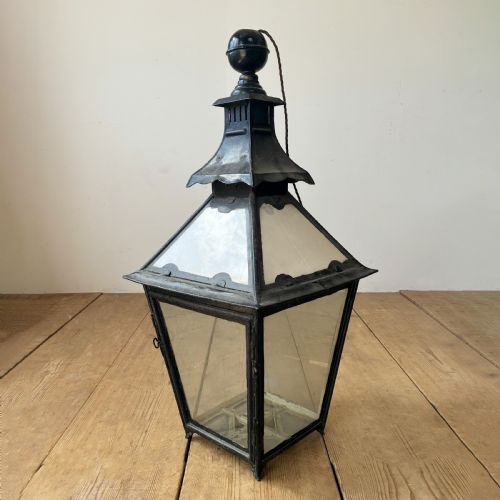
A victorian hall pendant brings weight and atmosphere to an entranceway, hanging in brass, bronze, and glass.
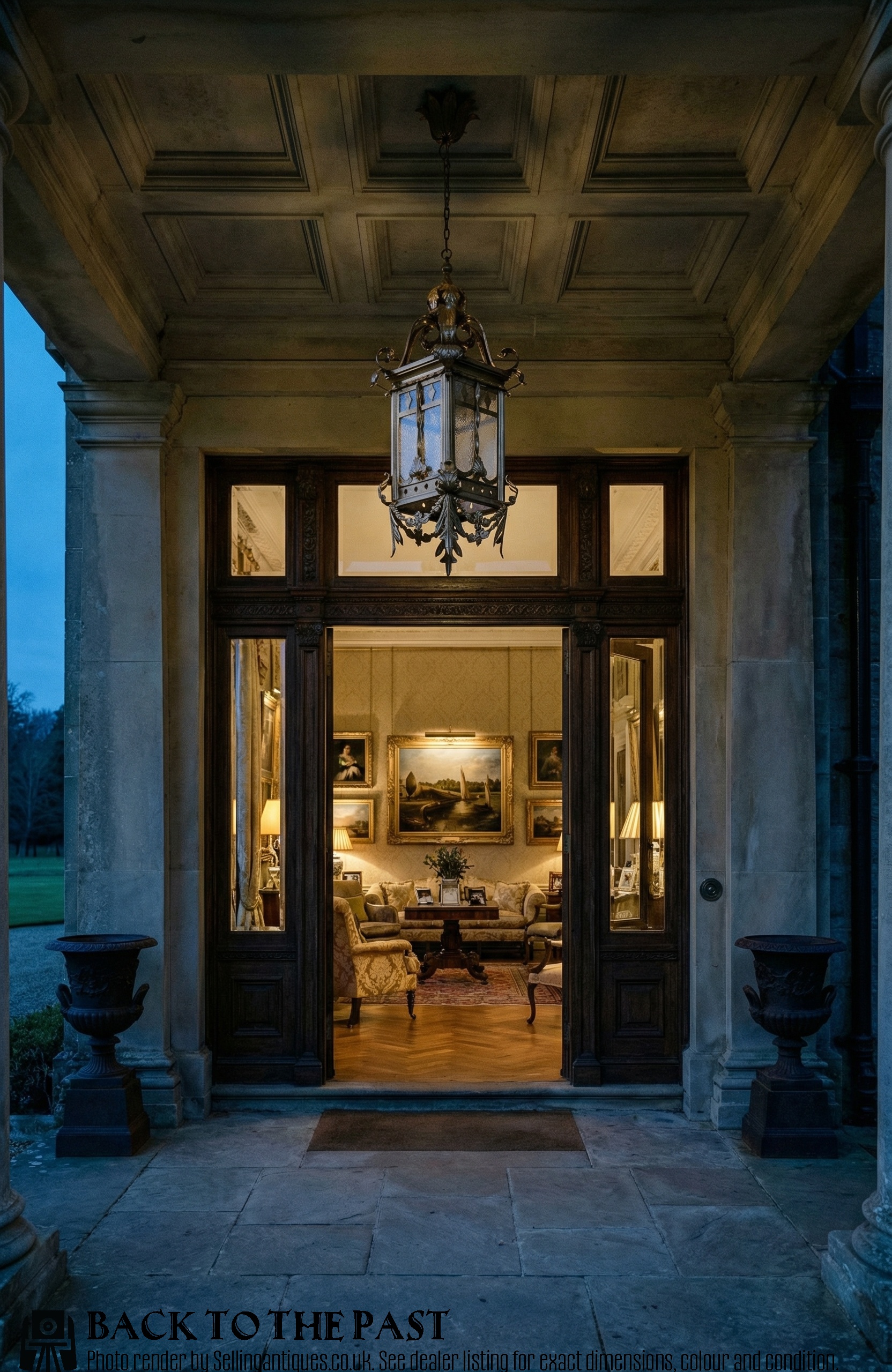
Victorian Hall Pendant
When you search for a victorian hall pendant, you encounter hanging lanterns, ceiling lights, and bell jar fixtures designed to illuminate passages and vestibules. These pieces typically originate from the nineteenth century and the Edwardian era, bearing the practical architecture of domestic and public thresholds.
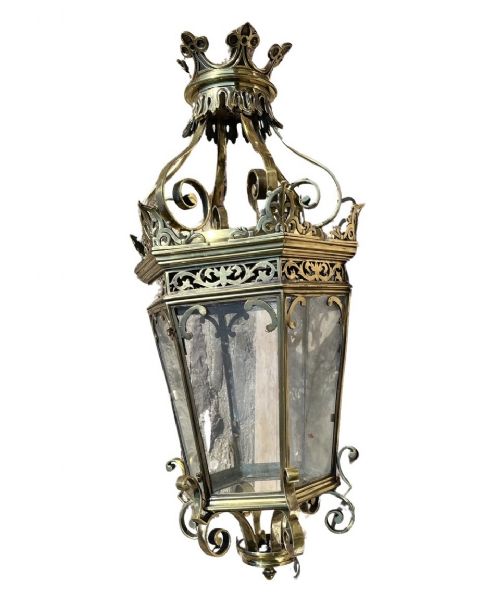
The predominant examples on this page utilise brass, bronze, copper, and wrought iron frames fitted with clear, coloured, leaded, or opaline glass. Forms range from simple hexagonal and round lanterns to elaborate Gothic revival designs and French gilded bronze fixtures.
Many of these ceiling lights transitioned from candle or oil burning to electricity during their long histories, retaining their structural hardware while adapting to modern wiring. Their physical presence grounds an entryway, reflecting the architectural scale of the period.
Construction and Materials
Makers constructed these lanterns using cast, spun, or sheet brass and bronze, often integrating structural ironwork for larger hanging fixtures. Metal components were joined by rivets, screws, or brazing, creating rigid frames capable of supporting heavy glass panels.
Glazing techniques defined the visual character of each pendant, employing hand-blown glass, leaded came work, diamond cutting, or etched panels held securely within hinged or fixed metal doors.
Listings span the nineteenth and early twentieth centuries, featuring glass, brass, bronze, and wrought iron across Arts and Crafts and Gothic revival styles.
Distinctions in Quality
Quality rests in the weight of the metal casting and the precision of the frame construction, where heavier brass and bronze indicate superior durability. Finer pieces display crisp botanical or architectural ornament rather than simplified mass-produced stampings.
The integrity of the glass panels and the sophistication of the metal finishing, whether fire-gilt, patinated, or polished, separate standard utility hall lights from bespoke architectural commissions.
Perry And Co·Pugin
The Victorian Hall Pendant Glossary
- Hall Lantern
- A hanging light fixture specifically proportioned for corridors, vestibules, and entrance halls. These fixtures often feature protective metal frames enclosing glass sides.
- Leaded Glass
- Glass panes held together by strips of lead came, forming geometric patterns or structural windows within the lantern frame. This technique allows for complex shapes and coloured glass insertions.
- Gilt Bronze
- Bronze metal treated with a thin layer of gold or gold-coloured alloy, providing a luminous surface finish. It appears frequently on decorative French and English revival lanterns.
- Gothic Revival
- An architectural and decorative style drawing inspiration from medieval forms, featuring pointed arches, tracery, and heavy ecclesiastical details. This aesthetic is common in Victorian church and grand house lanterns.
- Bell Jar Lantern
- A hanging ceiling light enclosed by a rounded, bell-shaped glass shade, frequently diamond cut or hand blown. This form protects the internal light source from drafts.
Victorian Hall Pendant: Frequently Asked Questions
How do I hang a heavy brass hall lantern?
These lanterns require secure anchorage into ceiling joists using appropriate hooks and ceiling roses capable of supporting the combined weight of metal and glass.
Professional electrical installation is recommended to ensure the internal wiring safely carries the weight and current of the fixture.
Can I use these lanterns outside?
While some examples originated as porch or coaching lights designed for exterior use, many interior hall pendants lack weatherproof seals.
Review the construction and material specifications of each individual piece before exposing historic metal and glass to outdoor conditions.
How do I clean historic glass and brass?
Dust glass panels gently with a soft cloth and mild soapy water, avoiding harsh chemical cleaners that might strip the historic patina from the metal frame.
Unlacquered brass and bronze benefit from occasional gentle waxing rather than aggressive polishing to preserve their aged appearance.
How do I identify a Gothic revival lantern?
Gothic revival pieces display distinct architectural motifs such as pointed arches, quatrefoils, and heavy structural ironwork reminiscent of medieval ecclesiastical design.
These lanterns often project a more solemn, monumental presence compared to domestic Arts and Crafts or standard Victorian brass fixtures.