



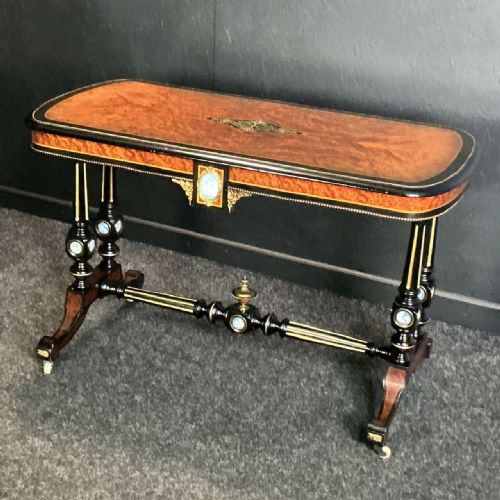
Victorian Hall Console
When you need a victorian hall console, you are choosing a practical architectural anchor for an entranceway shaped by nineteenth-century craftsmanship.
Victorian Hall Console
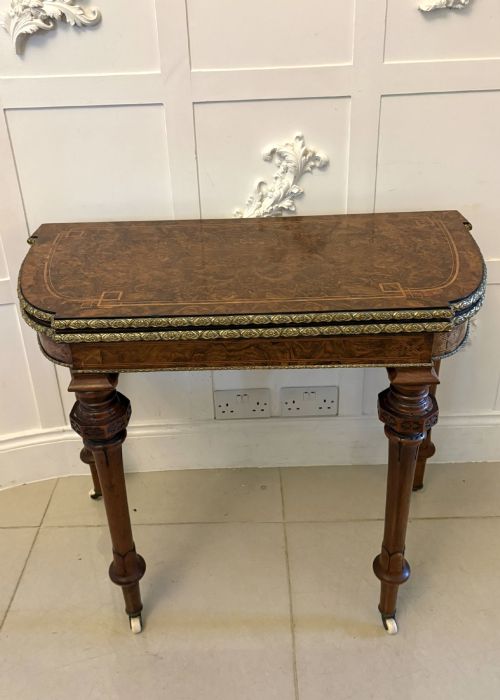
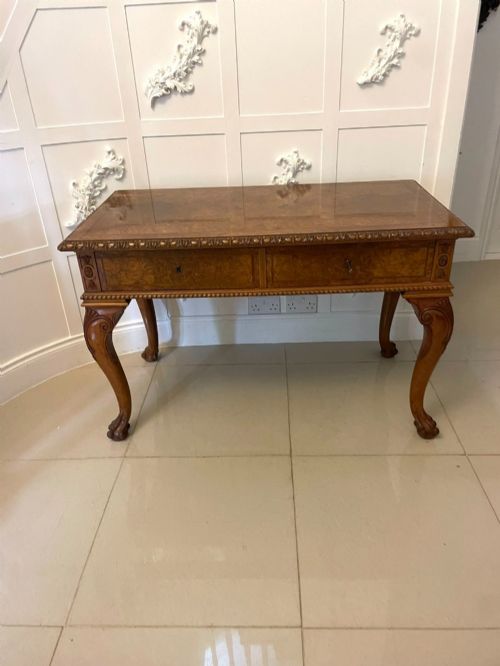
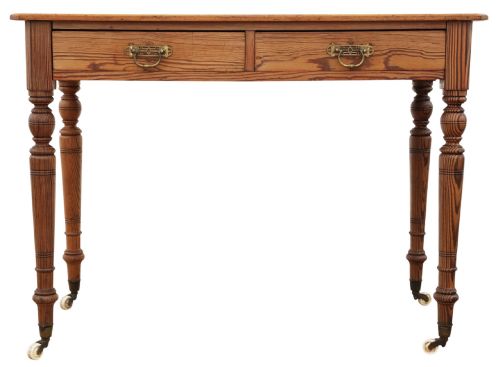
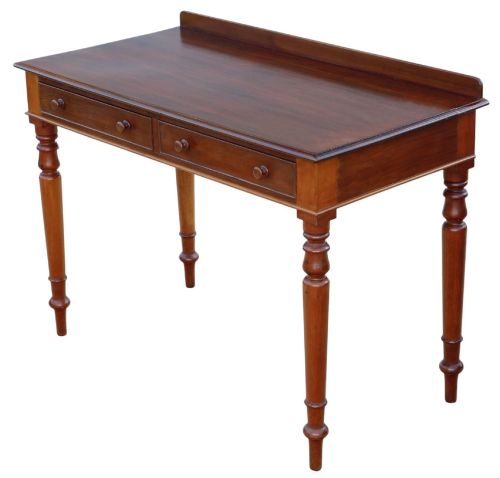
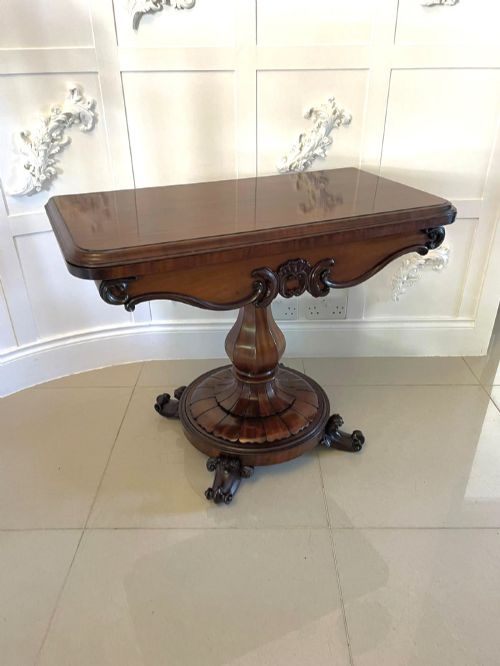
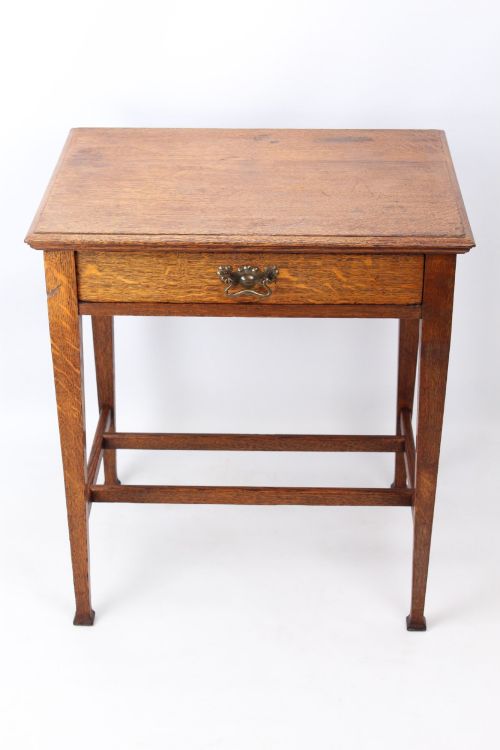
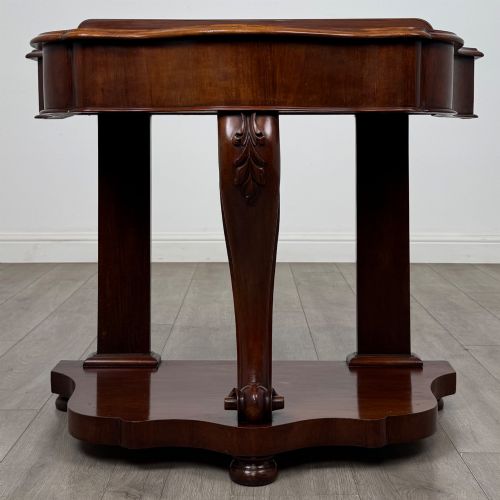
A victorian hall console serves as a narrow surface designed to stand against an entranceway wall without obstructing passage. These pieces frequently manifest as demilune tables, side tables, or writing desks adapted for display and correspondence.
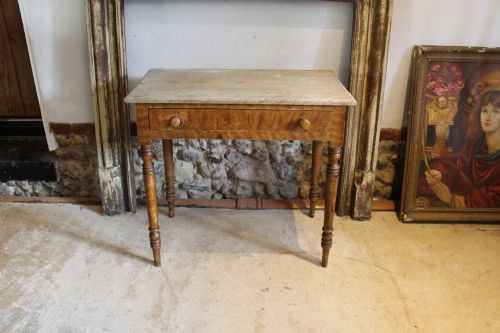
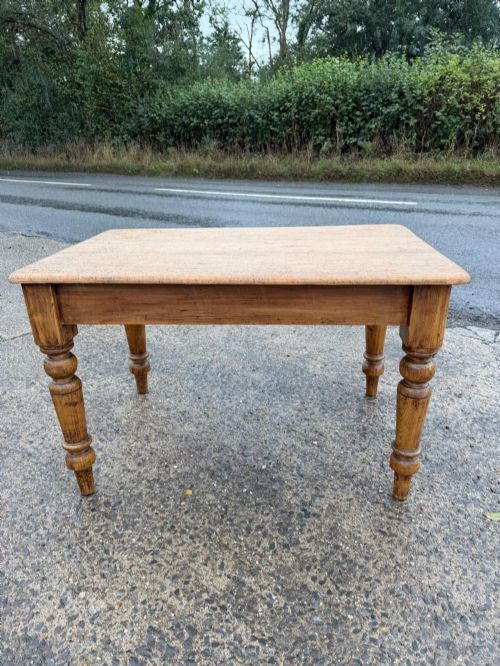
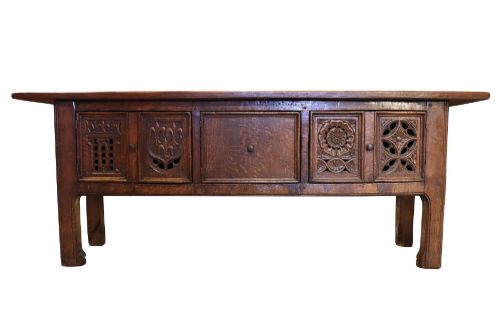
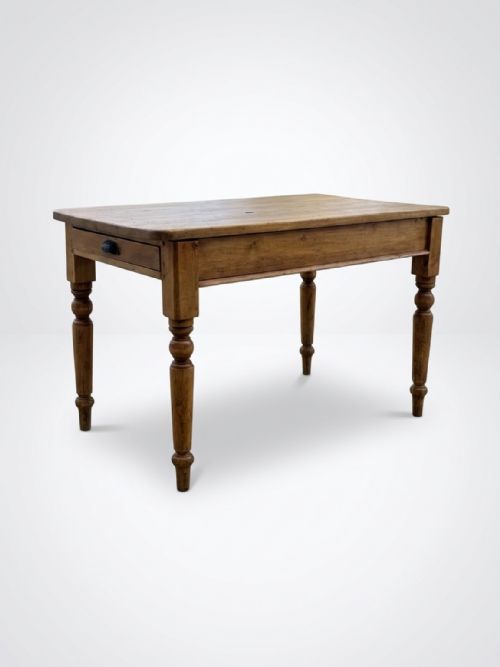
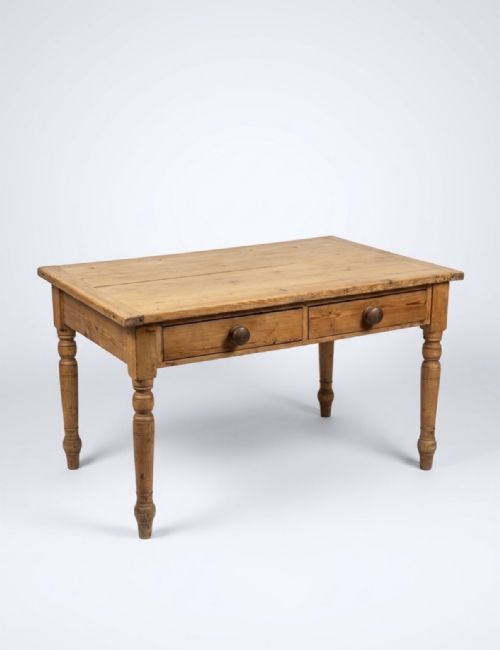
Makers of the period worked extensively in mahogany, walnut, and oak to supply houses with practical furniture for receiving visitors. Surviving examples range from simple pine washstands to exhibition-grade carved mahogany tables featuring marble tops.
The category bridges formal drawing room furnishings and robust country utility, reflecting the diverse domestic requirements of nineteenth-century households. Buyers encounter styles spanning plain early designs up to ornate Gothic Revival and Renaissance Revival forms.
Materials and Construction
Cabinetmakers utilised dense timbers such as mahogany, walnut, and oak, frequently selecting figured veneers like flame mahogany or burr walnut for primary surfaces. Secondary structural elements often incorporated pine or pitch pine for internal framing and drawer construction.
Surface ornamentation relied heavily on hand-carved details, turned legs, and inlaid banding, alongside applied scumble paint finishes or marble inserts. Joinery typically employed traditional dovetailing for drawers and mortise and tenon joints for stable frame construction.
The documented forms span simple single-drawer side tables to grand mirror-backed display consoles and marble-topped serving surfaces.
Assessing Quality and Execution
The distinction between standard utility items and superior examples lies in the selection of timber and the depth of hand-carving. Finer pieces display carefully matched veneer grains, substantial marble slabs, and crisply executed mouldings rather than mechanical uniformity.
Structural integrity also separates workshop traditions, where well-proportioned narrow frames with sound secondary woods outlast heavier, poorly joined alternatives. Original hardware, intact surface patination, and uncompromised structural joins elevate the standing of any surviving console.
Heal and Son·Edward’s And Robert’s
The Victorian Hall Console Glossary
- Demilune
- A half-moon shape used to describe tables with a curved front and flat back designed to sit flush against a wall.
- Frieze
- The horizontal band situated directly beneath the tabletop, frequently housing one or more small storage drawers.
- Scumble
- A decorative paint technique applied over a base coat to simulate the grain patterns of more expensive timber.
- Serpentine
- A curved contour featuring a convex centre flanked by concave wings, creating a flowing movement across the front edge.
Victorian Hall Console: Frequently Asked Questions
How were these tables originally used?
Households placed these surfaces in entranceways to hold visiting cards, lamps, and daily post upon arrival. They provided an immediate functional surface for guests before they entered the main reception rooms.
In larger properties, matching pairs flanked doorways or sat beneath tall wall mirrors to create a grand architectural symmetry. Smaller variants doubled as writing surfaces or compact sideboards for residential hallways.
Will a console fit a narrow hallway?
These pieces were specifically constructed with shallow depths to occupy minimal floor space in domestic corridors. Demilune and rectangular wall-mounted formats allow passage without obstruction.
Buyers should measure the available clearance between skirting boards and opposing doors to ensure comfortable movement. Many surviving examples specifically highlight narrow proportions designed for confined Victorian entrance spaces.
How do I care for a nineteenth-century timber top?
Regular dusting with a dry, soft cloth maintains the natural wax finish without building up greasy residue. Avoid placing unsealed liquid containers directly onto antique wood or marble surfaces to prevent staining.
Keeping the furniture away from direct heat sources and strong sunlight preserves the stability of the timber and veneer. Periodic application of traditional beeswax nourishes the grain and enhances the historical patina.
How do I distinguish early designs from later revival pieces?
Early examples typically display simpler lines, hand-cut secondary joinery, and solid timber construction without elaborate machine mouldings. The progression towards late-century revival styles introduced heavier carved ornamentation, such as Green Man motifs and Gothic tracery.
Examining the underside, drawer linings, and backboards reveals the tool marks and ageing characteristics specific to different decades. Comparing timber shrinkage and fastener types helps confirm the manufacturing period of the frame.