


Victorian Half Tester
A victorian half tester brings architectural presence and draped comfort to a bedroom, offering the intimacy of a canopy bed with a shorter canopy projection.
Victorian Half Tester
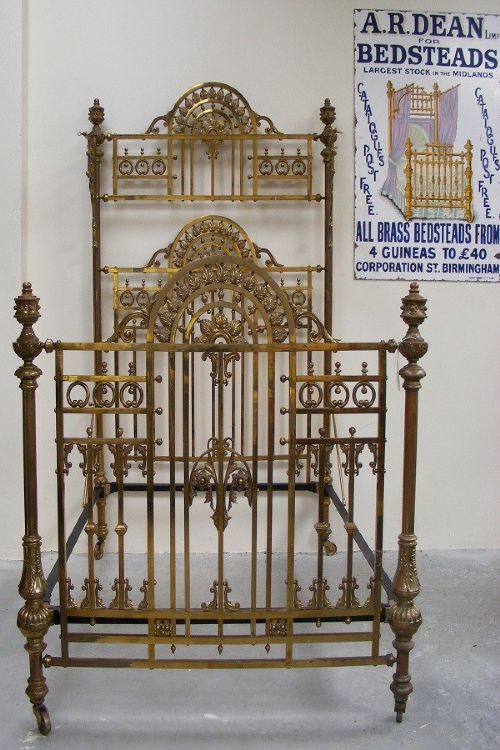
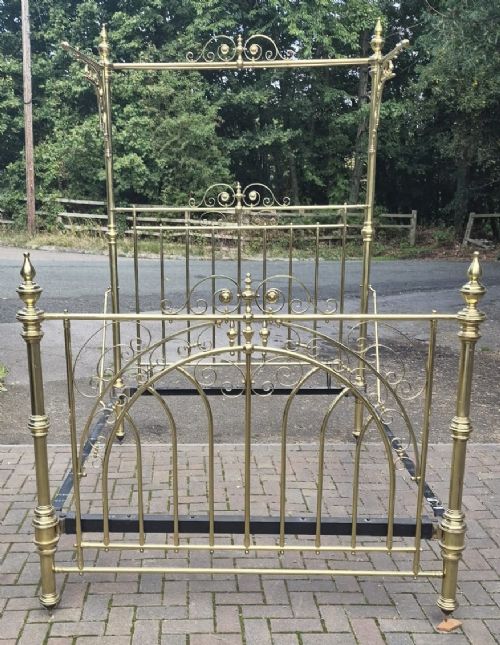
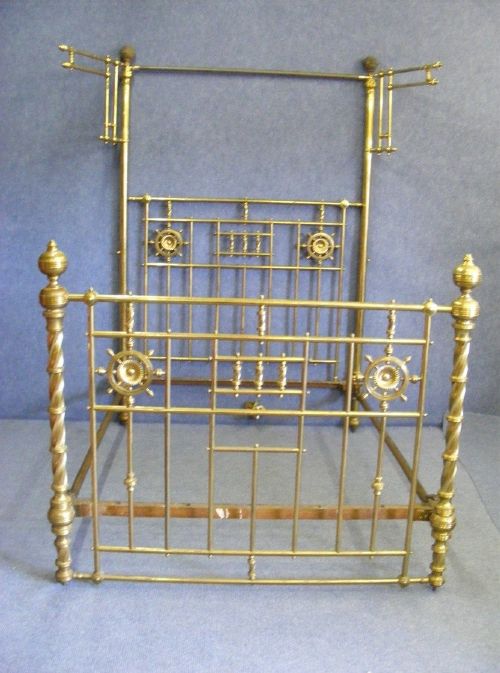
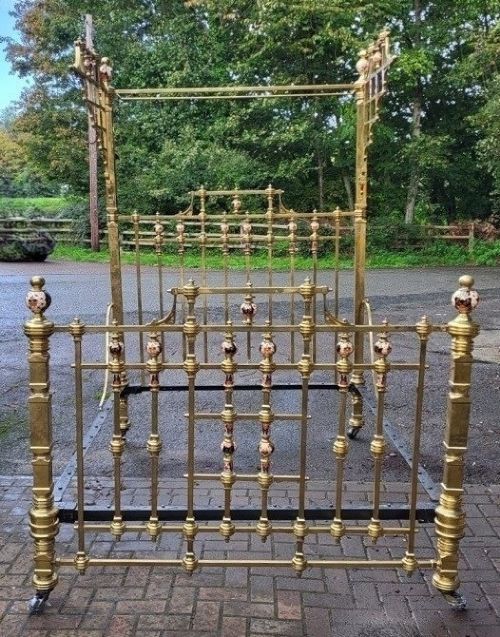
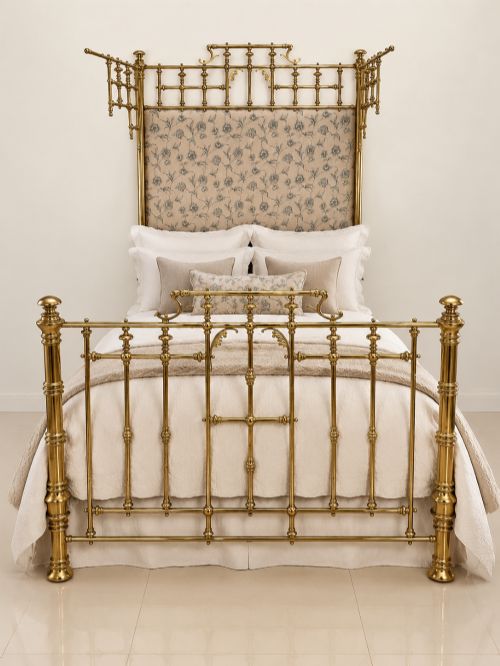
A victorian half tester is a bedstead featuring a projecting canopy or tester attached to the headboard, leaving the foot of the bed open. The pieces seen here span the mid to late nineteenth century, appearing predominantly as double and king size frames.
Makers of the period worked within the Victorian and Gothic styles, constructing these large bedroom centerpieces from native timbers like mahogany, satin birch, and pollard oak, or constructing them as all-brass frameworks.
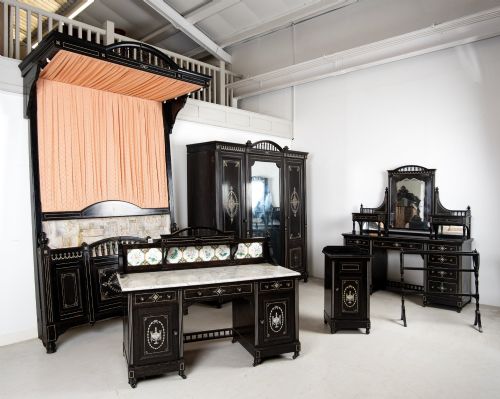
The archive shows that while full bedroom suites and smaller doll's or miniature versions exist, the main focus remains on substantial brass or timber bedsteads designed to anchor a principal bedroom.
Materials and construction
The construction relies heavily on solid brass, cast iron, and wrought iron, often combined in a single bedstead to provide structural strength alongside decorative metalwork. Tubing and cast components were shaped to form the sweeping headboards and canopy brackets characteristic of the type.
Timber frames utilise flame mahogany, burr walnut, ebonised wood, and satin birch, frequently enhanced with inlay, carved panels, and polished finishes that highlight the natural grain of the wood. Fabric also plays a structural and decorative role, forming the testers and draperies suspended from the wooden or metal cornices.
Doll's and miniature versions occasionally appear alongside full-sized adult frames, proving that nineteenth-century children also required proper canopied sleeping quarters.
Distinguishing quality
Quality in a victorian half tester rests on the ambition of the design and the integrity of the materials, separating standard commercial pieces from exhibition quality examples. Superior pieces display crisply cast brass ornamentation, heavier gauge metals, and meticulously selected timbers such as figured flame mahogany or pollard oak.
The refinement of the carving on wooden cornices and bed bases marks the hand of a skilled workshop, as does the integration of complex metal casting. Pieces bearing attribution to known makers or featuring extensive gilding and ebonised detailing represent the upper tier of nineteenth century production.
RW Winfield·JAS Shoolbred
The Victorian Half Tester Glossary
- Half tester
- A bedstead featuring a canopy that extends only partway over the length of the mattress from the headboard. This design provides the intimacy of a traditional four-poster without dominating the entire room.
- Tester
- The flat canopy or sounding board suspended over a bed. In these pieces, it projects from the headboard to support decorative fabrics.
- Ebonised wood
- Timber treated with a dark finish to imitate expensive ebony. This technique was widely utilised during the Victorian period for dramatic contrast.
- Flame mahogany
- Mahogany timber exhibiting a distinct, flamelike grain pattern. It was typically reserved for the primary surfaces of high-status Victorian furniture.
- Bedstead
- The framework of a bed supporting the mattress and springs. These nineteenth-century examples combine structural ironwork with decorative wood or brass.
Victorian Half Tester: Frequently Asked Questions
How do I fit a modern mattress?
Many nineteenth-century frames were built to historical dimensions rather than standard modern sizes. Custom mattress solutions or minor internal adjustments are often necessary to ensure a secure fit within antique iron and wood side rails.
Working with a specialist upholsterer or mattress maker allows you to match the exact proportions of the bedstead while maintaining traditional support systems like wooden slats or modern firm bases.
Are these beds difficult to assemble?
Most designs utilise heavy iron side rails that slot into cast headboard and footboard sockets, secured with standard bed bolts. While straightforward in mechanical principle, the heavy brass and timber components require two people to manoeuvre safely.
Care should be taken during assembly to protect polished wood surfaces and delicate brass plating from accidental impacts against walls or flooring.
How should I clean the brass?
Original brass components often retain an aged patina that collectors prefer to preserve rather than polish to a bright shine. Gentle dusting with a dry microfiber cloth is generally sufficient for routine maintenance.
Avoid abrasive chemical cleaners or harsh metal polishes, as these can strip away thin historical lacquers or original surface treatments applied during the Victorian period.
What rooms suit a half tester?
The projecting canopy demands adequate ceiling height and wall clearance to look properly proportioned within a space. High-ceilinged bedrooms provide the ideal volume to showcase the architectural lines of the tester and its hanging fabrics.
Positioning the bed as the central focal point of the room allows the detailed headboard and canopy framework to command the visual space without feeling cramped.