




Mahogany Canopy Frame
A mahogany canopy frame provides the architectural bones for a grand bed, bringing stately presence and period presence to a master bedroom.
Mahogany Canopy Frame
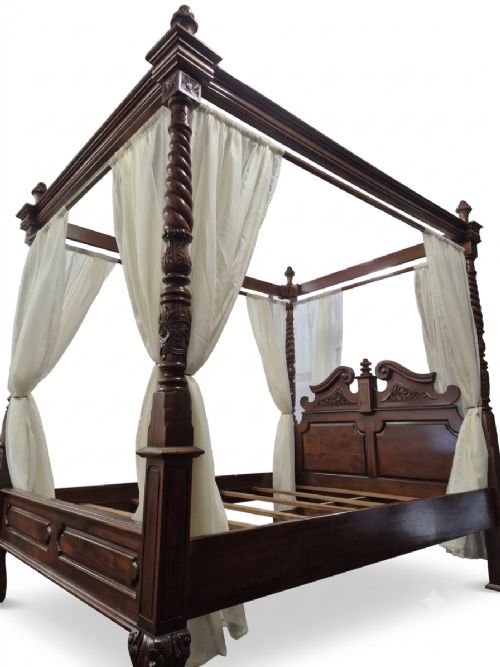
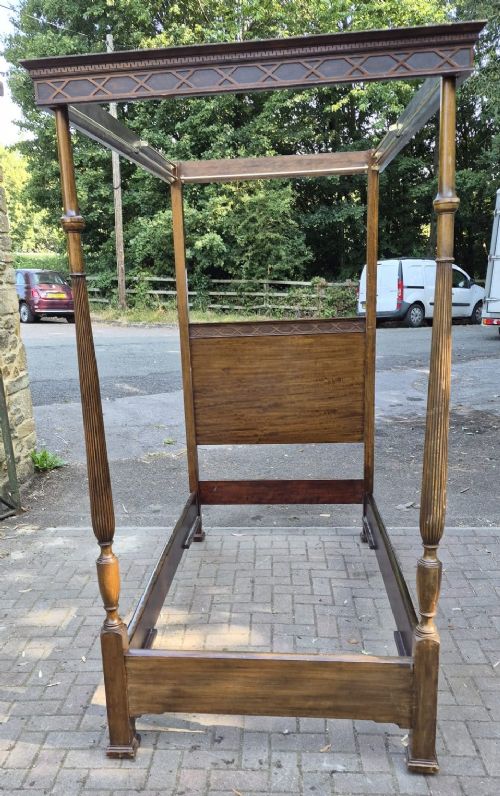
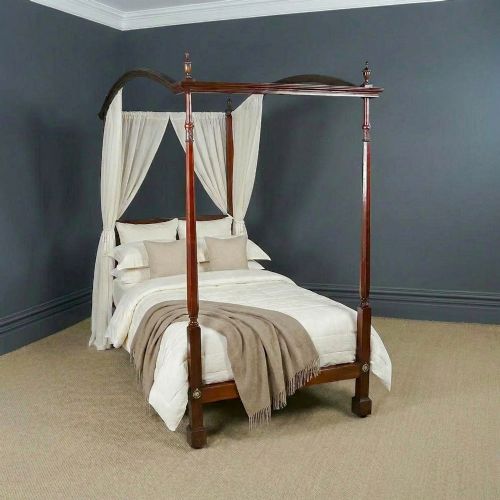
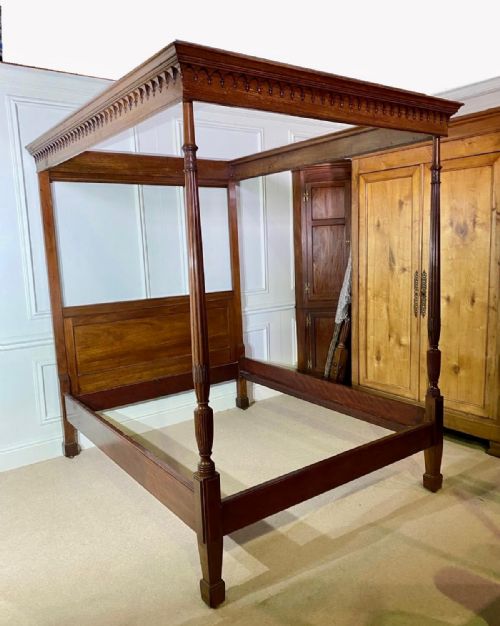
A mahogany canopy frame forms the structural upper tester and vertical posts of a traditional four-poster bed or half tester bed. When searching for a mahogany canopy frame, collectors encounter grand architectural frameworks dating from the eighteenth century through the Edwardian era, encompassing styles such as Regency, Chippendale, and Anglo-Indian Colonial.
The selections span standard single dimensions up to generous king and super king sizes, with forms ranging from strict Georgian Revival interpretations to substantial Victorian and colonial iterations. Many incorporate carved wooden cornices, slender or heavily turned posts, and specialised joinery designed to support both heavy tester structures and complementary drapery.
The underlying timber work frequently shows regional variations, moving from classic British cabinetmaker proportions to ornate colonial interpretations influenced by British trade and local workshop practices. Buyers evaluate these frames for their timber figure, structural integrity, and the historical accuracy of their decorative carving.
How they were made
Makers constructed these frames primarily using solid mahogany, often complemented by secondary timbers such as pine or native hardwoods for concealed internal framing. Timber selection focused on rich grain figures, particularly for the prominent corner posts and upper canopy friezes.
Construction relied on traditional joinery methods including heavy mortise and tenon joints to bear the considerable weight of the upper tester and hangings. Carved elements were executed by hand, utilising gouges and chisels to create classical reeding, acanthus leaves, and geometric mouldings directly into the dense timber.
Some canopy frames include concealed slots originally meant for tucking away silk drapes when the morning chill finally lifted.
What varies in quality
Quality rests in the crispness of the hand carving and the depth of colour in the primary mahogany timber. Superior examples display sharp, well-defined decorative details on the posts and cornice, whereas lesser pieces show softer, more mechanical execution or extensive replacement timber.
The architectural proportions and the integrity of the original joints dictate the overall execution. Frames retaining their authentic structural hardware and uncompromised corner posts represent the higher tier of cabinetmaking from this lineage.
Heals of London·Howard & Sons
The Mahogany Canopy Frame Glossary
- Half tester
- A wall-mounted or post-supported canopy that covers only the head portion of the bed rather than the entire length. This form provides a lighter visual footprint while retaining traditional draping.
- Cornice
- The ornamental moulded projection that crowns the top of the canopy frame. It defines the architectural style of the upper structure.
- Chippendale
- A style of eighteenth-century English furniture characterised by carved ornamentation, Gothic or Chinese influences, and robust proportions. It remains a benchmark for quality in bed design.
Mahogany Canopy Frame: Frequently Asked Questions
How do I choose the right size?
Measure your ceiling height and bedroom floor space carefully before selecting a canopy frame. These architectural structures demand significant vertical clearance and visual room to breathe.
Verify whether the listed dimensions refer to the internal mattress space or the outer footprint of the canopy. Older frames often require custom mattress sizing to fit historical proportions properly.
How were four poster beds used historically?
Historically, four-poster beds with heavy canopies and curtains provided privacy and retained warmth in draughty houses. The overhead tester and surrounding drapes created a private, enclosed space for sleep.
Over time, the practical need for insulation diminished, and the canopy evolved into a purely decorative statement of status and fine cabinetmaking skill within grand homes.
How do I care for antique mahogany?
Maintain the timber by dusting regularly with a soft, dry cloth and avoiding modern silicone-based polishes. Keep the wood away from direct heat sources and strong sunlight to prevent drying and fading.
Feed the surface periodically with traditional beeswax to preserve the natural lustre of the mahogany grain. Check structural joints and bolts occasionally to ensure the heavy framework remains stable.
How do I identify a Regency period frame?
Regency frames typically exhibit classical restraint, drawing inspiration from ancient Roman, Greek, and Egyptian motifs rather than ornate rococo carving. Look for clean architectural lines, brass mounts, and rich dark mahogany.
Pets, reeded columns, and simpler geometric cornices often distinguish Regency pieces from the more heavily carved Chippendale or Victorian styles found in other examples.