
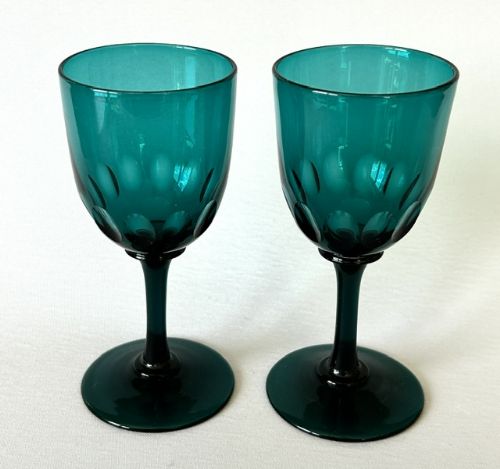


Victorian Green Wine Goblets
These Victorian green wine goblets bring rich colour and heavy form to the table, offering a striking centrepiece for any collector of antique glassware.
Victorian Green Wine Goblets
Victorian green wine goblets appear in forms ranging from tall roemers to tulip shapes and cut wine glasses. Dating largely from the nineteenth century, these pieces emerge from Victorian, Biedermeier, and Bohemian historicism traditions.
Buyers meet pairs and larger sets spanning decades from eighteen-forty to nineteen-hundred. English and continental origins shape the design, including Bristol green and Bohemian styles with enamelled armorial decoration.
The glassware includes lead glass and uranium glass variants in shades from pale green to deep emerald and aqua. These drinking vessels bridge decorative display and historic utility.
How they were made
Glassmakers utilised blown glass and lead glass techniques to shape these heavy drinking vessels. Coloured glass recipes incorporated minerals to achieve rich green hues, including uranium glass variants that react under ultraviolet light.
Surface decoration involved cutting and polychrome enamel, seen in Lobmeyer enamelled armorial pieces and Biedermeier cut wine glasses. Artisans formed tulip shapes, roemers, and liquor glasses by hand while maintaining consistent proportions across sets.
Listings span periods from Georgian to late Victorian, showcasing glass, lead glass, and vitreous enamel across English and continental forms.
What varies in quality
Depth of colour and consistency across a set separate standard glassware from finer examples. Uniformity in green shades within a matched group of eight or six pieces demonstrates superior workshop output.
Complexity of surface treatment distinguishes basic vessels from elaborately decorated goblets. Hand-cut facets, polychrome enamel, and armorial details elevate the status of nineteenth-century glassware significantly.
Lobmeyer
The Victorian Green Wine Goblets Glossary
- Roemer
- A traditional continental European wine goblet featuring a wide bowl and a decorative stem with applied prunts. These pieces frequently appear in green glass from nineteenth-century Bohemia.
- Uranium glass
- Glass coloured with uranium oxide that yields a distinctive yellow-green hue and glows brightly under ultraviolet light. This material appears frequently in Victorian drinking vessels.
- Biedermeier
- A Central European style spanning the mid-nineteenth century characterised by clean lines and functional elegance. Pieces from this period often display precise wheel cutting.
- Armorial
- A style of decoration incorporating family crests, coats of arms, or heraldic shields. Enamelled armorial designs appear on late nineteenth-century goblets.
- Lead glass
- Heavy glass containing lead oxide that increases brilliance and weight. This composition provided the ideal medium for deep cutting and polishing.
Victorian Green Wine Goblets: Frequently Asked Questions
Are green wine goblets safe to drink from?
Nineteenth-century green wine goblets served historical dining functions and remain suitable for occasional use today. Some pieces contain lead or uranium oxide, which prompts certain collectors to keep them purely for display.
Careful hand washing preserves the enamel and cut details of older glassware. Avoid sudden temperature changes to protect the material.
How do I date a green wine goblet?
Dating relies on stylistic indicators, manufacturing techniques, and pontil marks left on the base. Victorian and nineteenth-century pieces often exhibit distinct weight, colour saturation, and cutting patterns typical of the period.
Comparing items to documented examples from England and Bohemia helps narrow the decade of production. Sets from eighteen-eighty often display different proportions compared to earlier eighteen-fifty examples.
How should I display antique green glass?
Displaying green glassware near natural light highlights the depth of the coloured glass and enamel details. Cabinets with glass shelves allow light to pass through the bowls and stems effectively.
Keeping pieces away from direct heat sources protects the historic material. Grouping matched sets together creates a strong visual impact on a dining table or sideboard.