


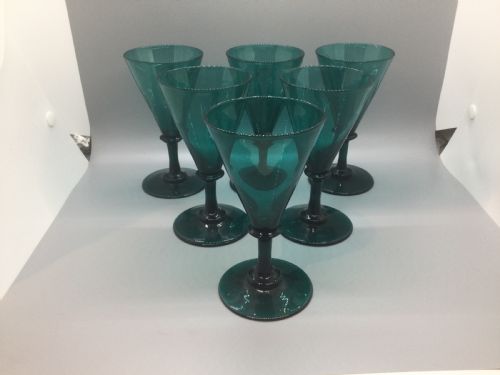
Hand Blown Green Glassware
These hand blown green glassware pieces bring depth of colour and historical variety to a room, ranging from Georgian wine glasses to Art Deco vases.
Hand Blown Green Glassware
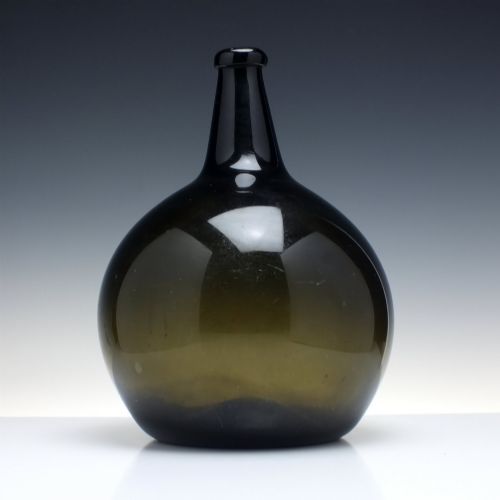
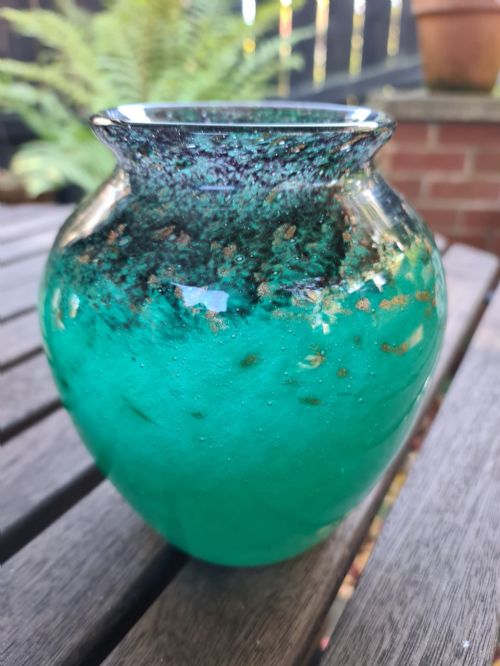
You are most likely to meet Victorian Bristol green wine glasses, Georgian rummers, and early twentieth-century Scottish bowls made by Monart or Vasart. Each piece carries the distinct characteristics of its period, from simple eighteenth-century beakers to elaborate Victorian ewers and French carboys.
How they were made
Makers shaped molten glass by hand, utilising techniques such as free-blowing and mould-blowing to form vases, jugs, and drinking vessels. Coloured glass received its tone through metallic oxides added to the batch, producing shades from deep forest green to bright turquoise.
Decoration often involved applied trails, folded feet, and hand-painted enamel scenes. Some pieces incorporate specialist inclusions like aventurine or exhibit uranium and opalescent properties under light.
One green glass vase proudly sports a hand-painted enamel fox hunting scene, proving that seventeenth-century sporting tastes outlived their era.
What varies in quality
The distinction between standard items and finer examples rests upon the skill of the blower and the clarity of the metal. Superior pieces display balanced proportions, clean pontil marks, and purposeful weight rather than excessive thickness.
Artistry in decoration also divides the range, where hand-painted enamelling or carefully controlled aventurine inclusions demonstrate superior craftsmanship. The precision of the form and the richness of the green tone ultimately define the grade of the piece.
Harry Powell·James Powell
The Hand Blown Green Glassware Glossary
- Pontil mark
- The rough scar left on the base of a blown glass vessel where the pontil rod was snapped off after shaping. Its presence indicates traditional hand-blown manufacture.
- Aventurine
- Glass containing suspended reflective mineral flakes that create a glittering metallic effect within the material. This technique appears in early twentieth-century Scottish studio pieces.
- Uranium glass
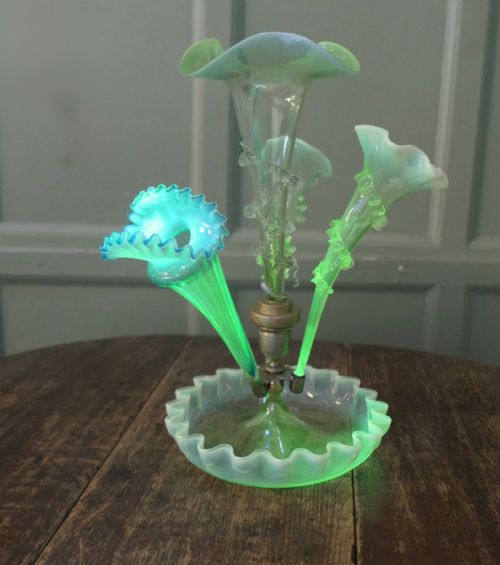
- Glass containing a small percentage of uranium dioxide added as a colourant, which glows bright green under ultraviolet light. It was widely produced during the Victorian and Edwardian eras.
- Epergne
- A large table centrepiece featuring a central bowl with multiple detachable trumpets or arms used for holding fruit or flowers. Victorian examples frequently utilise hand-blown green or opalescent glass.
- Bristol blue and green
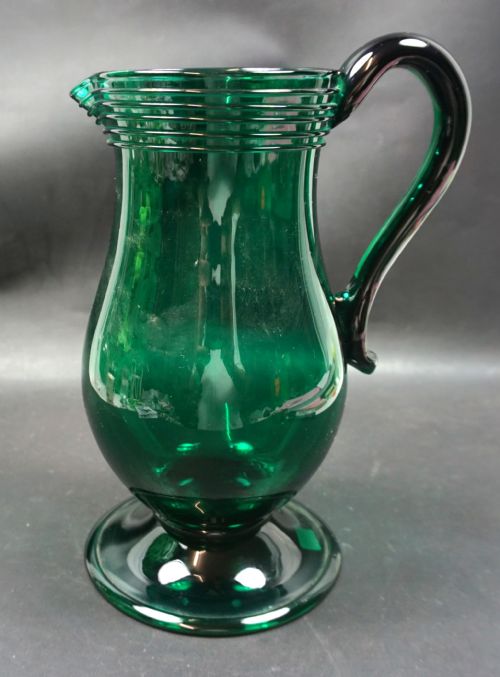
- Deeply saturated coloured lead glass traditionally associated with eighteenth and nineteenth-century glasshouses in the Bristol area. It was heavily utilised for wine glasses, rummers, and finger bowls.
Hand Blown Green Glassware: Frequently Asked Questions
Can I use antique wine glasses?
Georgian and Victorian wine glasses and rummers remain structurally sound for occasional use if handled with proper care. Hand wash them immediately after use and store them securely away from shelf edges.
Keep in mind that older glasses possess thinner bowls and delicate stems compared to modern equivalents. Treat them with respect during toasts to preserve their condition.
How do I date green glassware?
Examine the base for pontil marks, wear patterns, and the weight of the metal to establish clues about the manufacturing period. Georgian glass often shows distinct kick-ups and darker metal tones, while Victorian pieces feature brighter hues and varied forms.
Stylistic cues like Art Deco shapes or Edwardian proportions also help narrow down the decade. Comparing piece forms against documented nineteenth and twentieth-century examples confirms the era.
What caused the green colour?
Makers introduced various metallic oxides, primarily iron, copper, or chromium, into the molten batch to achieve different green tones. The precise chemical mix determined whether the result resembled dark forest green or lighter turquoise.
Uranium oxide was also utilised to create vibrant yellow-green glass that reacts to ultraviolet light. Each compound produced a characteristic hue specific to the glasshouse recipe.