


Victorian Green Glazed Pottery
Victorian green glazed pottery brings together rich botanical colour and robust nineteenth-century ceramics, offering collectors bold majolica, faience, and studio earthenware for practical display.
Victorian Green Glazed Pottery
When you search for victorian green glazed pottery, you encounter a diverse array of nineteenth-century ceramics spanning practical household vessels and decorative ornaments. The selection draws heavily from domestic earthenware, stoneware, and specialised faience production.
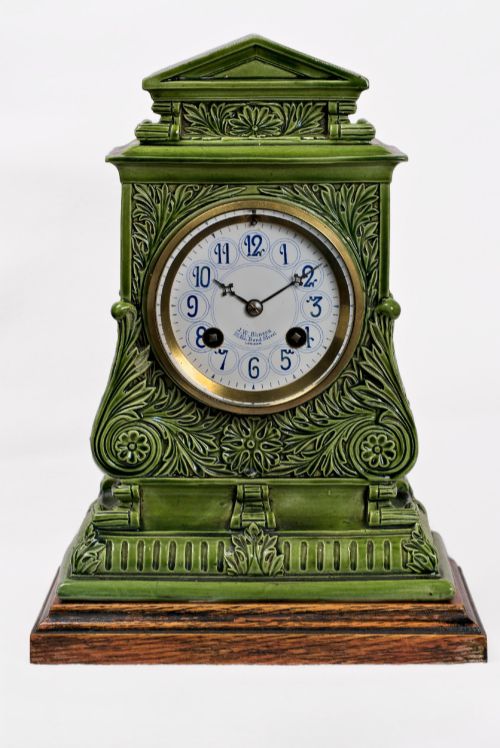
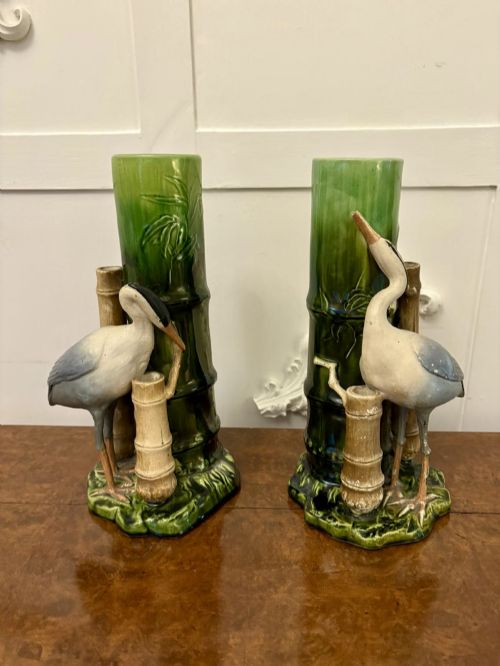
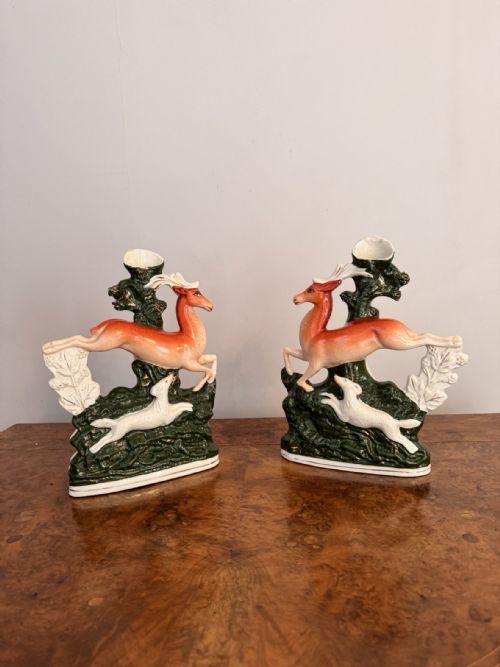
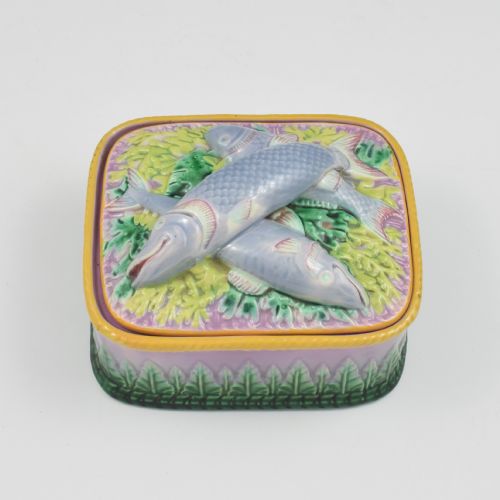
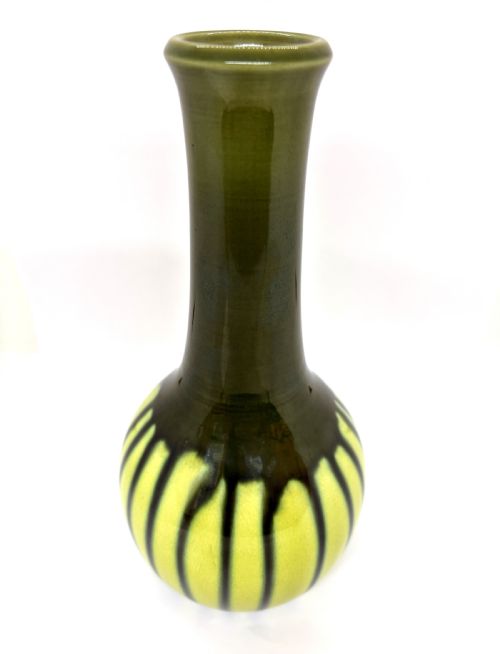
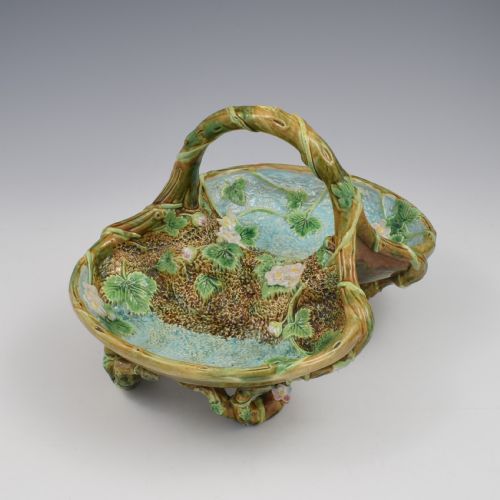
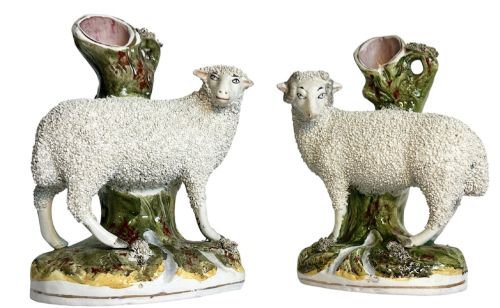
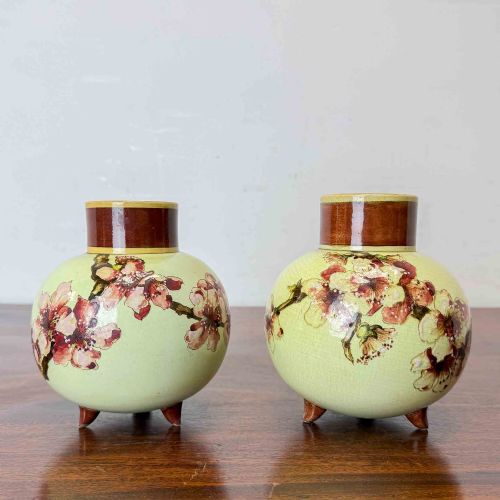
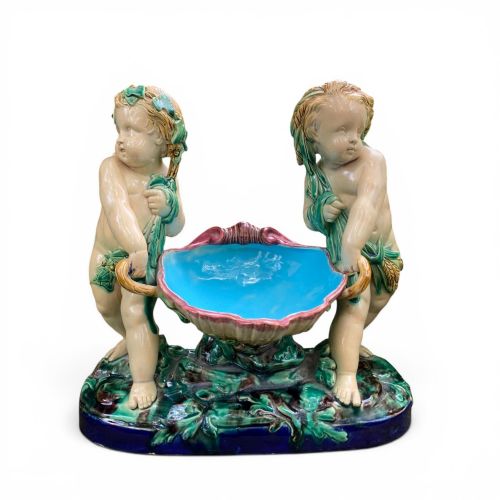
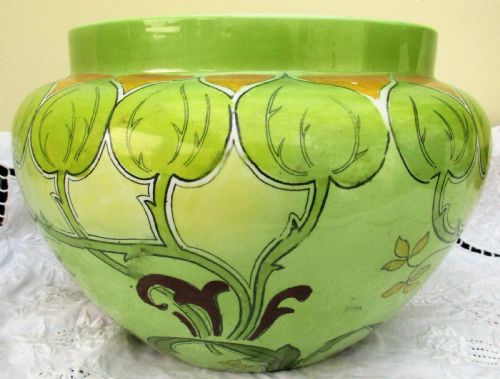
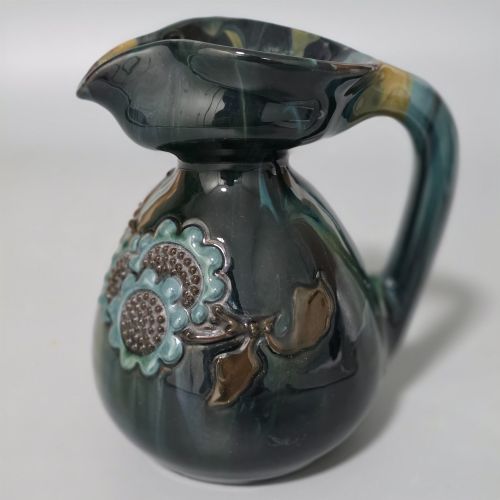
Vases, jardinieres, and jugs dominate the forms, alongside figural groups, spill vases, and tableware like cheese domes and sardine boxes. These pieces reflect the period's fascination with naturalism, often adopting botanical motifs and earthy tones.
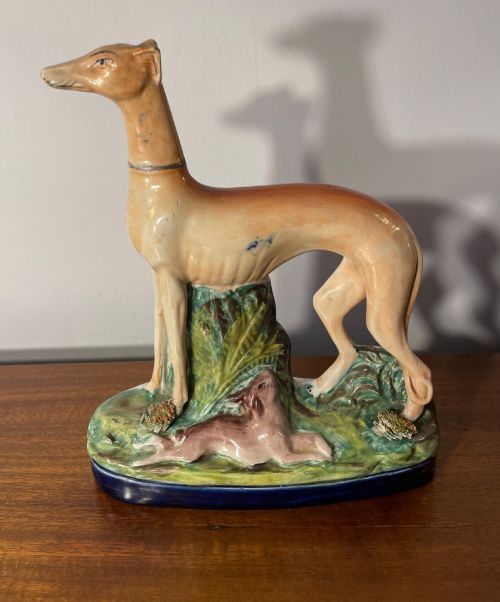
Makers from England, France, and central Europe feature prominently, working within distinct regional traditions from Staffordshire figures to specialised art pottery studios. The most common survivals combine utilitarian function with ornate surface decoration typical of the late nineteenth century.
How they were made
Potters shaped these vessels using earthenware and stoneware bodies, often throwing them on a wheel or pressing them into moulds to achieve complex sculptural forms. Earthenware provided a porous, absorbent base ideal for receiving heavy coloured glazes.
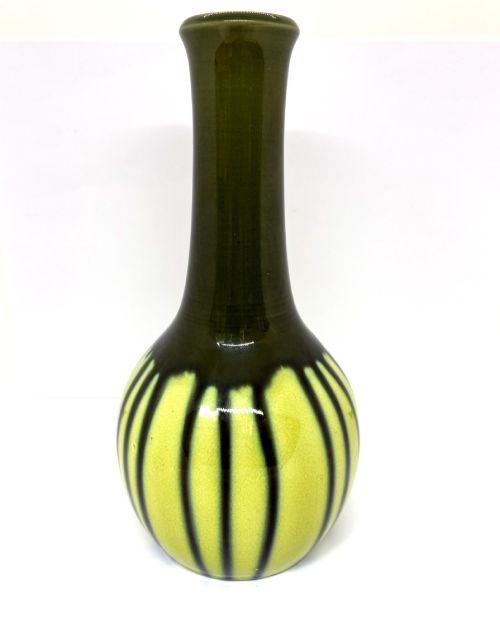
Makers applied lead glazes and enamel finishes, frequently utilising rich green tones derived from copper oxides to create lustrous, reflective surfaces. Firing techniques fixed these metallic glazes onto the ceramic body, producing the characteristic depth and sheen seen on majolica and faience.
Victorian Green Glazed Pottery Retail Price Guide 2026
Typical asking prices for victorian green glazed pottery among the pieces listed under this phrase on Sellingantiques today, from the lower quarter to the upper quarter. They describe what is for sale here now, not the wider market.
The available inventory highlights various object forms, ranging from utilitarian chamber pots and jugs to ornamental jardinieres and spill vases.
What varies in quality
Quality in these ceramics rests primarily on the crispness of the mould impression and the dexterity of the hand-finishing. Finer examples display sharp relief work on botanical or figural elements, whereas lesser pieces show softened details from worn moulds.
The application and firing of the glaze further distinguish the range, with superior pieces exhibiting an even, rich depth of colour without excessive pooling or dry patches. Artistic ambition also plays a role, separating standard factory output from pieces produced by notable studio potters and designers.
Burmantoft's Pottery·Doulton Lambeth Ware·George Jones Majolica·Sir Edmund Elton·Julius Dressler·W.A. Adderley·Minton
The Victorian Green Glazed Pottery Glossary
- Majolica
- A type of earthenware coated with an opaque tin glaze and painted with metallic oxide colours, widely produced during the Victorian era for decorative and tableware items.
- Faience
- Earthenware decorated with colourful opaque glazes, often associated with art pottery studios and decorative vases from the late nineteenth century.
- Earthenware
- Porous pottery fired at lower temperatures, serving as the standard base body for much of the green glazed ornamental ware on this page.
- Spill vase
- A small hollow vessel designed to hold slender wooden spills used for lighting candles, pipes, or fires, frequently modelled as animals or cottages.
- Jardiniere
- A large ornamental pot or stand intended to hold a live plant, often heavily decorated in the majolica taste.
Victorian Green Glazed Pottery: Frequently Asked Questions
What is majolica pottery?
Majolica is a nineteenth-century ceramic type featuring colourful lead glazes applied over a moulded earthenware body. The style is known for vibrant tones and naturalistic motifs.
These pieces were popular for both display and dining, encompassing everything from decorative jardinieres to cheese domes and sardine boxes.
How do I date these ceramics?
Dating relies on stylistic clues, registration marks, and maker signatures stamped into the ceramic body. Aesthetic Movement and Art Nouveau influences typically point toward the late nineteenth century.
Comparing the form and glaze characteristics with documented works by known potteries helps narrow the production period further.
Were these items used daily?
Many items served practical functions in Victorian households, including jugs, pitchers, chamber pots, and tableware. Their robust construction suited them for regular domestic tasks.
Over time, owners transitioned these durable vessels from functional kitchen and parlour use to purely decorative display.
What defines art pottery?
Art pottery represents a departure from mass-produced factory wares, focusing instead on individual studio execution, unique glazes, and artistic expression. Makers experimented freely with forms and surface textures.
Pieces by notable ceramists often bear incised signatures or distinct studio marks identifying their specific origin.