







Victorian Gothic Settle
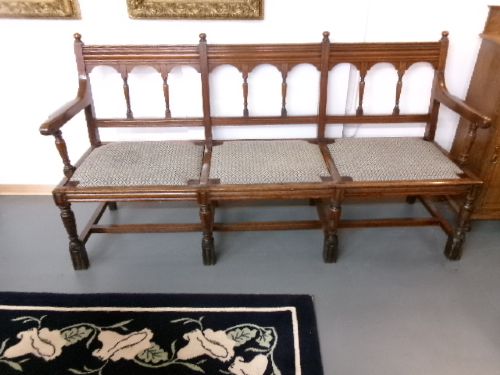
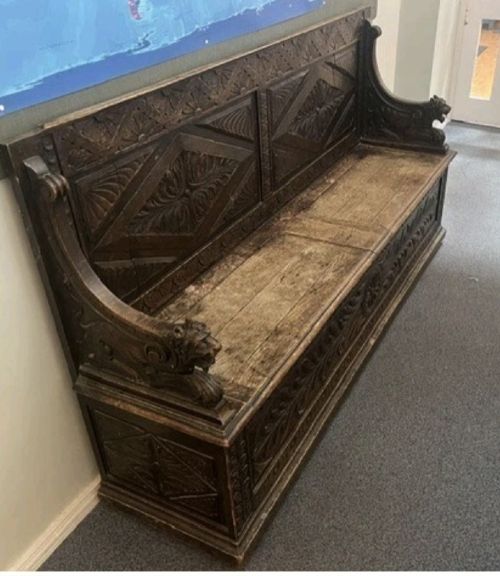
A victorian gothic settle brings architectural weight and ecclesiastical character into a hallway through heavy timber framing and carved ornamentation.
Victorian Gothic Settle
A victorian gothic settle is a substantial wooden seating form rooted in nineteenth-century revivalism, designed primarily for entrance halls, reception rooms and ecclesiastical settings. These pieces draw heavily on medieval architectural vocabulary, translating stone pointed arches, tracery and linenfold panelling into domestic woodwork.
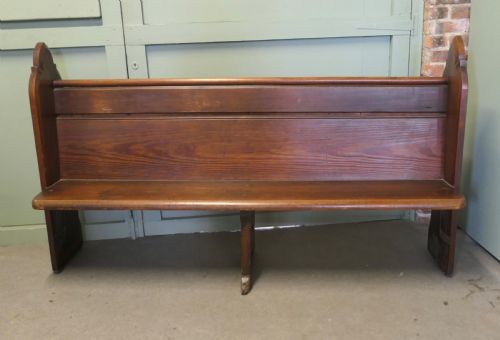
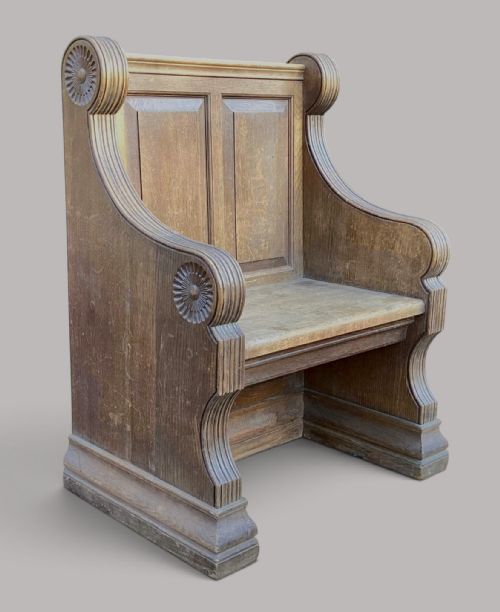
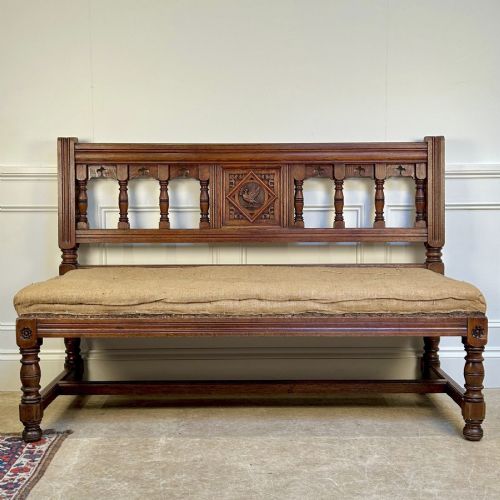
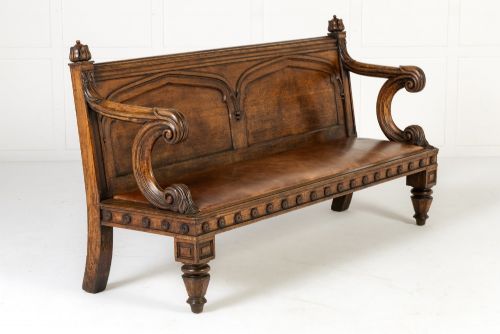
The versions most commonly met on this page are constructed from solid oak, walnut, pitch pine or elm, frequently featuring high panelled backs, hinged lift-up seats and elaborate arm supports. Many examples display regional interpretations ranging from baronial Scottish forms to simpler country house pews and chapel seating.
Makers and workshops of the period utilised stylistic labels such as Gothic Revival, Jacobean Revival and Reformed Gothic to describe these imposing benches. Their structural presence makes them natural anchor points for large spaces, combining prolonged durability with distinct historical theatre.
Materials and construction
Carpenters relied predominantly on native timbers, selecting dense English oak, walnut, pitch pine and elm for their structural integrity and capacity to hold deep relief carving. Pine and pitch pine appear frequently in ecclesiastical pews, while finer reception hall settles employ burr elm veneers and walnut alongside solid framing.
Joinery techniques combined traditional mortise and tenon frames with heavy pegging to support the substantial weight of high backs and box-like lift-up seats. Metal elements such as brass hinges and iron brackets provided functional reinforcement to lids and armrests without disrupting the medieval aesthetic.
Victorian Gothic Settle Retail Price Guide 2026
Typical asking prices for victorian gothic settle among the pieces listed under this phrase on Sellingantiques today, from the lower quarter to the upper quarter. They describe what is for sale here now, not the wider market.
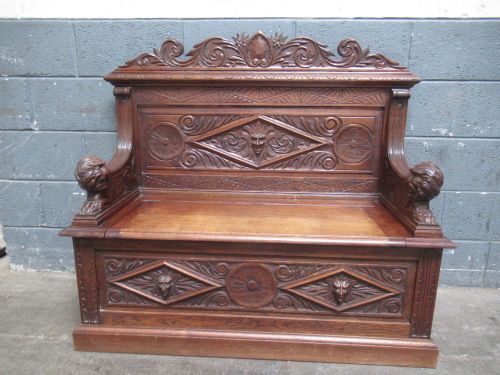
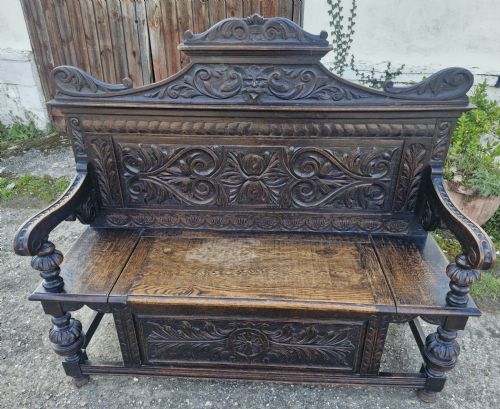
A grinning Green Man peers from the woodwork of multiple hall seats, watching over nineteenth-century coats and boots.
Distinctions in standard
The standard of a victorian gothic settle rests on the ambition of its architectural proportions and the depth of its carved detail. Pieces featuring crisp linenfold panels, figural motifs like the Green Man, and complex tracery represent the upper tier of nineteenth-century workshop production.
Timber selection and structural integrity further divide ordinary utility seating from grander architectural forms. Grain matching in solid oak or burr elm and the preservation of original hinges and lift-up seat mechanisms distinguish pieces intended for prominent reception spaces from basic chapel furnishings.
GIllows
The Victorian Gothic Settle Glossary
- Settle
- A wooden bench with a high back, solid arms, and frequently a box seat beneath the cushion area. This form provided shelter from draughts in large medieval and revival halls.
- Gothic revival
- An architectural and decorative movement spanning the nineteenth century that revived medieval structural forms, pointed arches, and ornamentation. It heavily influenced domestic furniture design.
- Linenfold
- A style of wood panelling carved in relief to resemble folded parchment or linen. It is a recurring decorative motif on the backs of these benches.
- Green Man
- A sculptural motif depicting a human face surrounded by or sprouting from foliage. It appears frequently as a carved detail on nineteenth-century oak woodwork.
- Monks bench
- A convertible furniture form that functions as a table with a tipping back that folds down over the seat. Many revival examples share stylistic roots with the settle.
Victorian Gothic Settle: Frequently Asked Questions
Where were these benches originally placed?
These seating forms were primarily positioned in grand entrance halls, corridors, and reception rooms to provide impressive initial seating for visitors. Ecclesiastical variants originated in churches, chapels, and institutional pews.
Domestic hall settles also served practical purposes, offering concealed storage beneath lift-up seats for garments and walking gear while keeping drafts away from the door.
How do you distinguish a genuine period piece?
Examination of the timber surfaces, tool marks, and joint construction reveals the nineteenth-century origin of these items. Authentic examples display consistent ageing and patination appropriate to oak, pine, and walnut from the eighteen-fifties onwards.
Hardware such as brass hinges and iron fittings should align with the period of manufacture, while joinery methods like pegged mortise and tenon joints confirm traditional workshop practices.
How should a heavy oak bench be maintained?
Solid timber furniture requires stable environmental conditions away from direct heat sources and extreme humidity fluctuations to prevent wood splitting. Regular dusting with a dry cloth preserves the natural wax patination on carved oak and walnut surfaces.
Avoid modern liquid polishes that can build up a residue in deep relief carvings like linenfold panels or Green Man motifs, preferring traditional beeswax where nourishment is needed.