
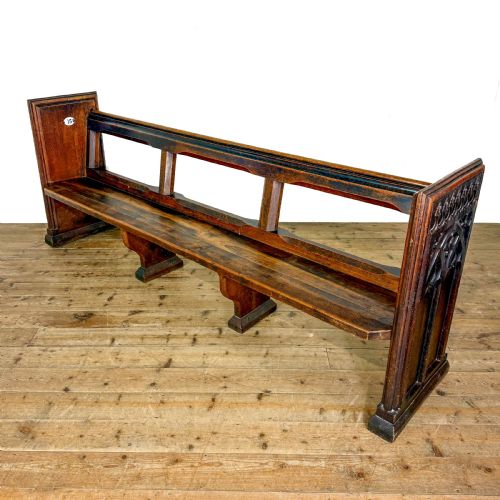


Victorian Gothic Pew
These robust victorian gothic pew designs bring ecclesiastical gravity into domestic halls.
Victorian Gothic Pew
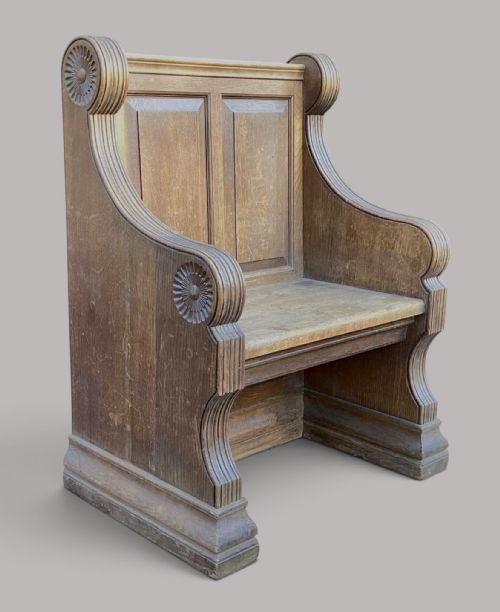
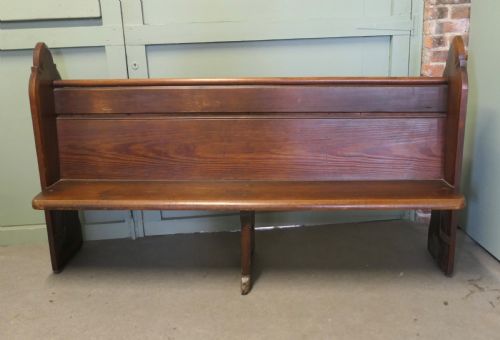
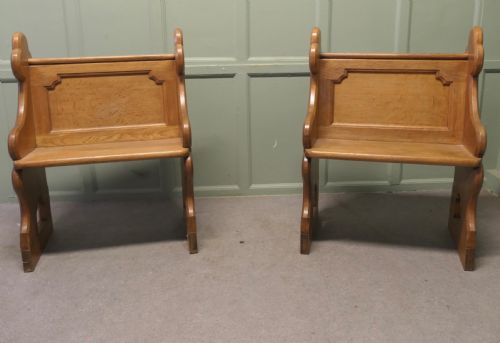
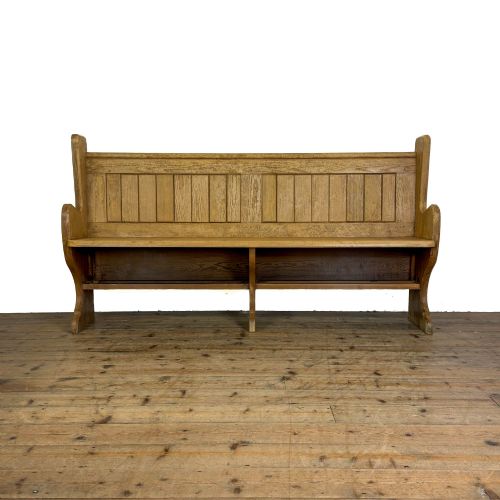
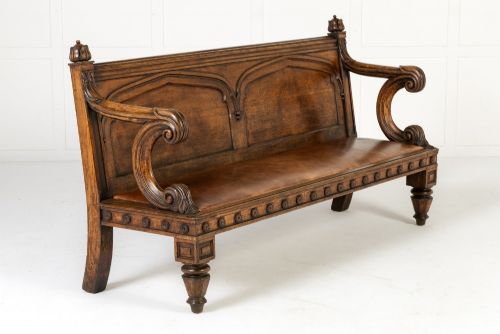
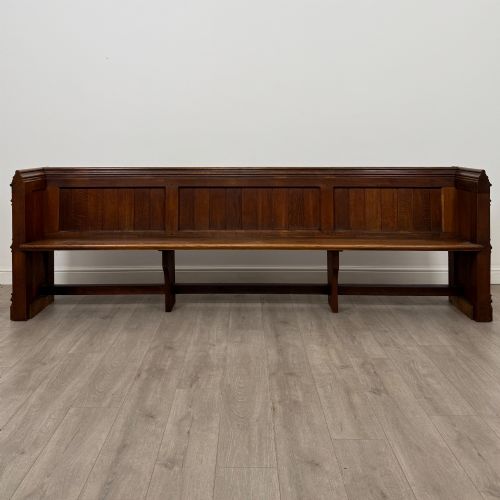
A victorian gothic pew is a long wooden bench originally built for ecclesiastical spaces such as churches and chapels. These pieces bridge the gap between religious architecture and domestic seating, taking forms that range from simple chapel benches to large carved hall seats.
You are most likely to meet solid oak and pitch pine examples from the nineteenth century on this page. They frequently display architectural characteristics like pointed arches, panelled backs, and decorative ends derived from the gothic revival movement.
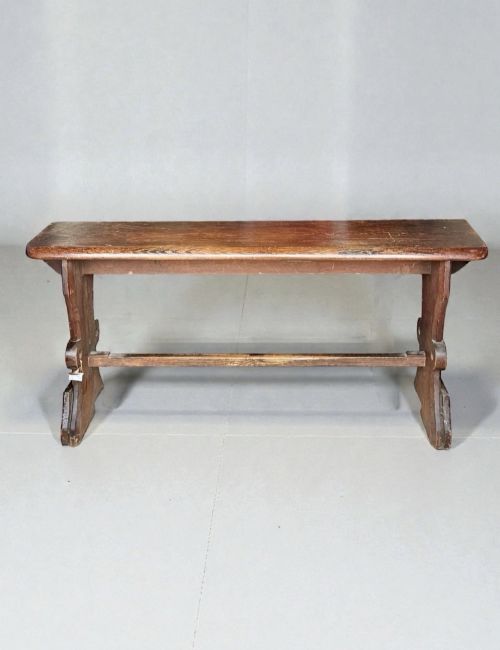
Beyond standard church pews, the selection encompasses related items like organist benches, hall benches, and architectural panels or pew fronts. Their substantial proportions make them well suited for placement in large hallways, libraries, and country houses.
Materials and construction
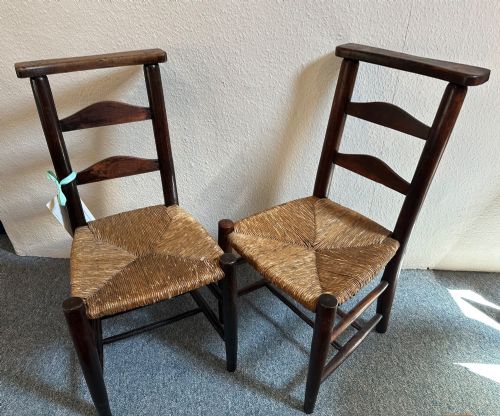
Makers relied principally on dense, durable timbers such as oak, pitch pine, and standard pine to construct these robust seats. Elm and rush also appear occasionally in country house and side chair variations, while brass surfaces on barleytwist pew end rails provide metallic contrast.
Construction methods emphasise structural strength through solid timber framing, pegged joints, and carved architectural details. Craftsmen utilised straightforward joinery to support heavy daily use in ecclesiastical settings, frequently incorporating raised panelling and decorative pew ends.
Architectural elements range from plain chapel benches to carved pew fronts and barleytwist rails.
What separates the best from the rest
Quality in a victorian gothic pew rests primarily upon the selection of timber and the ambition of its architectural carving. Dense, richly grained oak commands higher regard than plain pine, particularly when enhanced by sophisticated tracery or specific provenance.
The integrity of the structural joinery and the survival of original decorative ends also determine the standing of a piece. Examples bearing specific marks or originating from notable architectural commissions demonstrate superior craftsmanship compared to standard utilitarian seating.
The Victorian Gothic Pew Glossary
- Pew end
- The visible vertical panel at the end of a bench, often heavily carved with gothic tracery or architectural motifs. These elements define the visual character of the seating row.
- Gothic Revival
- An architectural and design movement from the nineteenth century drawing inspiration from medieval forms. It manifests in pointed arches, trefoils, and heavy vertical lines.
- Barleytwist
- A spiral turning technique applied to wooden supports or brass rails. This decorative detail adds movement and texture to structural components.
- Tracery
- Openwork stonework ornamentation translated into wood carving on panels and backs. It mimics the intricate patterns found in gothic church windows.
Victorian Gothic Pew: Frequently Asked Questions
Where do these pews fit at home?
These long benches suit large entrance halls, long corridors, or large dining tables where substantial seating is required. Their narrow profile allows them to sit flush against walls without dominating the floor space.
Positioning one in a boot room or library introduces a strong architectural anchor to the room. The linear form works particularly well beneath tall windows or picture rails.
How do I spot pitch pine?
Pitch pine displays a strong, highly figured grain pattern with warm amber tones and distinct resin streaks. The timber feels exceptionally heavy and dense to the touch.
Over time, exposure to light deepens the colour of the wood significantly. This distinguishes it from softer, paler varieties of standard pine found in simpler furniture.
Are these benches comfortable to use?
Original church pews feature upright wooden backs and solid seats designed for formal posture rather than lounging. They were built for communal gatherings and service attendance rather than relaxation.
Many owners soften the seat using loose squab cushions or sheepskins. This adaptation makes them practical for daily domestic seating in hallways or kitchens.
How do I date a gothic pew?
Dating relies on examining the timber species, tool marks, and specific gothic revival stylistic markers. Nineteenth-century examples often combine machine-sawn components with hand-finished carving.
Clues also lie in the construction hardware and whether the piece shows ecclesiastical wear patterns. Pieces connected to specific church commissions sometimes carry documentary marks.