

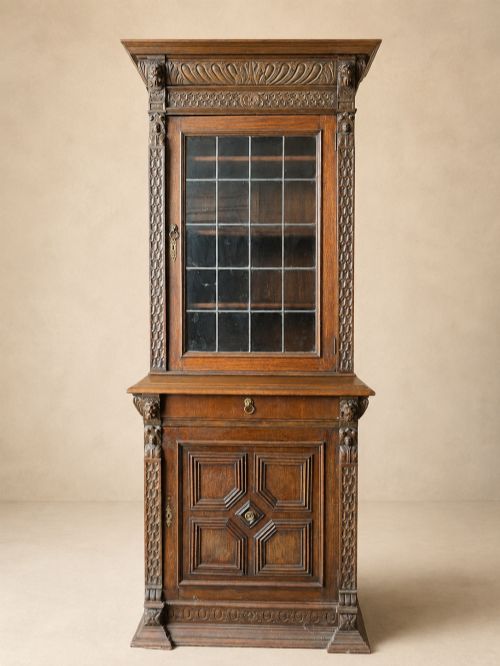
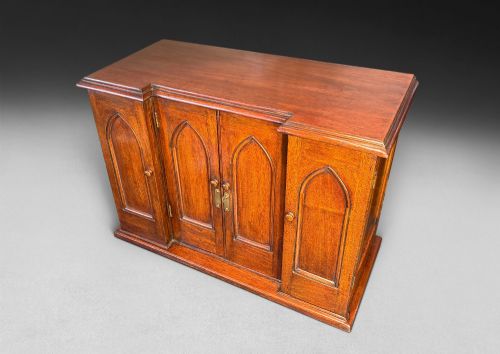
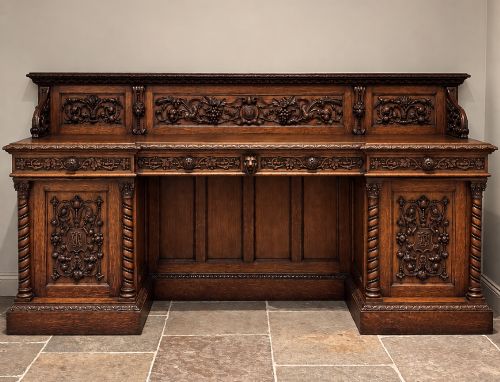

Victorian Gothic Oak Cupboard
These nineteenth-century victorian gothic oak cupboards bring architectural presence and heavy timber storage into a room.
Victorian Gothic Oak Cupboard
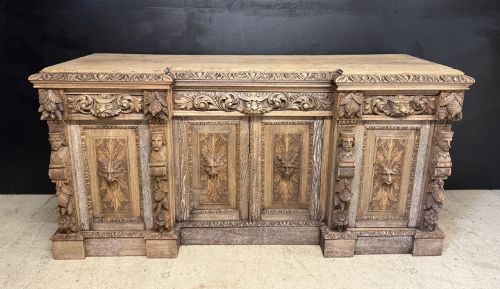
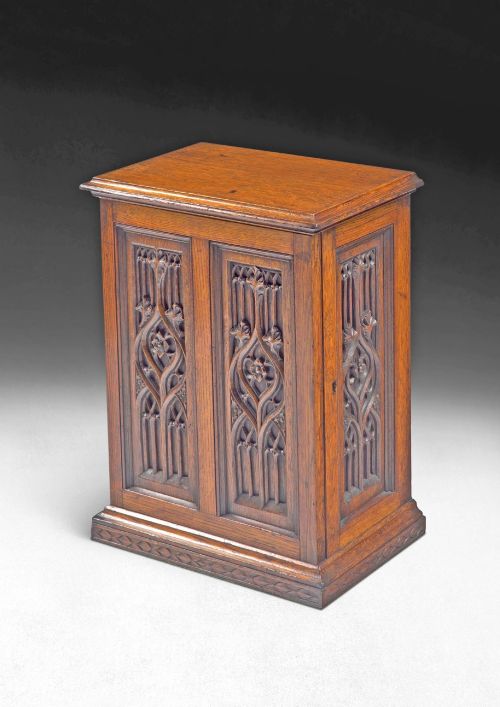
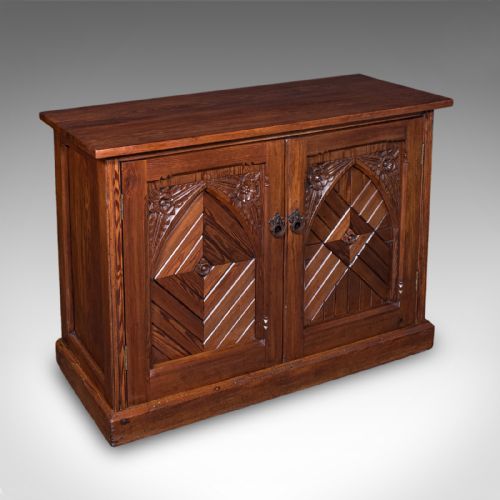
A victorian gothic oak cupboard represents the nineteenth-century revival of medieval architectural motifs applied to domestic storage furniture. Buyers search for these pieces to anchor a room with heavy timber construction, pointed arches, and deep relief carving.
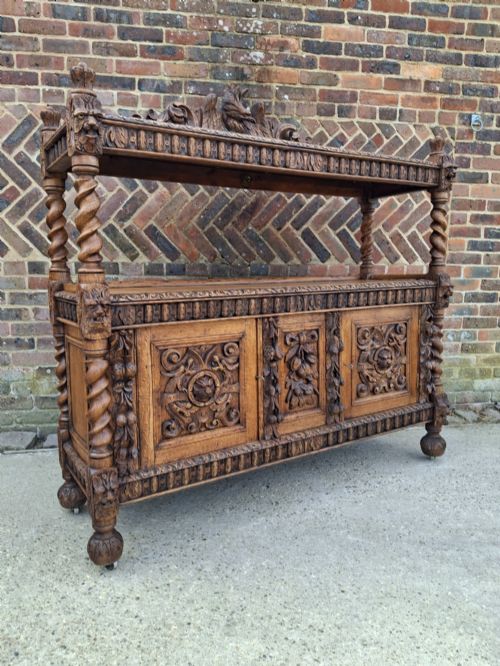
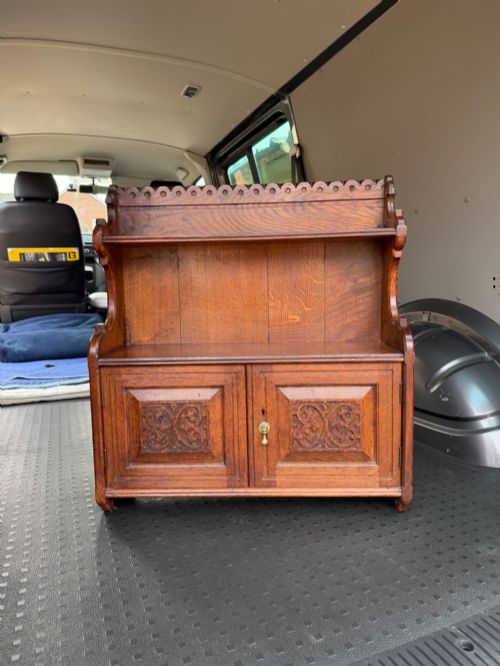
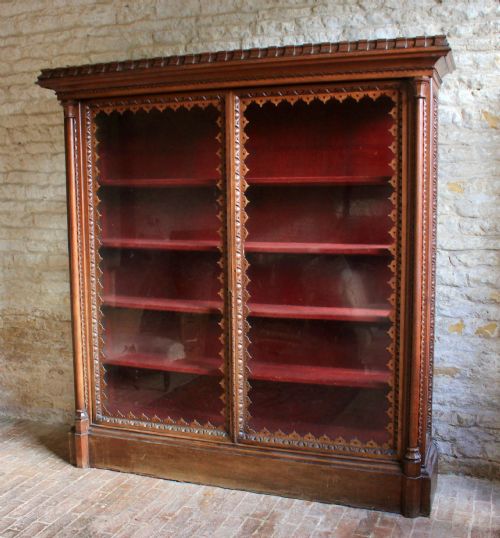
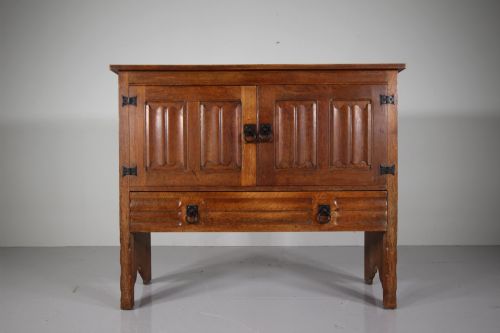
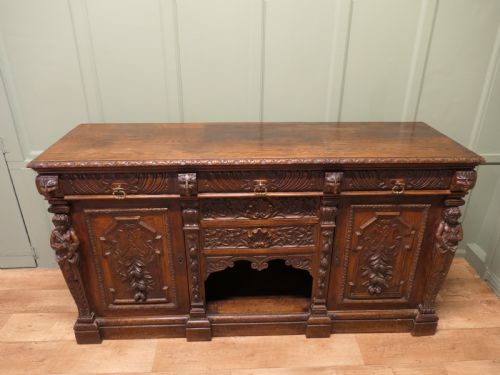
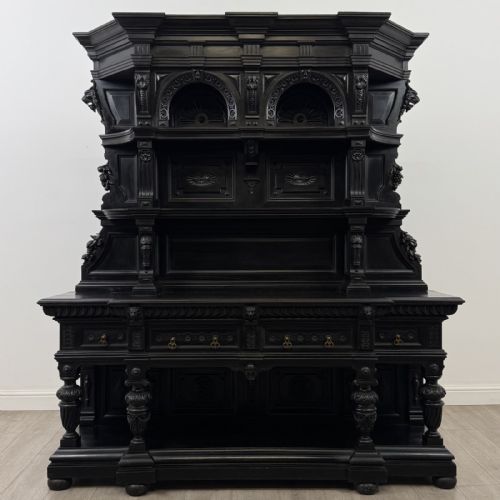
The pieces on this page span from compact table-top collectors' cabinets and bedside chests to large sideboards, bookcase combinations, and hall cupboards. Most items date from the mid to late nineteenth century, reflecting the peak of the Gothic Revival and related aesthetic movements.
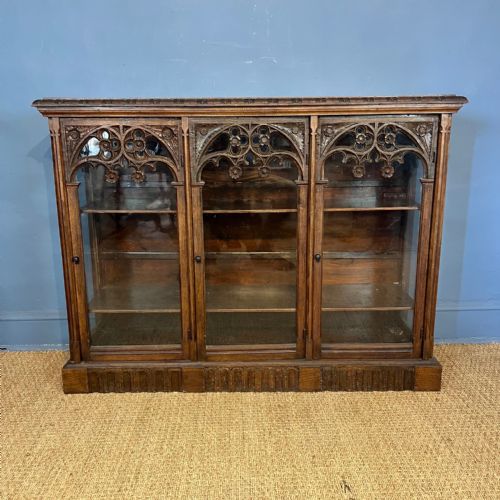
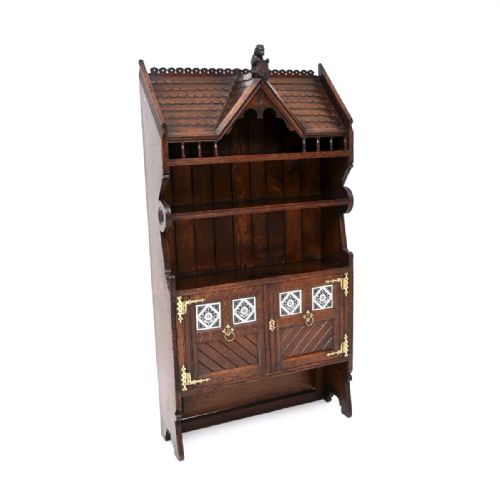
Forms vary widely from tall display cabinets with glazed doors to low dresser bases and corner cupboards. Oak is the primary structural timber, often supplemented by secondary woods like pine or beech and detailed with brass or iron hardware.
Materials and Construction Techniques
Makers built these pieces primarily from solid oak, sometimes utilising pollard oak or ebonised hardwood to create tonal contrast in panel work and mouldings. Timber was selected for durability and grain pattern, then joined using traditional framing methods to support heavy architectural cornices and carved doors.
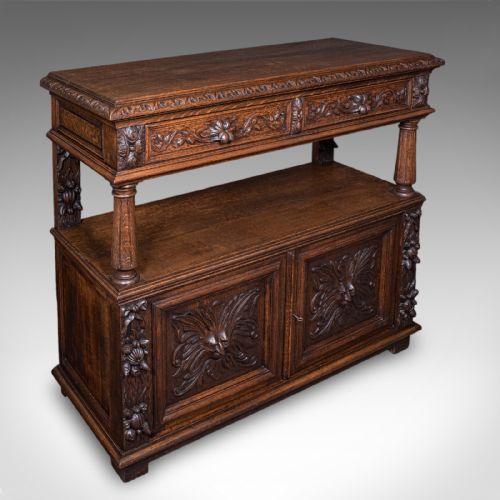
Carving defines the surface work, executed in deep relief to render motifs such as Green Man masks, lion heads, and foliate tracery. Glazed sections incorporate lead and glass within wooden lattices, while hardware relies on cast brass and iron hinges, lock plates, and handles.
Victorian Gothic Oak Cupboard Retail Price Guide 2026
Typical asking prices for victorian gothic oak cupboard among the pieces listed under this phrase on Sellingantiques today, from the lower quarter to the upper quarter. They describe what is for sale here now, not the wider market.
Listings feature oak combined with ebonised wood, brass, iron, and lead across Victorian and aesthetic movement periods.
Distinctions in Craftsmanship
Quality rests in the crispness of the timber carving and the architectural ambition of the design. Pieces with sharply defined Green Man masks, geometric tracery, and well-balanced proportions stand apart from simpler vernacular items.
Construction depth also separates standard utility pieces from exhibition-grade work, seen in thick panelled doors, secondary timbers of high grade, and integrated brass or iron fittings that complement the gothic scheme.
John Moyr Smith
The Victorian Gothic Oak Cupboard Glossary
- Gothic Revival
- An architectural and decorative style drawing inspiration from medieval design, featuring pointed arches, trefoils, and heavy massing.
- Green Man
- A sculptural motif depicting a human face carved with leaves, branches, or vines sprouting from the mouth, common in nineteenth-century oak furniture.
- Pollard Oak
- Timber taken from trees that were pollarded, resulting in a dense, highly figured grain pattern prized for decorative cabinet fronts.
- Ebonised Wood
- Timber treated with a chemical stain or pigment to imitate ebony, used to create dark framing or contrasting details.
- Tracery
- Architectural stonework-style ornamentation translated into woodwork, forming openwork patterns on cabinet doors or panels.
Victorian Gothic Oak Cupboard: Frequently Asked Questions
What rooms suit a gothic oak cupboard?
These substantial cupboards work well in reception halls, dining rooms, and studies where heavy timber and dark finishes balance high ceilings and stone or plaster walls.
Smaller variants like bedside chests or wall-hung corner cabinets adapt easily to tighter spaces without losing their architectural character.
How do I care for nineteenth-century oak furniture?
Maintain the timber by keeping pieces away from direct heat sources and sudden humidity shifts that can cause splitting in old oak panels.
Apply a traditional beeswax polish occasionally to nourish the grain and protect the carved surface from drying out.
How do I date a gothic revival cabinet?
Examine the construction methods, backboards, and secondary timbers like pine or beech behind the main oak structure to understand the period of manufacture.
Stylistic cues such as Aesthetic Movement influences or specific carved motifs often narrow the date down within the nineteenth century.
Are these cupboards suitable for daily storage?
The deep shelves and sturdy frame construction make these cabinets practical for storing books, tableware, or linens in a modern home.
Internal configurations vary by form, ranging from open display shelves to enclosed cupboard spaces with original locks.