
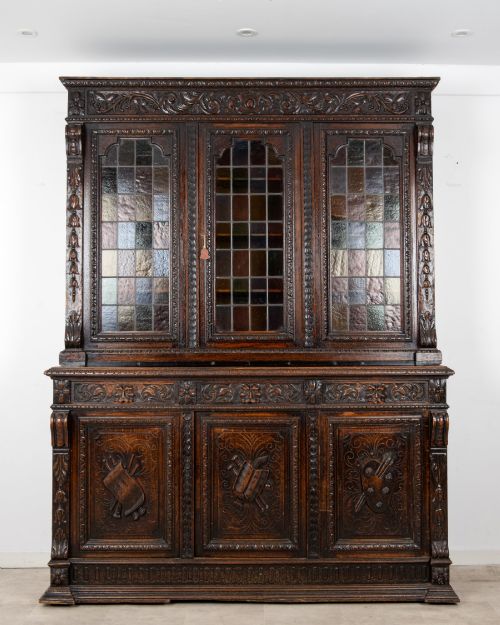
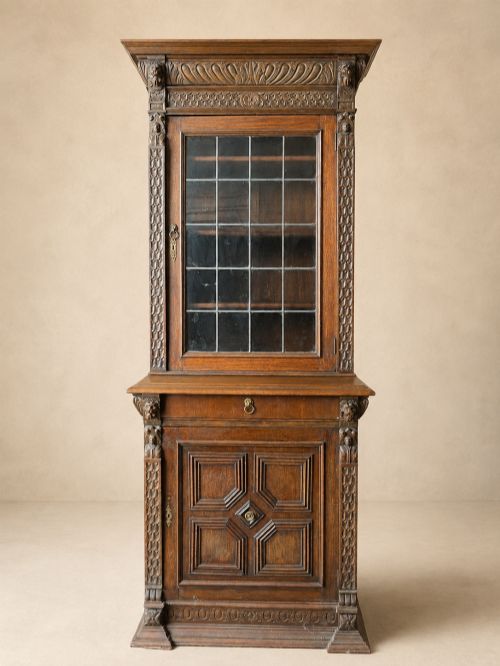
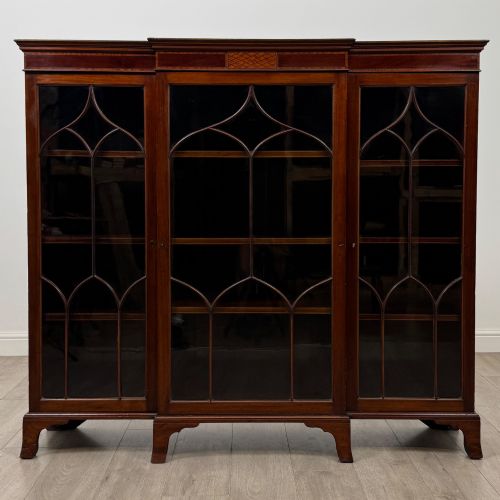
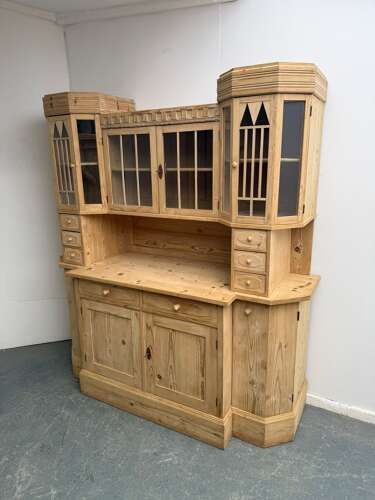
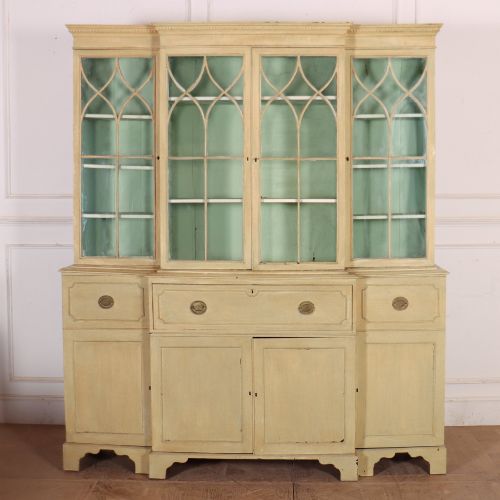
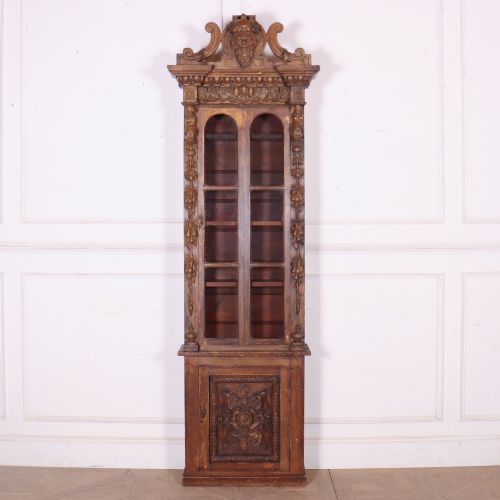


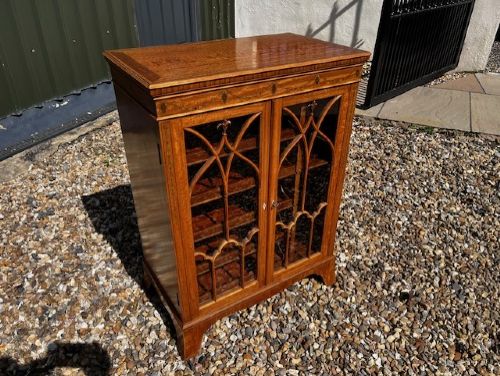


Victorian Gothic Glazed Cabinet
A victorian gothic glazed cabinet brings architectural drama and glass-fronted display into a room, uniting nineteenth-century revival design with practical storage.
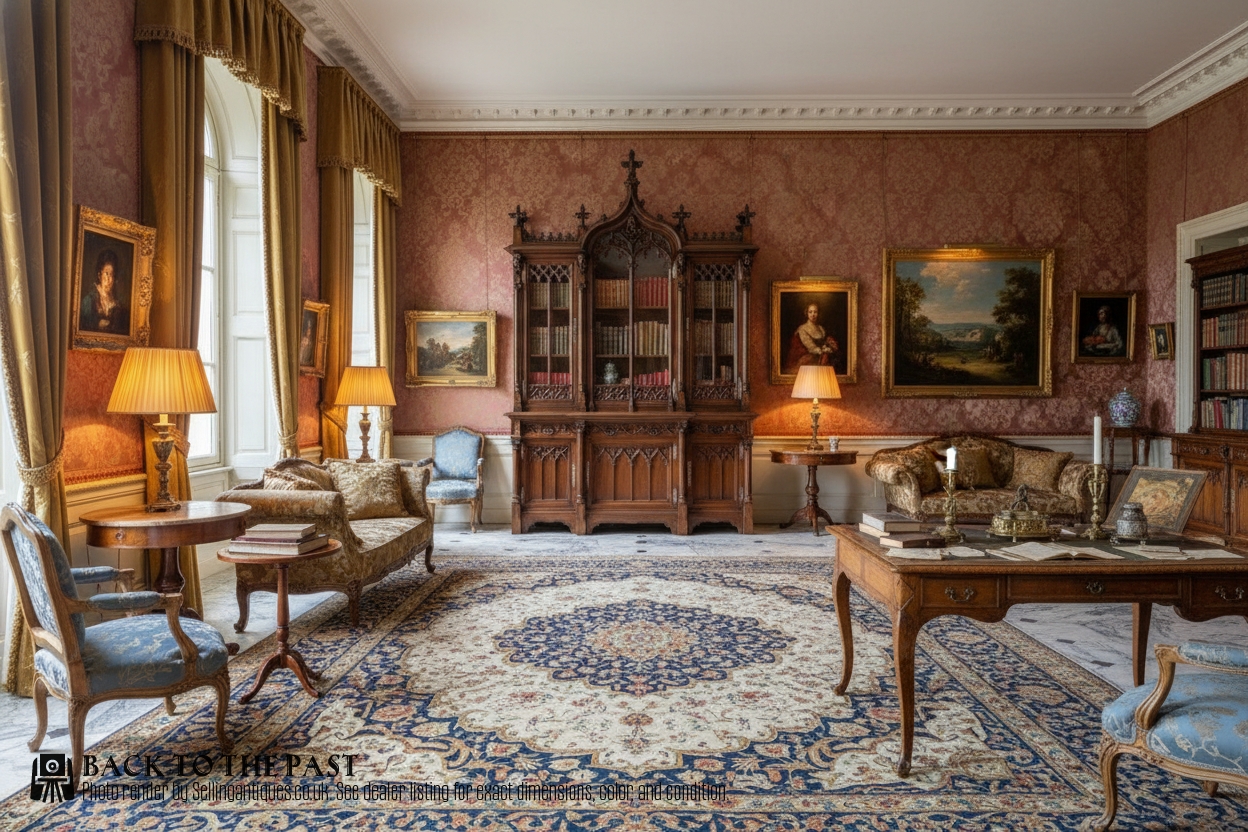
Victorian Gothic Glazed Cabinet
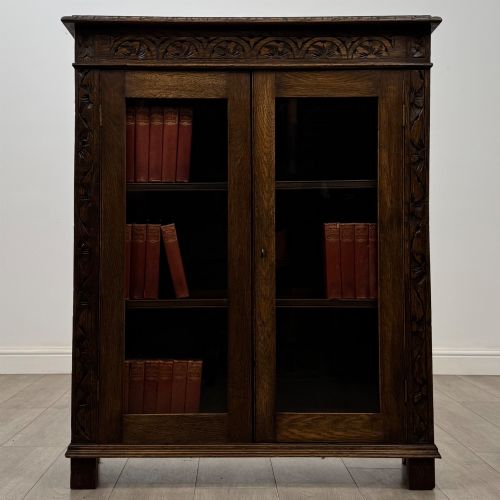
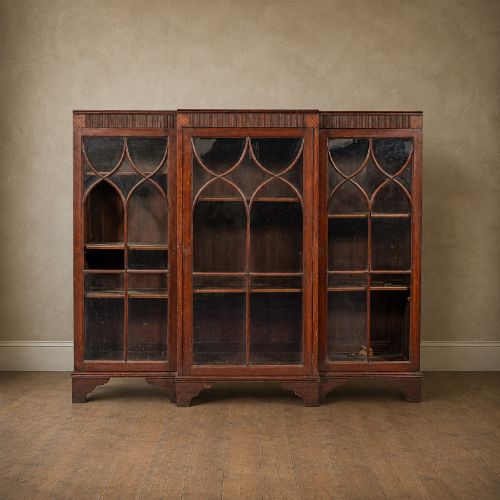
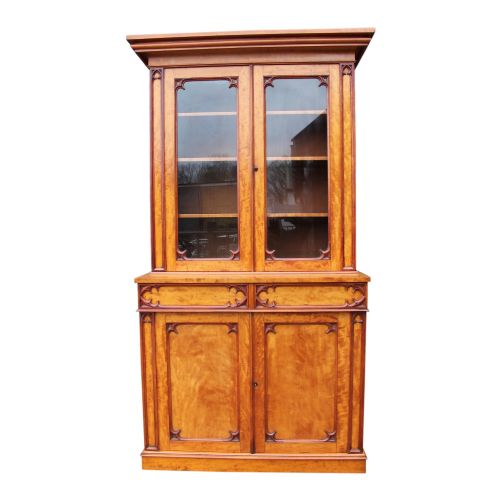
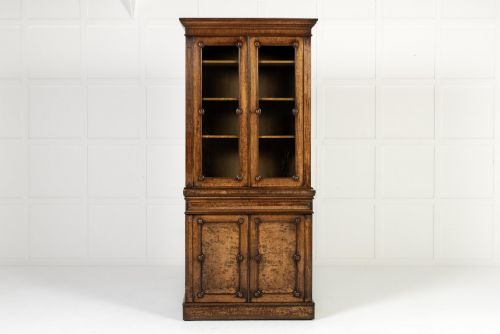
A victorian gothic glazed cabinet combines nineteenth-century revival aesthetics with functional storage, taking forms such as bookcases, display cabinets, and breakfront bookcases.
The pieces on this page span the Victorian era and the broader nineteenth century, frequently showing Gothic Revival, Renaissance Revival, and Arts and Crafts influences.
Makers and workshops of the period utilised various formats, from slim single-door cupboards to monumental breakfront libraries housing books and curiosities.
What varies in quality
Quality rests in the depth and crispness of the carved architectural details, the selection of timber grain, and the proportional harmony of the cornice and base.
Superior examples demonstrate careful joinery in large breakfront structures and refined integration of specialised glass or brass panels.
Object forms span bookcases, display cabinets, breakfronts, kitchen dressers, and secretaire bookcases.
Jas Shoolbred·James Winter And Sons
The Victorian Gothic Glazed Cabinet Glossary
- Breakfront
- A piece of furniture where the central section projects forward from the side sections. This layout creates visual depth in large libraries.
- Gothic Revival
- An architectural and decorative style drawing on medieval forms, pointed arches, and tracery. It defines much nineteenth-century cabinet work.
- Secretaire
- A cabinet incorporating a pull-down writing drawer fitted with small compartments and pigeonholes. It hides a compact desk space behind formal cabinetry.
- Marquetry
- The art of applying small pieces of veneer to a structure to form decorative patterns. Craftsmen use varied woods to create pictorial designs.
Victorian Gothic Glazed Cabinet: Frequently Asked Questions
What is a victorian gothic glazed cabinet used for?
These pieces function primarily to store and display books, ceramics, and collections behind protective glass doors.
They also serve as architectural anchor points in a room, bringing nineteenth-century character to domestic interiors.
How do I identify a gothic revival piece?
Look for pointed arch motifs, cusping, heavy carved oak or walnut timber, and architectural cornices referencing medieval buildings.
Many examples also incorporate leaded glass or specialised brass hardware typical of nineteenth-century revivalism.
Are these cabinets made of solid wood?
The listings show construction in various timbers including oak, mahogany, walnut, satinwood, and pine. Cabinetmakers selected these woods for both structural stability and decorative grain pattern.
Secondary woods often appear inside drawers and on unexposed backing panels.
What woods are common in these cabinets?
Oak and mahogany appear frequently across nineteenth-century examples, providing durability for large bookcases and breakfront cabinets.
Walnut, satinwood, and pollard oak also feature, offering distinct grain patterns suited to detailed revival furniture.