

Victorian Gothic Carving
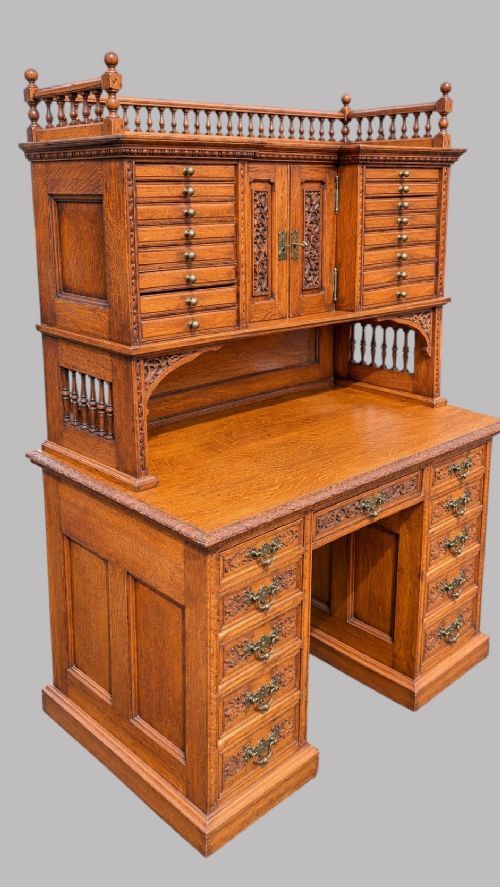
Victorian gothic carving brings together heavy timber and medieval motifs, offering substantial furniture designed to command a room.
Victorian Gothic Carving
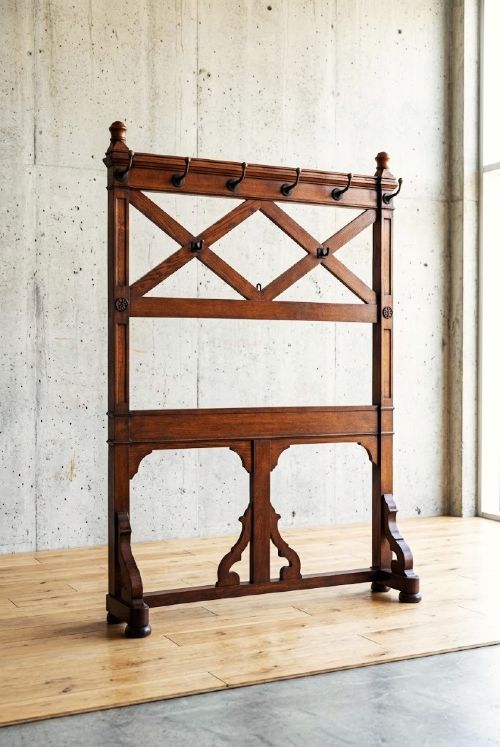
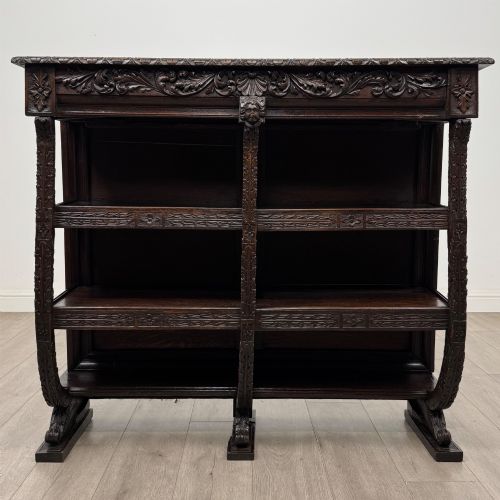
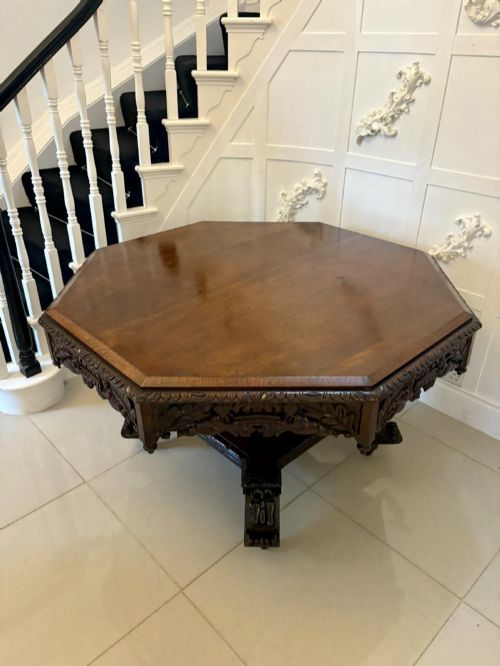
Victorian gothic carving encompasses large furniture forms and architectural fittings created during the nineteenth century under the influence of medieval design. Buyers searching for victorian gothic carving encounter heavy oak sideboards, bookcases, desks, and seating.
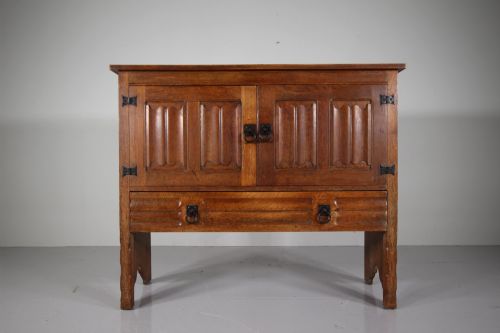
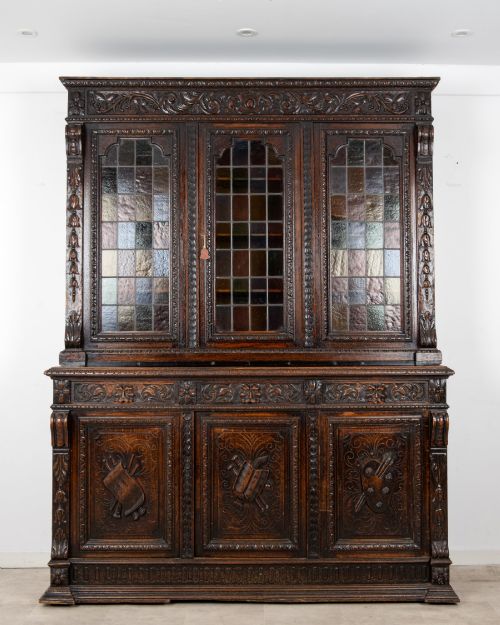
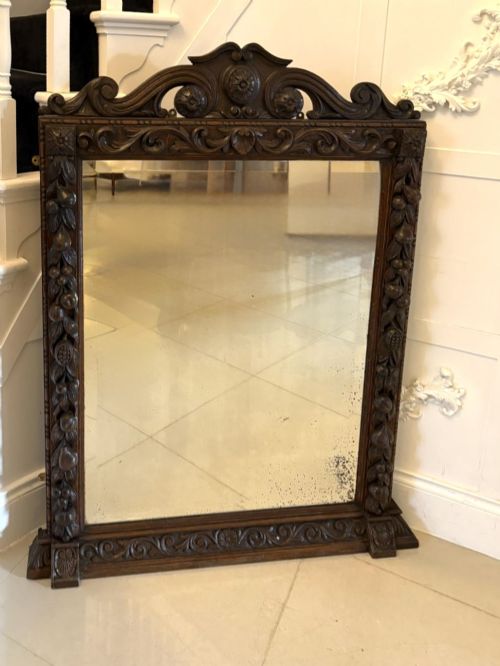
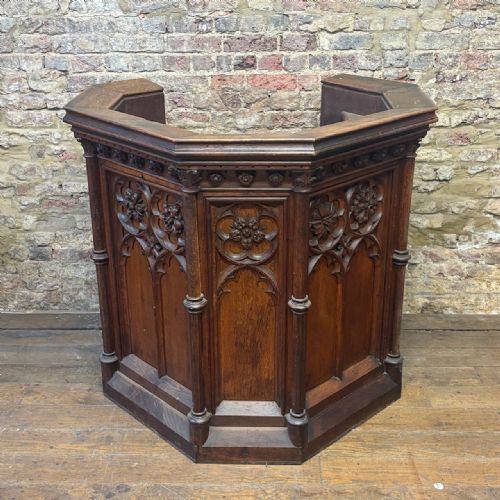
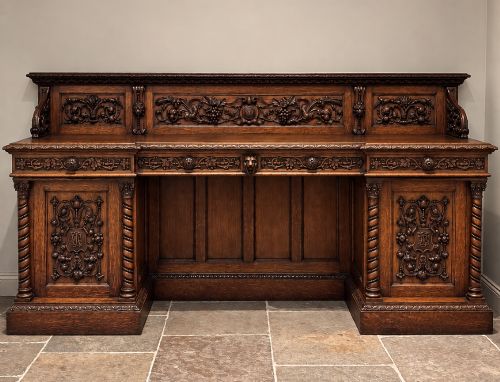
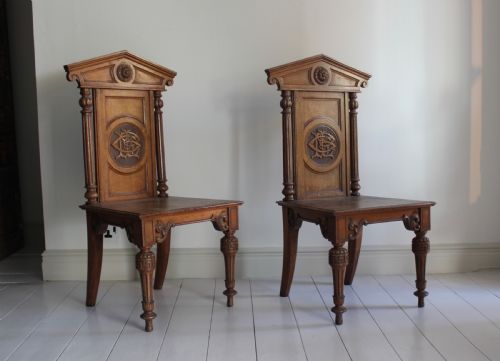
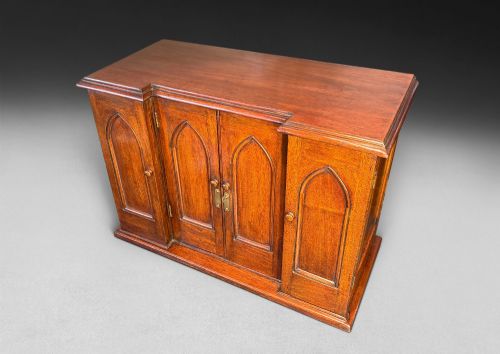
The material record shows a dominance of solid oak shaped into bookcases, hall chairs, and dining suites. Pieces frequently incorporate ecclesiastical elements, such as tracery and linenfold panels, alongside secular domestic utility.
Makers drew on Gothic Revival and Scottish Baronial styles to produce items ranging from small table-top cabinets to monumental sideboards. These works often survive with their original hardware of brass, iron, and glass intact.
How they were made
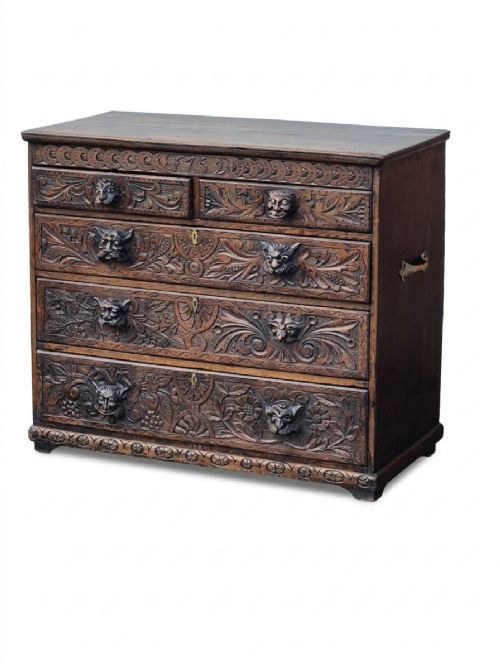
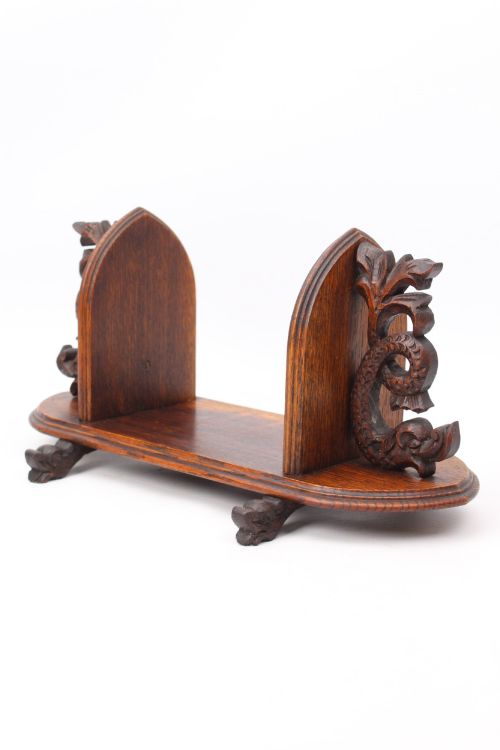
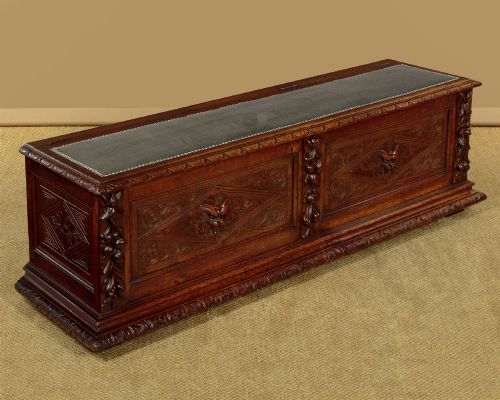
Carpenters utilised solid oak alongside walnut and rosewood, constructing frames with mortise and tenon joints designed to bear heavy architectural ornamentation. Surfaces received deep chisel work to render foliage, heraldic motifs, and grotesque masks.
Secondary materials included embossed leather, stained glass, and lead, integrated into doors, desk inserts, and upholstery panels. Iron and brass hardware provided structural reinforcement and functional handles for heavy drawers and cabinets.
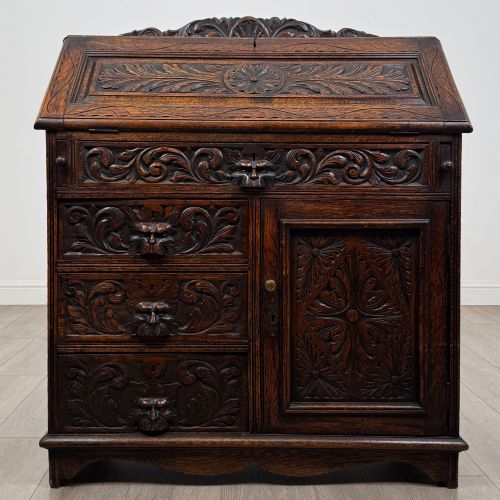
A green man peers out from a drawer front.
What varies in quality
Depth and crispness of the chisel work separate ordinary production from superior examples, where every leaf and contour of a green man or tracery panel retains sharp definition. The weight of the timber and the architectural integration of the design determine the success of the piece.
Proportion and scale dictate the visual impact of large case pieces, with narrow or balanced proportions commanding greater design interest. Original surface finishes and untouched hardware maintain the integrity of the object against later alterations.
Christopher Dresser·George Wadham·W.A. Willcocks
The Victorian Gothic Carving Glossary
- Green Man
- A sculptural head carved from foliage or disgorging vines from its mouth. This motif appears frequently on nineteenth-century oak furniture and architectural woodwork.
- Gothic Revival
- An architectural and decorative style drawing inspiration from medieval forms, pointed arches, and ecclesiastical ornament. It dominated much of the nineteenth-century production seen here.
- Linenfold
- A style of wood panel carving resembling folded parchment or linen. It is commonly found on the doors and panels of cabinets and sideboards.
- Scottish Baronial
- A nineteenth-century revival style incorporating fortified castle architecture into domestic furniture and large seating. Pieces in this manner often display heavy proportions and stern profiles.
- Triple Fusee
- A clock movement driven by three chains or cords connected to fusee cones, maintaining even tension. This mechanism powers complex strike and chime arrangements in bracket clocks.
Victorian Gothic Carving: Frequently Asked Questions
What is victorian gothic carving?
Victorian gothic carving refers to nineteenth-century woodwork influenced by medieval architecture, featuring motifs like pointed arches, tracery, and grotesque masks. Craftsmen applied these deep sculptural details to heavy oak furniture.
Items range from large sideboards and bookcases to hall chairs and church pulpits. The style reflects a broader nineteenth-century fascination with historical forms and ecclesiastical design.
How do I care for antique oak furniture?
Maintain antique oak by keeping pieces away from direct heat sources and sudden temperature shifts. This prevents the heavy timber from drying out or splitting.
Apply a microcrystalline wax periodically to nourish the wood and protect the surface. Avoid liquid polishes that contain silicone, which can penetrate and damage historic finishes.
How are these pieces dated?
Dating relies on construction methods, timber choice, and stylistic markers recorded in nineteenth-century design vocabulary. Cabinetmakers often incorporated dated inscriptions or maker labels into the structure.
Comparative analysis with documented pieces by known designers helps narrow the decade of production. Secondary materials like brass hardware and glass also provide chronological indicators.
Were these pieces used in homes?
Domestic interiors during the Victorian period frequently incorporated gothic revival furniture alongside more conventional Victorian styles. Large sideboards and bookcases served practical storage functions in dining rooms and libraries.
Ecclesiastical forms like prayer desks and hymn boards were also adapted for private devotional use in Victorian households. Hall chairs furnished entrance spaces with imposing architectural presence.