



Victorian Gothic Carvers
Victorian gothic carvers are commanding seating pieces combining medieval architectural motifs with nineteenth-century craftsmanship, built for those seeking dramatic historic character.
Victorian Gothic Carvers
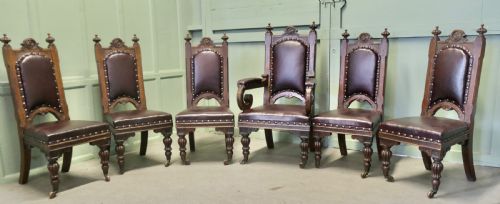
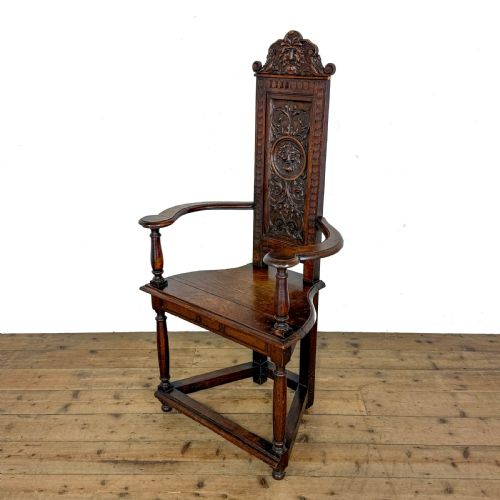
Victorian gothic carvers are substantial armchairs and elbow chairs created during the nineteenth century, drawing heavily on medieval architectural forms. These seating pieces typically function as grand elbow chairs, throne chairs, or desk chairs rather than simple side seating.
The versions most frequently met on this page are carved from oak, often featuring high backs, armorial details, and revival styles such as Jacobean, Jacobethan, and Arts and Crafts. They emerge from periods spanning the mid nineteenth century into the early twentieth century.
Makers such as Lamb of Manchester and designers influenced by Charles Bevan or the Puginesque tradition produced these striking pieces. They serve as focal points in dining rooms, libraries, and halls, offering both utility and architectural presence.
Construction and materials
These carvers rely primarily on solid oak, mahogany, and pitch pine, providing the structural weight necessary for heavy architectural carving. Joinery often incorporates traditional mortise and tenon methods to support the substantial frames and high backs.
Upholstery materials include leather and various fabrics, fastened with brass elements, while some examples utilise cane for seat panels. The surface finishes range from polished oak to golden oak, accentuating the depth of the hand-carved details.
Several armchairs incorporate sturdy brass fittings alongside their deep oak carvings, ensuring they endure centuries of spirited conversations.
Assessing quality and execution
The distinction between standard examples and superior pieces rests upon the depth, crispness, and ambition of the carved ornament. Master carvers executed intricate tracery, linenfold panels, and heraldic motifs with sharp relief, whereas lesser pieces display shallow, mechanical tooling.
Timber selection and structural integrity define the upper tier of these chairs, with dense, figured oak and well-preserved original leather indicating high workshop standards. The harmony between the gothic architectural elements and the ergonomic proportions of the armchair determines overall success.
Lamb Of Manchester·Charles Bevan
The Victorian Gothic Carvers Glossary
- Carver
- An armchair designed to match a set of dining chairs, usually featuring arms and a slightly larger scale. These pieces often sat at the heads of dining tables.
- Gothic Revival
- An architectural and decorative style popular during the nineteenth century that revived medieval forms, pointed arches, and ecclesiastical motifs. This movement heavily influenced furniture design.
- Jacobean Revival
- A design style mimicking the heavy, rectilinear furniture of the early seventeenth century, frequently integrated into Victorian gothic seating. It is characterised by dark oak and turned supports.
- Throne chair
- A high-backed, imposing armchair designed to resemble seat furniture of authority or ecclesiastical office. These pieces often feature extensive carving and architectural canopies.
- Tracery
- Architectural stonework ornamentation adapted for woodwork in gothic design, forming openwork patterns of curved lines. This detail appears frequently on chair backs.
Victorian Gothic Carvers: Frequently Asked Questions
Where did these chairs originally sit?
These imposing chairs typically furnished the principal rooms of nineteenth-century homes, such as libraries, morning rooms, and formal dining halls where their architectural presence commanded attention.
Pairs often flanked fireplaces or served as master seating at dining tables, while singular throne chairs occupied prominent positions in halls.
How do I distinguish revival styles?
Victorian gothic carvers incorporate elements from multiple historical periods, making stylistic identification a matter of examining specific ornamentation. Gothic Revival pieces display pointed arches and ecclesiastical tracery, whereas Jacobean Revival versions favour turned legs and geometric paneling.
Arts and Crafts examples tend to show more honest construction methods with simplified structural lines, while maintaining the heavy timber framework.
Are these chairs comfortable for daily use?
Most of these carvers were built with upright postures in mind, reflecting nineteenth-century seating standards rather than modern lounging comfort. Their generous armrests and solid timber proportions provide sturdy support for desk work or formal dining.
Some variants feature upholstered leather or padded seats which offer a softer sit than solid wood panels.
What timber was preferred?
Oak remains the dominant material found across these listings, valued for its strength and its traditional association with medieval architecture. Mahogany and pitch pine also appear, particularly in pieces influenced by Chippendale revival or later aesthetic movements.
Golden oak finishes are common in Arts and Crafts interpretations, highlighting the natural grain of the wood.