




Victorian Gothic Carved Bench
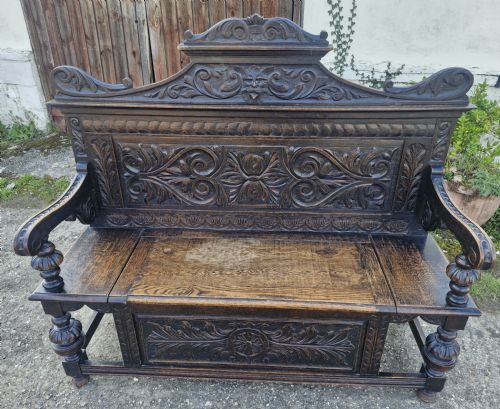
A victorian gothic carved bench brings the solemn architecture of the nineteenth century straight into the hallway with heavy timber and pointed arches.
Victorian Gothic Carved Bench
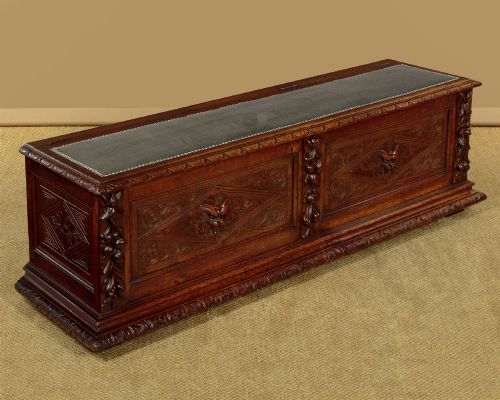
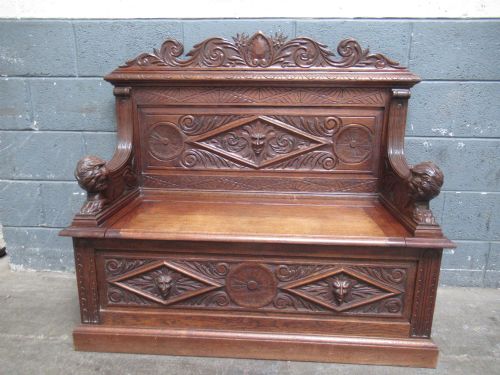
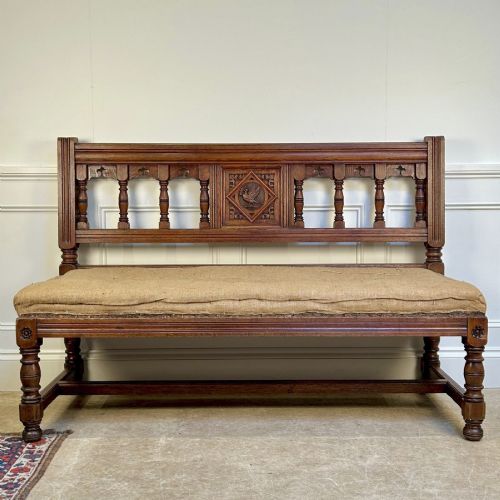
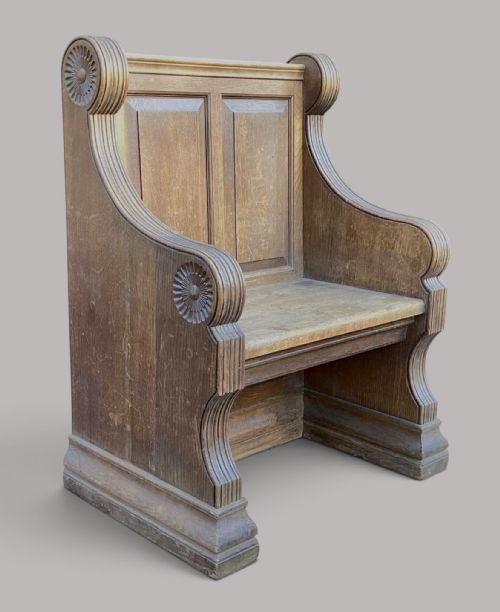
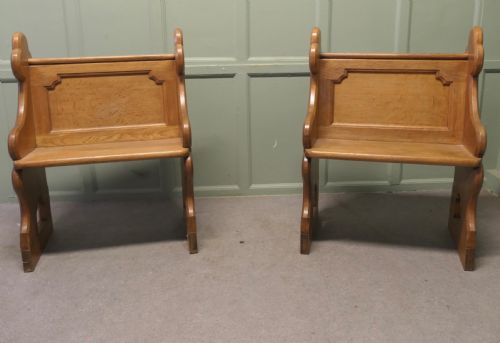
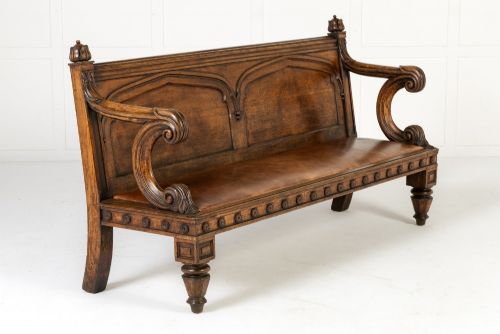
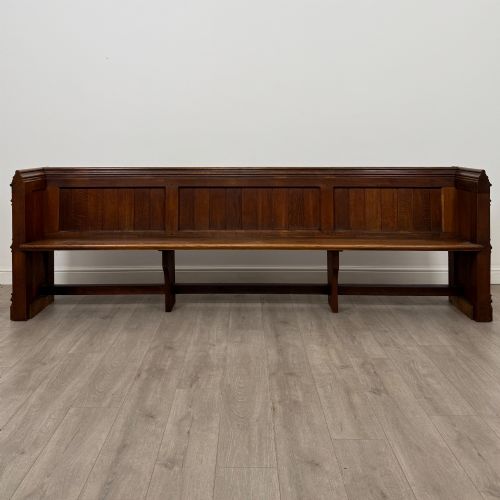
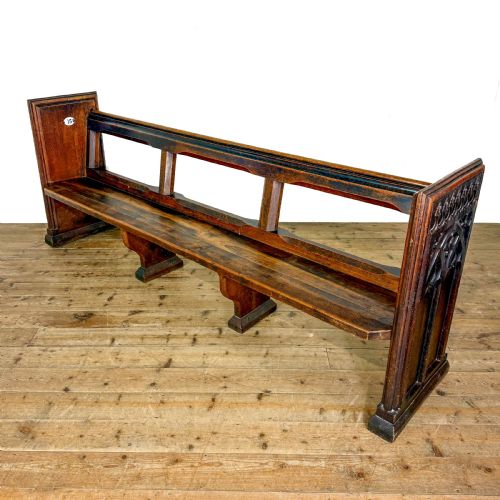
A victorian gothic carved bench typically appears as a solid oak hall seat, settle, or window bench rooted in the nineteenth century. These pieces draw directly from architectural styles such as Gothic Revival and Renaissance Revival, often taking the form of church pews, monks benches with lift-up seats, or architectural settles.
Buyers are most likely to meet heavy oak examples featuring panelled backs, linenfold carving, or grotesque green man motifs. Forms range from compact window seats and footstools to large baronial settles intended for grand reception halls.
Origins trace primarily to English workshops, alongside occasional Scottish and Irish pieces utilising walnut or elm alongside the staple oak. The selection reflects domestic utility merged with ecclesiastical grandeur, spanning the middle and late decades of the victorian era.
Materials and Technique
Makers relied heavily on solid English oak, shaping heavy timbers with traditional mortise and tenon joinery to endure centuries of hallway use. Secondary woods such as elm, pine, and walnut appear alongside iron and brass hardware, while velvet and leather provide upholstery for padded window seats.
Carving defines the aesthetic, executed by hand with deep relief work showing tracery, quatrefoils, and architectural mouldings. Surface finishes range from scrubbed raw timber to dark waxed patinas developed over generations.
Listings span from eighteen-fifty to nineteen-twenty, showcasing oak as the dominant material alongside walnut, iron, and brass.
Evaluating the Pieces
Quality rests principally on the crispness and depth of the timber carving, distinguishing competent vernacular work from master cabinetmaker execution. Heavy architectural proportion and structural integrity without excessive later repairs elevate certain examples above standard utility furniture.
The choice of primary timber also shifts the value, with dense figured oak or contrasting burr elm commanding greater respect than simpler pine or softwood variants. Original untouched hardware and integrated storage mechanisms like shoe compartments or lift seats preserve the integrity of the piece.
GIllows
The Victorian Gothic Carved Bench Glossary
- Settle
- A wooden bench with a high solid back, arms, and often a storage box beneath the seat. This form kept out drafts in unheated nineteenth-century halls.
- Gothic Revival
- An architectural and decorative style drawing inspiration from medieval forms. It utilises pointed arches, trefoils, and heavy structural mass.
- Green Man
- A sculptural motif of a human face disgorged from foliage or vines. This pagan symbol frequently adorns nineteenth-century revival woodwork.
- Linenfold
- A style of wood panel relief carving that imitates vertical folds of draped fabric. It is a hallmark of medieval and revivalist joinery.
- Prie-Dieu
- A devotional desk or chair designed for kneeling during prayer. Victorian examples often incorporate Gothic carved oak and upholstered armrests.
Victorian Gothic Carved Bench: Frequently Asked Questions
How do I distinguish a genuine nineteenth-century piece?
Examine the timber for deep natural patination, hand-cut joinery marks, and appropriate wear consistent with heavy domestic or ecclesiastical use.
Check the construction methods at the joints and underside to confirm period hand tools were used rather than modern machinery.
Did these benches include built-in storage?
Many examples feature lift-up seats opening into deep box compartments or integrated shoe storage beneath the bench.
Monks benches and settles frequently utilised this dual purpose to keep hallways tidy while offering sturdy seating.
How do I care for antique oak wood?
Apply natural beeswax periodically to nourish the dry timber and maintain a soft, protective surface shine.
Keep the wood away from direct heat sources and strong sunlight to prevent splitting and preserve the dark nineteenth-century patina.