
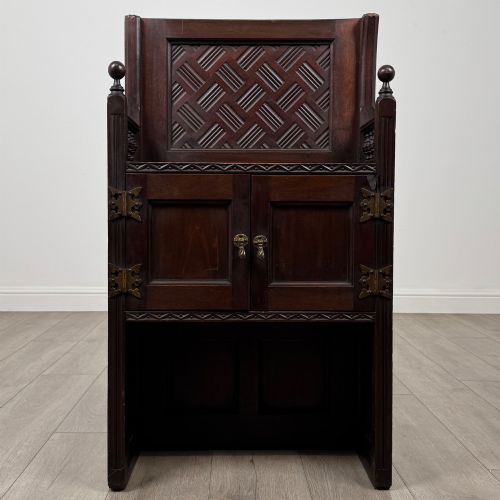
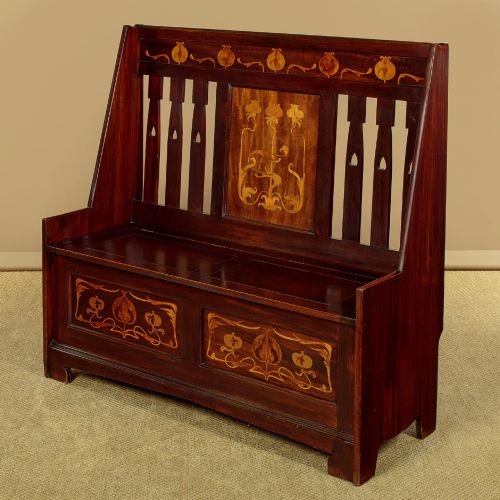
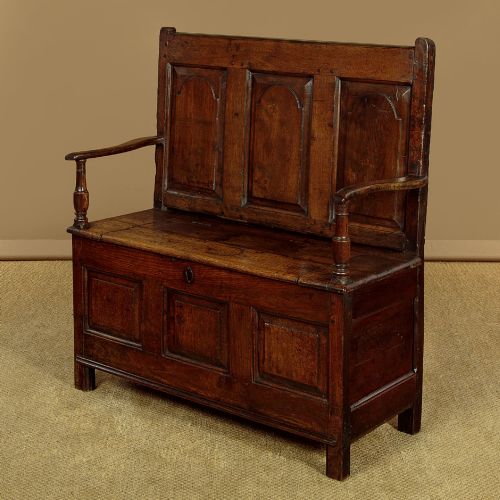
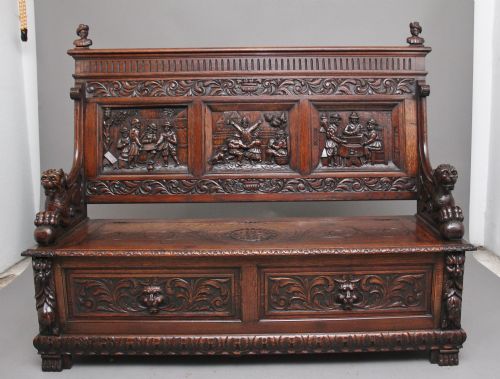


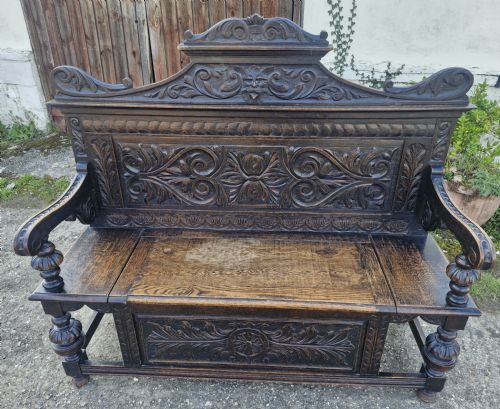


Dark Wood Storage Settle
A dark wood storage settle offers robust seating with hidden compartment space, anchoring an entrance hall with centuries of character.
Dark Wood Storage Settle
A dark wood storage settle combines a high-backed wooden bench with a compartment beneath the seat for keeping belongings. When exploring dark wood storage settle examples, you encounter pieces that function as both hallway seating and practical storage boxes.
The selection on this page ranges from sturdy 17th Century English wainscot designs to carved Victorian Gothic Revival pieces and Edwardian panelled variations. Most examples you meet here are fashioned from dark timber with hinged lift-up lids for everyday utility.
Regional and international varieties appear alongside British workshop output, including Chinese hardwood hall benches, Anglo-Indian box settles, and Italian Lombardy pieces. These diverse origins provide distinct carving motifs and proportions while retaining the core storage bench form.
Materials and construction methods
Cabinetmakers constructed these settles predominantly using solid timbers such as oak, elm, and Brazilian mahogany, occasionally incorporating boxwood inlay for contrast. Artisans joined heavy panels with traditional framing techniques to withstand the rigours of heavy hallway use.
Surface ornamentation relies on deep hand carving, Renaissance Revival motifs, and panelled construction rather than applied veneers. Some specific overseas examples integrate brass decoration or ebonised hardwood to accent the primary dark timber body.
Several examples incorporate mischievous Green Man carvings peering out from the heavy oak panels.
Judging the standard of a settle
The distinction between ordinary and exceptional pieces lies in the crispness of the hand carving and the integrity of the timber selection. Heavy, well-figured oak and richly grained Brazilian mahogany indicate a higher grade of workshop production from the outset.
Proportion and structural balance separate simpler utilitarian items from master-carved examples featuring detailed panels and Green Man motifs. The seamless integration of the lift-up seat mechanism within the historic framework also marks the work of skilled period joiners.
James Shoolbred & Co.
The Dark Wood Storage Settle Glossary
- Settle
- A wooden bench with a high back, solid arms, and a box compartment beneath the seat. This form evolved to keep draughts away from the sitter in medieval and later halls.
- Monks Bench
- A convertible piece of furniture featuring a back that folds down to form a table top over a box base. These versatile items served dual purposes in smaller historical rooms.
- Wainscot
- Timber panelling used on walls or furniture construction, typically featuring pegged mortise and tenon joints. Early settles often adopt this robust panelled construction style.
- Bacon Settle
- An elongated wooden bench incorporating a high panelled back traditionally used for curing and storing meat in rural farmhouses. These regional pieces display distinct utilitarian proportions.
- Renaissance Revival
- A 19th-century design movement that revived classical ornamentation, heavy moulding, and elaborate figural carvings. Pieces in this style borrow heavily from earlier European architectural motifs.
Dark Wood Storage Settle: Frequently Asked Questions
What is a dark wood storage settle?
A dark wood storage settle is a traditional wooden bench featuring a high back and a concealed compartment beneath the hinged seat. These substantial pieces were designed to provide seating while keeping household goods or outer garments tucked away.
Over the centuries, workshops produced them in various regional styles, using durable timbers like oak and mahogany to endure heavy hallway traffic.
How were settle storage boxes used historically?
Historically, families used the integrated box base under the seat to store heavy blankets, winter cloaks, boots, or dry goods. The high back shielded occupants from cold draughts in large, stone-floored hallways.
In agricultural regions, specialised variants even served practical domestic duties related to food preparation and storage.
How do I style a storage settle at home?
Place your settle in an entrance hall or boot room where its high back creates an architectural focal point and the interior compartment conceals daily clutter. Adding a simple linen or wool cushion softens the wooden seat for comfortable daily use.
Allow the dark timber grain to contrast against neutral or light-coloured walls to highlight the historical character of the carving.
How can I tell the period of a settle?
Examine the construction joints, timber selection, and carving style to determine the age of a piece. Earlier 17th and 18th-century examples often display pegged frame-and-panel construction with simpler, hand-cut joinery.
Victorian and Edwardian versions frequently introduce heavier, more elaborate revival carving, machine-assisted elements, or alternative woods like Brazilian mahogany.