


Victorian Gothic Brass Lighting
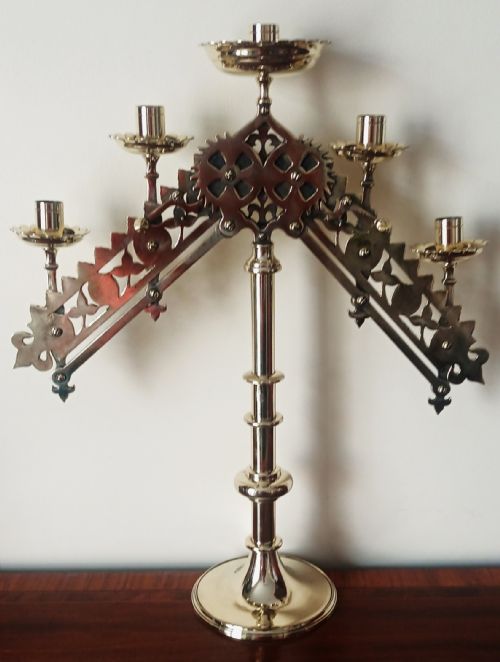
Victorian gothic brass lighting brings heavy ecclesiastical and architectural forms into domestic spaces through enduring metalwork and tinted glass.
Victorian Gothic Brass Lighting
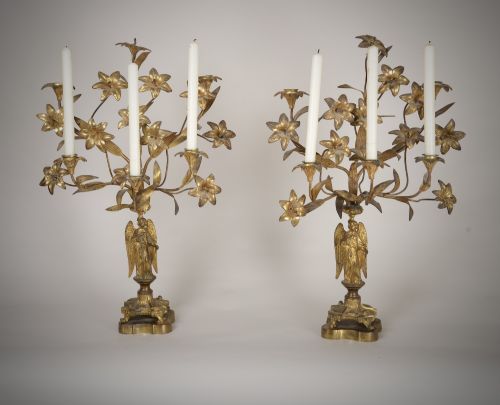
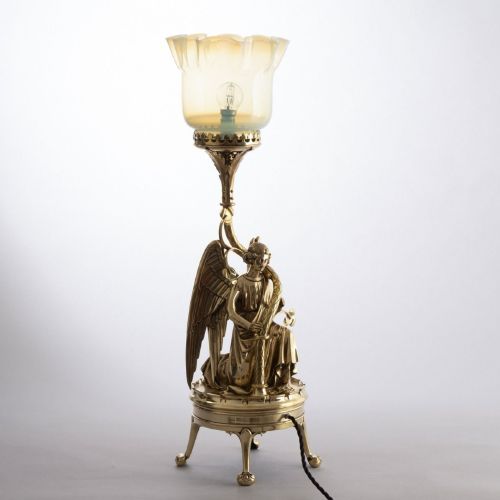
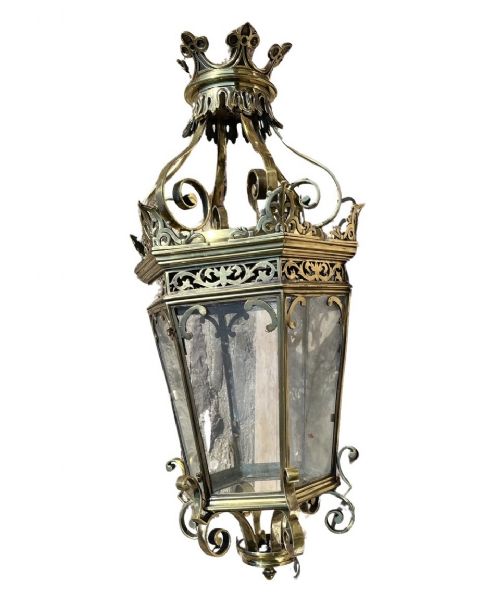
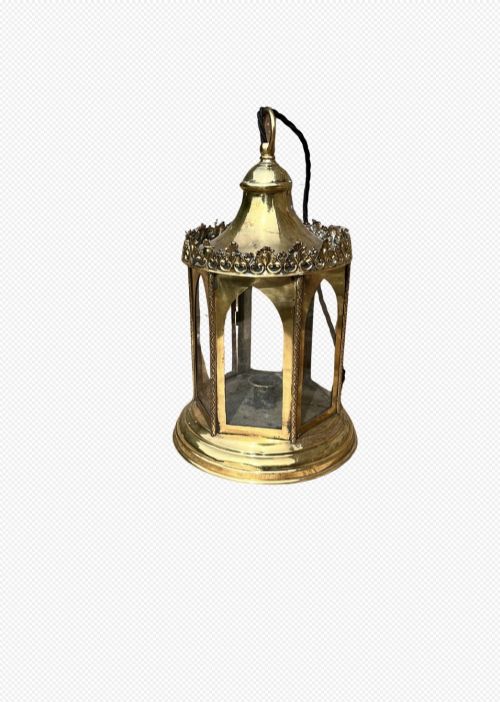
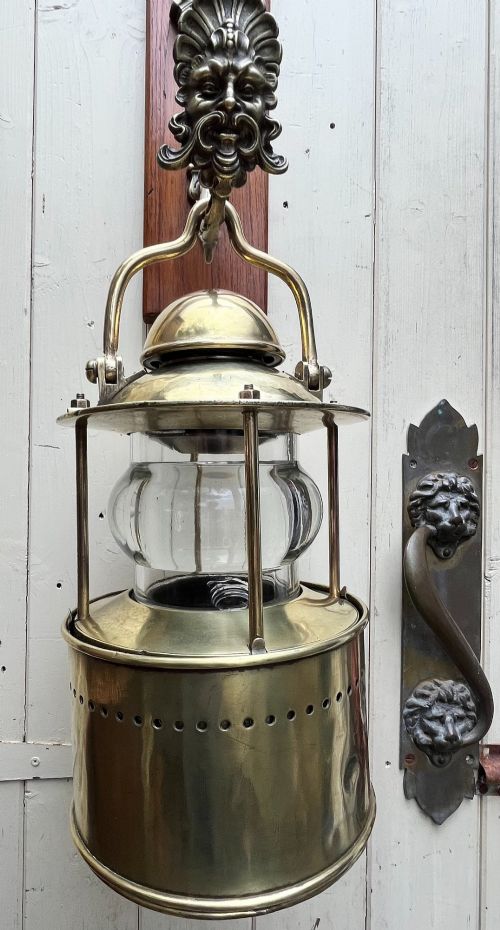
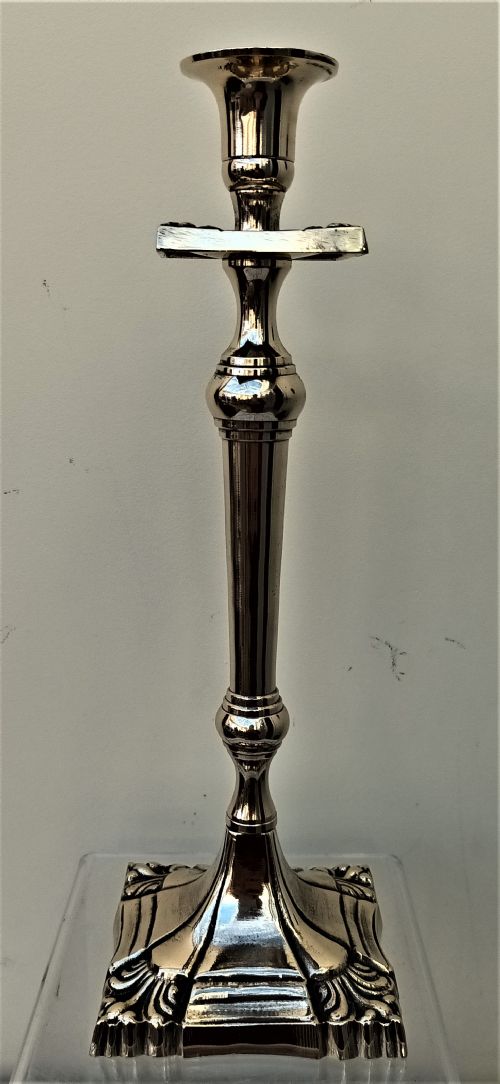
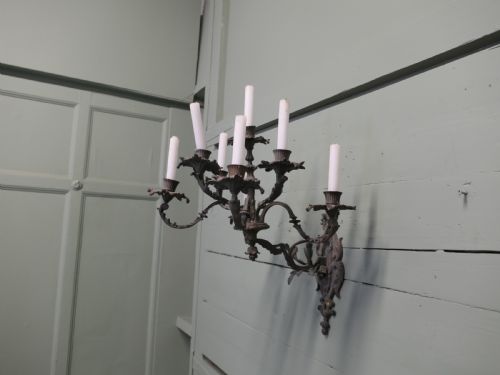
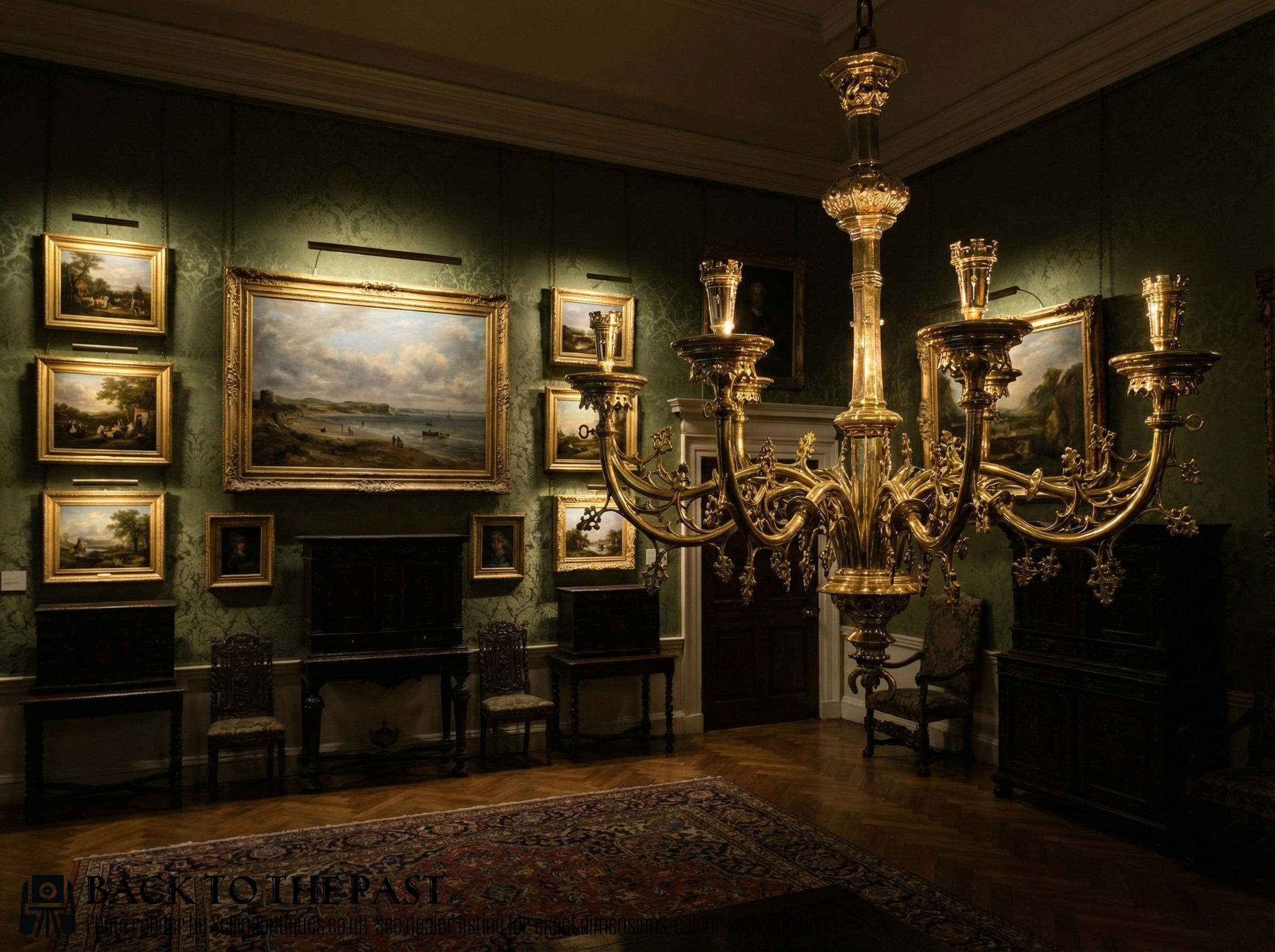
Victorian gothic brass lighting encompasses ecclesiastical church candlesticks, hall lanterns, gasaliers, and multi-branched candelabra originating across the nineteenth century.
Buyers seeking victorian gothic brass lighting most frequently encounter heavy altar sticks, hexagonal leaded glass lanterns, and structural gasoliers shaped by the Gothic Revival and Arts and Crafts movements.
These items transition from candle use to gas and electricity, reflecting the technical changes of the period while retaining mediaeval architectural motifs.
Design and Execution
Quality rests upon the crispness of the cast detailing, where superior examples exhibit sharp architectural tracery rather than soft, smoothed surfaces.
Proportion and scale distinguish finer ecclesiastical pieces and grand chandeliers from domestic adaptations, with heavier gauge metal and more complex branch arrangements commanding attention.
The integration of specialised glass, such as coloured, vaseline, or leaded panes, determines the overall refinement of a lantern or gasolier.
Listings combine cast brass, bronze, and lead with vaseline and opalescent glass across the Victorian and Edwardian periods.
Wm. Tonks & Sons·Dr Christopher Dresser·Joseph Wilmotte
The Victorian Gothic Brass Lighting Glossary
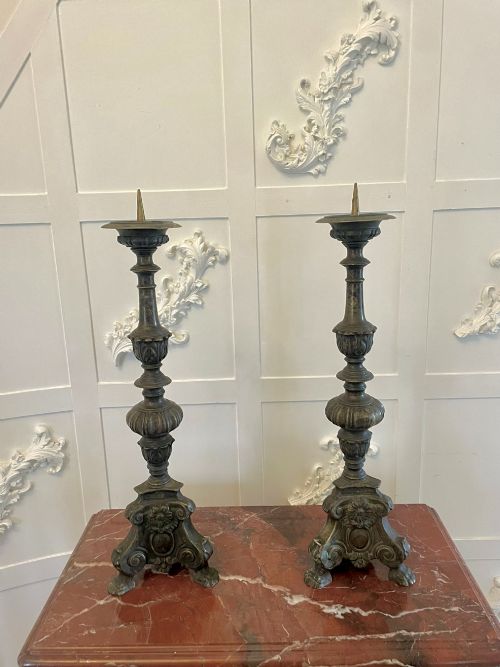
- Pricket candlestick
- A candlestick featuring a sharp central spike designed to hold a wax candle in place. This form is common in ecclesiastical settings.
- Gasolier
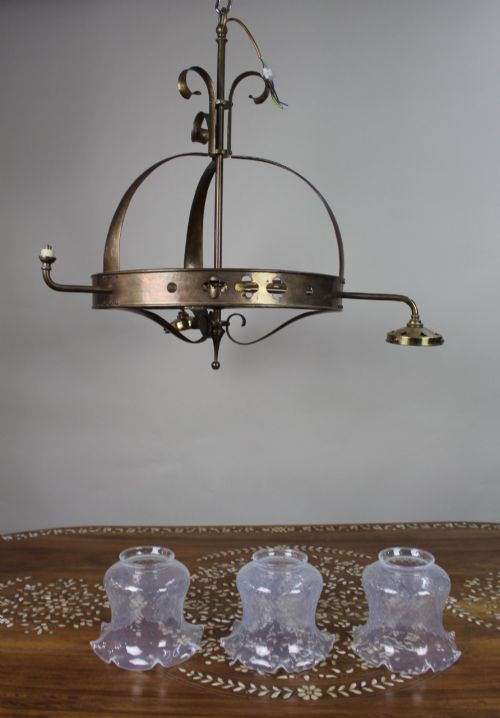
- A branched lighting fixture suspended from the ceiling, designed specifically to burn coal gas. These often feature articulated arms and glass shades.
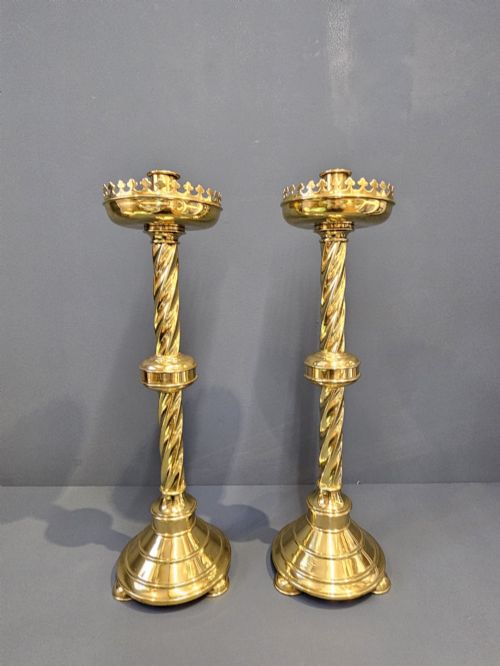
- Altar candlestick
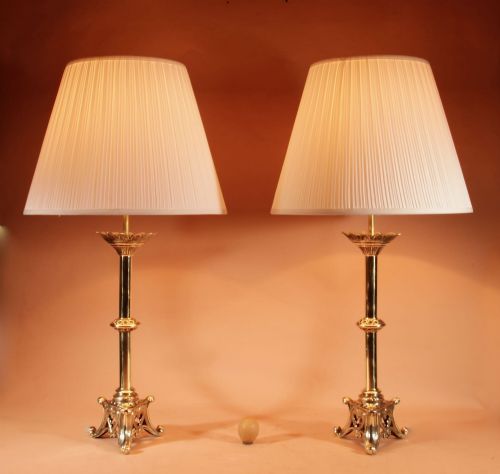
- A tall, heavy candle holder intended for placement on a church altar. They frequently display ecclesiastical motifs and heavy cast brass construction.
- Vaseline glass
- A pale yellow-green glass that contains uranium dioxide and glows brightly under ultraviolet light. It appears in late nineteenth century lighting.
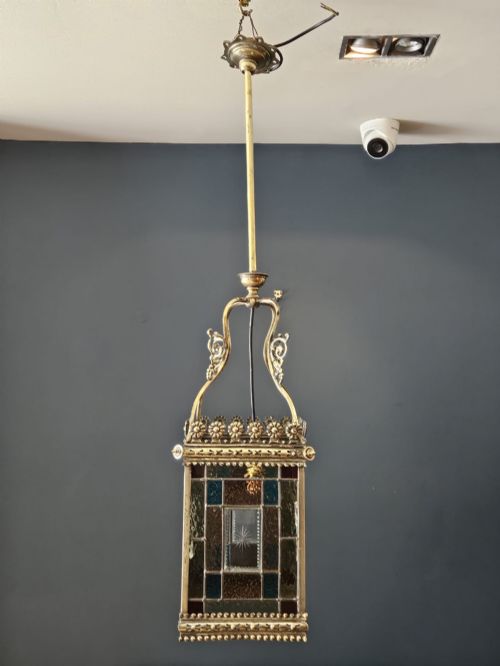
- Lead glass lantern
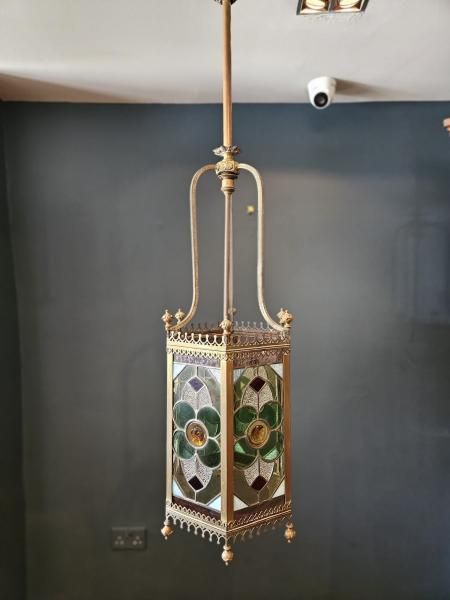
- A hanging light fixture constructed with lead cames holding individual panes of glass together. They often take a hexagonal or square form.
Victorian Gothic Brass Lighting: Frequently Asked Questions
How do I wire a gasolier?
Converting a gasolier for modern electricity requires running internal wiring through the original brass arms and gas paths. Professional rewiring ensures the historic metalwork remains undamaged.
Many pieces retain their original mounting loops and structural integrity, making adaptation straightforward for a qualified electrician working with period fixtures.
What is church lighting doing at home?
Victorian architects and designers brought ecclesiastical forms into domestic interiors during the Gothic Revival. Heavy brass candlesticks and hall lanterns suited the sombre, rich aesthetic of the period.
These pieces offer robust construction and dramatic architectural silhouettes that contrast with lighter domestic furnishings.
How do I clean antique brass?
Antique brass benefits from gentle dusting and the occasional removal of surface grime using a soft cloth. Aggressive polishing strips away the natural dark oxidation accumulated over a century.
Leaving the aged patina intact preserves the historical character and depth of the cast metal surfaces.
Were these electrified originally?
Most pieces began life configured for wax candles or coal gas before subsequent conversion to electricity. Gasoliers and table lamps adapted to changing fuel technologies as infrastructure advanced.
Evidence of original gas keys or pricket spikes indicates the initial method of illumination.