



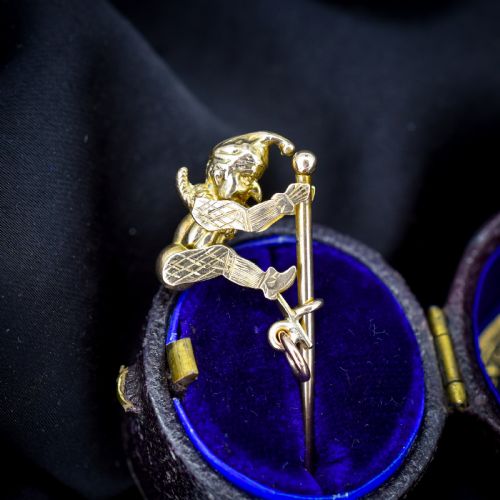
Victorian Gold Fob Pendant
A victorian gold fob pendant is a miniature piece of history once worn on a watch chain, prized today for its intricate carving and weight.
Victorian Gold Fob Pendant
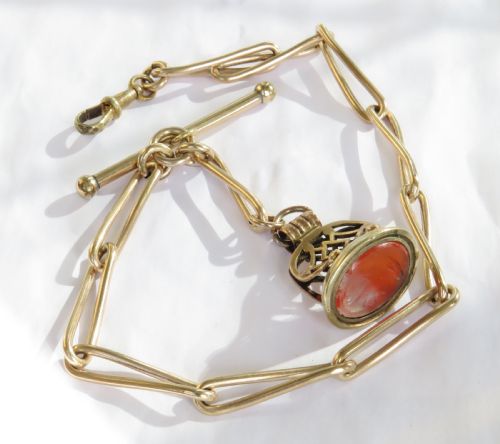
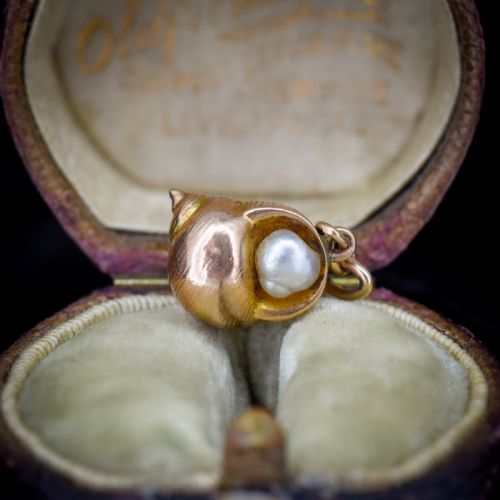
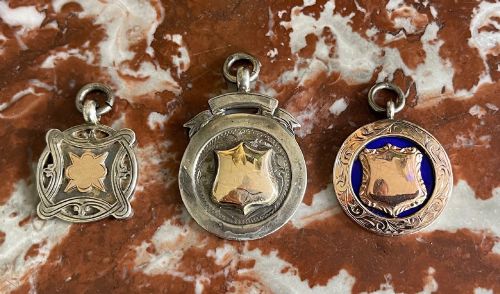
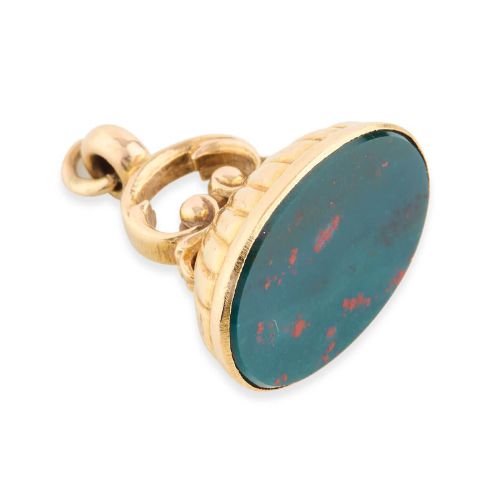
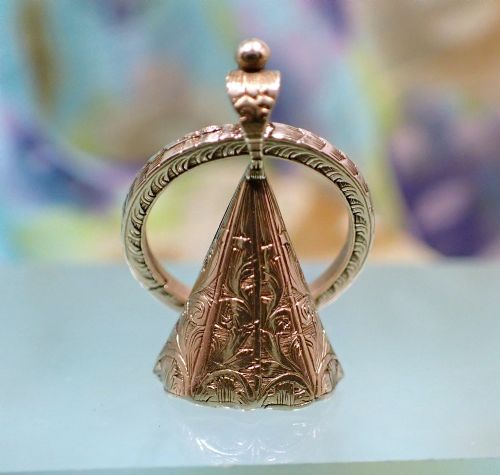
A victorian gold fob pendant represents a miniature work of utility and ornamentation originally designed to hang from a pocket watch chain. Buyers seeking these items encounter spinning swivel designs, carved hardstone seals, and detailed novelty shapes.
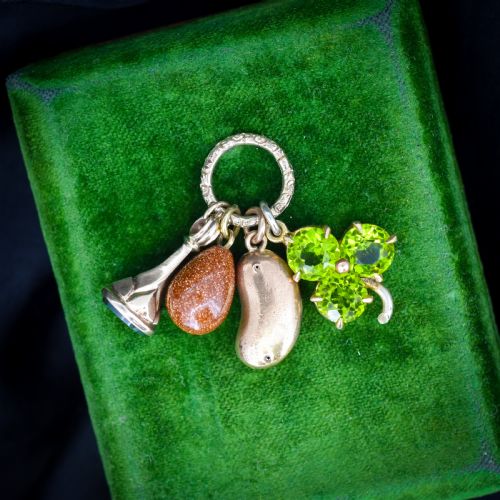
The pieces appearing here stem primarily from the nineteenth century alongside related Georgian and Edwardian examples. Forms range from simple gold signet seals to elaborate mounted charms incorporating compasses or photographs.
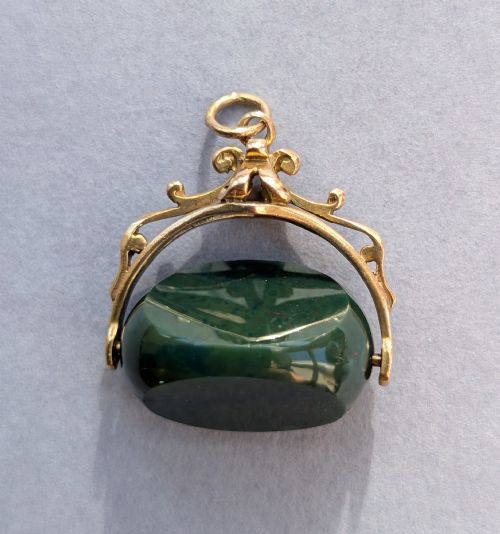
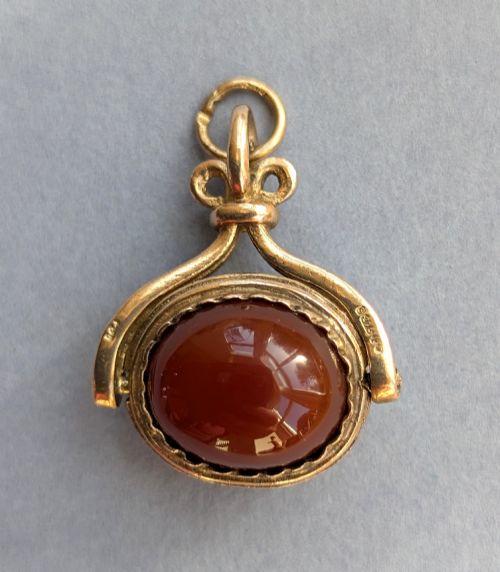
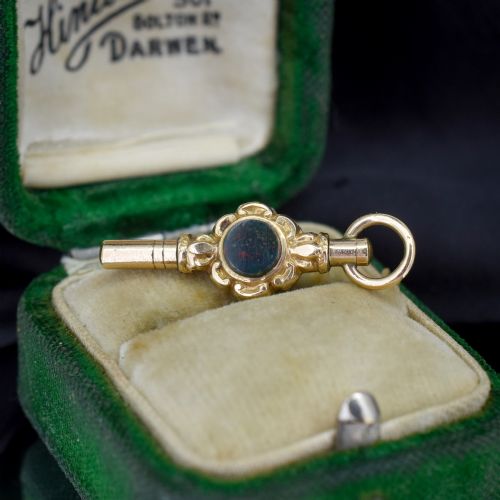
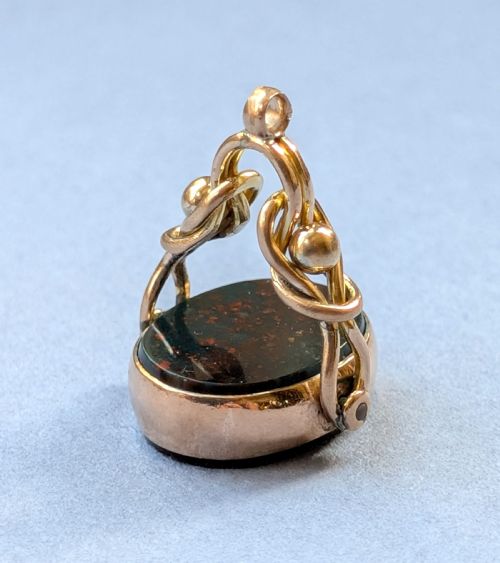
Carnelian, bloodstone, and agate feature prominently as the central stones set within yellow or rose gold frames. Many retain hand-engraved monograms or intaglios cut for sealing wax documents.
Materials and Construction
Goldsmiths utilised nine-carat and fifteen-carat gold alongside gold-cased metals to form the decorative mounts and swivelling frames. Hollow stamping and solid casting both contributed to the structural weight of each fob.
Hardstones including chalcedony, sardonyx, and carnelian were sliced, shaped, and polished by hand to fit snugly within bezel mounts. Intaglio designs were painstakingly carved into the stone surface to reverse impressions into hot wax.
Listings feature nine-carat yellow and rose gold frequently paired with natural carnelian and bloodstone.
Markers of Distinction
The clarity and depth of the stone carving distinguish finer examples from simpler production. Crisp intaglio details and well-defined engraving on the gold mount indicate superior craftsmanship.
Substance and mechanical precision dictate the upper tier of pieces, particularly in revolving swivel fobs that turn smoothly on their axis without looseness in the jump rings.
The Victorian Gold Fob Pendant Glossary
- Intaglio
- A design carved into the flat face of a gemstone so that a raised impression is left when pressed into wax. This technique was standard for personal seal fobs.
- Fob seal
- A small pendant featuring a hardstone matrix at the base engraved with initials or a crest. They were suspended from pocket watch chains to stamp correspondence.
- Spinning fob
- A double-sided or multi-sided stone mount set on a central axis that rotates within a metal frame. Users could flip the stone to display different coloured minerals or engraved faces.
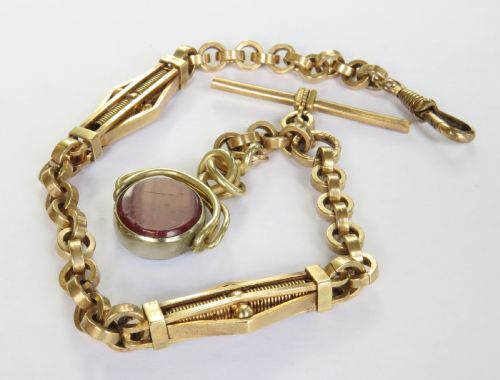
- Albert chain
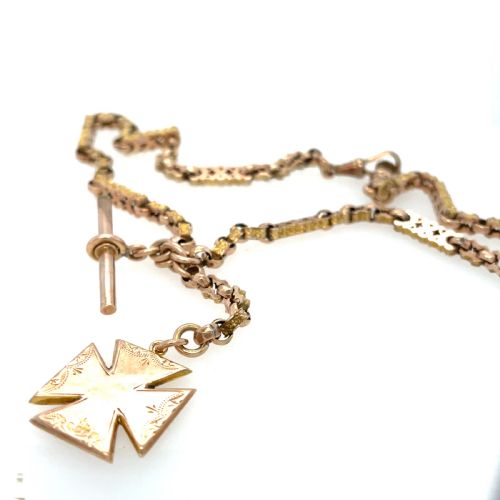
- A heavy watch chain designed to pass through a waistcoat buttonhole, frequently holding a T-bar and a fob pendant at the centre.
- Hardstone
- A semi-precious mineral such as carnelian, bloodstone, or agate chosen for its hardness and suitability for carving.
Victorian Gold Fob Pendant: Frequently Asked Questions
What is a fob pendant?
A fob pendant is a small ornamental object attached to a pocket watch ribbon or chain. Originally used as a functional seal for documents, they evolved into purely decorative wear.
Today these pieces are removed from chains and worn as distinctive pendants on modern necklaces.
How do I wear a antique fob?
These pieces suit a sturdy gold chain worn close to the collarbone. Their substantial weight allows them to hang well without twisting.
Rotating swivel designs also permit the wearer to alternate which side of the stone faces outward.
What stones are used in seals?
Carnelian, bloodstone, chalcedony, and sardonyx dominate the surviving examples. These dense minerals accepted fine hand-carving without fracturing.
Coloured glass and paste also appear in place of natural stones on certain pieces.
How can I tell the age?
Hallmarks stamped directly onto the gold mount provide precise dates where assay offices recorded the year. Stylistic clues like Georgian Neoclassical motifs or Victorian sentimental engraving also help establish the era.
Construction methods such as hollow stampings versus solid castings further narrow down the manufacturing decade.