



Gold Bloodstone Fob
A gold bloodstone fob is a pocket watch accessory or pendant that brings deep green, red-speckled stone together with warm gold mountings for daily wear.
Gold Bloodstone Fob
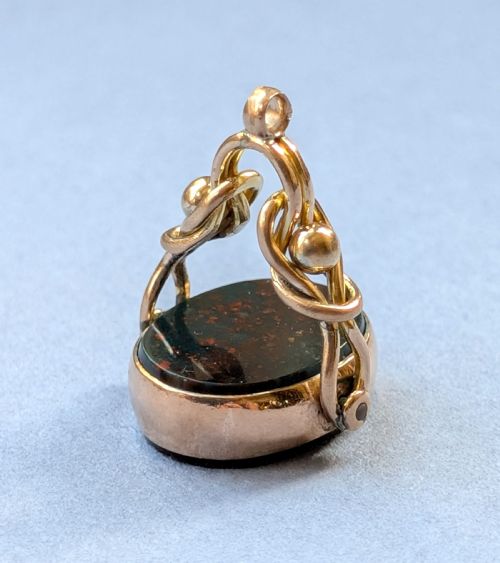
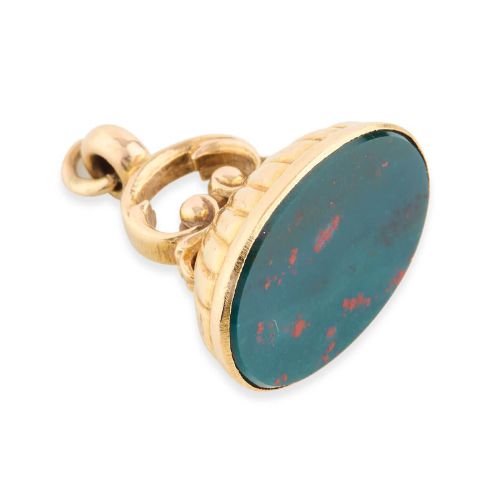
A gold bloodstone fob sits on a watch chain or hangs as a pendant, combining the dark green and red jasper stone known as bloodstone with precious metal mountings. The pieces on this page span the Victorian, Edwardian, and later twentieth-century periods, showing how these functional items evolved into decorative charms.
Most examples take the form of spinning or swivel fobs, allowing the wearer to display either the bloodstone face or a secondary stone like carnelian or agate. Fixed seals and watch keys also appear frequently, often engraved with initials or crests for sealing wax correspondence.
The materials range from nine-carat yellow and rose gold to higher purities like fifteen-carat and eighteen-carat gold, alongside silver and gold-gilt examples. Forms vary from simple shields and roundels to horseshoes, buckles, and figural designs.
Materials and construction
Makers set polished bloodstone into gold mounts using bezels, enclosing the dark stone within sturdy metal walls that protected the edges from daily knocks. Spinning mechanisms required delicate pivot pins and swivel loops, allowing the stone centre to turn smoothly within its outer frame.
Goldsmiths worked with varying purities of gold, including nine-carat, fifteen-carat, and eighteen-carat alloys, often utilising rose gold hues alongside traditional yellow shades. Engravers cut intaglios and crests directly into the flat faces of the bloodstone or matching carnelian and agate panels.
Listings show gold bloodstone fobs spanning the Victorian, Edwardian, and mid-twentieth-century periods in nine-carat, fifteen-carat, and eighteen-carat gold.
Assessing quality and craftsmanship
Quality rests in the crispness of the stone cutting and the density of the red jasper flecks scattered across the dark green bloodstone ground. Well-executed pieces show precise hand-engraving on the gold mountings and solid swivel mechanisms that hold the stone firmly without wobble.
The weight and purity of the gold elevate certain examples, with higher carat alloys and substantial cast frames marking out the more ambitious pieces. The clarity of intaglio engraving on the stone face also distinguishes standard production from finer commissioned work.
The Gold Bloodstone Fob Glossary
- Bloodstone
- A dark green chalcedony quartz flecked with red spots of jasper. This stone forms the primary display face for many antique fobs and watch keys.
- Swivel fob
- A pendant design featuring a central stone-set element that rotates on a horizontal axis within a fixed outer loop. This allows the wearer to present two different faces.
- Intaglio
- A design incised into the flat surface of a gemstone so that it leaves a raised impression when pressed into hot wax. Fobs often used bloodstone for this purpose.
- Watch key
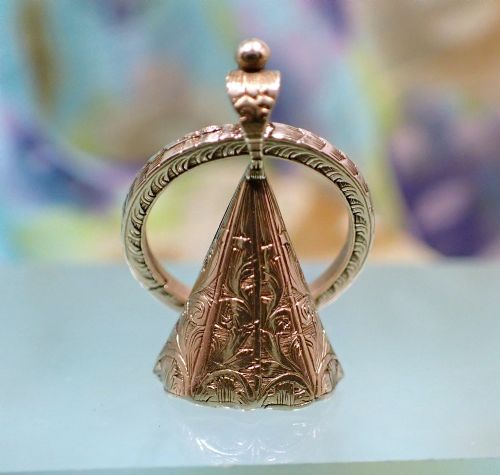
- A small winding key for pocket watches, frequently combined with a fob pendant or decorative stone seal. These often share the same gold and bloodstone construction.
- Carnelian
- A reddish-orange variety of chalcedony quartz commonly paired with bloodstone on the reverse side of a spinning swivel fob.
Gold Bloodstone Fob: Frequently Asked Questions
What is a gold bloodstone fob used for?
These items originally hung from a pocket watch chain to anchor the timepiece and provide a seal for correspondence. Today, collectors wear them as pendants on necklaces or attach them to charm bracelets.
Their substantial mounts and rotating stones make them versatile pieces of jewellery that suit everyday wear.
How do I tell Victorian fobs from later ones?
Victorian pieces often feature heavier gold mountings, distinct hallmarking, and hand-carved intaglios tied to personal or family crests. Edwardian and later twentieth-century examples tend to show lighter construction or simpler geometric swivel frames.
Examining the metal alloy and any assay office marks helps narrow down the production period.
Can I wear a spinning fob on a chain?
Many people wear these pieces as pendants by threading a chain through the top suspension loop or split ring. The spinning action allows the bloodstone or alternate stone to face outward.
Ensuring the loop and swivel mechanism remain secure prevents loss during daily movement.
What stones are found with bloodstone on fobs?
Carnelian and agate appear most frequently opposite bloodstone on spinning swivel fobs and watch keys. Chalcedony, onyx, sardonyx, amethyst, and citrine also occur in these rotating settings.
This double-sided construction gave the original owner two distinct coloured faces to display.