
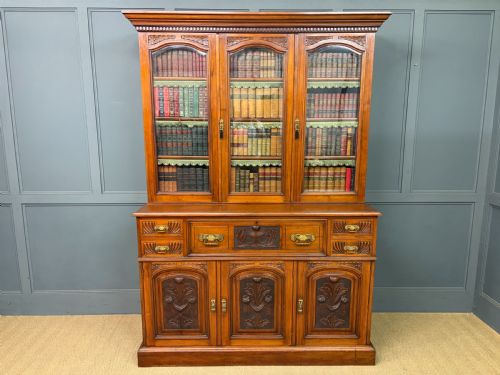


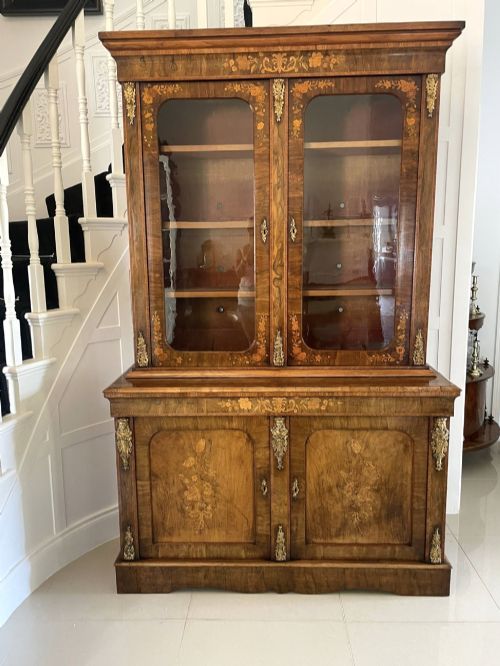
Victorian Glazed Walnut Cabinet
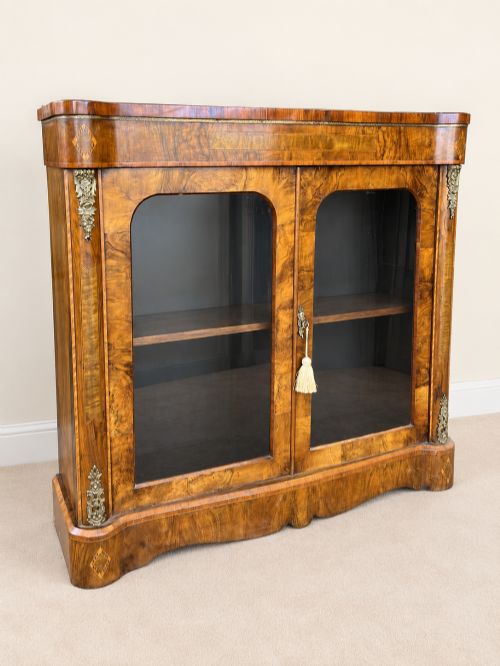
A victorian glazed walnut cabinet brings warmth and refined display space into a room, offering glazed protection for books or collections alongside rich timber grain.
Victorian Glazed Walnut Cabinet
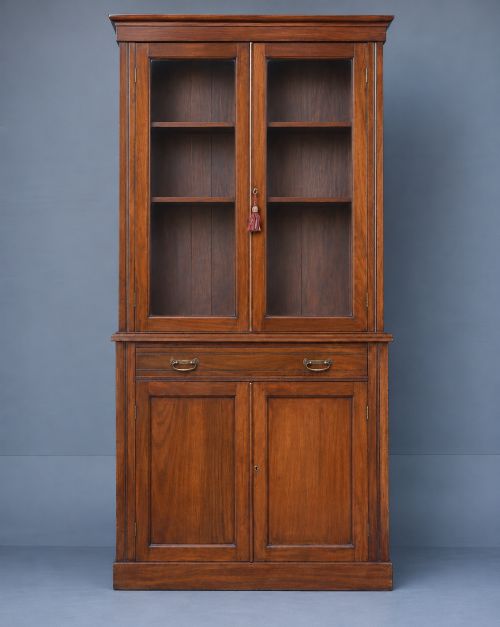
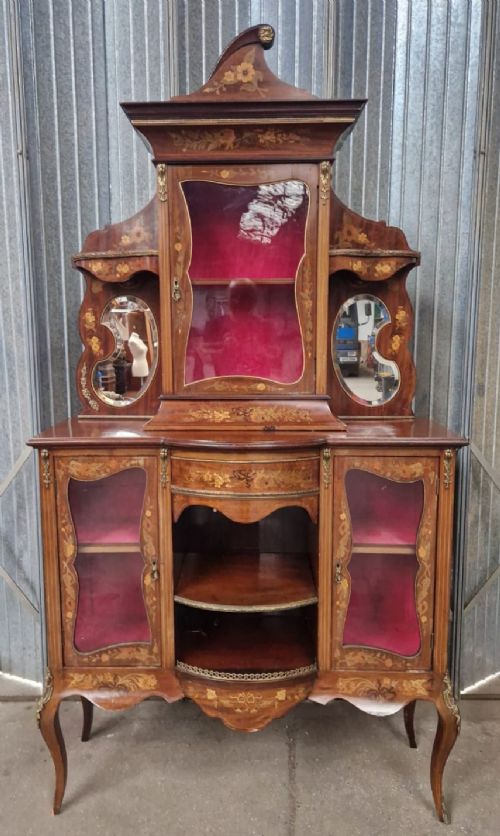
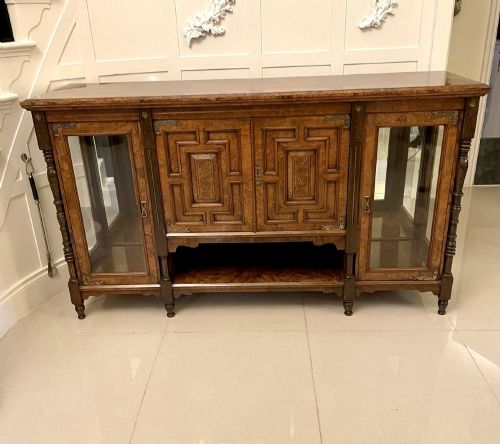
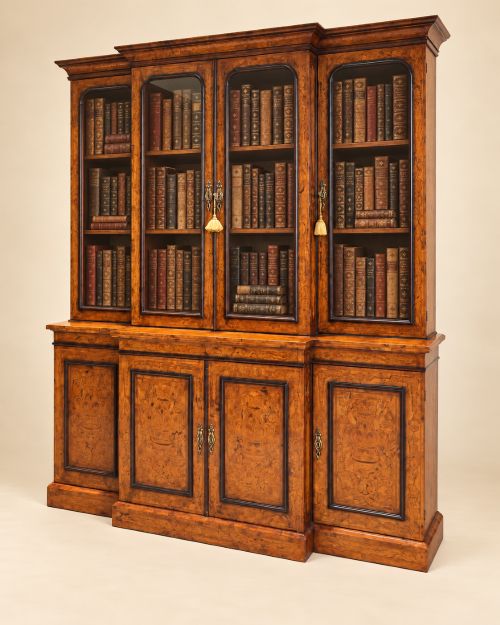
A victorian glazed walnut cabinet encompasses a variety of forms designed for display and storage, ranging from compact pier cabinets to substantial breakfront bookcases and credenzas.
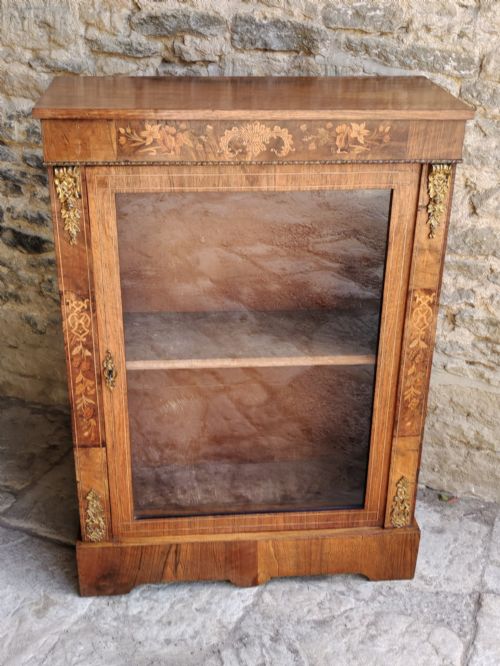
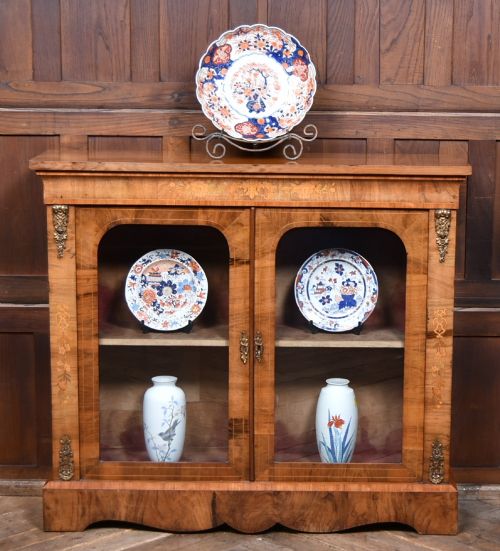
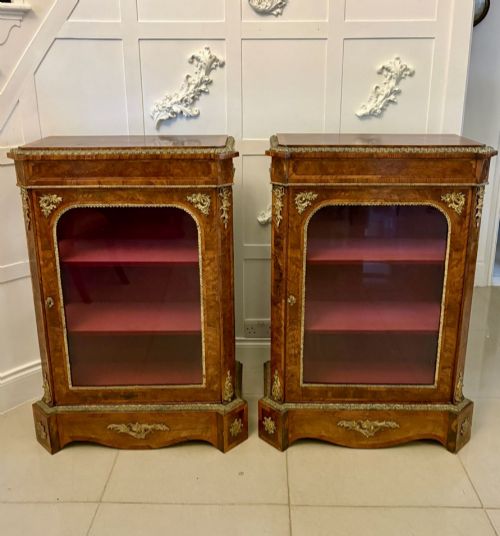
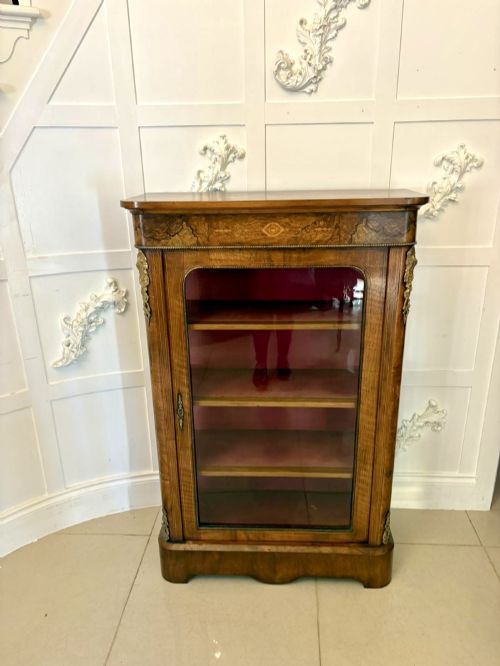
The version most commonly encountered on this page is the pier cabinet, a slender piece intended to stand against a narrow wall between windows or doors, featuring a single glazed door.
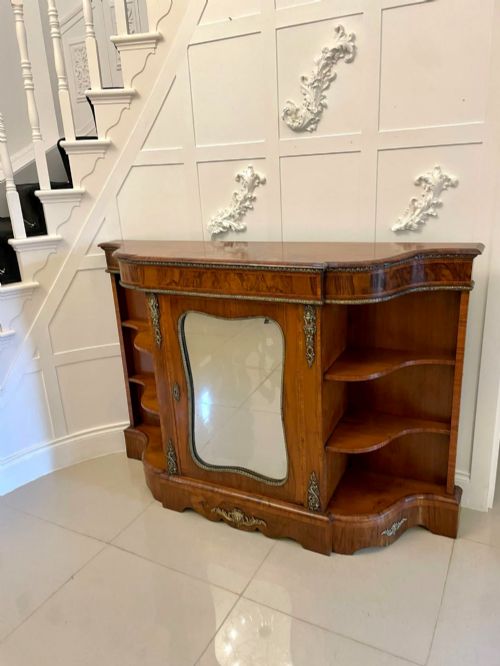
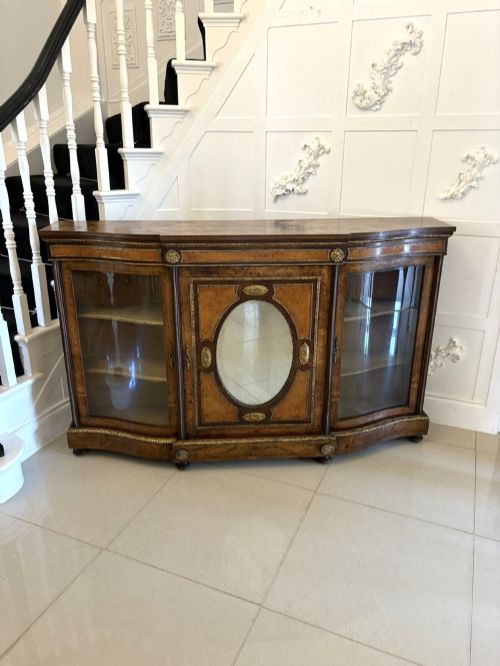
Beyond pier cabinets, buyers frequently encounter broader credenzas and tall bookcases, originating predominantly from the Victorian period alongside select examples from the wider nineteenth century.
How they were made
Cabinet makers utilised dense walnut and highly figured burr walnut veneers applied to stable secondary timbers, creating rich patterns across the primary surfaces.
Decoration often involved intricate boxwood inlay, marquetry, and contrasting ebonised timber, complemented by cast or chased ormolu mounts and brass fittings.
Glass was fitted into timber doors to protect contents from dust while maintaining visibility for display, occasionally paired with velvet linings inside the cabinet.
Listings feature works spanning the eighteenth century through the late Victorian era, utilising burr walnut, glass, brass, and ormolu.
What varies in quality
The standard of a victorian glazed walnut cabinet depends on the depth and symmetry of the burr walnut veneer selection, where superior examples exhibit complex, matching grain patterns across the entire front.
Craftsmanship is further demonstrated by the precision of the marquetry and boxwood inlay, the weight and detail of the ormolu mounts, and the overall structural integrity of the timber carcass.
Lamb of Manchester·Edwards & Roberts
The Victorian Glazed Walnut Cabinet Glossary
- Burr walnut
- A prized timber harvested from the abnormal growth or burl of a walnut tree, yielding complex, swirling grain patterns highly valued for decorative veneer.
- Pier cabinet
- A narrow display cabinet specifically built to occupy the pier of wall space situated between two windows.
- Ormolu
- Gilded bronze mounts and decorative accents applied to furniture, adding metallic contrast to the timber surface.
- Marquetry
- Elaborate decorative woodwork created by fitting contrasting veneers into a design pattern on the furniture exterior.
- Credenza
- A low cabinet or sideboard, frequently featuring glazed central doors flanked by curved side cupboards.
Victorian Glazed Walnut Cabinet: Frequently Asked Questions
What is a pier cabinet used for?
A pier cabinet provides upright display space for decorative ceramics, glassware, or small collectibles within a principal reception room. The glazed door protects delicate objects from dust while allowing them to be viewed easily.
Historically, these narrow cupboards were positioned in the architectural pier of wall between windows to utilise otherwise neglected spaces. Today, they serve a similar decorative function in modern interiors.
How do I distinguish a credenza from a bookcase?
A credenza is typically a low, wide sideboard or display cabinet that often incorporates curved glass doors and ormolu mounts. These pieces were designed to stand against larger dining or drawing room walls.
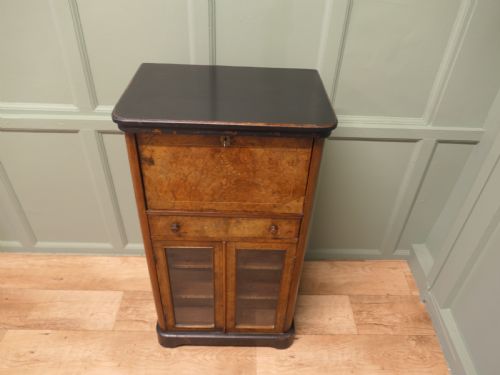
In contrast, a bookcase is generally taller and dedicated primarily to housing books behind vertical glazed doors, sometimes incorporating a secretaire drawer for writing.
Where should I place a walnut cabinet?
Walnut furniture benefits from being placed away from direct sunlight and sudden temperature fluctuations, which can cause the delicate veneers to dry out or fade over time. Maintaining a stable environment preserves the timber finish.
Pairing a glazed cabinet with complementary nineteenth-century furniture or placing it against a neutral wall allows the figured grain and inlay to stand out as a focal point.
How can I tell a Victorian piece from later revivals?
Examining the construction methods, interior secondary timbers, and backboards often reveals the age of a cabinet. Nineteenth-century pieces typically exhibit hand-cut joints and timber characteristics consistent with the period.
Stylistic cues such as Aesthetic Movement ebonising or Queen Anne revival motifs also help anchor the piece to specific decades within the Victorian era.