
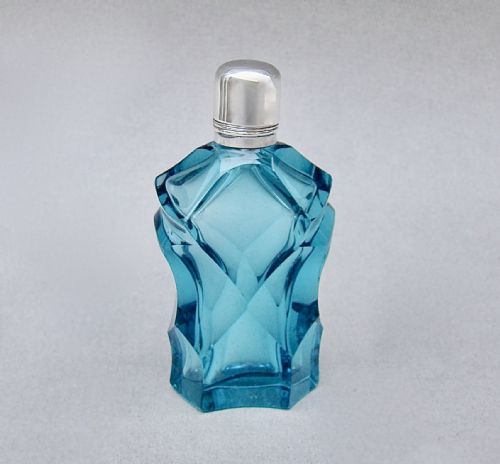
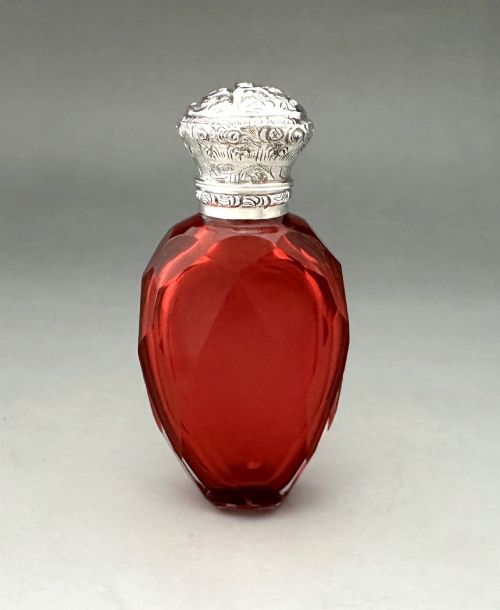
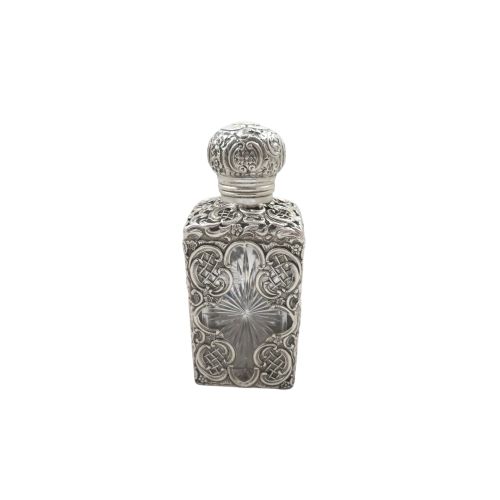
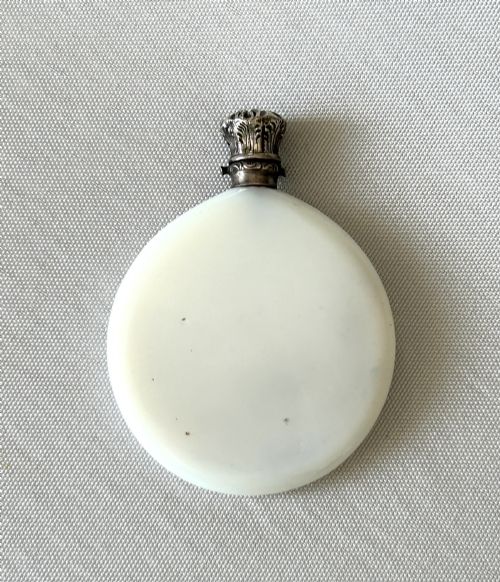
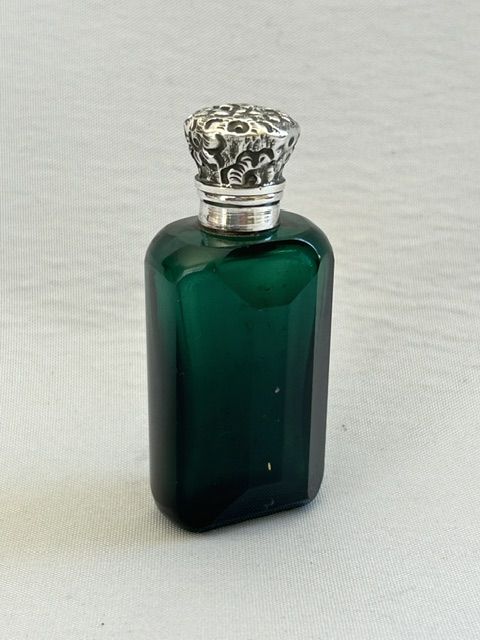
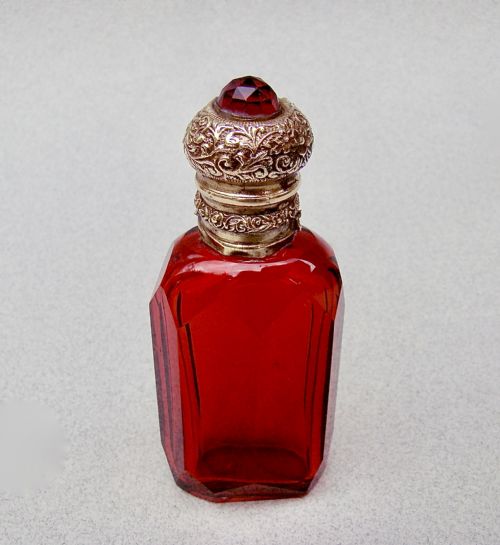


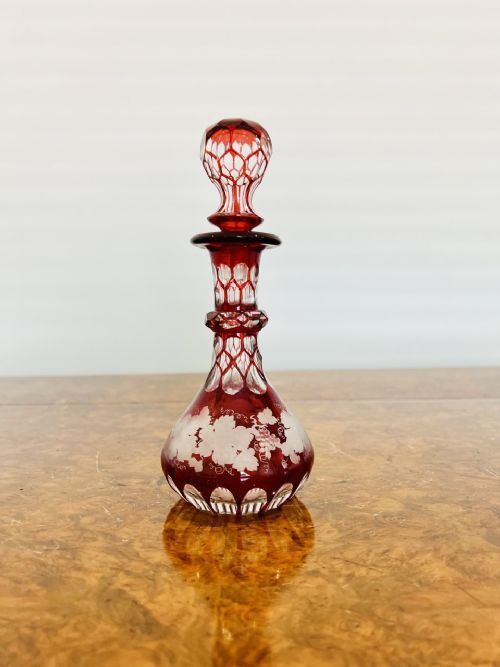


Victorian Glass Vanity Flask
A Victorian glass vanity flask offers a pocket of portable scent, pairing coloured glass with metal mounts for daily use.
Victorian Glass Vanity Flask
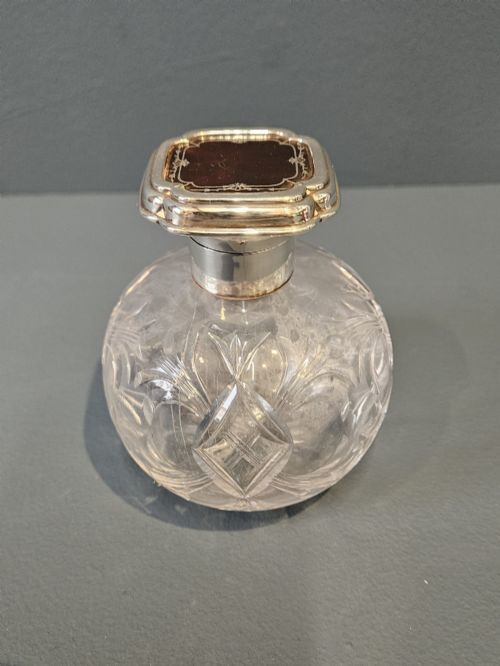
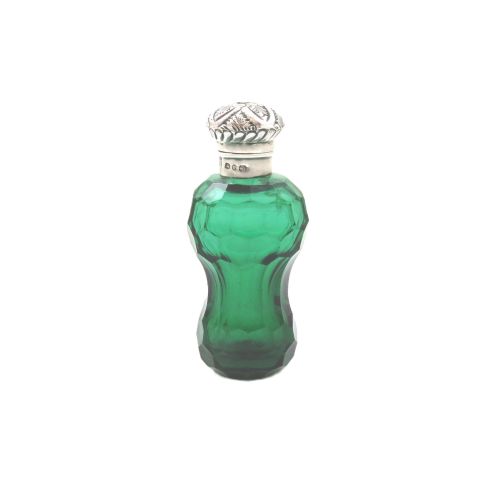
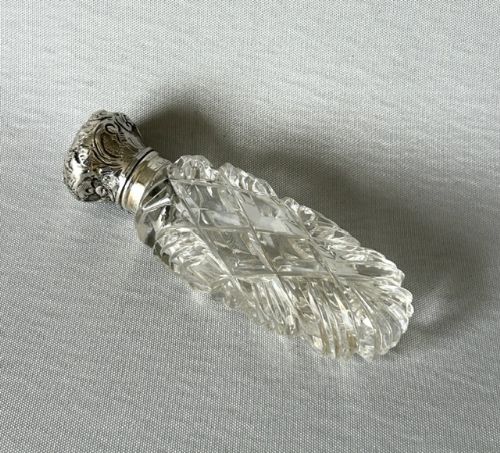
A Victorian glass vanity flask serves as a portable scent bottle, merging utilitarian function with decorative refinement. These vessels appear primarily in Victorian and Edwardian contexts, taking the form of scent bottles and miniature flasks designed for travel or dressing table display.
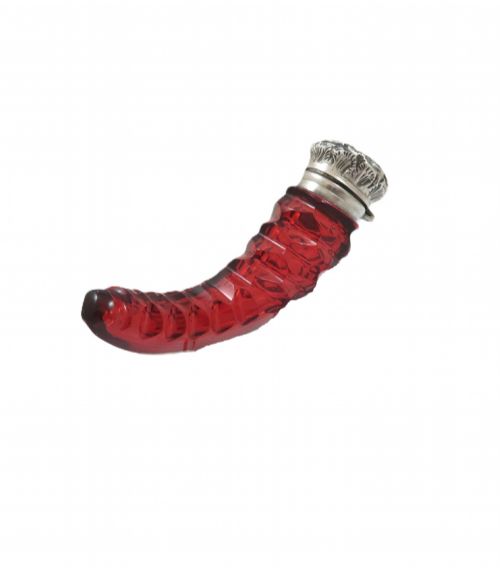
The objects listed here rely on glass bodies paired with metal components, ranging from standard scent bottles to specific forms like egg and icicle shapes. The majority of pieces date from the nineteenth century, reflecting the prevailing styles of the period.
Makers and origins span English production alongside continental examples, including French and Venetian pieces. Buyers encounter various glass colours, such as cranberry, ruby, green, and opaline, combined with silver or silver-gilt mountings.
Materials and Techniques
Makers combined glassblowing and cutting techniques to produce vessels in solid colours or overlaid layers. Cut glass and crystal provide faceted surfaces, whilst coloured glasses such as cranberry, ruby, and opaline display distinct hues achieved through mineral additives during production.
Metalwork forms an integral part of each piece, utilising sterling silver, silver-gilt, and ormolu for screw caps, hinged lids, and protective mountings. Some examples incorporate tortoise shell or specialised glass techniques like murrine to decorate the exterior.
Listings feature nineteenth-century items spanning the Victorian, Edwardian, and 1930s periods, incorporating materials such as sterling silver, ormolu, and tortoiseshell.
Distinctions in Execution
Quality rests upon the precision of the glass cutting, the depth of colour within the material, and the weight of the metal mounts. Finer examples display crisp facet work and heavy gauge sterling silver caps that fit securely against the glass rim.
The integration between the glass body and the metal mounting demonstrates the skill of the silversmith. Superior items maintain balanced proportions, clean engraving on the silver elements, and unblemished coloured glass without internal flaws.
Franchini & Bigaglia·S. Morden & Co
The Victorian Glass Vanity Flask Glossary
- Cranberry glass
- A transparent pinkish-red glass coloured with gold chloride during the manufacturing process. It appears frequently in nineteenth-century scent bottles and tableware.
- Opaline glass
- An opaque or translucent glass, often found in white or pastel shades, which mimics the appearance of opal. It gained popularity during the nineteenth century for decorative vanity items.
- Silver-gilt
- Sterling silver that has been coated with a thin layer of gold on its surface. This technique provides the rich appearance of solid gold while utilising a silver base.
- Ormolu
- A metallic alloy resembling gold, used for furniture mounts and decorative items. It serves as an ornamental trim on continental glass pieces.
- Murrine
- Coloured glass rods heated and drawn out, then sliced to reveal patterns in cross-section. This technique creates complex mosaic designs within the body of the glass.
Victorian Glass Vanity Flask: Frequently Asked Questions
How do I identify a Victorian scent bottle?
Identification relies on examining the materials, hallmarks, and manufacturing styles characteristic of the period. Sterling silver mounts often feature British assay office marks and date letters that pinpoint the year of creation.
The use of specific glass types, such as cranberry, opaline, or sliced-cut crystal, further aligns these objects with nineteenth-century production methods.
Were these bottles meant for travel?
Many vanity flasks were engineered for portability, featuring secure screw tops or lockable mechanisms to contain liquid safely in transit. Gentleman's cologne bottles often included secure closures for pocket carriage.
More delicate decorative examples with hinged caps and thin glass walls were better suited to stationary use on a dressing table tray.
What colours of glass are common?
The inventory shows a strong presence of cranberry glass and ruby glass, alongside green, opaline, amethyst, and vaseline glass. Each colour was achieved through specific metallic oxides added to the molten batch.
Clear cut glass and crystal also appear frequently, often paired with silver or tortoise shell covers.