






Bohemian Cut Glass Bottle
These bohemian cut glass bottle pieces combine heavy wheel-cut clarity with brilliant colour, offering a tactile piece of historic craftsmanship for your dressing table.
Bohemian Cut Glass Bottle
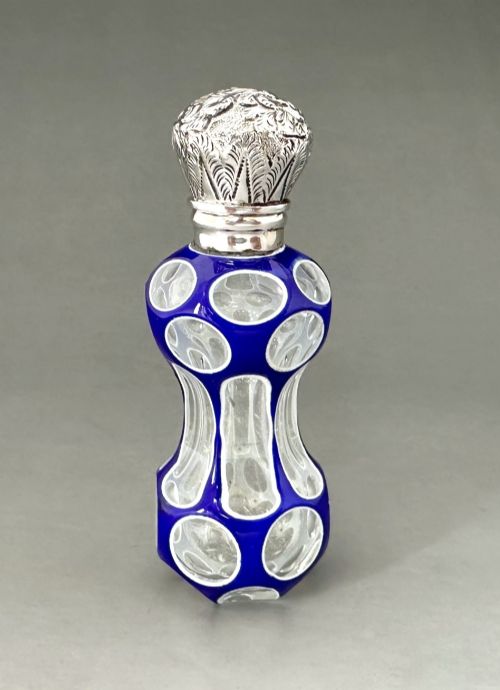
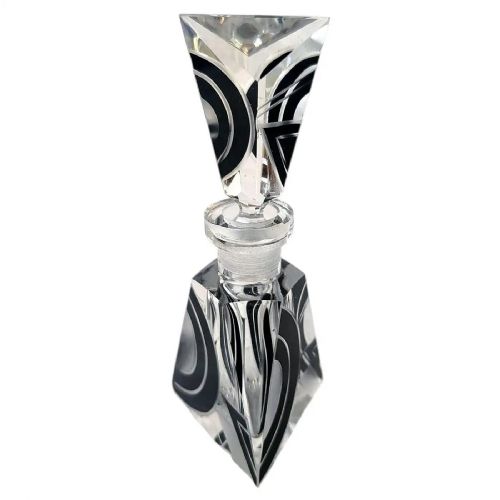
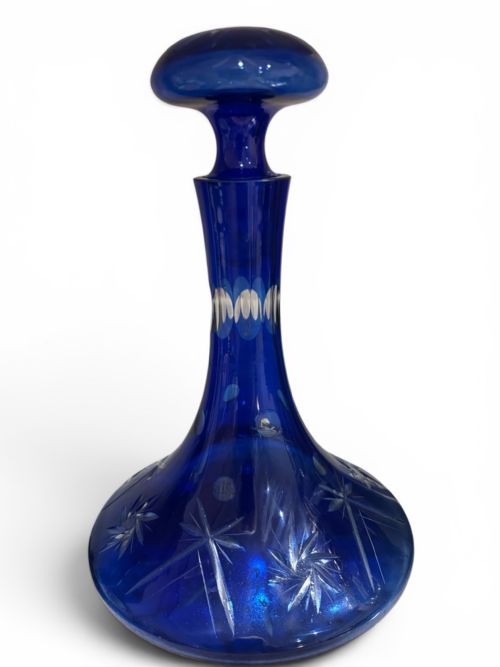
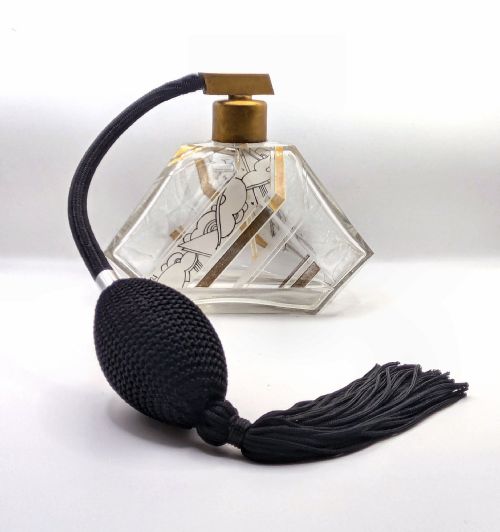
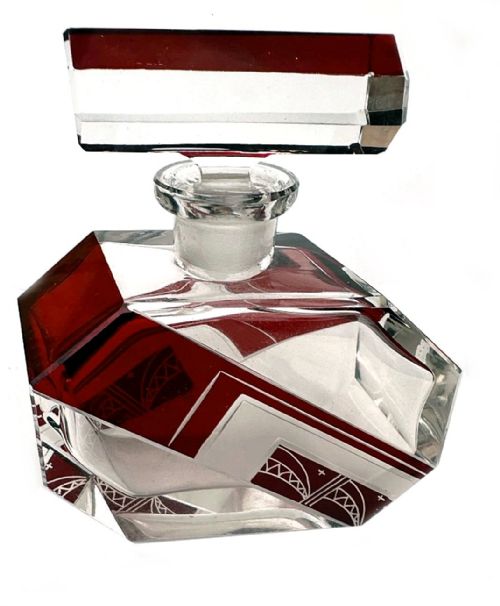
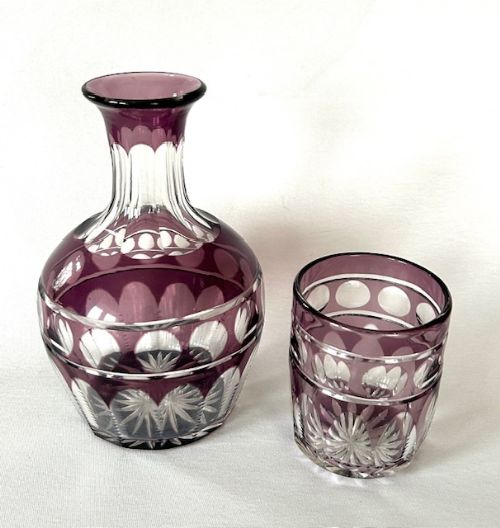
A bohemian cut glass bottle search brings up functional dressing table vessels and serving pieces, spanning perfume bottles, scent bottles, and decanters. You will frequently encounter Victorian overlay examples alongside geometric Art Deco pieces.
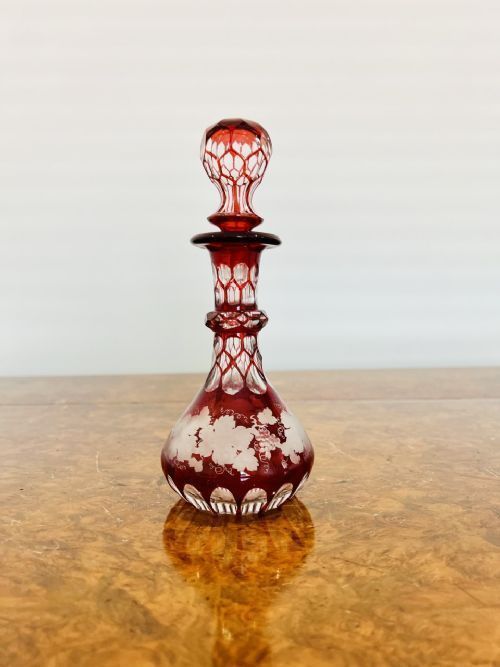
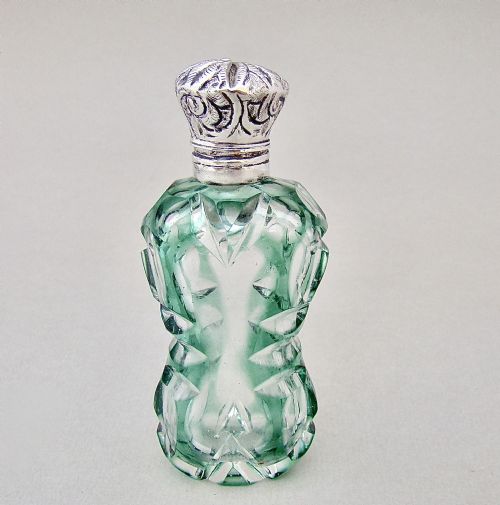
The selection ranges from Victorian green and cranberry overlay scent bottles to Art Deco Czech perfume atomisers and tall colour over crystal hock decanters. These objects serve both ornamental and practical purposes in a domestic interior.
Origins stretch from nineteenth-century production through to twentieth-century workshops in the Czech Republic, encompassing distinct stylistic shifts from ornate Victorian designs to clean Art Deco lines.
Materials and Construction
Makers utilised clear crystal and coloured glass, frequently applying overlay techniques where a layer of cranberry, green, or cobalt glass sits over a clear or contrasting body. Skilled artisans then cut through the exterior layer on a wheel to expose the contrasting colour beneath.
Many examples incorporate sterling silver mounts, collars, and hinged lids, often bearing hallmarks from silversmiths such as Harold Bushell & Co. Black enamel and coloured enamel accents further augment the cut crystal surfaces.
Bohemian Cut Glass Bottle Retail Price Guide 2026
Typical asking prices for bohemian cut glass bottle among the pieces listed under this phrase on Sellingantiques today, from the lower quarter to the upper quarter. They describe what is for sale here now, not the wider market.
Some perfume bottles hide their mechanisms behind gleaming layers of cranberry glass, ready for a vintage mist.
Assessing Quality and Execution
Quality rests upon the crispness and depth of the wheel-cut facets, where sharper, cleaner edges demonstrate superior dexterity by the glass cutter. The weight and clarity of the underlying crystal or coloured glass body also dictate the standard of the piece.
The integration of metalwork distinguishes finer examples, noting particularly whether silver mounts and stoppers fit snugly and retain original hallmarks. Enamel and overlay work demand precision in alignment and colour saturation to achieve distinction.
Karl Palda·Harold Bushell & Co
The Bohemian Cut Glass Bottle Glossary
- Overlay
- A technique where a layer of coloured glass is fused over a clear or contrasting body before being cut back. This reveals patterns and panels of the underlying glass.
- Cranberry Glass
- Transparent glass coloured with gold chloride to achieve a rich pinkish-red hue. It appears frequently in Victorian scent and perfume bottles.
- Atomiser
- A spray bottle mechanism fitted to a perfume vessel, often encountered on Art Deco Czech pieces. It allows liquid scent to be dispensed in a fine mist.
- Hock Decanter
- A tall, slender vessel traditionally designed for serving hock or white wine. These often feature colour over crystal layering and tall panel cutting.
Bohemian Cut Glass Bottle: Frequently Asked Questions
What is a bohemian cut glass bottle?
It is a decorative or functional vessel, typically a scent bottle, perfume container, or decanter, produced in Bohemia and characterised by heavy crystal and precise cutting.
These pieces range from ornate Victorian coloured overlay designs to geometric Art Deco creations from the Czech Republic.
How do I date a glass scent bottle?
Dating relies upon stylistic markers, such as Victorian floral motifs and heavy overlay versus the streamlined geometric facets typical of Art Deco production.
Silver mounts and stoppers often carry hallmarks that provide specific assay office and year markers to assist with identification.
Were these bottles used for perfume?
Many smaller vessels served as scent or perfume bottles, often fitted with stoppers or silver-mounted lids to preserve volatile fragrances.
Larger forms function as decanters and carafes, designed for serving spirits and wine at the table rather than dressing table use.
How do I care for antique glass?
Clean these items gently by hand using lukewarm water and mild detergent, avoiding harsh abrasives that might scratch the crystal or damage silver mounts.
Take particular care around silver collars and enamel details to preserve the original finish.