





Victorian Glass Lustres
Victorian glass lustres are decorative mantel garnitures that catch the flicker of candlelight through hanging crystal pendants, bringing deep colour and brilliance to a room.
Victorian Glass Lustres
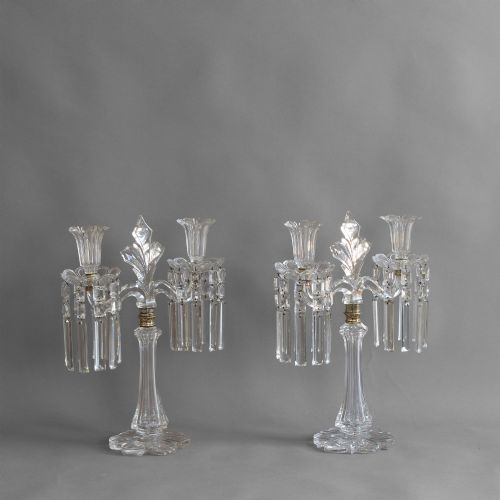
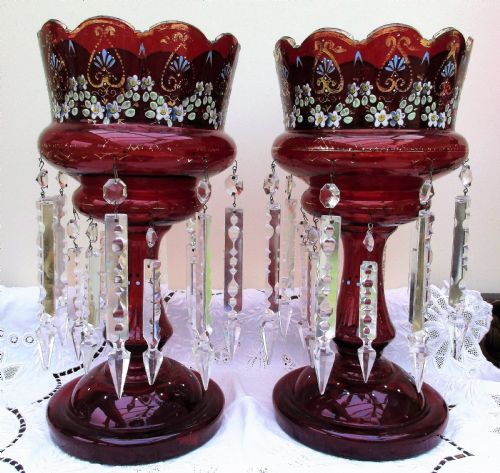
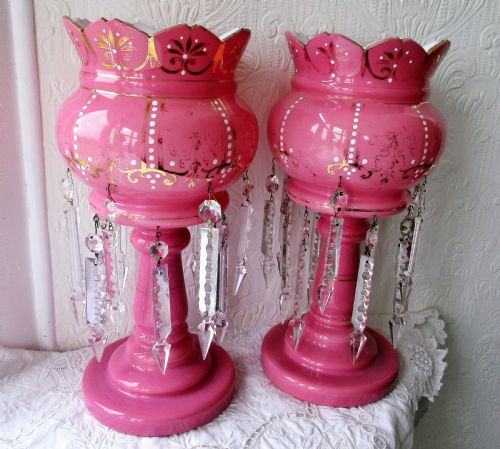
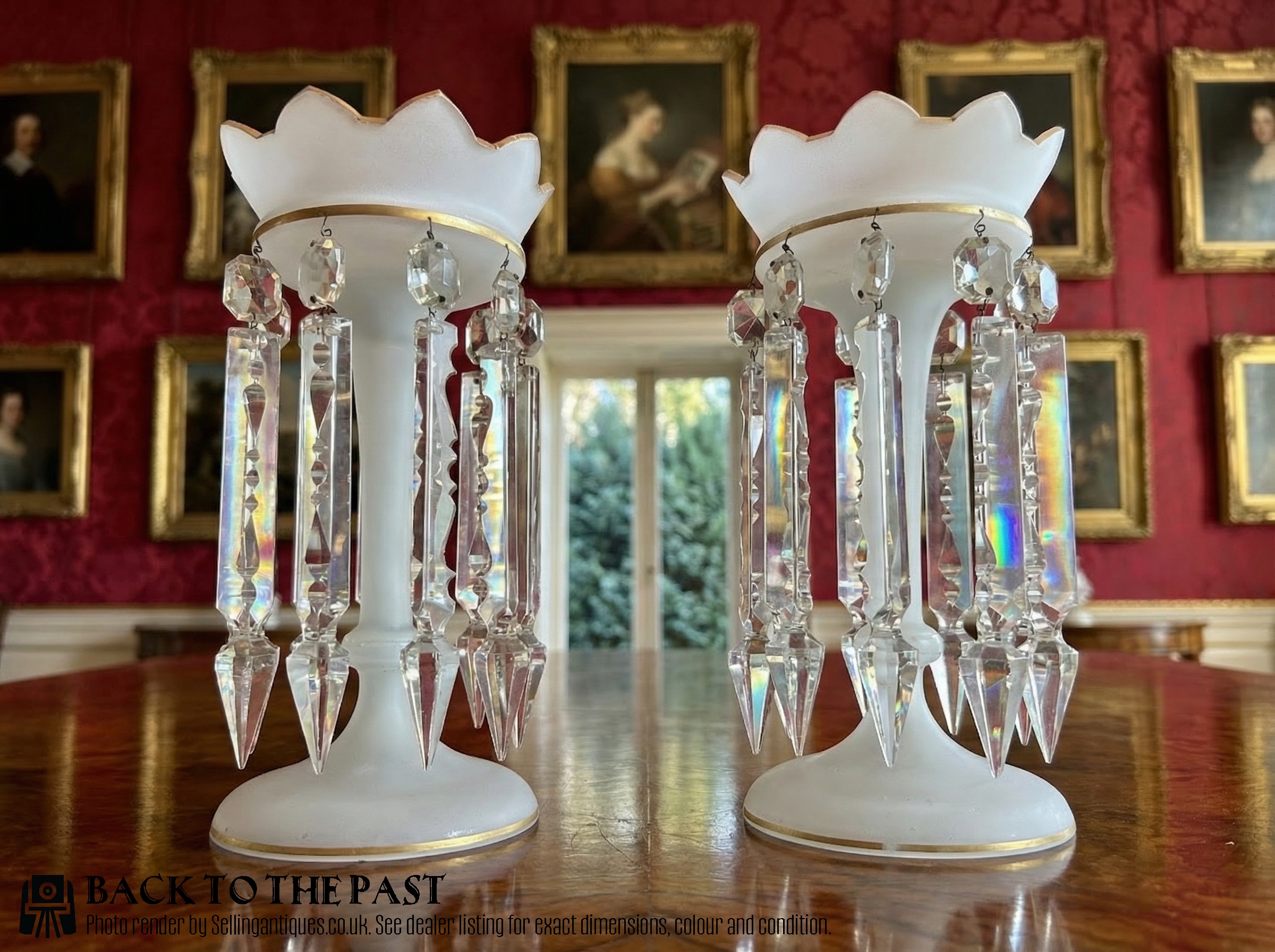
Victorian glass lustres are upright mantel garnitures designed primarily to ornament the fireplace and reflect candlelight across the room. When buyers search for victorian glass lustres, they encounter both matched pairs and single pieces intended to sit prominently on a mantelpiece or table.
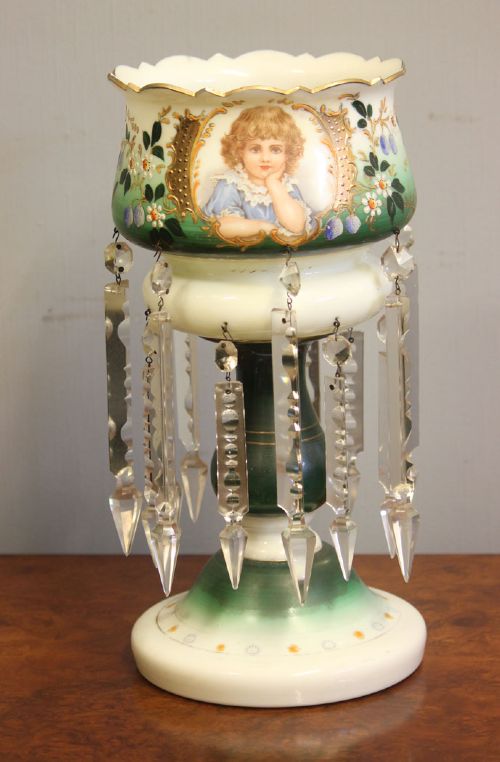
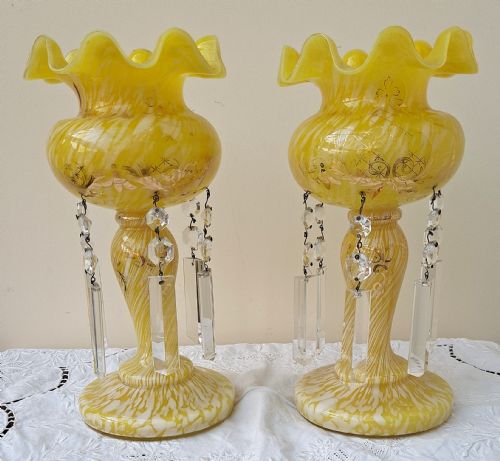
The objects take the form of stemmed vases or candlesticks fitted with a rim from which numerous cut crystal pendants hang on wire hooks. These pieces originate predominantly from the nineteenth century, spanning periods from William IV through late Victorian times.
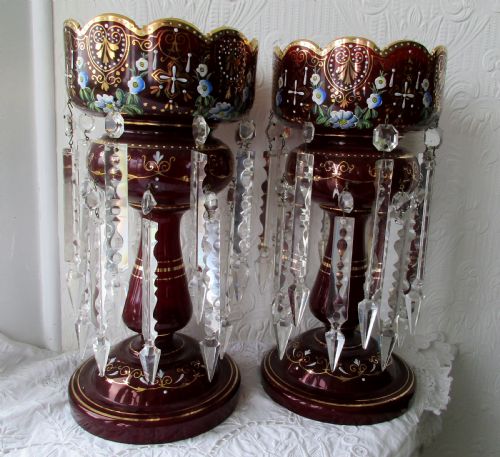
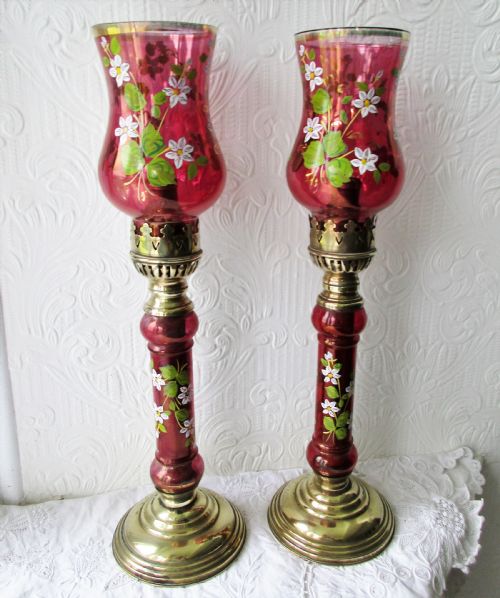
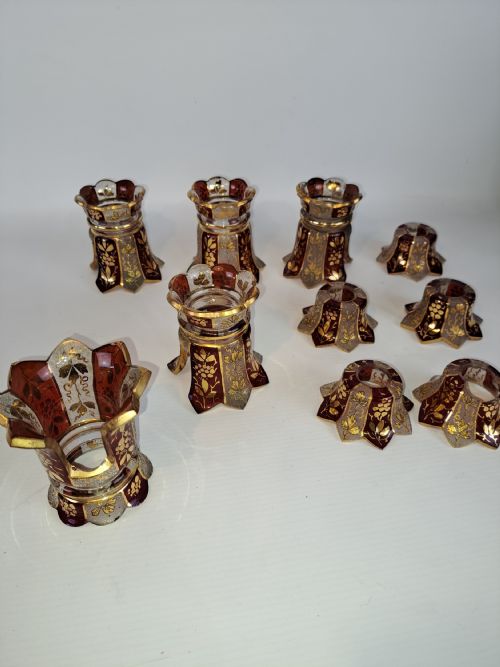
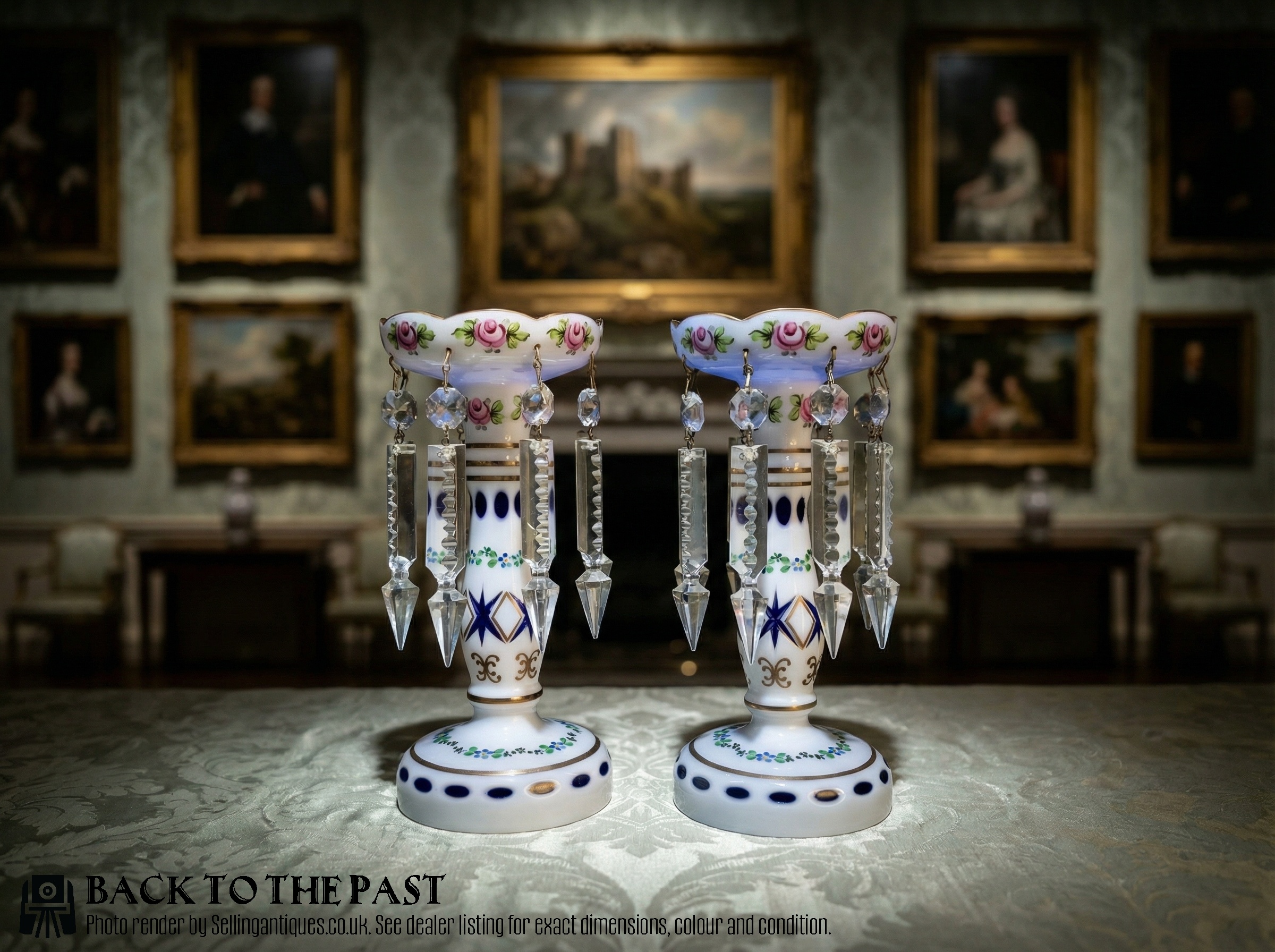
Coloured glass dominates the selection, featuring rich ruby, cranberry, green, pink, amber, blue, and opaline hues alongside clear crystal and milk glass. Many examples incorporate painted decoration, gilt highlights, or overlay techniques that expose contrasting layers of colour beneath.
Materials and Construction
Makers produced these pieces using coloured or clear glass shaped by blowing or pressing, frequently employing flash-cut overlay methods to create distinct layers that were then cut away. This technique exposed white or clear glass beneath vibrant hues like ruby or cranberry.
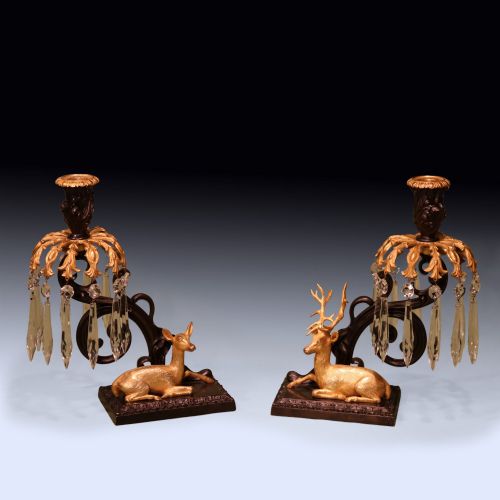
Support structures often combined glass with brass, bronze, or ormolu mounts, occasionally integrating cast animal figures or marble bases. Faceted crystal drops hung from pierced rims, secured by delicate metal wires that allowed the pendants to chime and catch the light.
Victorian Glass Lustres Retail Price Guide 2026
Typical asking prices for victorian glass lustres among the pieces listed under this phrase on Sellingantiques today, from the lower quarter to the upper quarter. They describe what is for sale here now, not the wider market.
Listings feature numerous ruby and cranberry glass examples alongside less common shades like uranium, amber, and pink.
Distinctions in Quality
Quality rests heavily on the depth of the glass colour, the precision of the surface cutting, and the richness of any hand-applied gilding or enamel painting. Pieces featuring overlay glass with crisp, complex facets demonstrate higher workmanship than plain moulded alternatives.
The presence of matching, original crystal drops in complete sets elevates a lustre, as replacement pendants alter the overall balance and harmony of the piece. Stability in the stem joints and refinement in the casting of bronze or brass mounts further separate standard examples from finer works.
Clarkes
The Victorian Glass Lustres Glossary
- Lustre
- A decorative mantel vase or candlestick fitted with hanging crystal pendants designed to reflect light. They typically appeared in matched pairs on nineteenth-century fireplaces.
- Overlay glass
- A technique involving two or more distinct layers of glass fused together, where sections of the outer layer are cut away to reveal the contrasting colour underneath.
- Flash glass
- A thin layer of coloured glass applied over a base of clear or white glass before being cut through to create patterns.
- Opaline glass
- An opaque, pale glass with a milky or iridescent appearance, popular in decorative nineteenth-century tablewares and mantel ornaments.
- Cricklite
- A brand of table lamp and candelabra system utilising specialised glass shades, associated with late Victorian lighting.
Victorian Glass Lustres: Frequently Asked Questions
Where were Victorian glass lustres placed?
These decorative objects sat predominantly upon mantelpieces in nineteenth-century drawing rooms, often flanked by matching vases or clocks. Their primary function was ornamental, catching daylight and reflecting the flicker of evening candles.
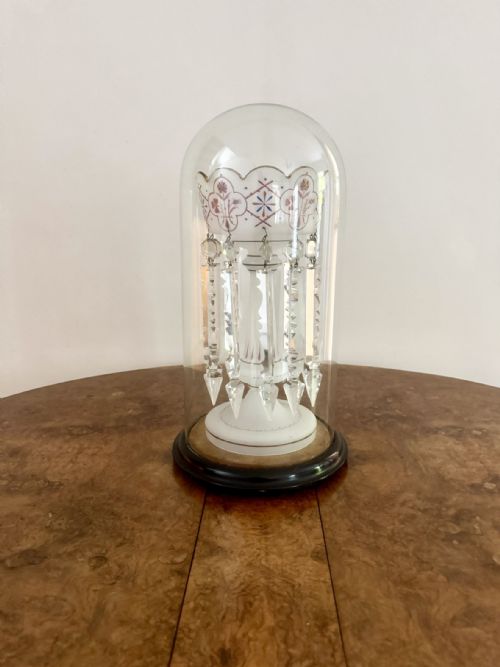
Collectors today continue to display them on mantel shelves, side tables, or enclosed within glass domes to protect the delicate hanging crystal pendants from accidental damage.
How do I identify different glass colours?
Victorian makers utilised various mineral oxides to achieve intense hues, resulting in deep ruby reds, uranium greens, milky opaline, and rich cranberry tones. Examining the interior and base under natural light reveals the depth and layering of the material.
Overlay and flash-cut pieces show clear demarcation where the surface colour was ground away to expose the underlying clear or white glass.
Are crystal drops usually original?
Pendants took a great deal of handling during cleaning and often suffered breakage over the decades. Replacement drops appear frequently on older pieces, though matching the exact cut, age, and collar shape remains a priority for strict collectors.
Close inspection of the hanging loops and the wear around the drilled holes helps determine whether the pendants share the same period as the main body.
Did they function as lamps or candlesticks?
Many examples served a dual purpose as candle holders and decorative vases, featuring a removable central nozzle for a taper. Some specific variations incorporated brass mounts and storm shades designed for burning oil or gas.
The upper rim supported the hanging prisms regardless of whether the central well held a candle or remained empty for display.