



Victorian Glass Lamp Base
These Victorian glass lamp bases bring together heavy brass mounts and coloured or cut vessels to light a room with period warmth.
Victorian Glass Lamp Base
A victorian glass lamp base is typically an oil-burning reservoir mounted on a metal column, designed to sit on a table or desk. When you search for this phrase, you find examples spanning the mid to late nineteenth century, incorporating materials like brass, ceramic, and silver plate alongside the glass body.
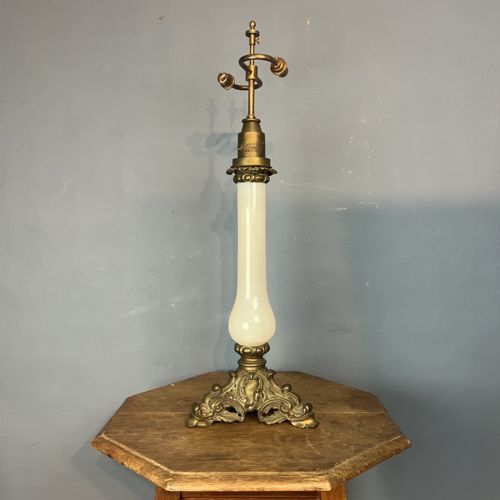
The most common versions on this page pair an opaque or coloured glass font with a brass base, often following classical column designs or rounded opaline shapes. These pieces frequently show the marks of nineteenth-century domestic lighting, combining utility with decorative presence.
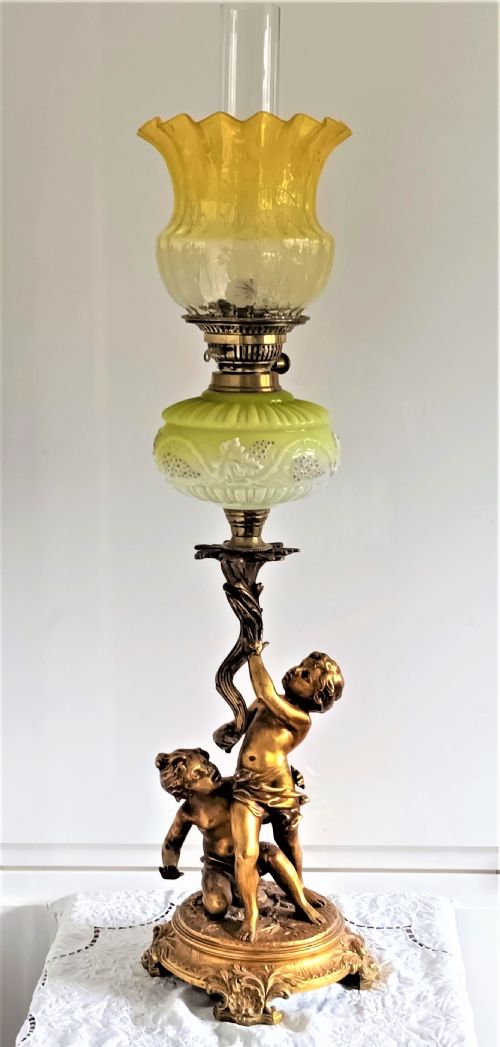
Makers and manufacturers utilised distinct regional styles, from English cut glass and gilt brass to continental porcelain and bronze figures. They range from modest cottage table lamps to tall, imposing column designs intended for formal reception rooms.
How they were made
The construction of these lamps relies on the pairing of blown or cut glass vessels with metal mountings, typically cast brass or silver plate. Artisans joined the glass reservoirs to metal columns using threaded collars, cement, or internal rods that secured the weight of the font to the base.
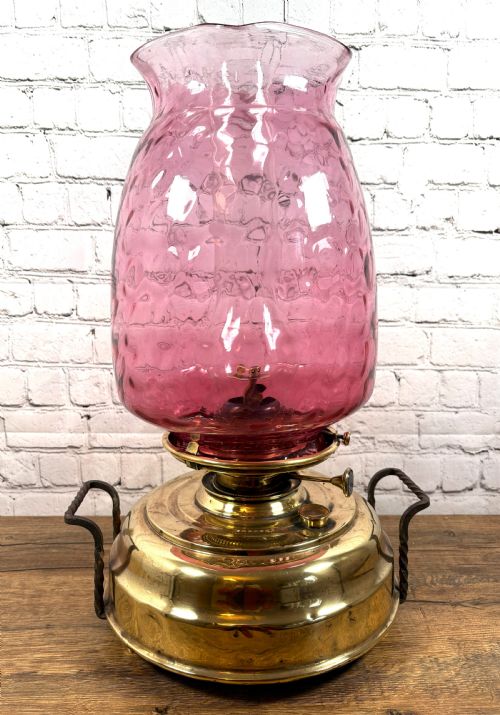
Glass techniques visible in the evidence include opaline, cranberry, satin, and blue cut glass, each requiring specific chemical colorants and heavy polishing or moulding. Metalwork components involved sand-casting brass and applying gilding, bronze patination, or silver plating to the structural columns.
Listings feature glass lamps combined with brass, silver plate, ceramic, and bronze across the Victorian and Edwardian periods.
What varies in quality
Quality in a victorian glass lamp base shows in the crispness of the brass casting, the depth and clarity of the glass cutting, and the weight of the metal components. Better examples maintain sturdy proportions and precise joins between the glass reservoir and the metal base.
The distinction between standard domestic lighting and finer workshop pieces rests on the complexity of the materials, such as heavy cut lead crystal paired with fire-gilt bronze, or hand-painted porcelain incorporated into the column.
Mc Gary·Goldsmiths and Silversmiths Company·Joseph Hinks
The Victorian Glass Lamp Base Glossary
- Opaline glass
- An opaque, pale glass often tinted in soft shades of white, blue, or pink, frequently used for Victorian lamp reservoirs. It provides a dense, smooth surface that diffuses light effectively.
- Cranberry glass
- A rich red glass produced by adding gold chloride to the molten batch, popular for Victorian shades and fonts. The depth of the red colour varies according to the gold content and temperature during annealing.
- Peg lamp
- A small oil lamp fitted with a tapered metal or glass peg at the base designed to drop directly into the socket of a candlestick or standalone base. This allowed candlesticks to double as oil lamps.
- Corinthian column
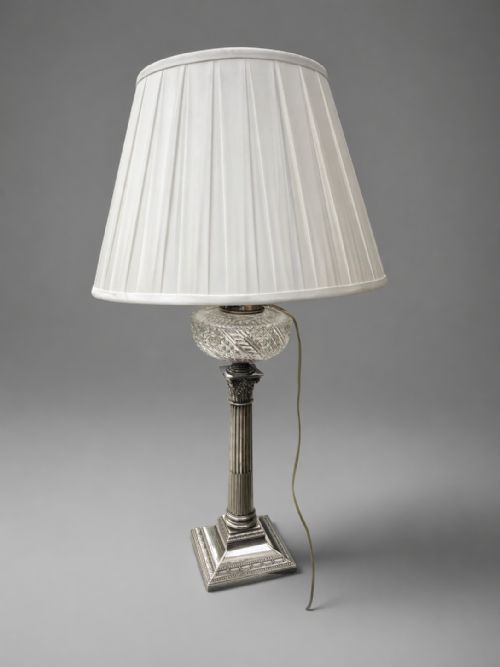
- A classical architectural column style featuring an ornate capital decorated with acanthus leaves, frequently adopted for nineteenth-century brass lamp bases. It lends a formal, neoclassical appearance to the lighting.
- Cut glass
- Glass decorated by grinding and polishing facets, flutes, or geometric patterns into the surface using rotating wheels. This technique enhances the refractive quality and weight of the glass.
Victorian Glass Lamp Base: Frequently Asked Questions
How do I wire a Victorian glass lamp?
Wiring a Victorian glass lamp typically involves running a discreet cord through the central burner collar or existing chaseways without drilling into the original glass reservoir. Modern fittings are usually mounted to the top burner assembly so the antique body remains unaltered.
It is advisable to consult a professional restorer who understands period brassware and can ensure the weighting remains stable once electrical components are added.
Were these lamps originally for oil?
Most pieces listed under this category were manufactured to burn kerosene or paraffin oil using a duplex or slip burner mechanism before being converted to electricity later in their lifespan. The brass collars at the top of the glass fonts originally held the wick housing and glass chimney.
When examining the top mounts, you can often see the threaded brass galleries that once secured the fabric shade or glass globe.
How do I clean an opaline glass base?
Cleaning opaline glass requires lukewarm water and a mild detergent applied with a soft cloth, avoiding abrasive pads that can scratch the delicate surface. Care must be taken around gilt brass mounts and painted details to prevent moisture damage.
Dry the glass thoroughly with a lint-free cloth to maintain the soft sheen characteristic of nineteenth-century opaline wares.
How can I tell a Victorian lamp from an Edwardian one?
Victorian lamps often feature heavier cast brass elements, robust classical proportions, and rich colours like cranberry or deep blue glass, reflecting mid to late nineteenth-century tastes. Edwardian examples tend to introduce lighter brasswork, softer pastel shades, and more slender profiles influenced by Art Nouveau or neoclassical revivals.
Comparing the weight of the metal base and the style of the glass cutting helps establish the likely decade of manufacture.