


Cut Crystal Desk Lamp
A cut crystal desk lamp brings weight, sparkle and steady illumination to a room, combining heavy glass prisms with classical or modern mounts.
Cut Crystal Desk Lamp
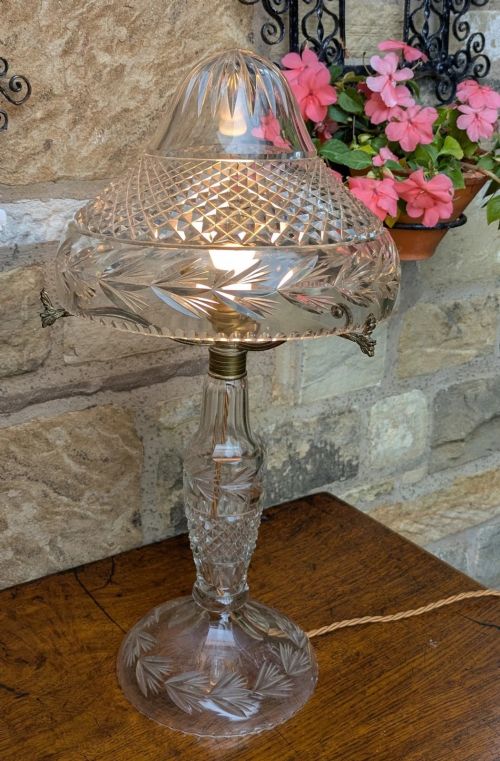
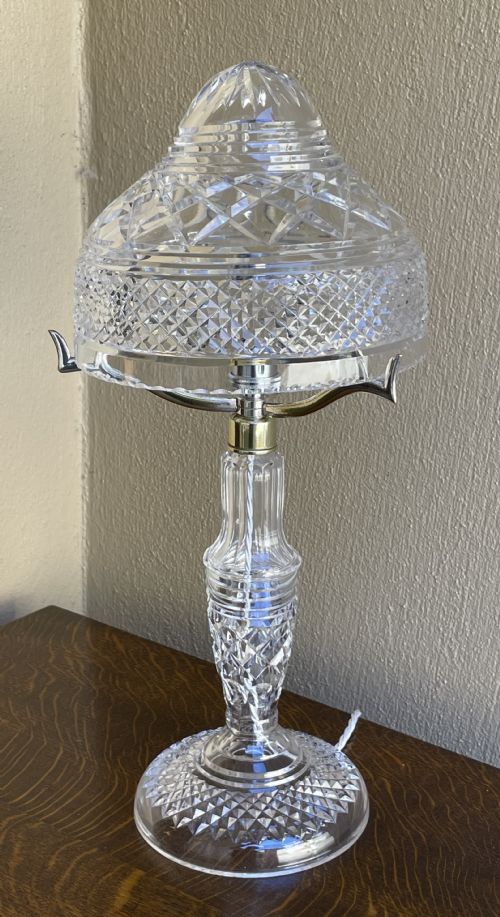
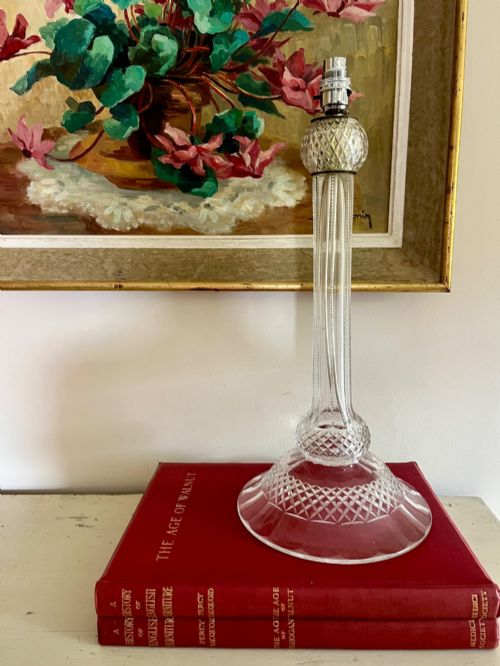
A cut crystal desk lamp takes many forms across different eras, spanning table lamps and converted oil lamps. Buyers searching for a cut crystal desk lamp encounter pieces from the Victorian era through the 1950s, reflecting shifts in interior lighting.
The materials paired with the crystal vary by period, ranging from brass and electroplate to gilt metal and ormolu. Column forms, mushroom shapes and traditional table lamp silhouettes dominate the available selection.
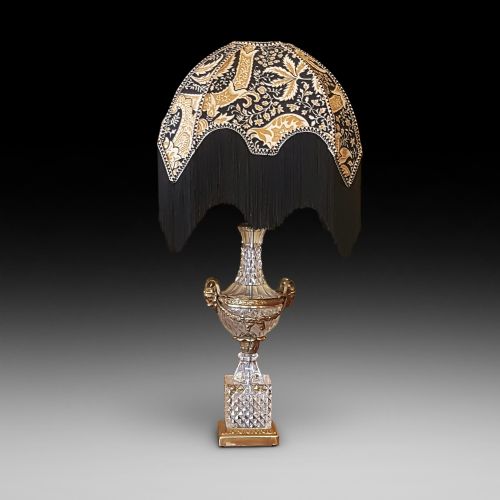
Origins stretch from traditional English workshops to French neoclassical designs, offering diverse aesthetic choices for a desk, side table or cabinet top. Each piece demonstrates the heavy glasswork typical of lead crystal and cut glass production.
Materials and construction
Makers shaped heavy lead crystal and cut glass by hand, grinding deep facets to catch and refract light from the bulb. Brass, chrome, ormolu and gilt metal mounts provide a sturdy structural base for the glass shafts and reservoirs.
Metal components such as Corinthian capitals or stepped bases are fixed securely to the glass columns, often incorporating twin bulb fittings or adapted oil burner mechanisms. Fabric shades complete the construction on many surviving examples.
Listings feature lead crystal, cut glass, brass, chrome and fabric across Victorian, Edwardian and Art Deco periods.
Assessing quality and finish
Depth and crispness of the glass cutting separate standard examples from finer productions, where every facet shows sharp angles and high clarity. The weight of the lead crystal and the quality of the metal mounts, whether solid brass, ormolu or electroplate, dictate the stability and overall presence of the lamp.
Integration between the metal hardware and the glass body reveals the level of craftsmanship, with superior pieces showing seamless joins and balanced proportions across columns and mushroom domes.
Stuart Crystal·Osler
The Cut Crystal Desk Lamp Glossary
- Cut crystal
- Glass containing lead oxide that is cut and polished with geometric or floral patterns. This high lead content increases the refractive index, making the glass exceptionally brilliant.
- Ormolu
- Gilt bronze created by applying a finely ground high-carat gold-mercury amalgam to a bronze object. It provides a rich golden finish on mounts and bases.
- Corinthian column
- An architectural column style featuring an ornate capital decorated with acanthus leaves. This classical form appears frequently on Edwardian and Victorian lamp standards.
- Mushroom lamp
- A lamp design featuring a rounded, domed shade made entirely of glass. This silhouette became popular during the Art Deco period.
- Paraffin lamp
- An older lighting fixture designed to burn lamp oil before conversion to electricity. Many surviving examples retain their original brass burners alongside the glass reservoirs.
Cut Crystal Desk Lamp: Frequently Asked Questions
How do I date a cut crystal lamp?
Dating relies on examining the metal mounts, wiring style and manufacturing techniques. Victorian and Edwardian examples often feature heavy brass or gilt metal Corinthian columns, whereas 1930s pieces lean towards mushroom silhouettes.
Examining the base and any maker marks helps narrow the decade of production. Stylistic clues such as French neoclassical or Art Deco motifs provide further context for the age of the piece.
Were these always electric lamps?
Many earlier pieces began life as oil or paraffin lamps before being professionally converted to electricity in the twentieth century. This conversion history is common among Victorian and nineteenth-century examples.
Converted oil lamps retain their original glass reservoirs and burners, adding historical interest and weight to the finished table lamp.
What maintenance does crystal require?
Crystal components benefit from gentle cleaning with lukewarm water and a mild detergent to restore their sparkle. Metal mounts require careful dusting to preserve finishes like brass, ormolu or electroplate.
Harsh chemical cleaners can damage vintage metal plating and older glass surfaces. Regular wiping keeps the facets clear and refractive.
How do I choose the right shade?
Selecting a shade involves balancing the height and weight of the crystal base with a suitable fabric proportion. Traditional classical and column lamps pair well with tailored drum or empire shades.
Mushroom lamps often require no additional shade as the glass dome itself diffuses the light. Proportion and scale remain the primary considerations for a balanced look.