

Vintage Cut Glass Lighting
Vintage cut glass lighting brings genuine sparkle to a room through heavy lead-refracting prisms and polished metal mounts.
Vintage Cut Glass Lighting
Vintage cut glass lighting encompasses chandeliers, ceiling lights, table lamps, wall lights, and oil lamps designed to refract illumination through facets and crystals. Buyers examining this category encounter pieces spanning from the Victorian and Edwardian eras into the 1920s and 1930s.
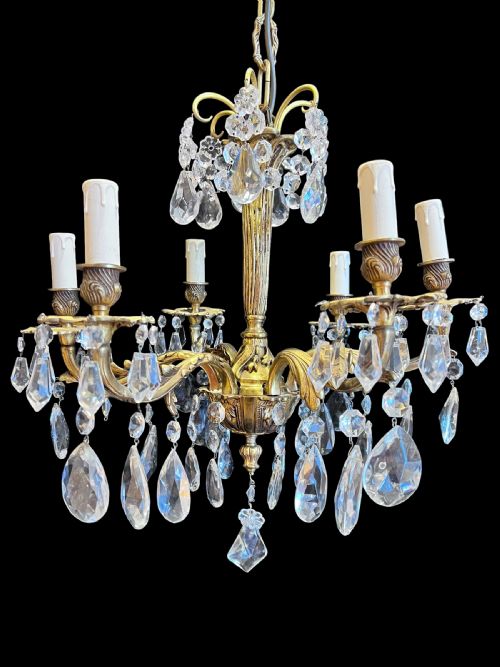
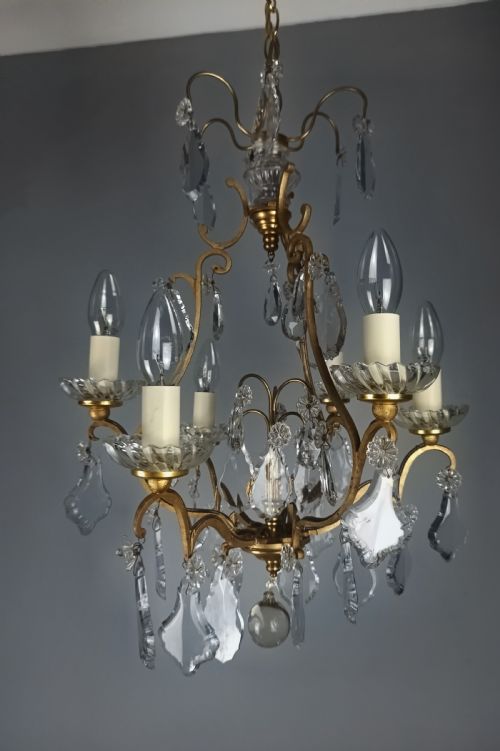
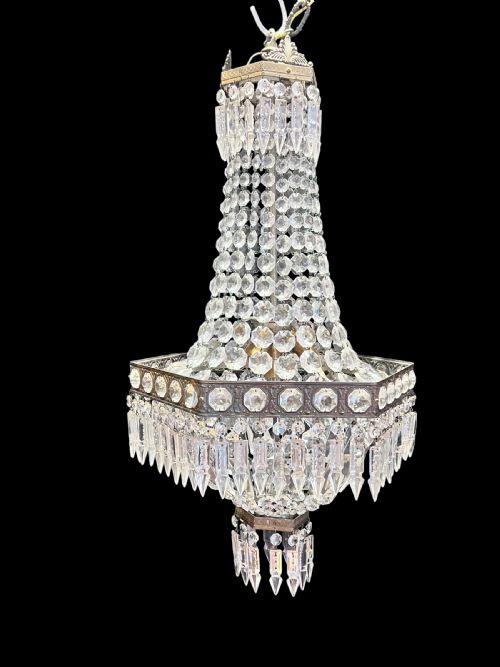
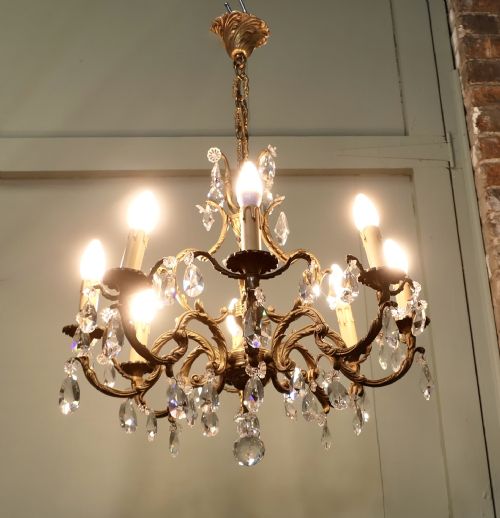
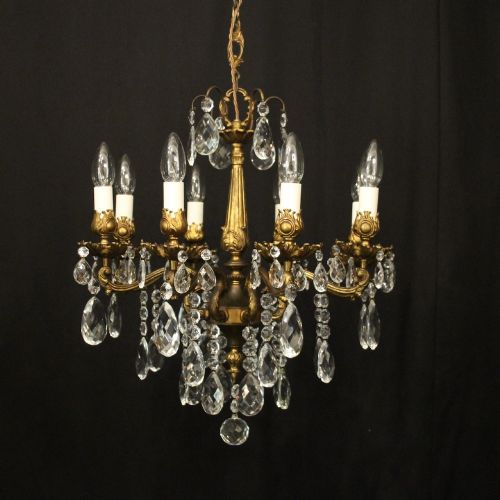
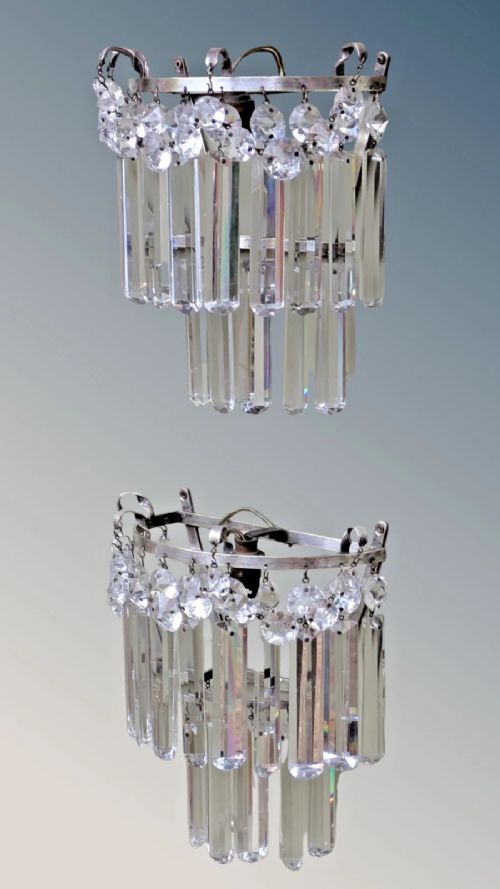
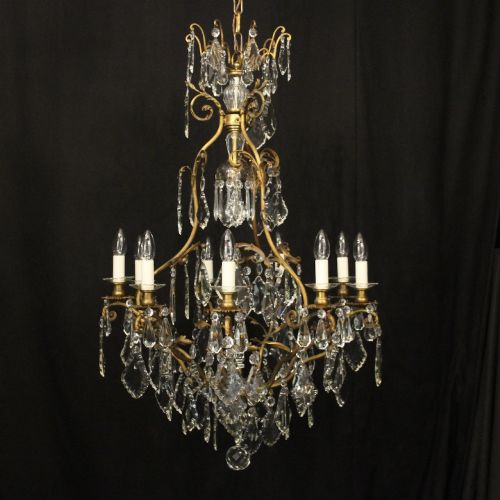
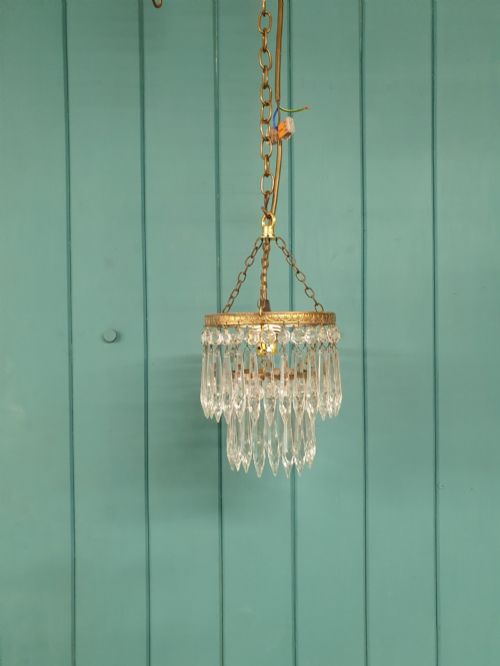
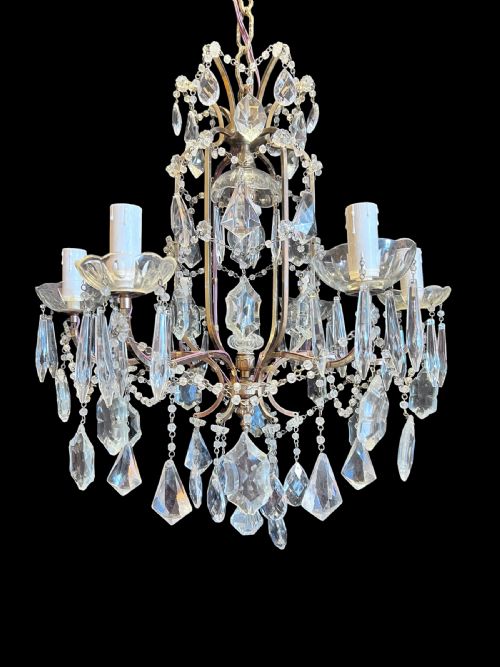
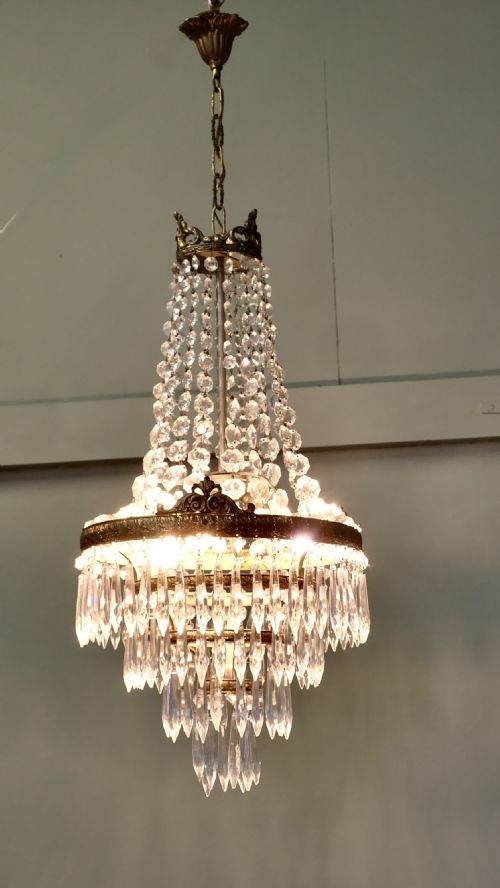
The selections most frequently met on this page include multi-arm chandeliers, flush-mounted plafonniers, and wall sconces originating from French, Italian, and English workshops. These fixtures range from small dome lights and tapered bag chandeliers to large tent-and-waterfall ballroom centerpieces.
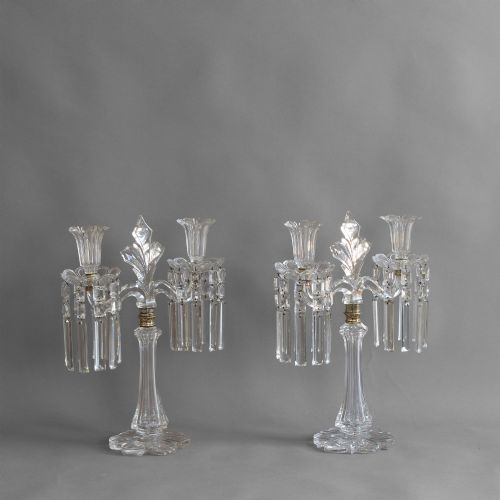
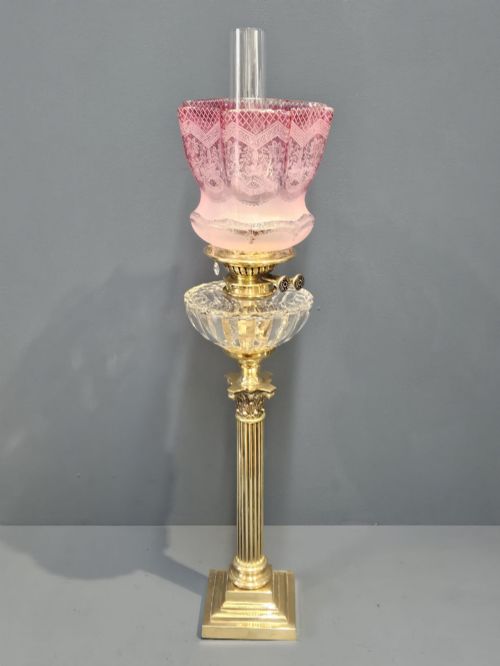
Beyond ceiling fixtures, the category embraces table-standing items such as oil lamps featuring cranberry or ruby glass shades alongside matched pairs of mantle lustres. Each form utilises faceted drops, spikes, or beads to scatter light across interior spaces.
Materials and construction methods
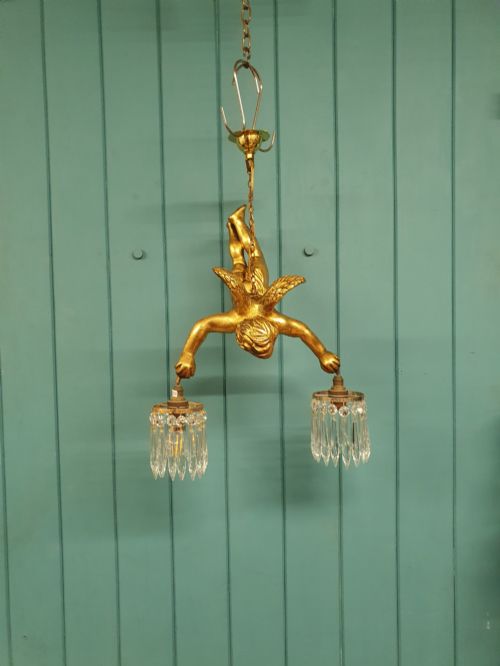
Makers constructed these fixtures using heavy brass, gilt bronze, gilt metal, and spelter frames to support extensive configurations of glass and crystal components. Metal armatures were cast, chased, or gilded before workers wired and pinned individual glass drops into place.
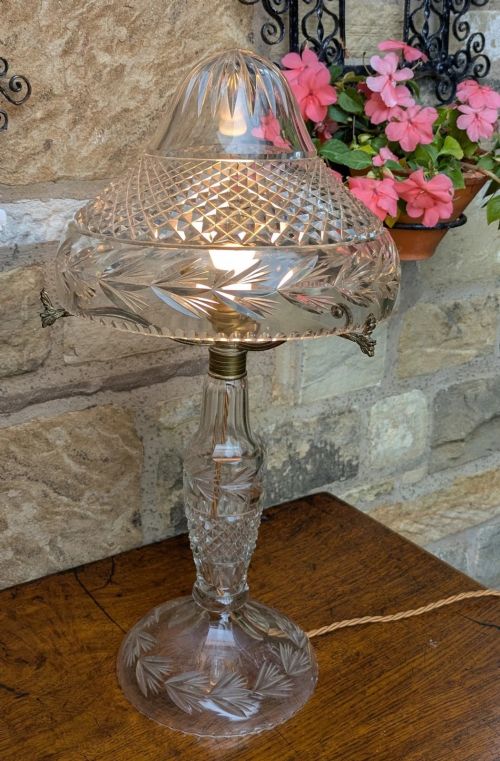
Glass elements combined moulded sections with hand-cut facets designed to catch and split light rays. Craftsmen linked crystal drops, beads, and spikes using small wire loops to form cascading tents, domes, and waterfall drops.
Listings feature brass, bronze, and gilt metal frames paired with hand-cut crystal and coloured ruby or cranberry glass.
Quality variations in the range
Quality separates fixtures by the depth of facet-cutting on the glass and the weight of the supporting metal frame. Superior examples demonstrate crisp, sharp edges on every prism alongside solid bronze or brass casting rather than lighter pressed alloys.
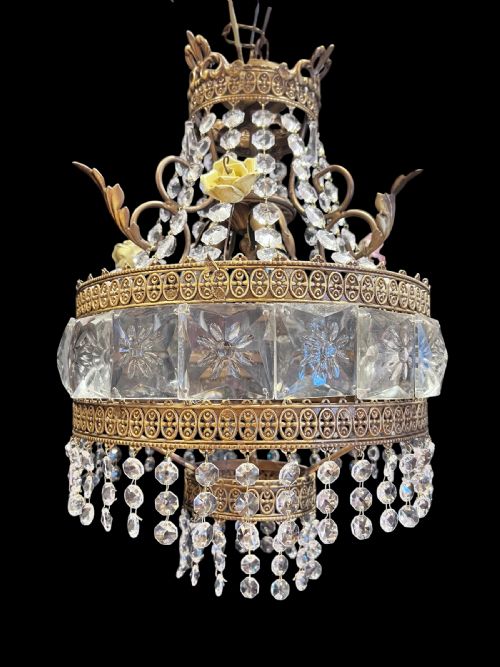
The complexity of the assembly dictates the upper tier of the range, visible in multi-tiered tent designs, integrated porcelain flower details, or cast brass lion masks. Simpler fixtures rely on basic moulded glass domes with minimal hardware.
The Vintage Cut Glass Lighting Glossary
- Plafonnier
- A flush-mount ceiling light or bowl fixture designed to sit close to the plaster surface. These items direct illumination downward through patterned or cut glass.
- Lustre
- A decorative mantel ornament consisting of a vase or pedestal hung with long cut crystal pendants. They were produced in pairs during the Victorian era.
- Tent chandelier
- A lighting fixture featuring an upper conical canopy of strung crystal beads that drops down to a central ring of arms. This configuration defines many grand 1920s ballroom pieces.
- Spike chandelier
- A compact ceiling light characterised by central vertical glass spikes surrounded by radiating metal arms. They appear frequently in Edwardian interiors.
- Bag chandelier
- A fixture shaped like a tapering basket or bag formed entirely from dense webs of crystal beads enclosing internal bulb sockets. They hang tightly against ceiling mounts.
Vintage Cut Glass Lighting: Frequently Asked Questions
How do I hang a heavy antique chandelier?
Heavy chandeliers require direct attachment to a ceiling joist using an independent steel hook and bracket system rather than relying on standard electrical boxes.
Electricians should transfer the weight-bearing load to the structural timber before connecting the internal wiring to the house supply.
Can these fixtures take modern LED bulbs?
Modern LED golf ball or candle bulbs fit most vintage sockets perfectly while generating significantly less heat than traditional incandescent lamps. Lower thermal output protects old lacquered brass finishes and fragile silk wiring sleeves from premature degradation.
Selecting warm white tones helps preserve the amber glow characteristic of early twentieth-century interiors.
What is the difference between glass and crystal?
True crystal contains added lead oxide, which increases the material weight, density, and refractive index compared to standard soda-lime glass. This higher lead content creates the sharp prismatic rainbows seen when light passes through Edwardian and 1920s fixtures.