



Victorian Glass Globe
When you search for victorian glass globe, you encounter oil lamp shades, decanters, display domes, and apothecary vessels shaped with distinct spherical forms.
Victorian Glass Globe
A buyer examining a victorian glass globe search is typically looking at round glass components from oil lamps, decanters, display domes, scent bottles, and apothecary vessels. These items span the nineteenth century and the early twentieth century, taking forms from simple blown pharmacy carboys to etched lamp shades and taxidermy showcases.
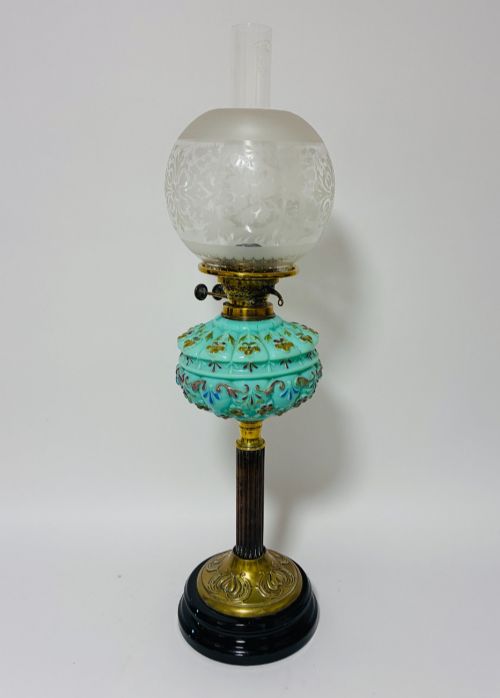
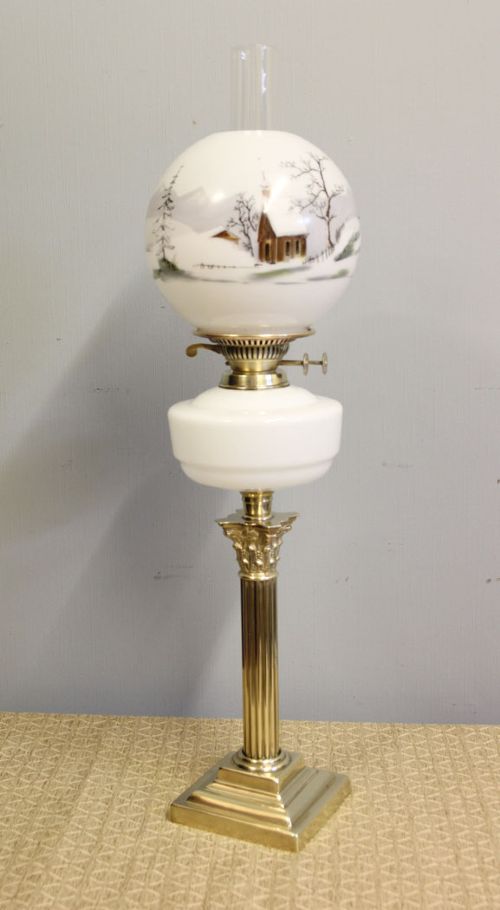
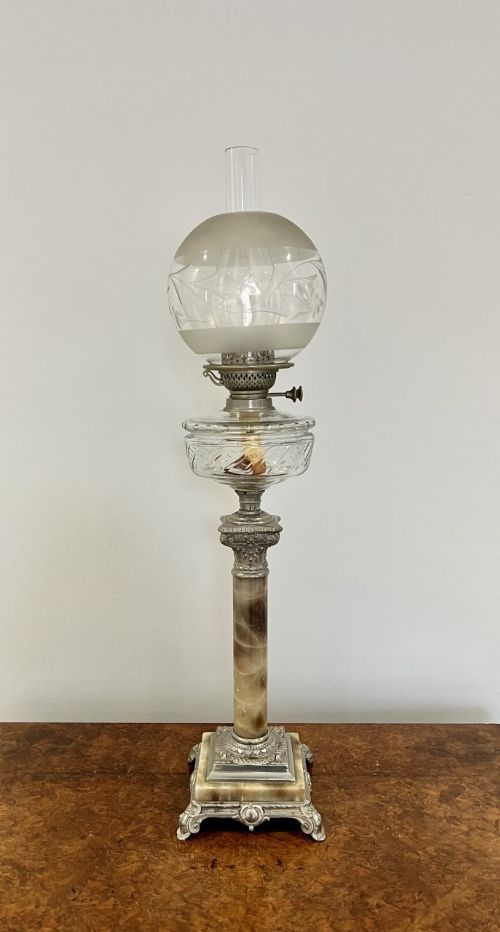
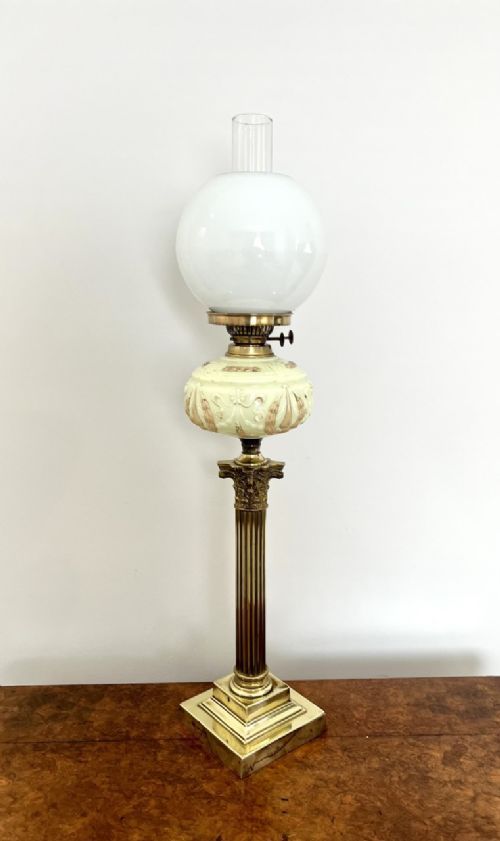
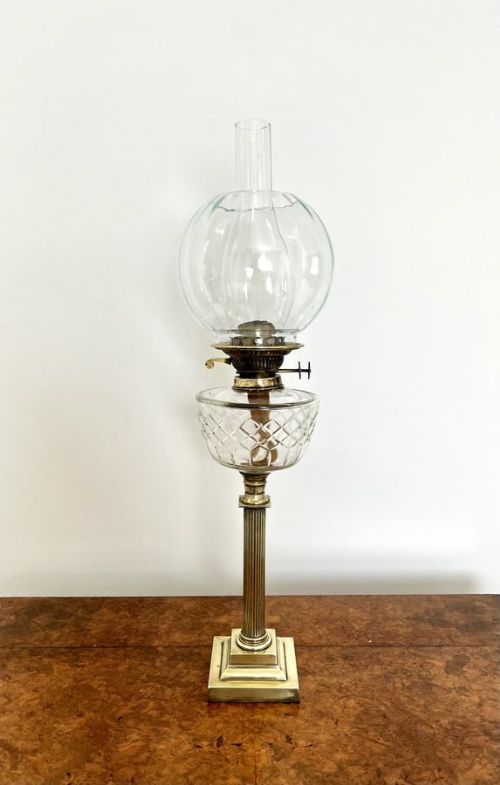
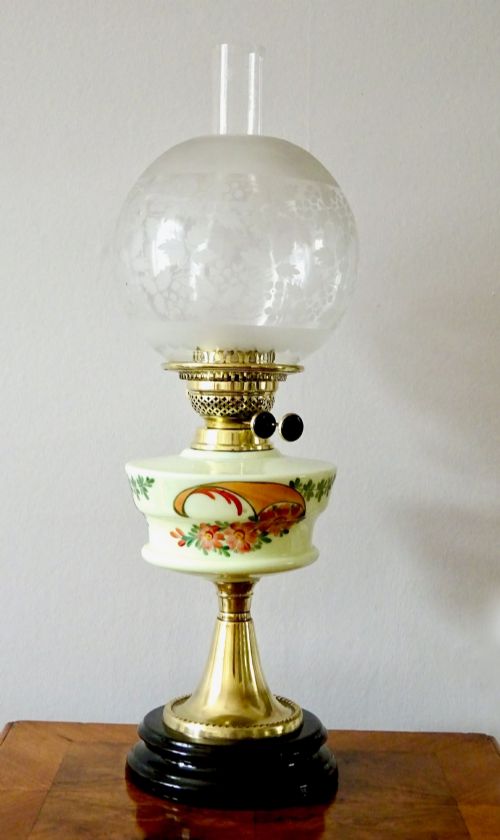
The most common iterations on this page are oil lamp shades, inkstands, and table lamps featuring spherical glass bodies or globes. These items frequently combine glass with brass, ceramic, ebonised wood, and bronze mounts, reflecting the dominant styles of the period.
Objects range from tall oil lamps with terrestrial globe shades and engraved decanters to large glass clock domes and pharmacy jars. The variety encompasses domestic lighting, scientific vessels, and display containers produced across Victorian and Edwardian periods.
Materials and Technique
Items are constructed primarily from hand blown glass, opaline glass, milk glass, and clear crystal glass, often shaped into globe bodies and shades. These glass elements pair with brass columns, ceramic fonts, bronze mounts, and ebonised wood bases.
Decoration involves engraving, etching, hob cutting, and painting, creating motifs such as winter scenes, foliage, and geometric panels. Metal components like brass rings, silver collars, and gilt bronze mounts secure and frame the spherical glass sections.
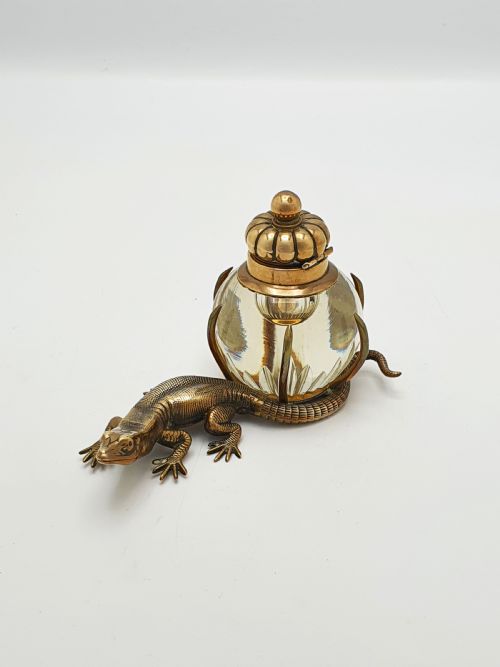
Lizards cast in brass occasionally scale the base of an inkstand, keeping permanent watch over the glass globe below.
Distinctions in Quality
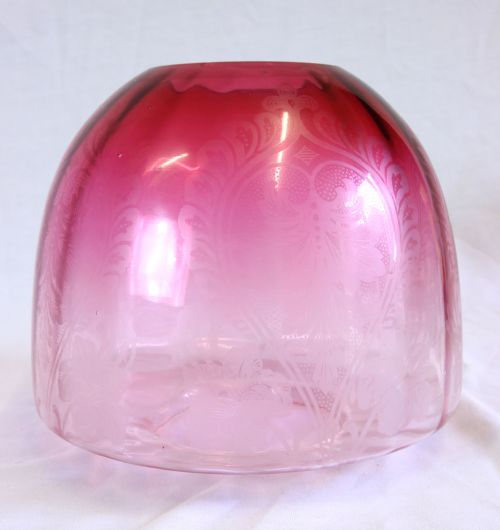
Quality separates through the weight and clarity of the glass, the depth of the cutting or engraving on shades and decanters, and the substance of the mounting metals. Heavier brass stands, intricate hand engraving, and unblemished opaline or cranberry glass distinguish finer examples from standard production.
The integrity of paired components, such as original glass domes sitting on matching bases or marked silver mounts on scent bottles, elevates an object. Superior items demonstrate precise joins between glass globes and their brass or bronze collars.
Hinks of Birmingham·Perry and Co·Messengers
The Victorian Glass Globe Glossary
- Carboy
- A large spherical glass bottle used in pharmacies and laboratories to hold liquids. These vessels often feature heavy blown glass walls designed for chemical storage.
- Opaline glass
- A semi-translucent white or tinted glass popular in nineteenth-century lighting and decorative objects. It diffuses light softly through its milky composition.
- Shaft and globe
- A decanter style defined by a long slender neck rising above a spherical glass body. These pieces frequently feature engraved thistle or union patterns.
- Taxidermy dome
- A blown glass bell jar placed over a wooden base to protect specimens and curiosities. They preserve delicate displays from dust and handling.
- Vesta
- A small pocket container for matches, often formed as a silver and glass globe. These match holders include striking surfaces for ignition.
Victorian Glass Globe: Frequently Asked Questions
What is a shaft and globe decanter?
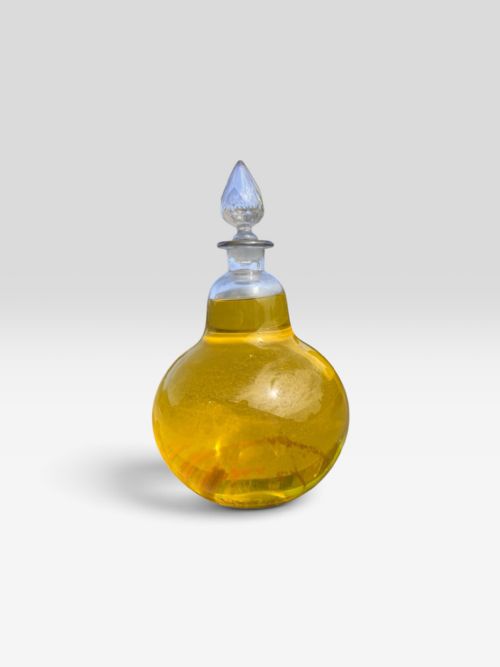
A shaft and globe decanter is a nineteenth-century wine bottle featuring a spherical glass body topped by a long, narrow neck. These pieces were blown and engraved with floral or geometric motifs.
They often include star-cut bases and handle spirits or port during formal dining. The heavy glass globe provides stability on the table.
How are apothecary carboys different from domes?
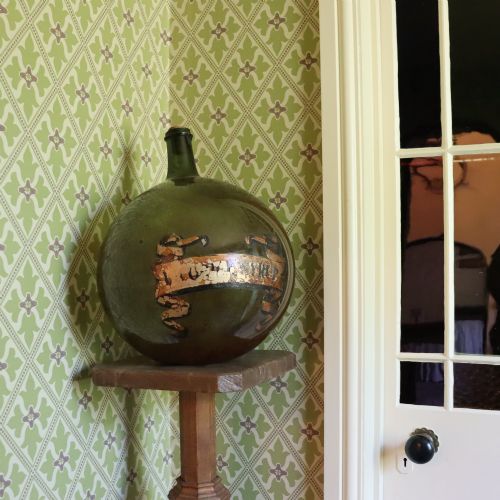
Apothecary carboys are large spherical glass vessels utilised in pharmacy shops for holding liquids and chemicals. They feature thick hand blown walls designed for heavy duty use.
In contrast, display domes are hollow glass bells placed over bases to protect taxidermy and ornaments. Carboys held substances, while domes served purely to showcase and shield collections.
What materials make up an oil lamp globe?
An oil lamp globe combines a glass shade or font with structural elements like brass, ceramic, and bronze. The glass itself appears as cranberry, opaline, milk glass, or etched clear material.
Support structures involve heavy brass stands, columns, and ebonised wood bases. Metal rings secure the spherical glass shade above the burner.
How do you distinguish Victorian from Edwardian glass?
Victorian glass often displays rich colours like cranberry and green, alongside heavy hob cutting and detailed engraving. Edwardian pieces frequently lean towards simpler opaline shades and transitional Art Nouveau forms.
Lighting fixtures from the later period also incorporate updated brass mechanics and structural wiring adaptations. The transition marks a shift toward lighter tones and softer profiles.