


Victorian Brass Apparatus
These Victorian brass apparatus selections combine scientific utility with heavy metal presence, offering tangible links to nineteenth-century discovery.
Victorian Brass Apparatus
When you search for victorian brass apparatus, you encounter a range of nineteenth-century scientific and industrial instruments designed for measurement, demonstration, and mechanical testing. These objects span laboratory apparatus, meteorological gauges, and workshop testers originating from British and European makers.
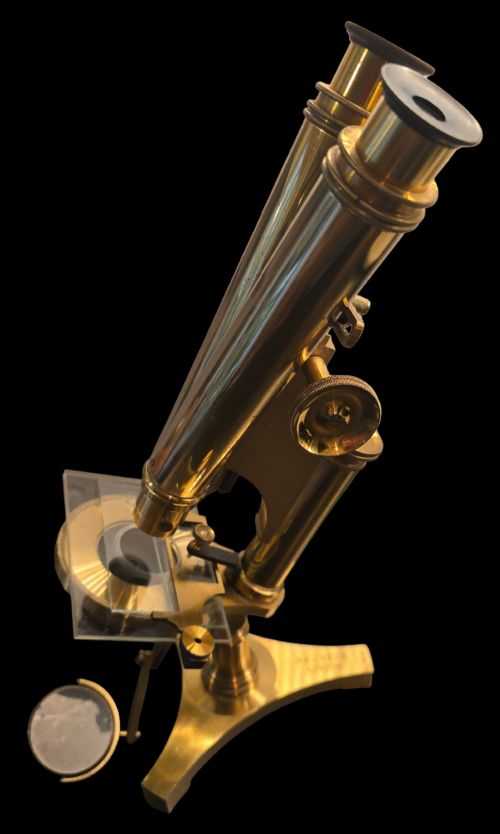
The pieces on this page lean heavily towards instruments housed in wooden cases, alongside freestanding electrostatic devices and optical equipment. Form follows strict utility here, with every screw, dial, and mounting bracket serving a precise observational purpose.
How They Were Made
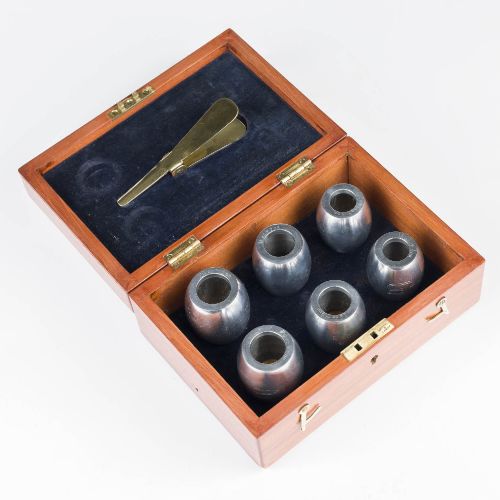
Makers constructed these items using heavy-gauge cast and turned brass, frequently paired with seasoned mahogany or walnut for fitted storage cases. Glass cylinders, tubes, and lenses appear alongside steel components and delicate silk or hair filaments.
Assembly relied on precision screw-cutting and dovetailing, ensuring that sensitive scientific movements remained stable within their protective wooden housings during transport and daily laboratory use.
Several Victorian instruments rely on treated human hair to measure atmospheric tension, proving that biology occasionally powered nineteenth-century physics.
What Varies in Quality
Quality rests in the crispness of the division engraving on dials and the retention of original lacquered finishes on the brass components. Surviving accessories, such as matching keys for fitted mahogany boxes and intact maker signatures, elevate an instrument significantly.
The complexity of the internal mechanism also dictates standing, with multi-plate assemblies and signed optical lenses demonstrating superior workshop standards compared to simpler utilitarian gauges.
De Grave Short and Co·R and J Beck·Poulenc Freres·Alfred Apps·Negretti and Zambra·Goodbrands·Gritzner and Co·Heinrich Daniel Ruhmkorff·William Ladd
The Victorian Brass Apparatus Glossary
- Hygrometer
- An instrument used for measuring the humidity or amount of water vapour in the atmosphere. Saussure models utilise human hair for tension sensing.
- Anemometer
- A device used for measuring wind speed and pressure. Lind's pattern versions measure pressure through liquid displacement in glass tubes.
- Induction Coil
- An electrical device used to produce high-voltage alternating pulses from a low-voltage direct current. Heinrich Daniel Ruhmkorff developed notable examples of this apparatus.
- Electrostatic Machine
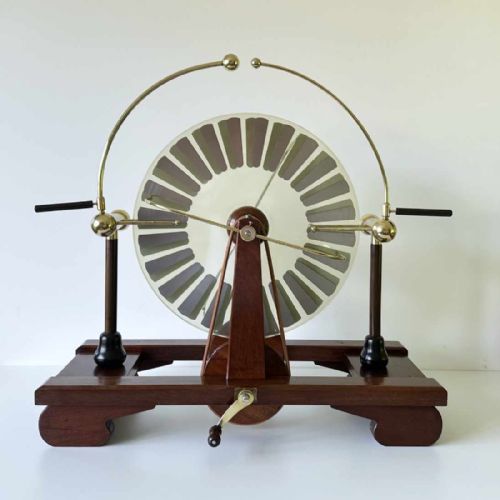
- A generator that produces static electricity at high voltages. Winters pattern machines utilise large glass plates to generate friction-based charges.
Victorian Brass Apparatus: Frequently Asked Questions
What are these brass instruments used for?
These pieces served as scientific instruments, workshop testers, and meteorological gauges during the nineteenth and early twentieth centuries. Laboratories, factories, and researchers utilised them for precise measurement and physical demonstration.
Today, they function primarily as decorative objects and historical artefacts for collectors of scientific instruments. Their robust construction allows them to sit securely on display surfaces.
Are these scientific instruments still in working order?
Most of these items are sold as historical display pieces rather than calibrated laboratory tools. Internal components such as coils, vacuum tubes, and delicate filaments often require specialist conservation to function.
Collectors appreciate them for their mechanical ingenuity and aesthetic presence rather than daily operational use. Preserved cases and intact glass elements are the primary focus.
How do I identify the maker of an apparatus?
Makers typically engraved their company name, partnership style, or address directly onto the brass scale plates, dials, or wooden bases. Some instruments also feature retailer signatures alongside the original manufacturer details.
Associated wooden storage cases occasionally retain paper trade labels pasted inside the lid. These inscriptions help date the piece and confirm its workshop origin.
How should I clean polished brass instruments?
Polished brass items benefit from minimal intervention to preserve their historic patination and original lacquer coatings. A soft, dry cloth is usually sufficient for removing surface dust.
Harsh chemical polishes should be avoided because they strip away age-related coloration and fine engraving details. Keeping pieces away from damp environments protects the accompanying wood and steel elements.