



Victorian Glass Drinking Goblets
Victorian glass drinking goblets bring weight and colour to the table, appearing in clear lead crystal, cranberry, green, and amber.
Victorian Glass Drinking Goblets
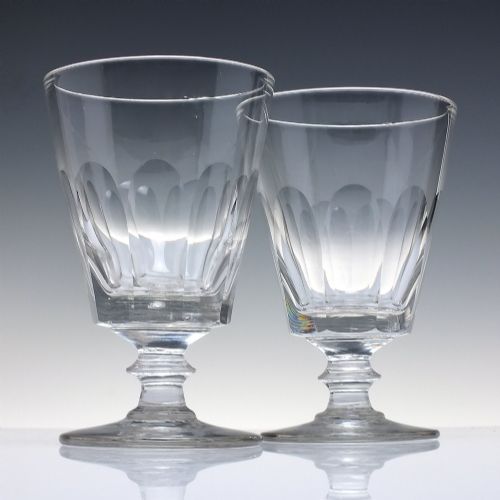
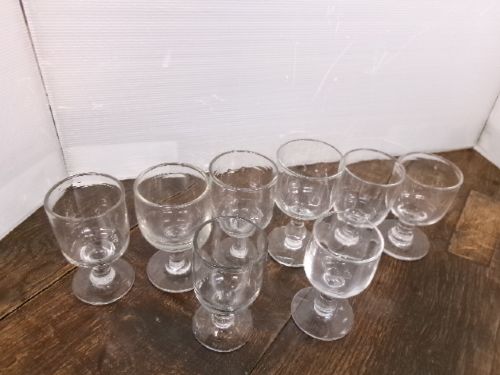
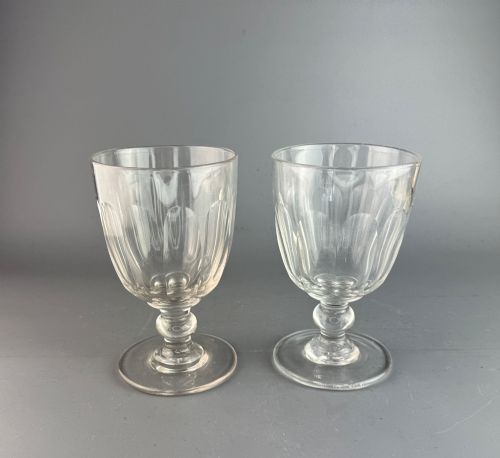
Victorian glass drinking goblets encompass heavy rummers, wine glasses, and stemmed vessels produced across the nineteenth century. The selection ranges from robust tavern glasses and rummers dated around 1840 to delicate cranberry and amber stemware from the late Victorian decades.
Makers utilised various silhouettes, including wide bowls, tulip shapes, and panel-cut sides. Pieces frequently arrive in matched sets or small groups, though harlequin sets assembled from related individual vessels also appear.
Origins stretch beyond English lead crystal to continental centres like Bohemia, France, Austria, and Italy. Examples include Venetian Revival, Biedermeier, and Murano pieces sitting alongside domestic production.
Materials and Techniques
Hot metal was hand-blown into shape, forming thick bases and sturdy stems such as baluster and bobbin forms. Lead glass and crystal provided the heavy clarity required for deep cutting and polishing.
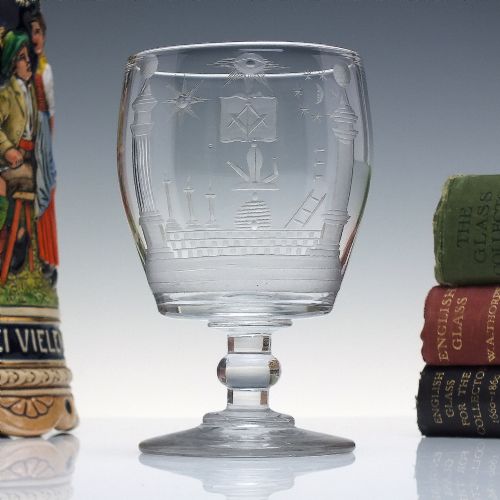
Decoration relied upon wheel engraving, intaglio work, etching, and acid cutting to create floral or masonic motifs. Coloured glass varieties, including cranberry, vaseline, emerald green, and opaque opalescent hues, gained their tones through metallic oxides added to the batch.
Materials recorded across the selection include lead crystal, clear glass, cranberry glass, vaseline glass, and emerald green glass.
Craft and Distinction
Superior vessels display crisp wheel cutting and balanced proportions, where the weight of the bowl matches the thickness of the foot. Fine engraving shows steady control and clean lines rather than shallow scratching.
The depth of colour in cranberry, green, and amber glass alters the visual impact, with rich, even saturation marking better production. Applied gilding and enamel work, particularly on Bohemian and French pieces, retain their crispness on finer examples.
Stevens & Williams·Lobmeyer·Salviati
The Victorian Glass Drinking Goblets Glossary
- Rummer
- A heavy, large-bowled drinking glass used for wine or ale during the eighteenth and nineteenth centuries. They typically sit on a short stem with a thick circular foot.
- Lead Crystal
- Glass containing lead oxide that increases weight, brilliance, and refractive index. It allows for deeper wheel-cut decoration.
- Cranberry Glass
- Transparent red glass coloured with gold chloride, popular in Victorian tableware. It ranges from pale pink to deep ruby.
- Intaglio
- A technique where the design is sunk below the surface of the glass rather than carved in relief. It produces a frosted, detailed finish when wheel-engraved.
- Baluster Stem
- A thick, turned stem resembling an architectural baluster, seen on heavier nineteenth-century drinking vessels. It gives stability to large bowls.
- Vaseline Glass
- Yellow-green glass containing uranium dioxide that glows under ultraviolet light. It was widely produced during the Victorian period.
Victorian Glass Drinking Goblets: Frequently Asked Questions
What is a rummer?
A rummer is a stout drinking glass with a large bowl designed for ale, punch, or wine. They emerged in heavy lead glass during the Georgian era and continued through the Victorian period.
Their substantial weight and low centre of gravity made them practical for tavern and household use alike.
How do I identify Victorian wine glasses?
Victorian wine glasses display hand-blown bowls, pontil marks on the underside of the foot, and heavier metal than modern stemware. Many feature cut panels, wheel engraving, or strong colours like green, amber, and cranberry.
Styles shifted from heavy faceted rummers in the mid-nineteenth century to delicate etched and enamelled forms by the eighteen-eighties.
Are coloured glass goblets hand-blown?
Most nineteenth-century coloured goblets were shaped by hand using traditional blowing irons and pontil rods. Makers added mineral oxides to the molten batch to achieve distinct hues such as vaseline, emerald, and ruby.
Slight irregularities in wall thickness and tiny air bubbles within the material point to hand-crafting methods.
Can I use antique goblets daily?
Antique drinking glasses handle modern dining well provided they receive careful treatment. Hand washing protects the delicate rims and historical lead crystal from thermal shock and abrasive detergents.
Their robust build, particularly on mid-nineteenth-century rummers, makes them well suited for occasional toasts and dinner parties.