




Victorian Glass Decanter Set
A victorian glass decanter set brings host-ready brilliance to a sideboard through heavy cut crystal bottles and gleaming metal frames.

Victorian Glass Decanter Set
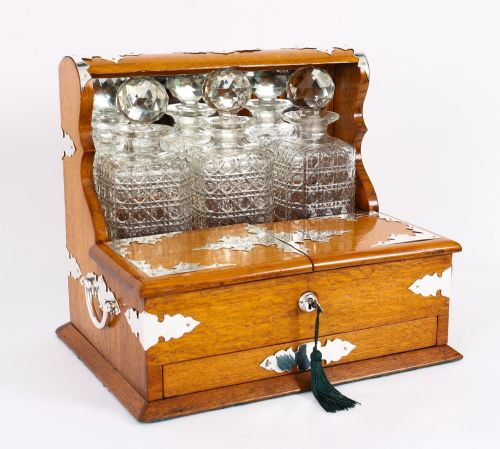
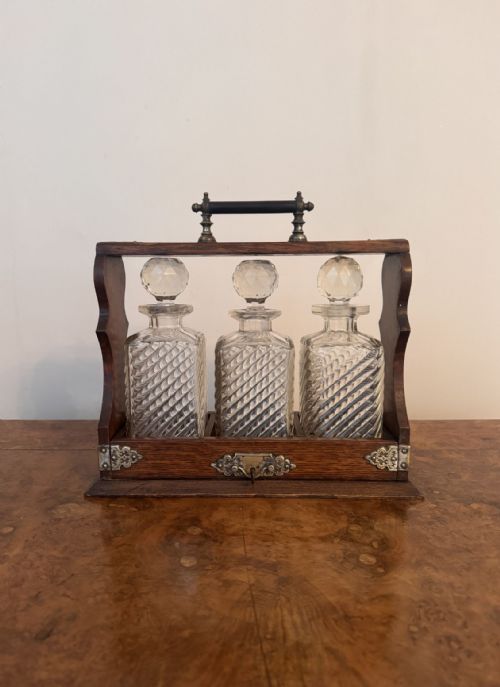
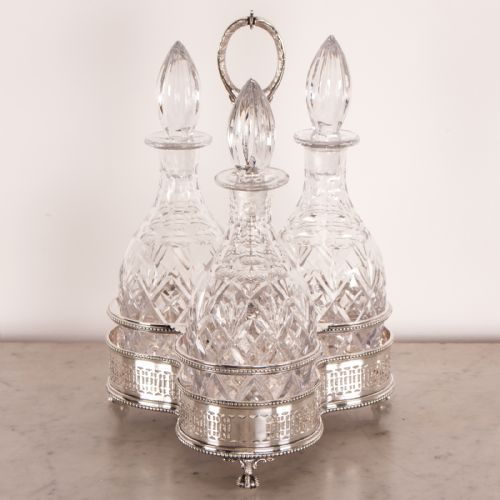
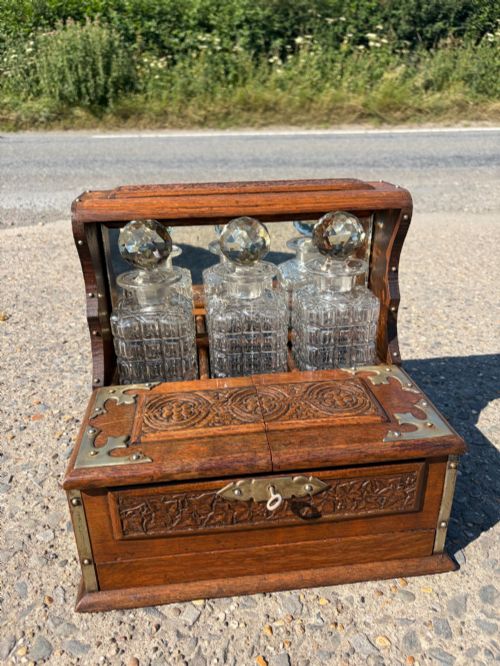
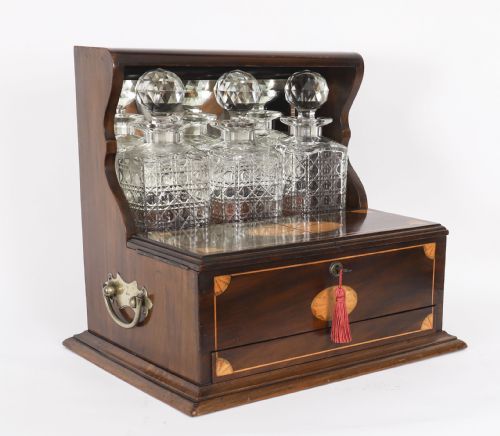
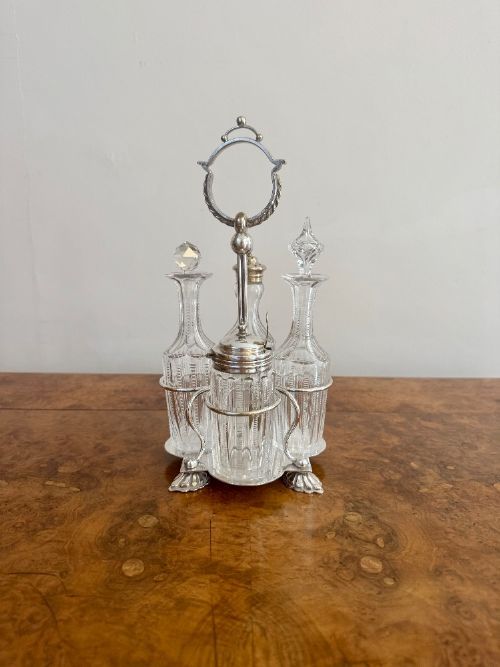
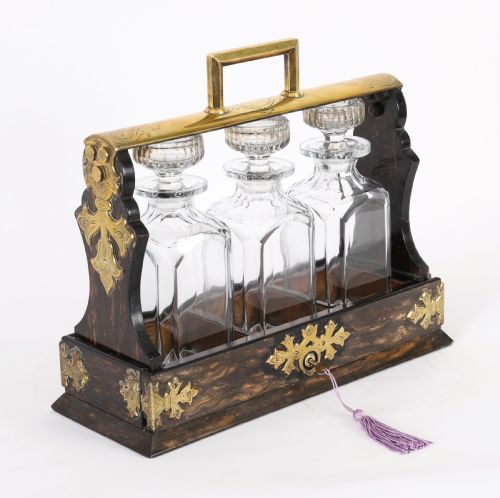
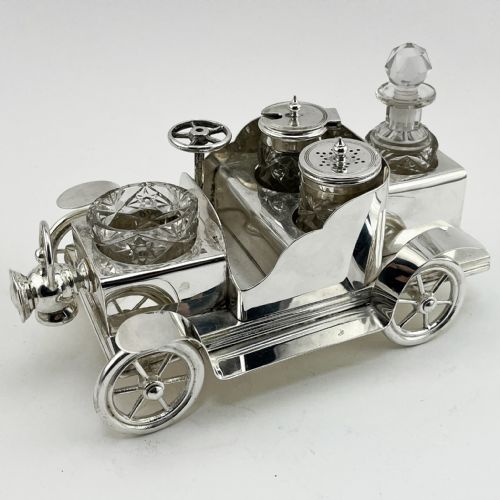
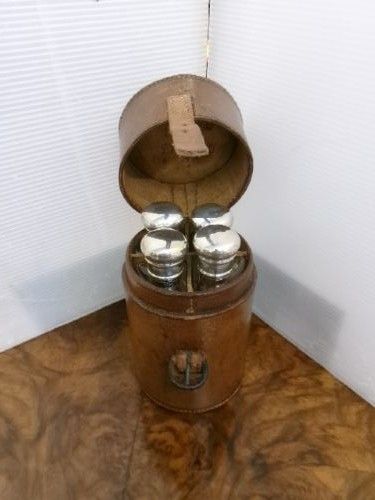
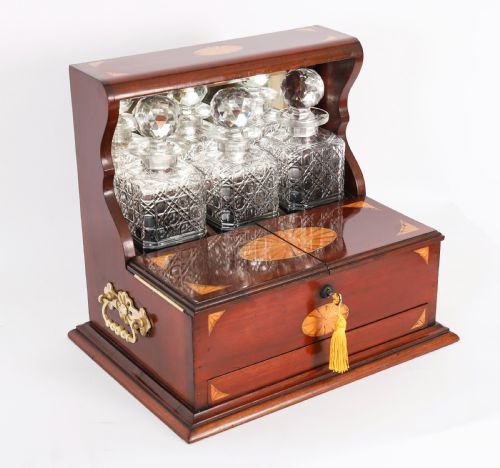
A victorian glass decanter set on this page usually takes the form of a tantalus, a locking wooden frame holding three cut crystal bottles, or a fitted silver plated stand. These items served as functional barware in nineteenth-century homes, designed to secure fine spirits away from unauthorized guests while displaying them attractively.
The assortment spans from multi-bottle oak and coromandel canteens with integrated games compendiums down to simple coloured glass carafes and cruet stands. Late nineteenth-century examples often combine functional liquor storage with games storage in blonde or golden oak frames.
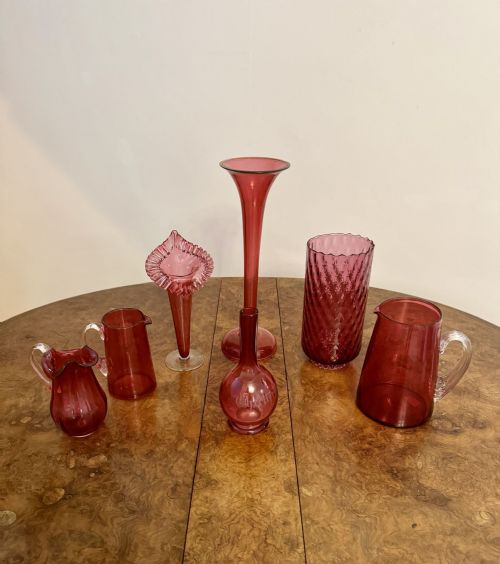
Buyers will also find Venetian lattico glass ewers, cranberry glass liquor stands, and frosted crystal barrel dispensers. These pieces reflect the varied social rituals of the period, from after-dinner drinks to dining table oil and vinegar service.
Materials and construction
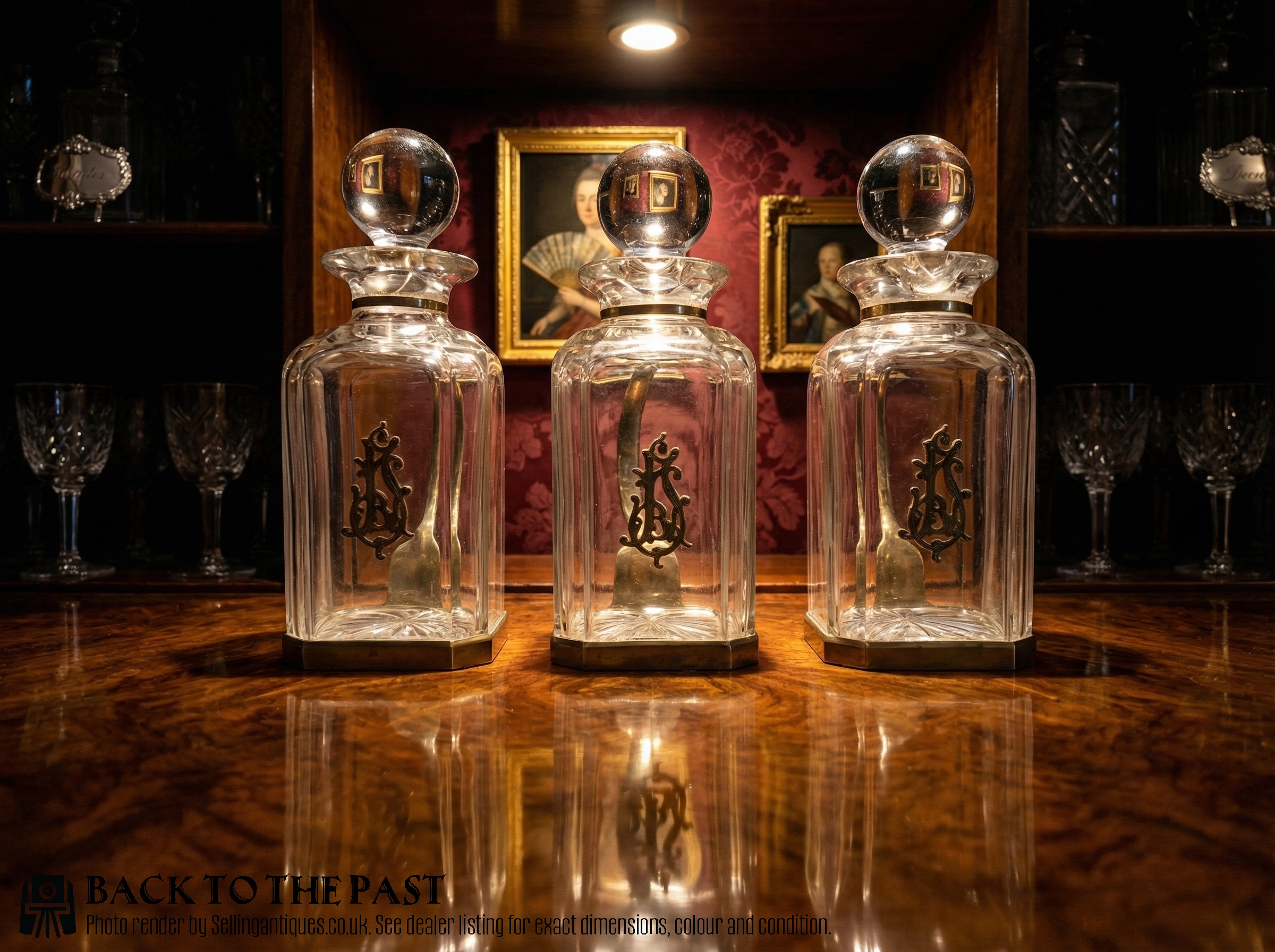
Makers shaped heavy glass through cutting, moulding, and casing to create deep light refraction in shades of cranberry, ruby, green, and amethyst. Metal components rely on silver plate and brass mounts to secure the glass bottles within wooden frames of oak, walnut, satinwood, and coromandel.
Wooden cases often feature marquetry stringing, brass handles, and locking mechanisms requiring functional keys to release the decanters. Silver plated stands and trays provide stable bases fitted specifically to the contours of the accompanying glass bottles.
Victorian Glass Decanter Set Retail Price Guide 2026
Typical asking prices for victorian glass decanter set among the pieces listed under this phrase on Sellingantiques today, from the lower quarter to the upper quarter. They describe what is for sale here now, not the wider market.
Some Victorian drinkers hid their brandy inside a cabinet that doubled as a chess board.
Evaluating distinction
Quality rests upon the crispness of the glass cutting and the structural integrity of the fitted timber or metal stand. Pieces featuring integrated games compendiums, marquetry inlay, and complete sets of matching bottles command greater interest than single-bottle carriers.
The weight of the glass, the complexity of the silver plated or brass framework, and the presence of original stoppers define the upper tier of surviving examples.
Walker And Hall·Elkington·Henry Wilkinson And Co
The Victorian Glass Decanter Set Glossary
- Tantalus
- A locking wooden frame designed to hold decanters securely in place while allowing the bottles to remain visible. The locking bar prevents the removal of the decanters without a key.
- Cranberry glass
- A transparent pinkish-red glass coloured by the addition of gold chloride into the molten batch. It appears frequently in Victorian tableware and liquor sets.
- Cruet set
- A matched collection of small bottles or jars held in a stand, used for holding condiments, oil, and vinegar at the dining table.
- Games compendium
- A fitted box containing equipment for multiple parlour games, often built into the base or sides of a late nineteenth-century tantalus.
- Lattico glass
- Opaque white striped art glass associated with Venetian production techniques during the nineteenth century.
Victorian Glass Decanter Set: Frequently Asked Questions
How do you open a tantalus without a key?
Most antique tantaluses require the original key to lift the locking arm and release the decanters from the frame. Forcing the mechanism risks damaging the surrounding wood and brass mounts.
Professional locksmiths can sometimes pick or fit a replacement key to the original lock without altering the timber housing.
What is the difference between a tantalus and a decanter box?
A tantalus exposes the bodies of the cut crystal decanters behind a locking metal bar fitted across their necks. This allows guests to view the contents while keeping the spirits secure.
A decanter box, such as a coromandel or brass-mounted case, completely encloses the bottles within hinged wooden lids and doors for concealed storage.
Are replacement stoppers acceptable on Victorian decanters?
Original stoppers that match the cut pattern and internal wear of the decanter neck remain the preference for collectors. Replacement stoppers are common due to breakage over decades of use.
Inspect the ground glass seating inside the bottle neck to ensure any replacement sits flush and airtight.