




Victorian Glass Decanter Pitcher
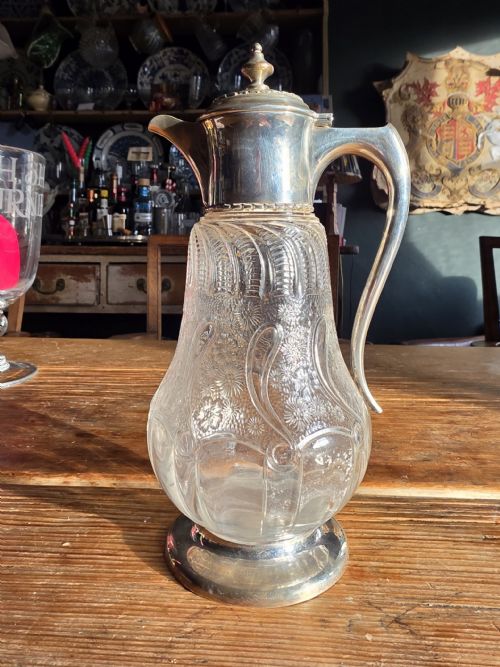
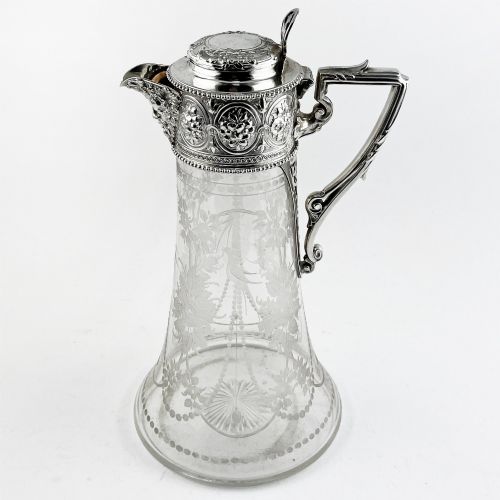
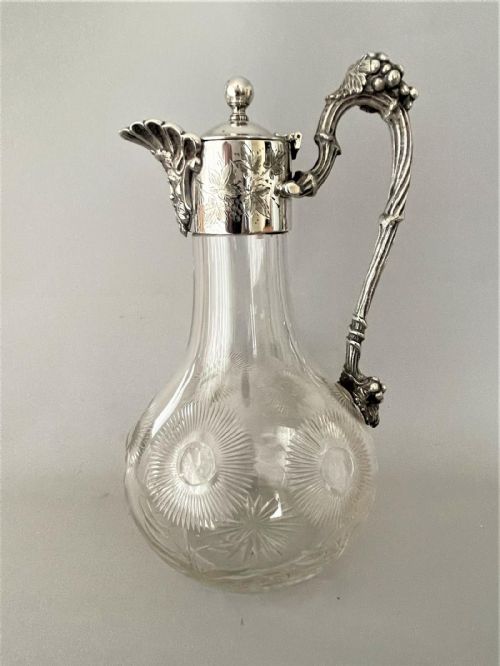
These Victorian glass decanter pitchers bring together heavy cut crystal and silver mounts for serving wine at the dining table.
Victorian Glass Decanter Pitcher
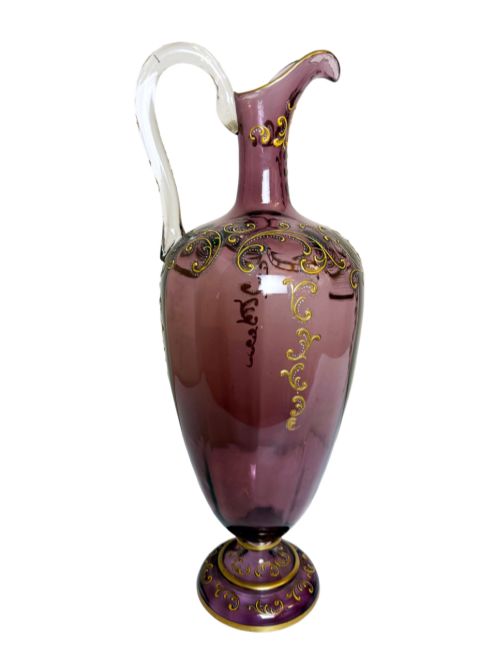
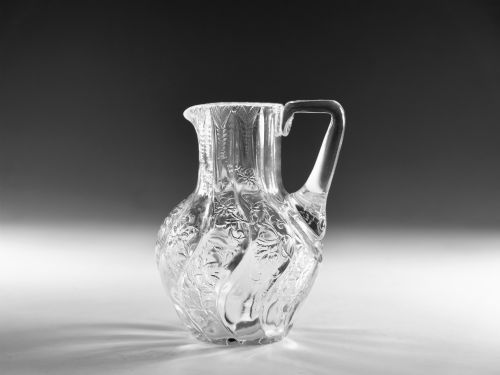
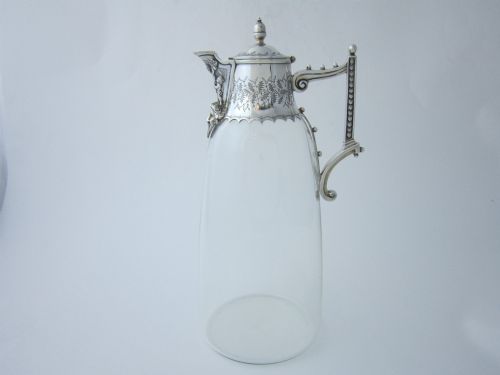
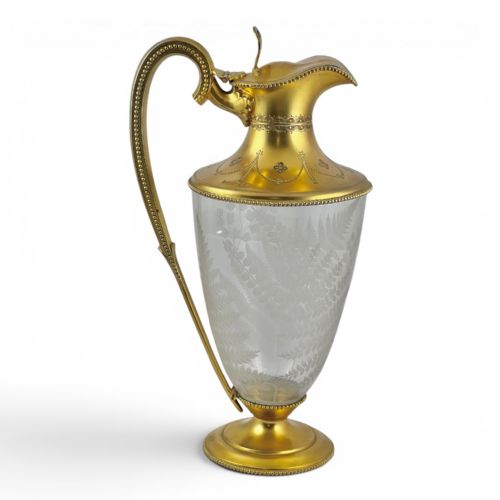
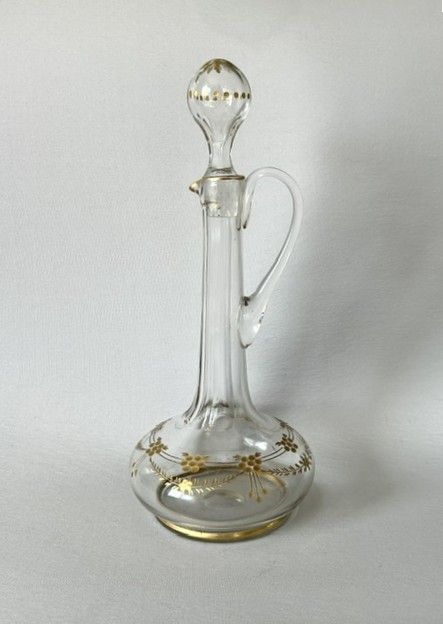
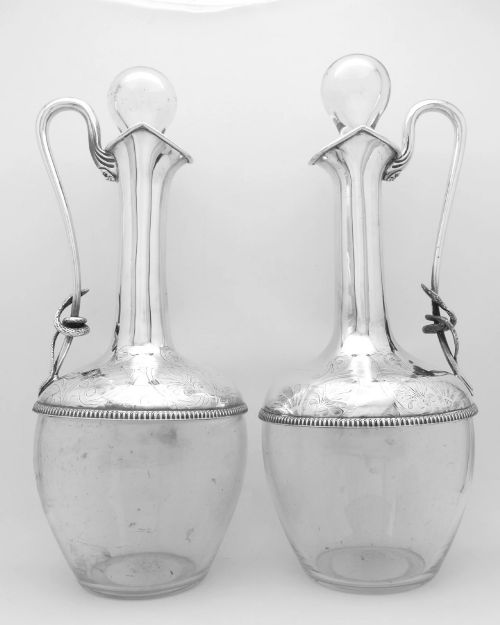
A victorian glass decanter pitcher takes many forms on this page, appearing as claret jugs, wine ewers, and champagne pitchers intended for formal dining. The most common examples pair a clear cut glass or crystal body with silver plate or sterling silver mounts, often dating from the late nineteenth century.
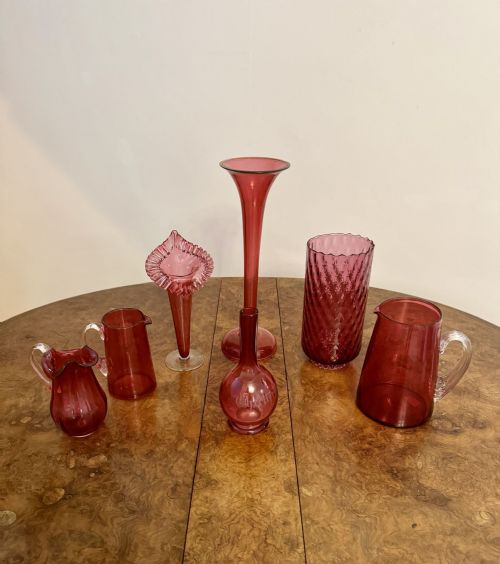
Makers and workshops across England, Bohemia, and France produced these vessels in styles ranging from French Rococo Revival to Art Nouveau and the Aesthetic Movement. Collectors encounter coloured glass varieties in cranberry, green, amethyst, and amber, alongside clear crystal engraved with fruiting vines or dolphins.
How they were made
Makers formed the glass bodies through blowing, sometimes overlaying colours or applying hand-painted gilt enamel, before cutting deep geometric patterns into the crystal surface. Craftsmen then fitted hinged metal mounts, collars, and serpent handles in silver plate or solid sterling silver to the glass necks.
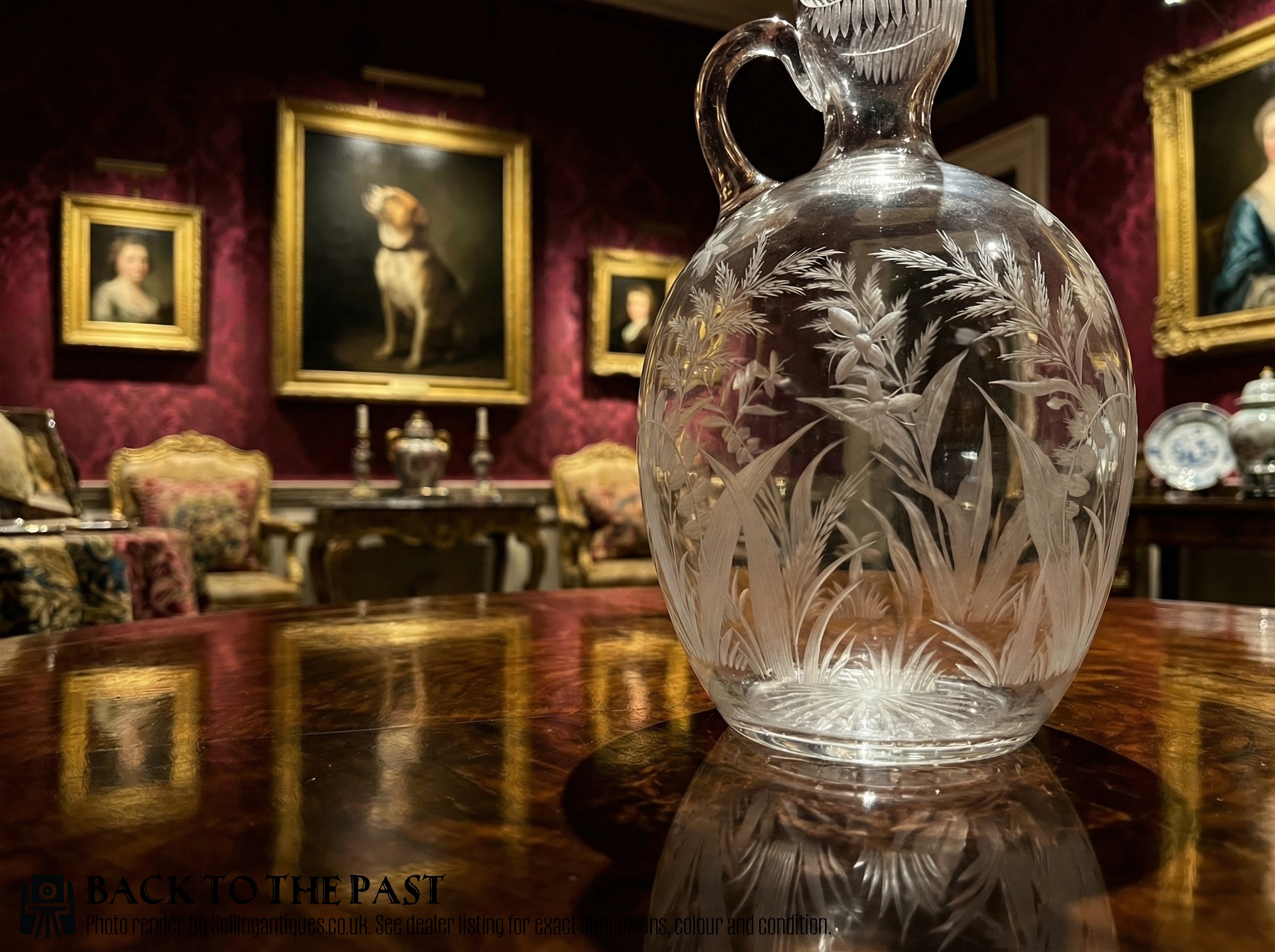
Certain specialised pieces incorporate internal ice tubes of silver plate to chill wine without dilution, or feature intricate bacchus mask spouts cast and chased by silversmiths. Workshops utilised wheel-engraving to decorate the bowls with botanical and animal motifs.
Listings feature periods from the mid-nineteenth century through the Edwardian era, highlighting materials such as cranberry glass, sterling silver, and cut crystal.
What varies in quality
The weight and depth of the glass cutting separate standard vessels from exceptional examples, with high-quality crystal displaying crisp, sharp facets that refract light clearly. The density of the metalwork and the complexity of cast mounts, such as figural serpent handles or detailed mask spouts, also elevate a piece.
The integration between the glass body and the metal collar determines overall structural integrity, as does the provenance indicated by hallmarks on silver mounts from makers like Mappin and Webb or Elkington. Hand-painted enamel work and overlay techniques require greater artisan skill than plain moulded glass.
Asprey and Co. Ltd·Stevens and Williams·Richardsons·Mappin and Webb·Elkington
The Victorian Glass Decanter Pitcher Glossary
- Claret jug
- A vessel specifically designed for serving red wine at the table, usually featuring a pourer and a hinged lid.
- Ewer
- A large jug with a wide spout and a decorative handle, often taking a more sculptural form than a standard pitcher.
- Silver plate
- A base metal, typically copper or white metal, coated with a thin layer of silver using electroplating techniques developed in the nineteenth century.
- Latticinio
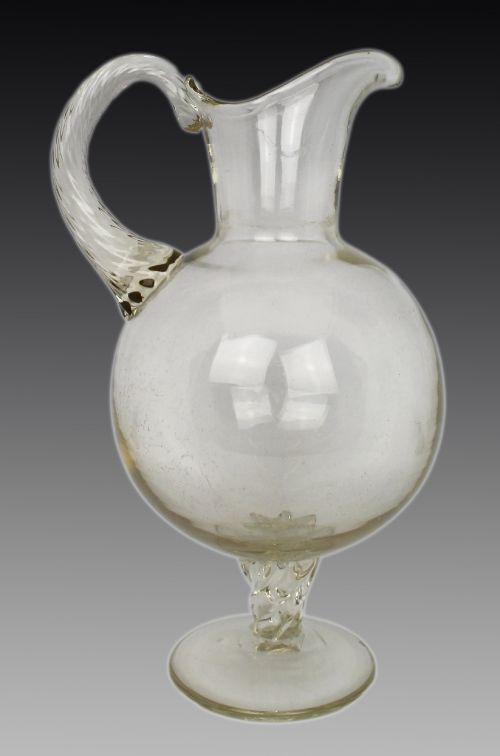
- A glassblowing technique involving fine opaque white or coloured glass threads twisted within clear glass.
- Overlay
- A method where a layer of coloured glass is fused over a clear glass body and partially cut away to create contrasting patterns.
Victorian Glass Decanter Pitcher: Frequently Asked Questions
What is a claret jug?
A claret jug is a serving vessel created for holding and pouring red wine during formal Victorian meals. They combine glass or crystal bodies with hinged metal lids and handles.
These pieces were standard on dining tables of the period, allowing hosts to decant wine from storage bottles before serving guests. The hinged mount kept the contents covered between pours.
How do I clean an antique glass pitcher?
Antique glass pitchers require careful hand washing in warm, soapy water without harsh abrasives. Metal mounts should be kept dry to protect silver plate and sterling surfaces.
Submerging antique pieces in hot water can cause thermal shock to nineteenth-century glass. Special care is needed around hand-painted gilt appliques and enamel decorations.
How can I date my glass decanter pitcher?
Dating relies on examining silver hallmarks, manufacturing styles, and glass cutting techniques recorded across the nineteenth and early twentieth centuries. Victorian pieces often display registration marks or maker stamps on the metal collar.
Stylistic shifts from French Rococo Revival to Art Nouveau also help narrow the production window. Heavy cut crystal combined with silver plate frequently points towards the eighteen-eighties and nineties.