


Victorian Glass Collection
These pieces from a victorian glass collection offer rich colour and texture, bringing distinct nineteenth-century craft into modern rooms.
Victorian Glass Collection
A victorian glass collection brings together nineteenth-century decorative and functional items, spanning the eighteen-sixties to nineteen-hundred. These groupings often feature cranberry glass, mercury glass, and decanters alongside dressing table accessories.
Most pieces date from the later nineteenth century, reflecting the periods of eighteen-eighty and eighteen-ninety. Buyers frequently encounter matched sets or assembled groupings of glassware and apothecary bottles.
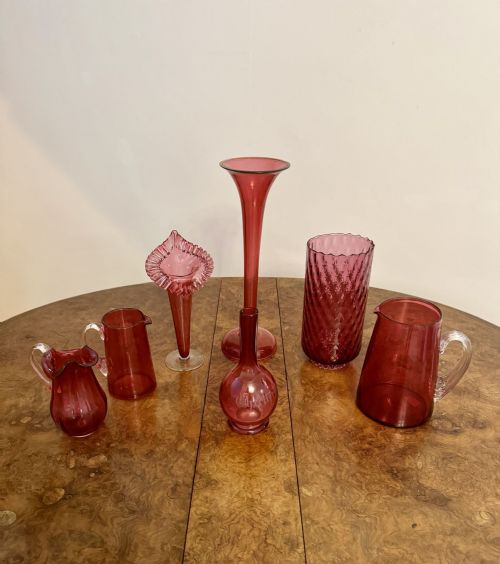
Vases, flagons, and decorative spheres dominate the available forms. English craftsmanship and nineteenth-century design define the aesthetic across the selection.
How they were made
Makers utilised glass as the primary material, often enhancing pieces with white enamel, gold leaf, and silver mountings. Hand blown techniques created organic variations in thickness and form.
Specialised colouring methods produced deep cranberry hues through the addition of gold chloride to the molten batch. Silvered glass and mercury techniques involved double-walled blowing to achieve reflective, mirror-like interiors.
Witches balls were once hung in cottage windows to catch wandering evil spirits in their shiny traps.
What separates the best from the rest
Quality rests on the depth of colour and the precision of applied decoration like white enamel and gold leaf. Superior items display clean optical clarity in the glass body without heavy bubbles or distortion.
The integrity of metal mountings and silver additions distinguishes finer pieces. Craftsmanship shows in the evenness of hand-blown walls and the crisp execution of decorative details.
The Victorian Glass Collection Glossary
- Cranberry glass
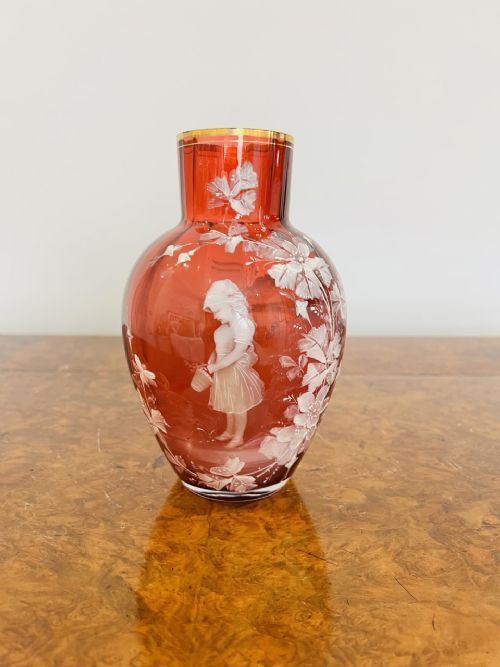
- A rich red-pink glass coloured with gold, popular in nineteenth-century tableware and decorative items. It ranges from pale rose to deep crimson.
- Mercury glass
- Double-walled blown glass coated on the inside with a silvering liquid to create a mirror finish. It is also known as silvered glass.
- Mary Gregory
- Glass decorated with white enamel silhouettes of children in natural settings, characteristic of late-nineteenth-century production. The painting is fired onto the surface.
- Witches ball
- A hollow glass sphere traditionally hung in windows to ward off evil spirits and witches. These decorative spheres often feature reflective silvered interiors.
- Air twist
- A decorative stem on glassware containing elongated spirals of air trapped within the clear metal. It is formed by twisting canes of glass before pulling and blowing.
Victorian Glass Collection: Frequently Asked Questions
What is a victorian glass collection?
A victorian glass collection comprises grouped pieces of glassware dating from the nineteenth century. These selections typically include vases, decanters, and decorative items.
They reflect the diverse manufacturing techniques and popular aesthetics of the period, from deep cranberry vessels to reflective mercury glass.
How do I clean cranberry glass?
Clean cranberry glass gently using warm water and a mild detergent. Avoid harsh abrasives or soaking pieces with metal mountings.
Dry them immediately with a soft cloth to preserve the surface and any delicate enamel details.
What is mercury glass?
Mercury glass is a double-walled glass blown with a cavity that was coated with a liquid silvering solution. The opening was then sealed to trap the reflective finish inside.
Despite the name, mercury was rarely used in the process, which relied instead on silver nitrate or similar compounds.
How can I date nineteenth-century glassware?
Dating nineteenth-century glass involves examining pontil marks, wear patterns, and manufacturing styles. Ground pontil marks often indicate earlier production, while smooth bases suggest later machine or polished techniques.
Comparing the form and colour palette to documented nineteenth-century examples helps narrow the period of origin.