
Victorian Glass Barware
These nineteenth century vessels form the core of any serious Victorian glass barware collection, bringing period charm to the sideboard.
Victorian Glass Barware
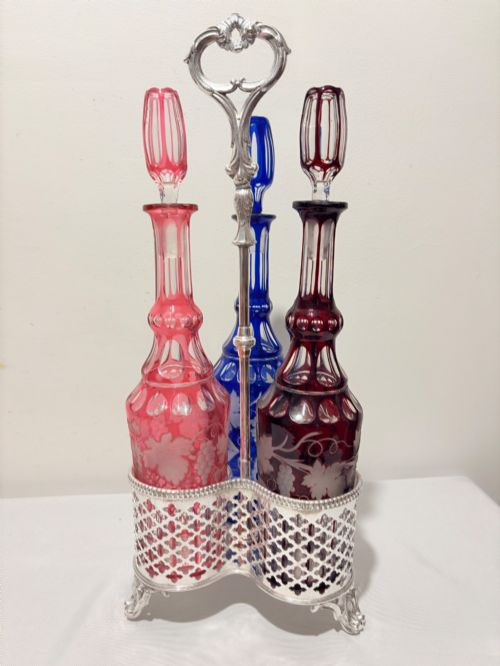
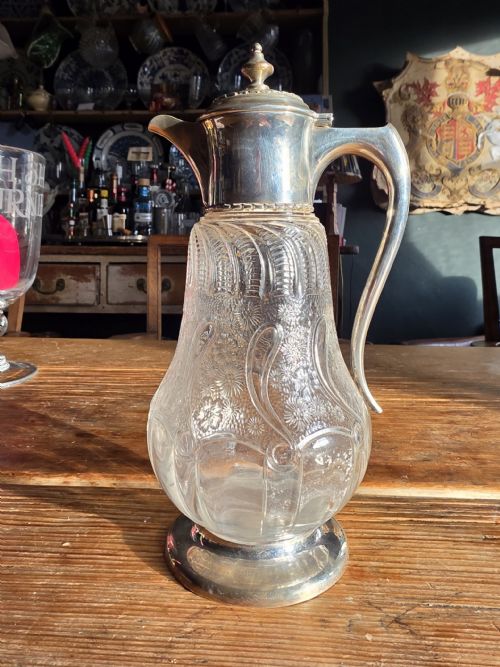
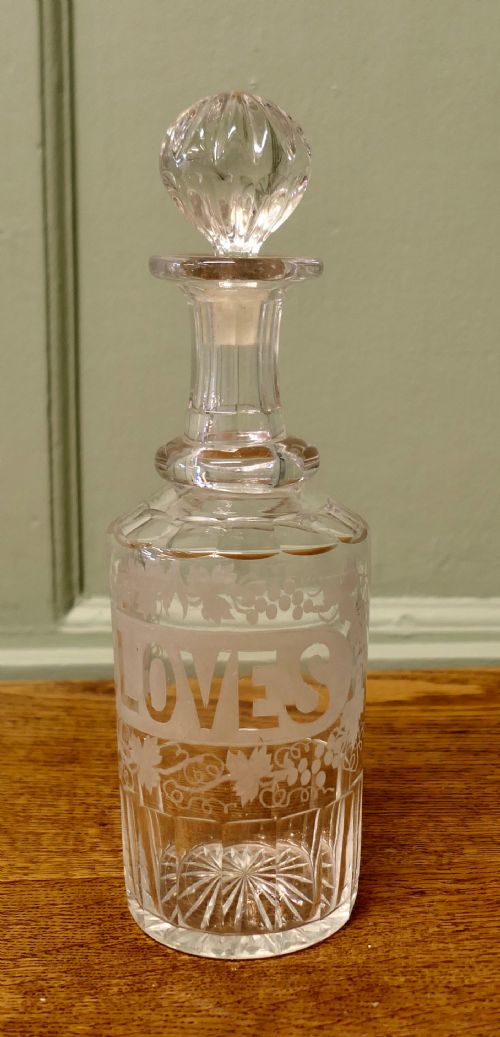
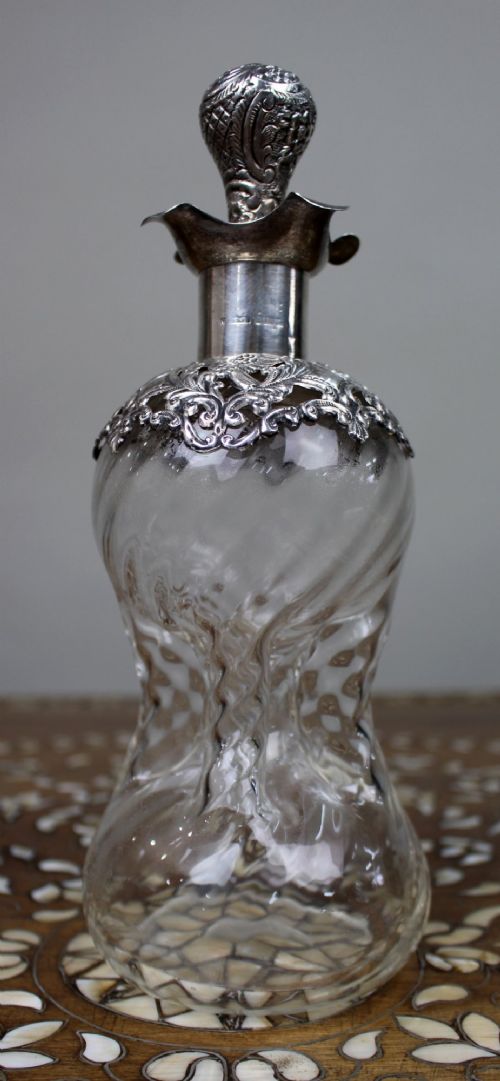
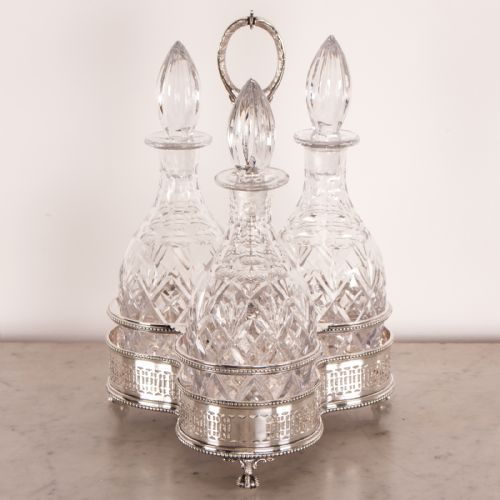
Victorian glass barware encompasses practical drinking vessels and serving pieces created during the nineteenth century, including decanters, tantalus sets, spirit flasks, and tumblers. Buyers seeking these items will frequently encounter cut crystal decanters housed in oak frames alongside coloured glass spirit decanters and mounted claret jugs.
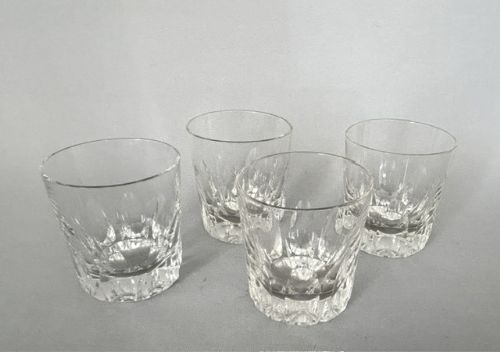
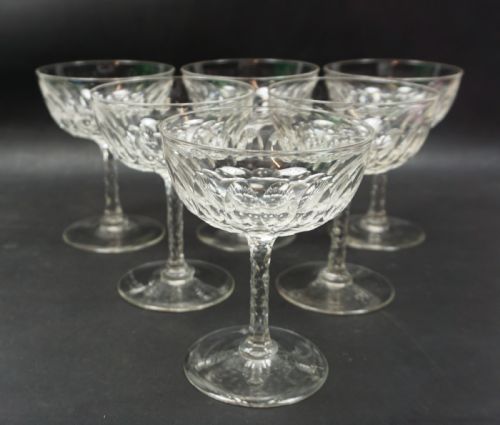
The objects serve as functional drinking equipment and display items from the Victorian period, frequently combining heavy lead crystal with sterling silver or silver plate mounts. Surviving examples demonstrate the era's taste for elaborate after-dinner hospitality through matched sets of whisky tumblers, champagne coupes, and spirit barrels.
Materials and techniques
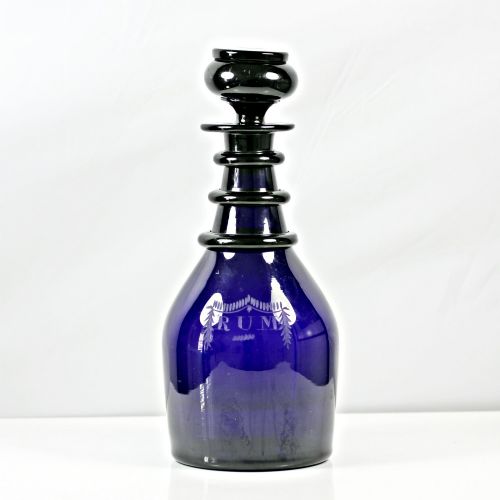
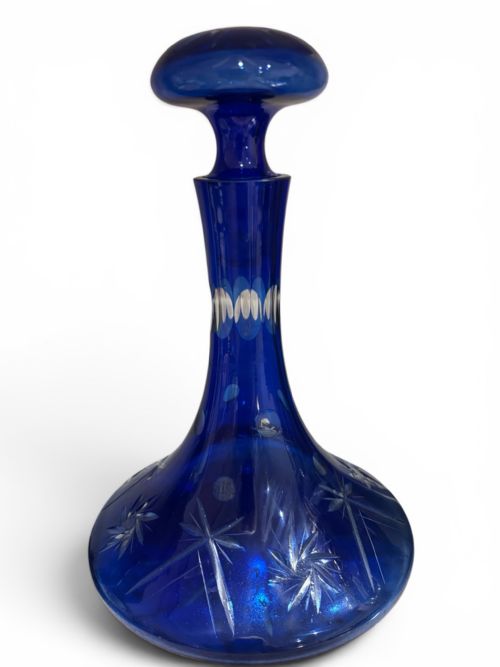
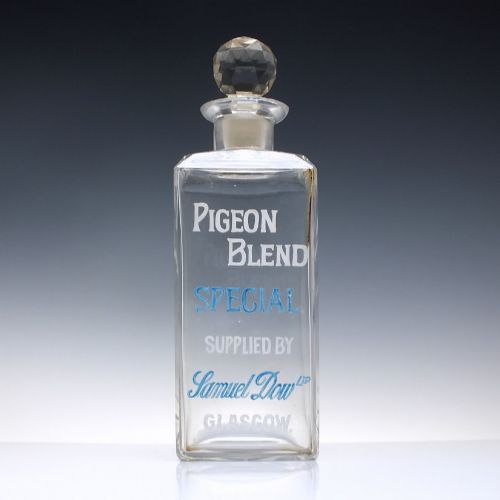
Craftsmen utilised heavy lead crystal and glass, often applying deep facet cutting or detailed wheel engraving to the body of decanters and tumblers. Coloured glass varieties, including Bristol blue, ruby, and green hues, received enamel decoration or specific lettering to denote contents like whisky.
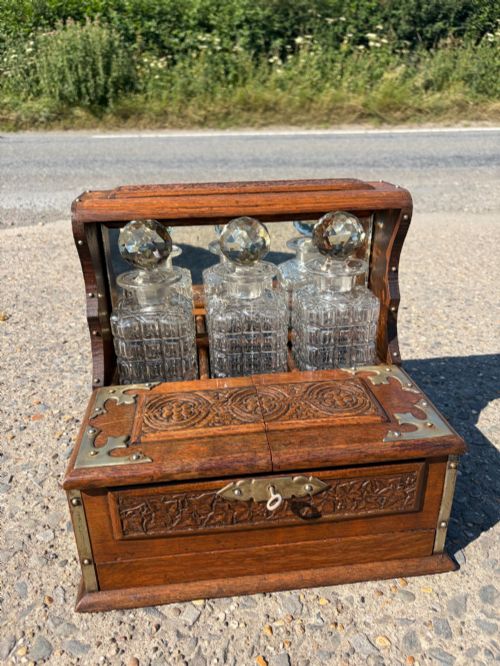
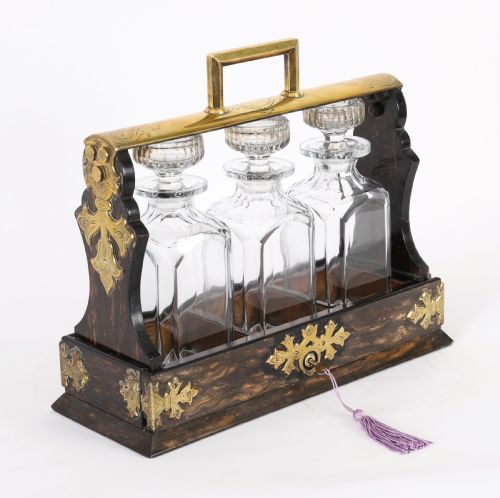
Metalworking accompanied the glass production, with workshops mounting vessels in sterling silver, silver plate, brass, and oak. Tantalus frames featured satin wood inlay, coromandel, or marquetry stringing, incorporating locking mechanisms to secure the crystal decanters within.
A tiny silver tumbler shaped as a sewing thimble bears the engraved warning, just a thimbleful.
Factors of quality
Excellence in these pieces rests upon the crispness of the glass cutting and the weight of the lead crystal, alongside the complexity of the metal mounts. Superior decanters and spirit sets display precise engraving, clear coloured glass, and robust frames constructed from quality timbers like oak.
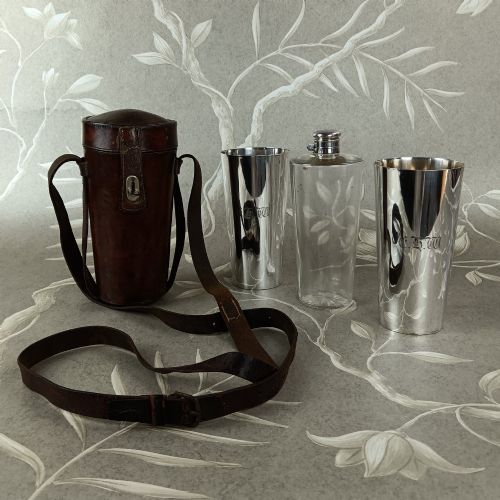
The integration of precious metals, such as hallmarked sterling silver mounts and removable cups on hip flasks, elevates the standing of an item. Makers who incorporated secure locking mechanisms and fitted games compendiums into tantalus designs achieved the highest tier of nineteenth-century production.
James Dixon & Sons·Walker & Hall·Asprey London
The Victorian Glass Barware Glossary
- Tantalus
- A locking wooden frame that holds spirit decanters securely while displaying their contents through the bars, preventing unauthorised access.
- Claret jug
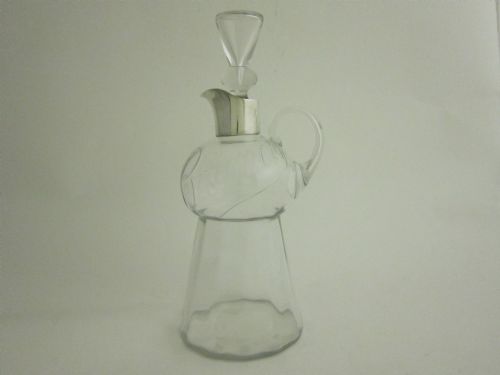
- A pouring vessel designed specifically for serving red wine, typically featuring a glass body with a silver-plated or silver handle, mount, and hinged lid.
- Hip flask
- A thin, pocket-sized container curved to fit the body, used for carrying spirits and frequently fitted with a removable drinking cup at the base.
- Spirit barrel
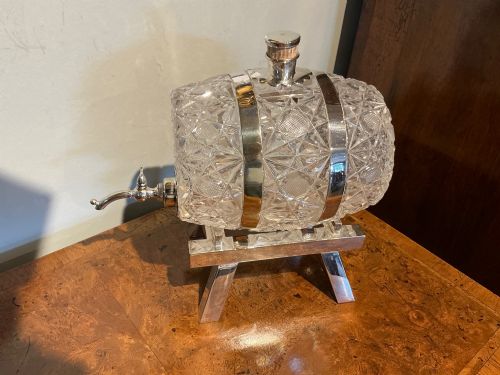
- A horizontal cylindrical glass or crystal vessel mounted on a stand, utilised for dispensing liqueurs or spirits in a domestic setting.
- Ring neck decanter
- A wine or spirit bottle featuring distinct horizontal glass rings or bands encircling the neck to assist with grip during pouring.
Victorian Glass Barware: Frequently Asked Questions
What is a tantalus?
A tantalus is a locked wooden stand that securely holds glass decanters, allowing guests to see the spirits inside while preventing them from pouring a drink without the key.
Cabinetmakers typically built these frames in oak, often adding brass handles and silver-plated locking bars across the necks of the crystal bottles.
What colours did Victorian glassmakers use?
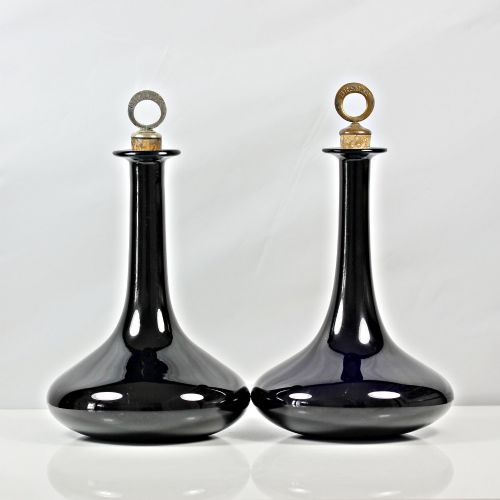
Victorian glasshouses produced barware in deep cobalt blue, rich ruby red, and vibrant green, alongside traditional clear lead crystal.
These coloured glass pieces were frequently embellished with enamel lettering, floral motifs, or cut panels to highlight the contents of the decanters.
How can I date a piece of barware?
Dating relies on examining the hallmarks on any silver mounts, the style of the timber cabinetwork, and the manufacturing techniques used on the glass.
Nineteenth-century pieces often display characteristic pontil marks on the base of blown vessels and specific registry marks on silver collars.