
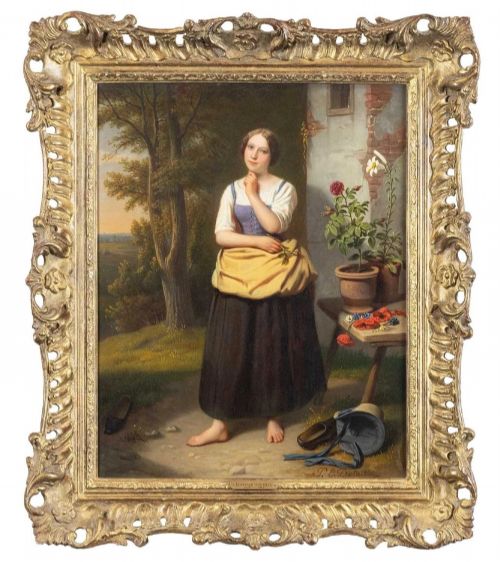


Victorian Girl Painting
When you want a victorian girl painting, you are looking at nineteenth-century portrayals of children and young women captured in oil, watercolour, and pastel.
Victorian Girl Painting
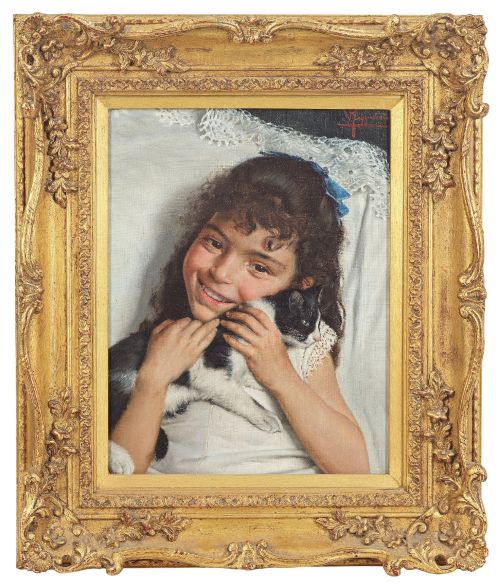
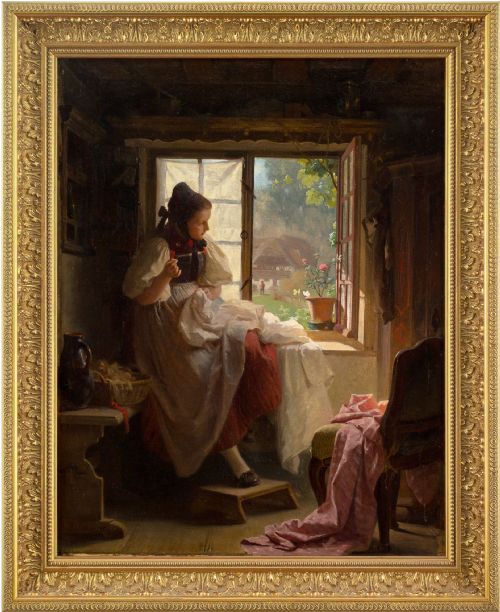
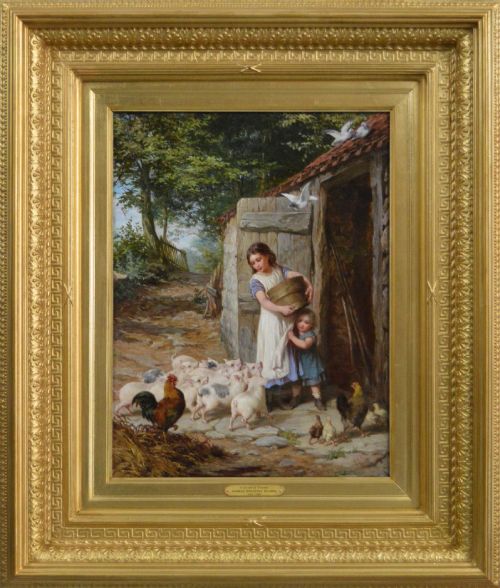
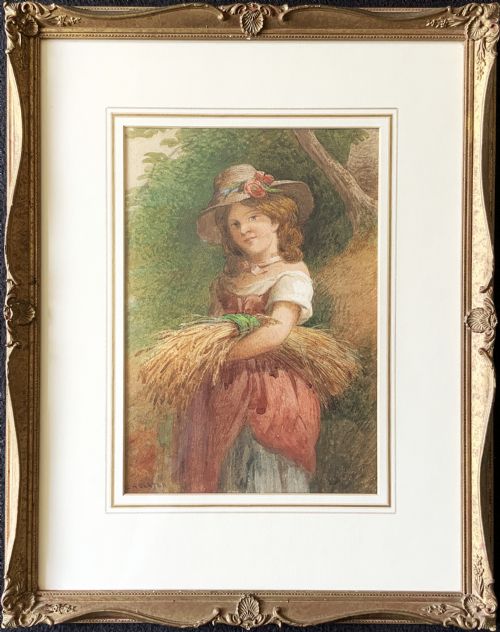
A victorian girl painting encompasses formal portraiture, genre scenes of daily life, and pastoral studies produced throughout the nineteenth century and into the early twentieth century. These works capture children and young women engaged in domestic tasks, playing with animals, or posing in pastoral landscapes.
The most common examples on this page are oil paintings on canvas and board, alongside delicate watercolour portraits on paper. Subjects range from named sitters in detailed interior settings to naive provincial depictions and Continental genre pieces.
Materials and Construction
Figurative works and portraits required careful layering of pigments to achieve skin tones and fabric textures, often supported by preliminary sketches in pastel or pencil. Miniature portraits utilised specialised surfaces like ivory or fine card, protected beneath glass.
Current listings feature pieces spanning the nineteenth century up to the 1920s, executed in oil on canvas, watercolour, and porcelain.
Evaluating Quality and Execution
The distinction between standard works and exceptional pieces lies in the rendering of expression, hands, and drapery. Skilled hands capture light and shadow across fabrics and skin with subtlety, whereas lesser works rely on formulaic gestures and flat backgrounds.
Provenance and attribution significantly influence a piece, as signed works by documented artists command greater attention than anonymous student studies. The preservation of the original surface, uncompromised by heavy restoration, determines the integrity of the image.
Vittorio Reggianini·Max Kaltenmoser·George Augustus Holmes·Charles Henry Slater·Charles Burton Barber·Henry E Hobson·Vincenzo Irolli·Bernard Bloch·Ernst Bohne Sohn·Daniel Pasmore·Joseph Kirkpatrick·Henry Weigall·Helena Wolfsohn·Charles Sillem Lidderdale·Jane Maria Bowkett·Robert Kemp·Ethel Mortlock·Harold Arthur Burke·Fred Morgan·Ralph Hedley
The Victorian Girl Painting Glossary
- Genre painting
- A depiction of everyday subjects and ordinary people engaged in domestic or social activities, rather than historical or mythological narratives. These scenes often tell a gentle narrative involving children or animals.
- Watercolour
- A painting method where fine pigments are suspended in a water-soluble binder and applied to paper. It allows for translucent washes of colour.
- Gesso
- A plaster-like mixture applied to wooden panels or frame mouldings to create a smooth surface for gilding or painting. It provides a stable foundation for decorative frames.
- Crystoleum
- A specialised method of applying a hand-coloured photograph or print to the inside of concave glass and dissolving the paper base so oil paints could be applied to the reverse. This technique gained popularity towards the end of the nineteenth century.
- Provenance
- The documented history of ownership of an antique, establishing its authenticity and origin. A clear record adds historical context to a portrait.
Victorian Girl Painting: Frequently Asked Questions
What subjects appear in these paintings?
The subjects range from formal family portraits to narrative genre scenes depicting children with pets, flowers, or working in rural settings. Many pieces focus on simple domestic moments like reading, sewing, or feeding animals.
Artists often placed their young subjects in gardens, rustic cottages, or detailed interior rooms to evoke a sense of Victorian pastoral life.
How do I date a nineteenth-century painting?
Dating relies on signatures, artist registry records, costume details, and framing materials. Canvas stamps and inscriptions on the reverse often provide clues to the year of creation.
Fashion, hair styles, and interior furnishings depicted within the composition also help narrow down the decade in which the work was painted.
Where should I hang these artworks?
These works suit traditional living spaces, studies, or hallways where lighting can be controlled to prevent fading. Placing them away from direct sunlight protects sensitive watercolours and oil pigments.
Pairing them with period furniture or neutral walls allows the rich tones of the original frames and canvases to stand out.
How do oils and watercolours differ?
Oil paintings utilise slow-drying paint on canvas or panel, offering rich texture, deep colour saturation, and a robust surface. Watercolours use transparent washes on paper, resulting in a lighter and more delicate finish.
Oils are typically displayed framed under open air or glass, whereas watercolours require protective glazing to prevent moisture and dust damage.