


Oval Mount Painting
Oval mount painting brings together intimate portraits, still lifes and landscapes held within shaped borders.
Oval Mount Painting
An oval mount painting or associated framed artwork presents pictorial subjects within curved, enclosing perimeters rather than standard rectangular edges. These pieces span portrait miniatures on ivory and paper, alongside oil on canvas, watercolor, pastel, and enamel works dating from the eighteenth century through the Edwardian era.
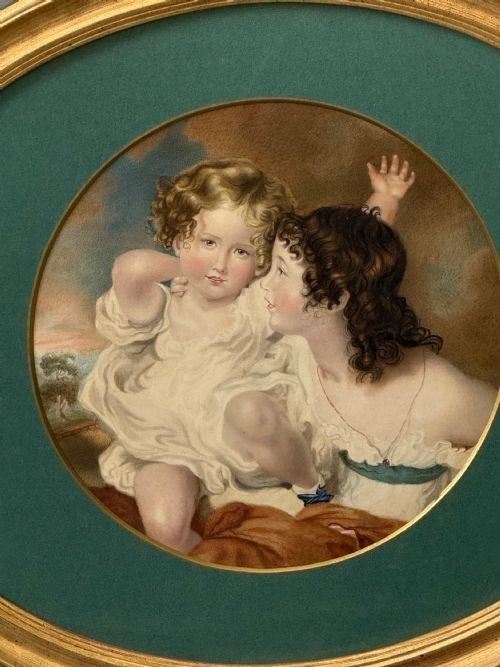
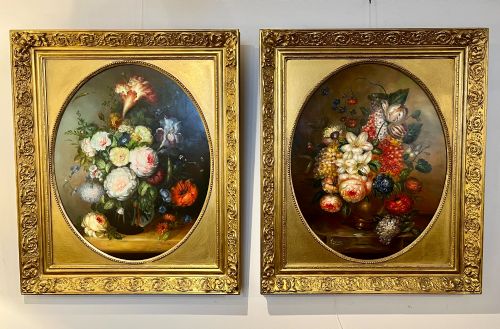
The format suits portraiture particularly well, concentrating the viewer's attention entirely on the sitter's face and expression. Examples here range from small miniature portraits in silver or maple frames to larger landscape and still life oils executed on board or card.
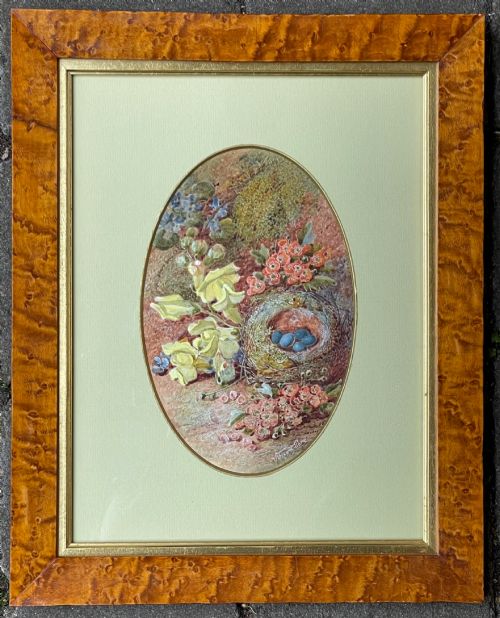
Historical contexts across these listings include Victorian naturalism, Dutch Golden Age style, Georgian revival, and Chinoiserie. Buyers encounter everything from delicate pencil and watercolor studies to substantial oil paintings framed by giltwood or simulated wood finishes.
How they were made
Artists executed these works across varied supports including paper, card, canvas, board, and ivory, employing mediums such as watercolor, oil, pastel, and enamel. Miniature paintings demanded exceptional precision, often utilising fine brushes to capture minute details on ivory or enamel surfaces.
Frames and mounts were constructed from wood, giltwood, and glass, frequently shaped to complement the curved perimeters of the artwork. Gold leaf application and specialised finishes like simulated wood provided decorative borders that defined the oval composition.
Victorian children gazing perpetually into oval gilt frames have spent over a century wondering who keeps rearranging the mantelpiece.
What varies in quality
Vincent Clare·Arthur William Devis·Henry Bone ARA·James Hardy Junior·Robert Kemp·Francis Moltino·Andrea Soldi·Gerrit Schipper
The Oval Mount Painting Glossary
- Portrait miniature
- A small, highly detailed painting, frequently executed on ivory, vellum, or card during the eighteenth and nineteenth centuries. These delicate works were often housed in protective cases or framed for personal display.
- Giltwood
- Wood that has been coated with a thin layer of gold leaf or gold powder over a prepared base. It provides a luminous, decorative border commonly found on antique frames.
- Vernis Martin
- A type of simulated Japanese lacquer developed in eighteenth-century France, known for its translucent and polished finish. It appears on decorative cabinets and furniture housings associated with refined interiors.
- Enamel miniature
- A painting created by fusing powdered glass colours onto a metal ground, usually copper or gold, under high heat. This technique produces a durable surface with enduring colour brilliance.
Oval Mount Painting: Frequently Asked Questions
What is an oval mount painting?
An oval mount painting is an artwork framed or composed within a curved, elliptical boundary. This format emphasises central subjects like portraits or still lifes by cutting off extraneous corners.
These pieces utilise various mediums including watercolor, oil, and pastel across periods spanning the eighteenth to the early twentieth century.
How do I date an oval portrait?
Dating relies on clothing styles, framing materials, and painting techniques characteristic of periods like the Georgian, Victorian, or Edwardian eras. Miniature portraits on ivory frequently point toward the late eighteenth or early nineteenth century.
Inscribed details on the reverse or accompanying documentation also help establish the exact period of creation.
Where were oval miniatures displayed?
Portrait miniatures were often kept in private rooms, carried as personal mementos, or displayed in small groupings on drawing room walls. Their compact scale suited intimate domestic spaces.
Fitted silver or maple frames allowed these delicate pieces to stand on surfaces or hang securely.
Are these paintings executed on paper?
Supports vary widely across the collection, including paper, card, canvas, board, and ivory. Watercolors and pastels typically employ paper or card bases.
Oil paintings generally utilise canvas or wooden boards shaped to fit the specific oval mount requirements.