


Victorian Gilt Metal Lighting
Victorian gilt metal lighting brings warmth and intricate metalwork to interiors through table lamps, chandeliers, and candelabras.
Victorian Gilt Metal Lighting
Victorian gilt metal lighting encompasses functional and decorative illumination pieces created during the nineteenth century and associated eras. When exploring victorian gilt metal lighting, buyers encounter table lamps, chandeliers, candelabras, and hanging lanterns designed to illuminate grand interiors.
Origins span English workshops and French ateliers, embracing styles like French Rococo Revival, Classical Revival, and the Victorian Aesthetic Movement. Table lamps and converted candelabras dominate the selection, providing versatile options for domestic settings.
Qualities of craftsmanship
Quality rests in the crispness of the metal casting and the depth of the gilding or ormolu finish. Superior examples display sharply rendered motifs, secure joints, and harmonious integration of secondary materials like marble or porcelain.
Heavier gauge metalwork and substantial rock crystal or cut glass components distinguish finer chandeliers and lamp bases from lighter, simpler productions. The integrity of the original form, whether an unaltered gasolier or a sympathetic conversion, dictates the standing of the piece.
Listings feature 19th-century periods alongside materials including brass, gilt metal, ormolu, fabric, glass, bronze, and gilded bronze.
Mappin and Webb
The Victorian Gilt Metal Lighting Glossary
- Ormolu
- Gilded bronze achieved through a mercury amalgamation process common in French decorative arts. This technique produces a rich, durable golden surface.
- Gasolier
- A multi-branched ceiling light fixture originally designed for gas illumination. Many examples undergo subsequent conversion to electricity.
- Candelabra
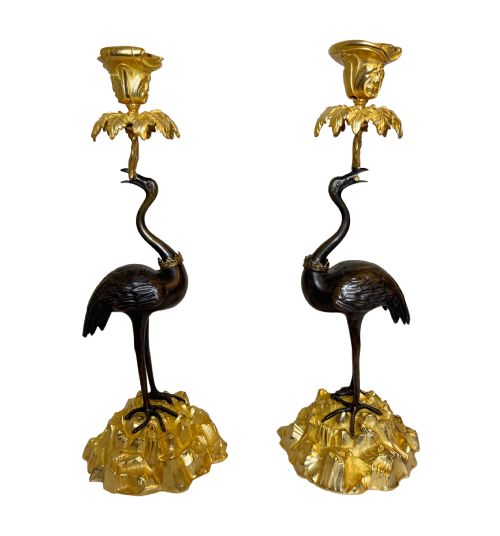
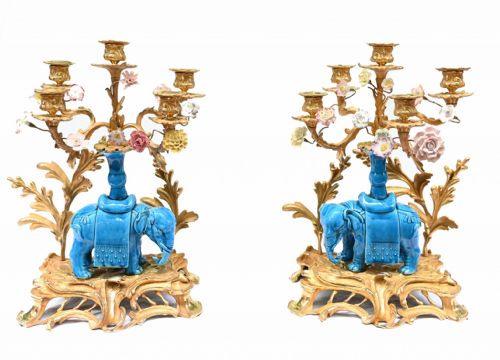
- A branched candlestick holder designed to support multiple candles. These frequently feature central figural stems or porcelain inserts.
- Ewer
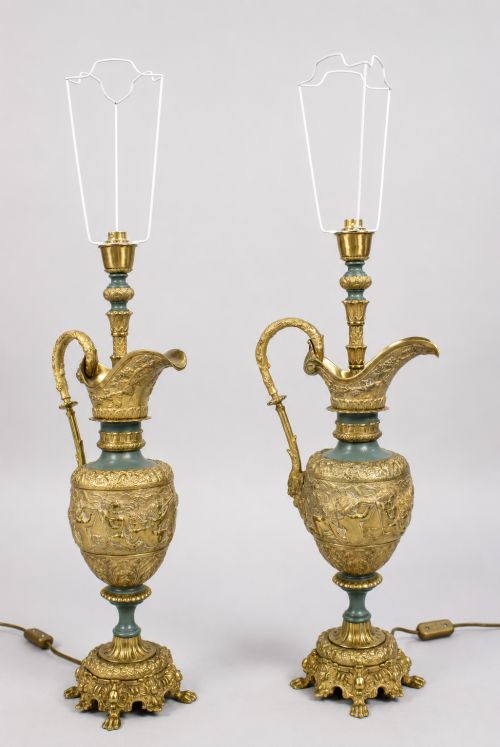
- A jug-shaped vessel with a rounded body and flared spout. In this category, ewers form the sculptural bases for decorative table lamps.
- Champlieve
- An enamelling technique where trenches are gouged into metal and filled with vitreous enamel. The surface is then fired and polished flush.
Victorian Gilt Metal Lighting: Frequently Asked Questions
How do I wire an antique lamp?
Professional rewiring ensures historical metal and glass components remain secure while meeting modern electrical safety standards.
Qualified restorers replace outdated internal cables without altering the exterior finish or damaging the original metalwork.
Were these lights originally electric?
Nineteenth-century lighting operated on candles, oil, or gas before the widespread adoption of domestic electricity. Many surviving fixtures undergo later conversion to house electrical lamp holders and wiring.
Original gasoliers and candelabra often retain traces of their earlier fuel mechanisms alongside modern adaptations.
How do I clean gilt metal?
Dusting gently with a soft, dry brush prevents the accumulation of grime on intricate cast surfaces. Avoid harsh chemical polishes that can strip the underlying gilt layer or damage adjacent crystal and porcelain.
What distinguishes ormolu from gilt brass?
Ormolu specifically denotes high-status gilded bronze created through traditional mercury gilding methods during the eighteenth and nineteenth centuries. Gilt brass typically employs different alloy compositions and alternative plating techniques.
Both materials provide a golden finish, but ormolu generally exhibits greater depth and warmth in the metal.