

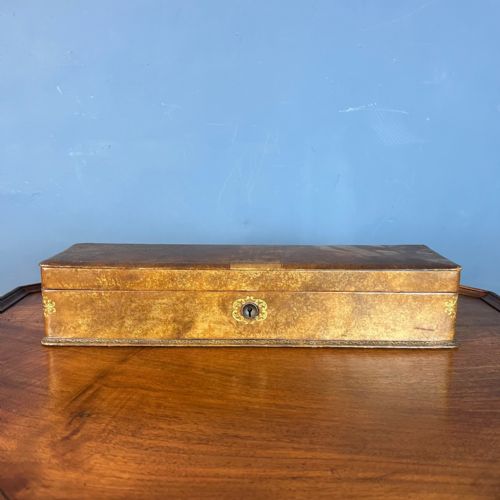


Victorian Gilded Trinket Box
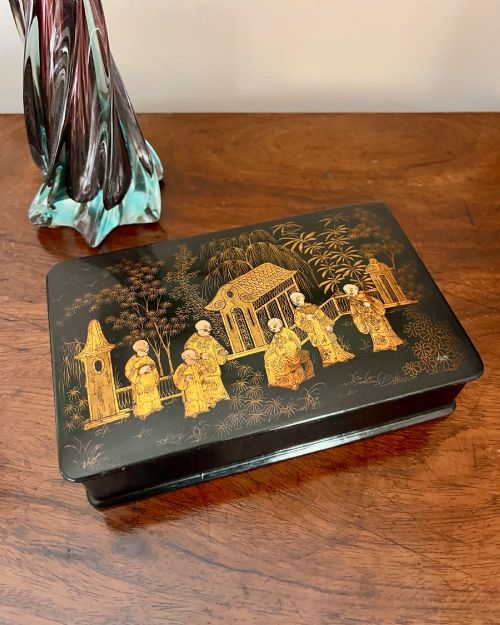
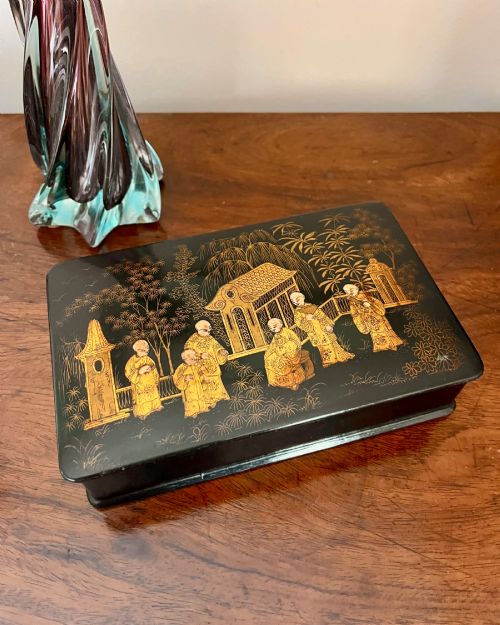
A victorian gilded trinket box brings nineteenth-century craftsmanship to a dressing table, holding small keepsakes with decorative flair.
Victorian Gilded Trinket Box
When searching for a victorian gilded trinket box, buyers encounter an array of nineteenth-century containers designed to hold jewellery, small accessories, and personal treasures. These pieces originate primarily from English and continental makers working during the Victorian era and the broader nineteenth century, spanning decades from eighteen fifty to nineteen hundred.
The selection on this page centres heavily on papier-mâché and lacquered boxes, alongside bronze, brass, porcelain, and crystal caskets. Forms range from simple table snuff boxes and tiny vinaigrettes to larger stationery boxes and fitted jewellery cabinets with internal trays.
Stylistic influences vary widely across the inventory, drawing on French rococo revival, neoclassical revival, chinoiserie, and Victorian gothic revival aesthetics. Buyers find everything from hand-painted porcelain panels to inlaid papier-mâché and intricate gilt metal mounts.
How they were made
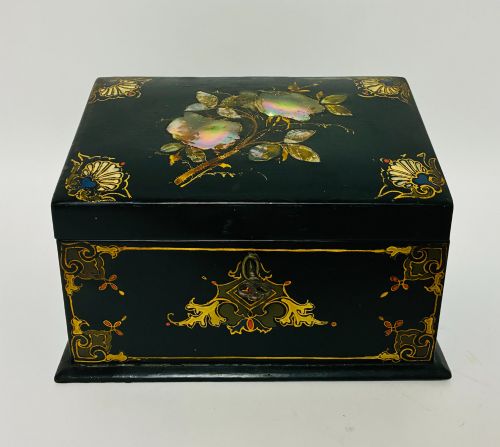
Papier-mâché and lacquer form the foundation of many pieces, often built up in layers and finished with polished black surfaces, hand-painted details, or mother-of-pearl inlay. Artisans shaped paper pulp and binders under pressure to create durable bodies for stationery boxes and jewellery cabinets.
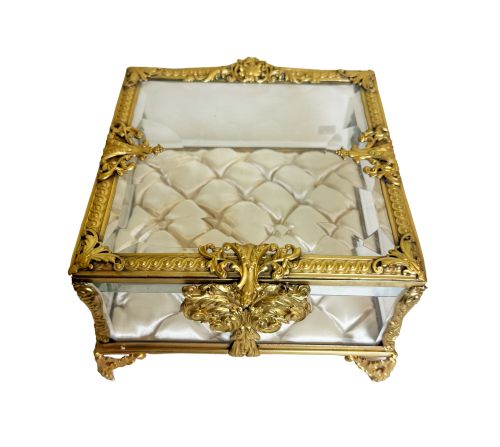
Metalwork relies on bronze, brass, and gilded copper formed through casting or electro-forming, creating ornate frames and caskets that house glass panels or Limoges miniatures. Gilt bronze and gold leaf provide the luminous surface treatments that define the gilded character of these boxes.
Ceramic elements utilise porcelain and toleware, featuring hand-painted designs, blue glazes, and detailed gilt ornamentation applied by specialised factories and independent workshops.
Listings feature papier-mâché, lacquer, bronze, porcelain, and crystal across the nineteenth century.
What varies in quality
Quality rests upon the crispness of the casting in metal frames, the depth and clarity of hand-painted porcelain or lacquer work, and the structural integrity of the core material. Superior papier-mâché exhibits smooth, stable surfaces without warping, while finer bronze caskets show sharp relief and well-fitted hinges.
The integration of decorative elements dictates the upper tier of the range, distinguishing standard production boxes from exceptional signed or attributed works. Finer examples feature superior gilding, intricate inlays, and well-preserved internal linings that reflect the skill of notable nineteenth-century makers.
Edme Samson Of Paris·Jennens & Bettridge
The Victorian Gilded Trinket Box Glossary
- Papier-mâché
- A composite material made from paper pulp or layers of paper mixed with glue, oil, and resin, then moulded and lacquered. It provided a sturdy, smooth base for Victorian decorative boxes and inlays.
- Gilt Bronze
- Bronze metal treated with a thin layer of gold or gold leaf to give a rich, reflective surface. It appears frequently in nineteenth-century French and English casket frames.
- Limoges Miniature
- A small painted enamel plaque produced in the French city of Limoges, often inset into the lids of nineteenth-century jewellery caskets.
- Toleware
- Enamelled or lacquered metalware, typically iron or steel, used for decorative boxes and trays. It offers a smooth surface suited to hand-painted botanical or scenic motifs.
- Bonbonniere
- A small decorative container originally designed to hold sweets or confectionery. Collectors now prize them as fine examples of period porcelain and metalcraft.
- Vinaigrette
- A small ornamental box containing a perforated grille, holding a sponge soaked in aromatic vinegar. These tiny nineteenth-century accessories often featured elaborate silver or gilt work.
Victorian Gilded Trinket Box: Frequently Asked Questions
What were victorian trinket boxes used for?
These boxes served to store rings, brooches, pins, and small personal valuables on dressing tables and desks.
Larger versions accommodated letters, stationery, or snuff, keeping private items neatly contained within decorated rooms.
How do I identify papier-mâché boxes?
Papier-mâché pieces feel remarkably lightweight yet rigid, usually finished with a deep black lacquer and polished surface.
Many examples incorporate mother-of-pearl inlay or hand-painted floral motifs beneath a protective varnish layer.
What is the difference between a casket and a box?
Caskets generally refer to heavier metal or glass frames with hinged lids, often mounted with decorative gilt bronze.
Boxes more commonly describe wooden, papier-mâché, or lacquered structures designed for desktop or dressing table use.
How should I clean a gilded metal box?
Dust the surface gently with a soft, dry cloth to remove everyday particles without disturbing the delicate finish.
Avoid liquid cleaners, polishes, or abrasive cloths, as these can strip away the original gold leaf or gilt layer.