


Gilt Metal Jewellery Box
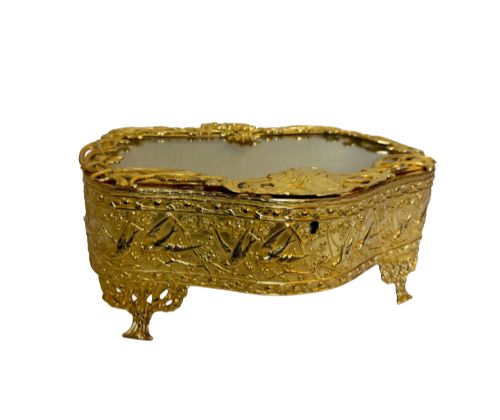
These gilt metal jewellery box pieces are small caskets designed for dressing tables, offering both decorative presence and safe storage for precious trinkets.
Gilt Metal Jewellery Box
When you search for a gilt metal jewellery box, you find ornamental containers created to house small valuables upon a dressing table or desk. The pieces seen here span from the eighteenth century into the early twentieth century, with nineteenth-century examples appearing most frequently.
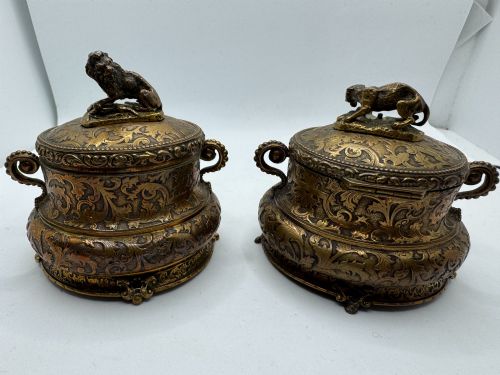
The forms vary from simple trinket boxes to substantial caskets mounted with hinged lids and decorative finials. Origins range widely across European workshops, including French, Italian, and German pieces that reflect distinct regional tastes of their eras.
Makers utilised various descriptive terms in their titles, such as jewellery caskets, trinket boxes, and decorative boxes. These names often depend on the scale of the object and the specific materials incorporated into the metal framework.
How they were made
The construction relies heavily on metalworking techniques, utilising gilt metal, ormolu, gilt bronze, brass, and gilded copper electro-form. These metals provide a durable structural chassis that is frequently polished or gilt to create a rich surface sheen.
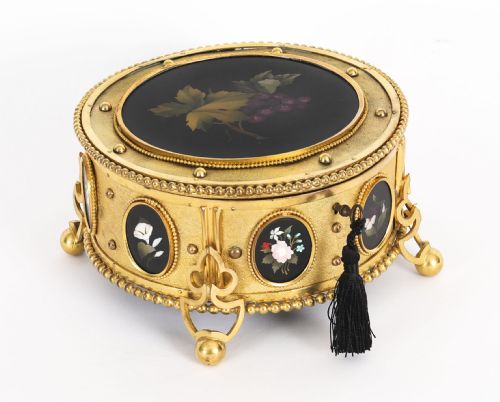
Many examples combine metal frames with inset panels of glass, bevelled glass, porcelain, enamel, or carved jade. Makers also applied specialist decorative elements such as pietra dura inlay, hand-painted miniature porcelain plaques, and detailed figural finials including dogs.
Some nineteenth-century caskets feature small dog finials guarding the lid, ready to watch over your trinkets for all eternity.
What varies in quality
The distinction between standard boxes and exceptional caskets lies in the crispness of the cast metalwork and the quality of the inset panels. Superior pieces display deeply chased or engraved ornament rather than simple surface plating.
Material combination also elevates a piece, such as the inclusion of Limoges miniatures, hand-painted Meissen porcelain, or genuine pietra dura work. The weight of the bronze or ormolu frame and the precision of the glass bevelling further separate average items from finer examples.
Meissen·Limoges·Capodimonte·AB Paris
The Gilt Metal Jewellery Box Glossary
- Ormolu
- Gilded bronze produced by applying a mercury and gold amalgam to a bronze base, commonly found on nineteenth-century French caskets. This technique yields a deep, warm metallic lustre.
- Pietra dura
- An artistic technique involving the inlay of cut and fitted polished coloured stones to create pictures or geometric designs. It frequently decorates the lids of Italian caskets.
- Electro-form
- A manufacturing process where metal is electrically deposited over a form or mould, allowing for detailed reproduction of intricate shapes. This method appears in later nineteenth-century copper boxes.
- Bevelled glass
- Glass panes featuring an edge cut at an angle to create a framed, prismatic border. These panes are often fitted into the sides of display caskets.
- Limoges miniature
- A small painted enamel plaque produced in the French city of Limoges, often set into the metal lid of a trinket box.
Gilt Metal Jewellery Box: Frequently Asked Questions
How do I identify French nineteenth-century caskets?
French nineteenth-century caskets often utilise heavy ormolu mounts, bevelled glass panels, and styles inspired by the Rococo revival or Napoleon III periods.
Many examples incorporate luxury materials such as hand-painted porcelain plaques or Limoges miniatures set directly into the hinged lid.
Were these boxes used for jewellery?
Yes, these caskets served as secure and decorative receptacles for keeping daily jewellery, pins, and small personal trinkets close at hand.
Inside linings made of silk or velvet were often included to protect delicate items from scratching against the metal base.
What is the difference between ormolu and gilt bronze?
Ormolu specifically refers to gilding executed with a mercury-gold amalgam on a bronze object, a practice common in high-end European decorative arts.
Gilt bronze broadly describes any bronze item finished with a gold-coloured surface, regardless of the precise historical plating method used.
How should I clean a gilt metal box?
Cleaning should be done very gently with a dry, soft cloth to remove dust without disturbing the delicate metallic finish.
Harsh metal polishes or chemical cleaners must be avoided, as they can strip away the original gilding or damage inset glass and porcelain panels.