



Victorian Gesso Mantle Mirror
When sourcing a victorian gesso mantle mirror, one seeks the grand scale and gilded presence characteristic of nineteenth-century overmantels.
Victorian Gesso Mantle Mirror
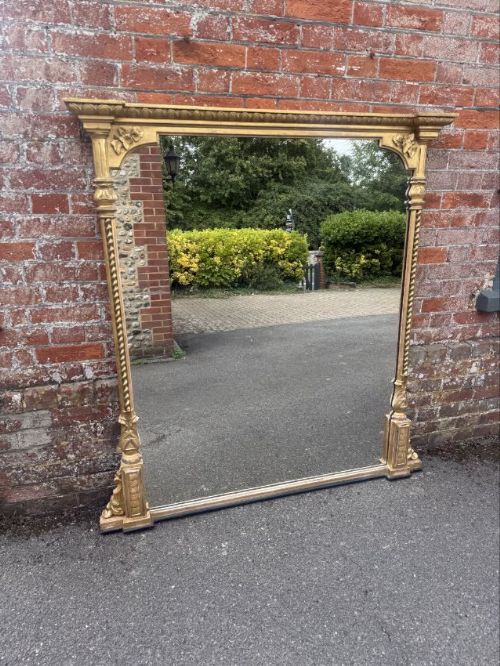
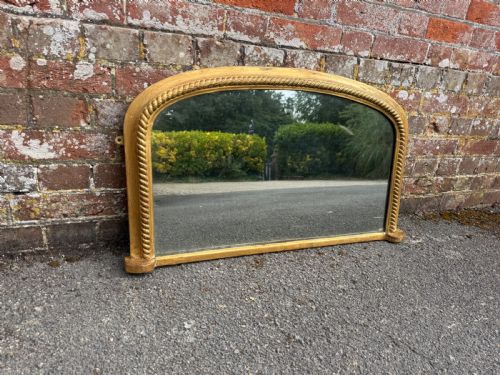
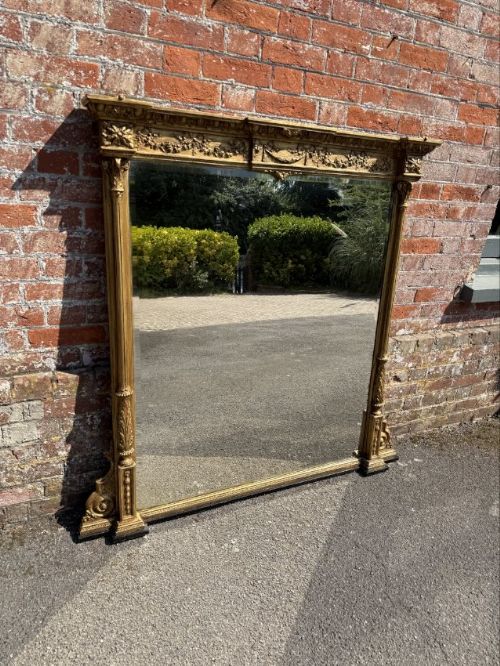
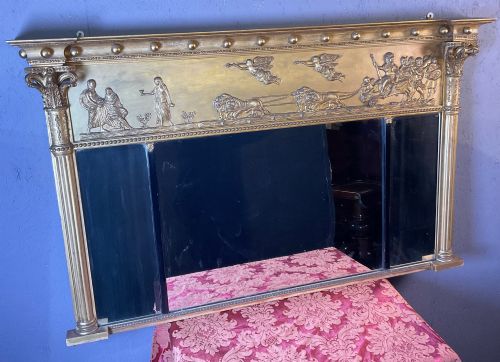
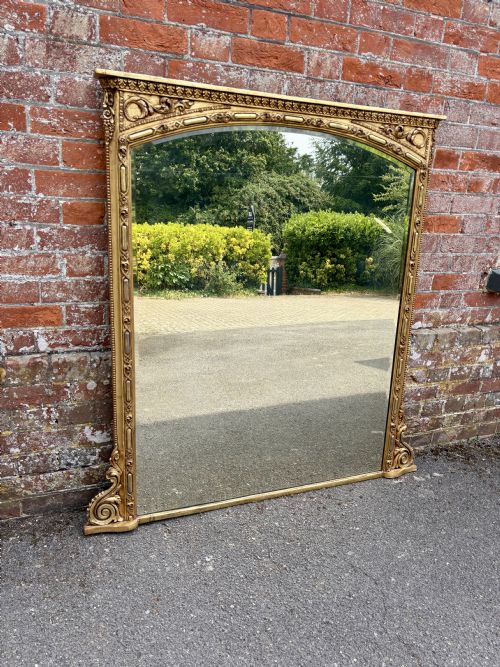
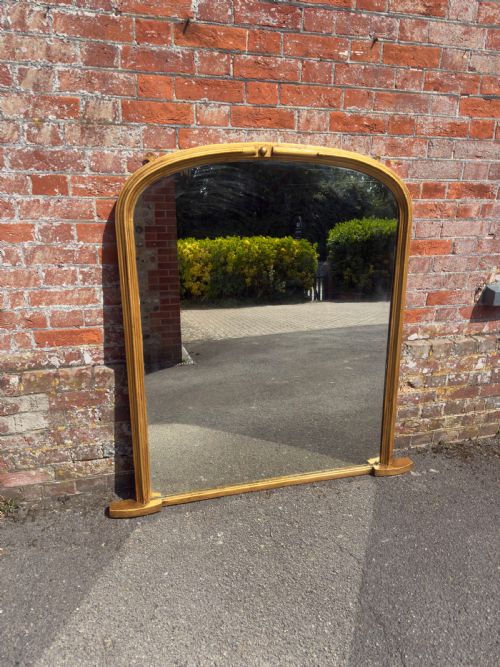
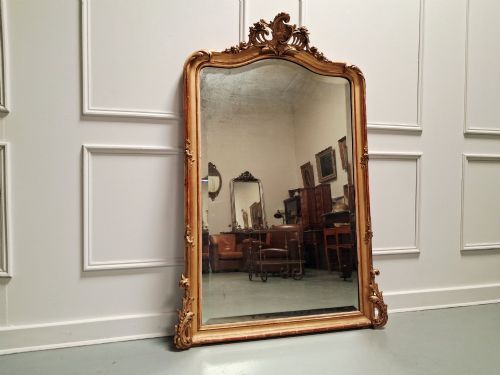
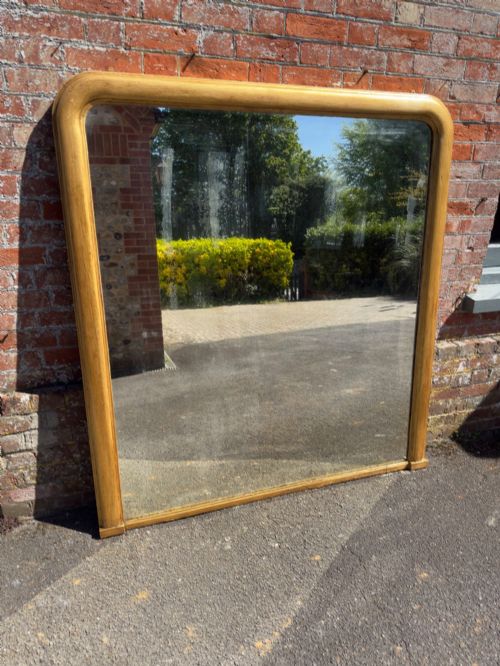
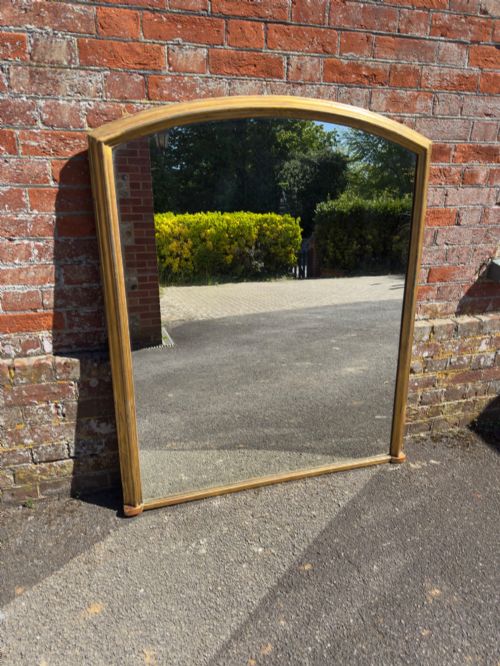
A victorian gesso mantle mirror defines a substantial wall-hanging glass built to sit above a fireplace hearth, often taking the form of an overmantel mirror designed to anchor a principal reception room. These pieces appear predominantly in nineteenth-century formats, drawing from English and French origins that span the Victorian era, alongside occasional earlier eighteenth-century influences.
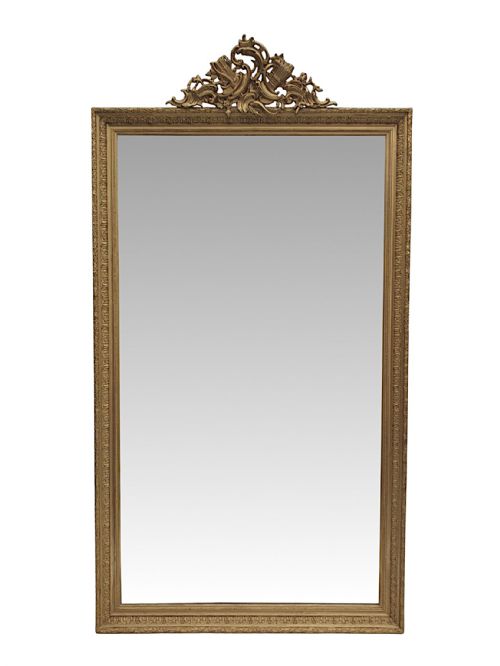
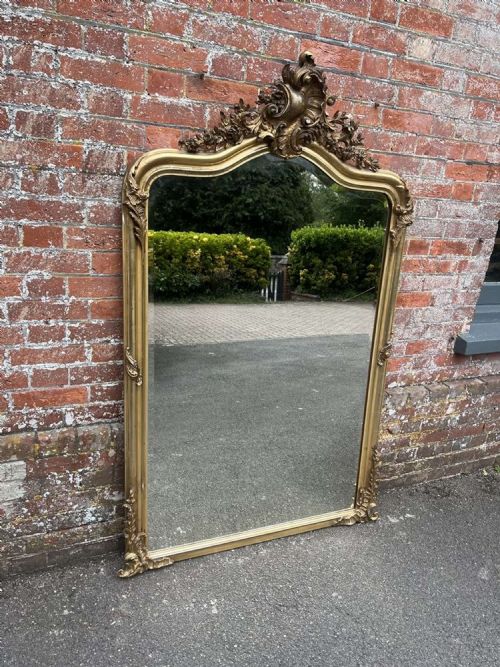
The prevailing silhouettes on this page range from arched tops and shaped frames to rectangular formats enhanced by decorative mouldings such as rope twists, columns, or beaded borders. Makers constructed these mirrors to reflect light and expand the perceived volume of period interiors, placing them centrally above mantelpieces where their architectural proportions command attention.
How They Were Made
Artisans built the structural core of these mirrors using carved wood, forming robust frames from timber such as oak or pine to support heavy glass plates. Over this wooden substrate, craftsmen applied layers of gesso, a dense mixture of chalk and binder, which was then carved, moulded, or stamped to create crisp decorative relief before gilding.
Surfaces received finishes of gold leaf, silver leaf, or liquid gilding, imparting a brilliant metallic sheen that caught the ambient light of gas or candlelight. Mirror glass was then fitted into the rebate behind the frame, secured to complete the overmantel assembly.
Listings feature pieces spanning the eighteenth century through to the early twentieth century, with a strong concentration of Victorian examples.
What Varies in Quality
The refinement of the gesso moulding dictates much of the distinction between pieces, with sharper, deeper relief work indicating superior hand-tooling rather than mass-produced composition ornament. Artisans who spent more time undercutting foliage, scrolls, or rope twists produced frames with greater visual depth and tactile presence.
The application of the metal leaf and the integrity of the underlying wood frame further differentiate examples, as skilled gilding ages with a warm, complex patina rather than flat uniformity. Heavier timber construction and original mirror glass with natural silvering oxidation also separate standard regional pieces from high-status commissions.
The Victorian Gesso Mantle Mirror Glossary
- Gesso
- A prepared mixture of chalk, gypsum, and glue binder applied to wood frames to provide a smooth, sculptural surface for gilding. This material allows artisans to carve intricate relief details that hold crisp edges.
- Overmantel
- A large mirror or painting specifically proportioned to hang directly above a fireplace mantelpiece. These fixtures were fundamental to nineteenth-century interior decoration.
- Giltwood
- Timber that has been coated with gold leaf or metal leaf over a prepared ground. It provides the signature luminous finish seen on formal nineteenth-century frames.
- Rococo Revival
- A nineteenth-century design style marked by asymmetrical scrolls, C-curves, and naturalistic shell or floral motifs. It draws inspiration from eighteenth-century French decorative arts.
Victorian Gesso Mantle Mirror: Frequently Asked Questions
Where should an overmantel mirror be hung?
These mirrors traditionally anchor the wall directly above a fireplace mantelpiece, where their generous proportions reflect light across the room. They also function successfully as leaner mirrors placed directly on the floor against a principal wall.
Because of their substantial weight, secure wall fixings tied directly into structural studs or masonry are essential for safe placement.
How do I identify a Victorian gesso frame?
Examination of the surface reveals a chalky, dense gesso layer beneath the metallic leaf, often showing fine craquelure or age-related shrinkage. The underlying timber frame is typically joined using period construction methods appropriate to the nineteenth century.
Detailing on these pieces usually reflects Victorian interpretations of Rococo or Neoclassical styles, distinct from twentieth-century resin reproductions.
Can these mirrors be cleaned safely?
Dusting the carved gesso frame requires a soft, dry brush to prevent moisture damage to the fragile chalk ground and metallic leaf. Glass surfaces can be wiped with a mild glass cleaner applied to a cloth rather than sprayed directly onto the mirror.
Harsh chemical solvents must be avoided entirely to preserve the original gilding and historic silvering.
What defines the Rococo style on these mirrors?
Rococo styling introduces asymmetrical curves, flowing scrollwork, and organic motifs such as acanthus leaves and shell forms into the frame's carved gesso ornament. This aesthetic emphasises movement and theatricality rather than strict symmetry.
Mirrors featuring this ornamentation date primarily from the mid to late nineteenth century during the revival periods.