




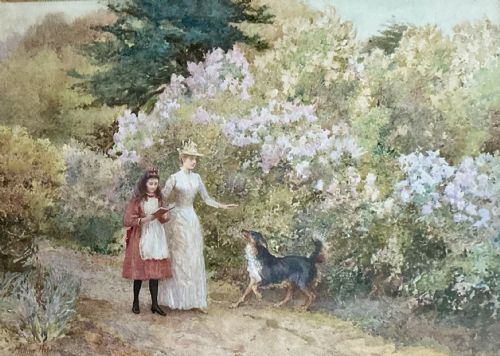


Victorian Genre Watercolour Painting
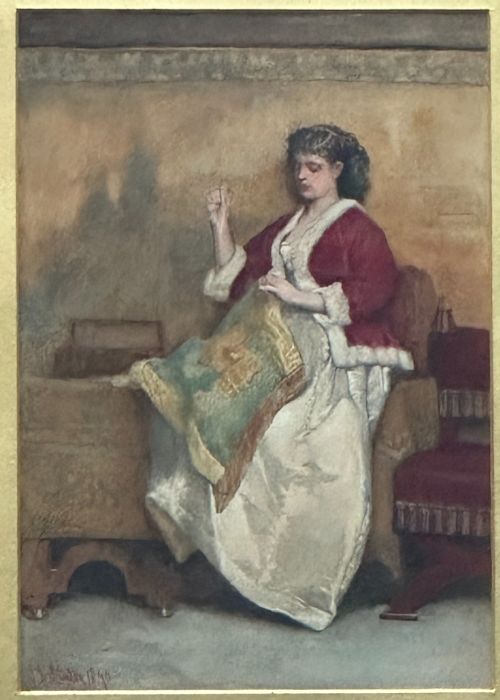
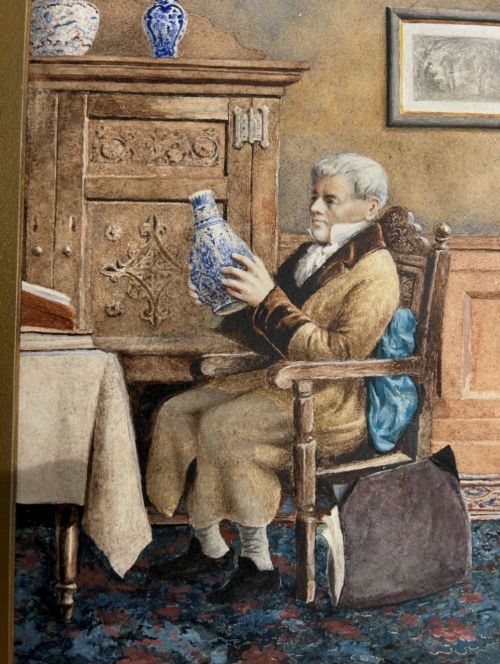
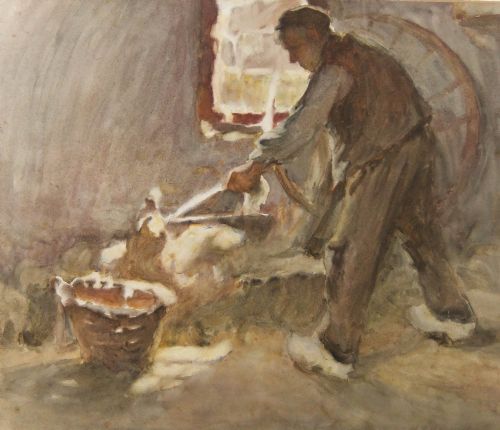
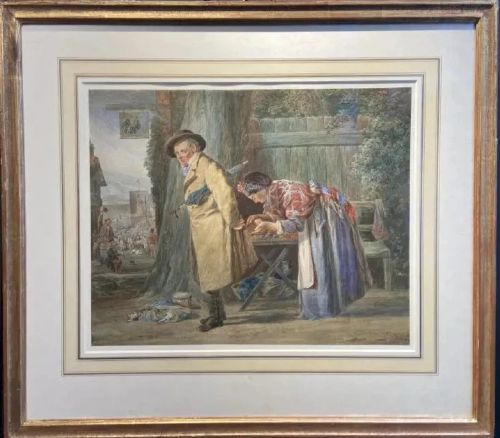
These pieces of victorian genre watercolour painting capture domestic scenes, rustic characters and everyday narratives preserved behind glass.
Victorian Genre Watercolour Painting
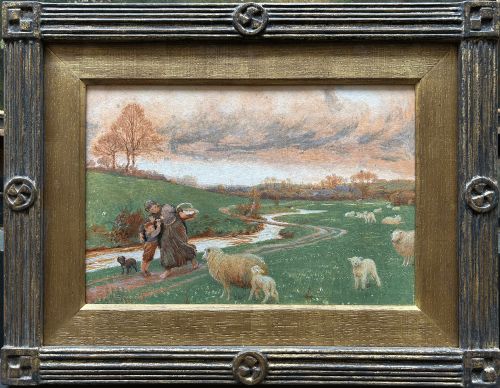
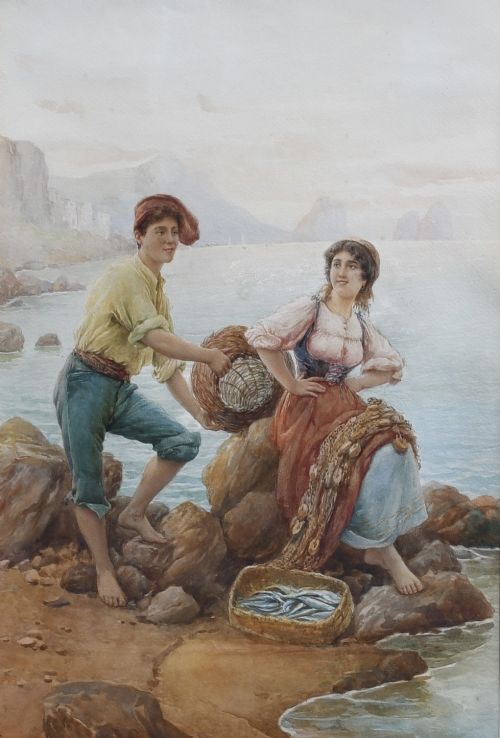
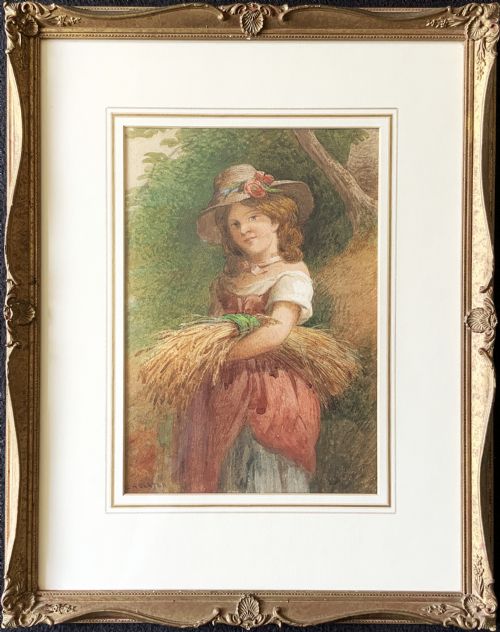
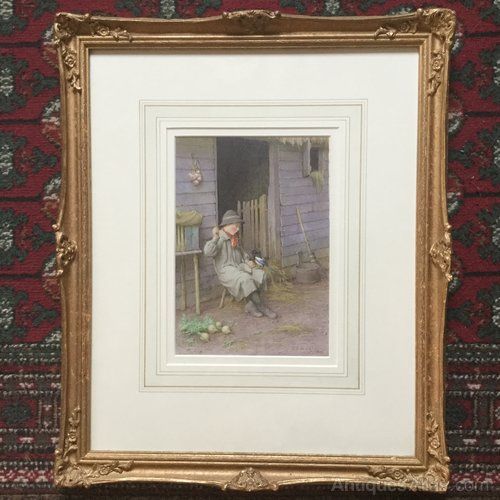
A victorian genre watercolour painting depicts human narratives, domestic interiors and rural life captured during the nineteenth and early twentieth centuries. These artworks focus on everyday moments, from children playing to labourers resting, rendered with narrative detail rather than grand historical themes.
The pieces on this page span the Victorian and Edwardian periods, including works labelled under Victorian realism and rural genre. Buyers meet framed paintings originating from British and continental hands, frequently depicting coastal fisherfolk, cottage thresholds and fireside rests.
Materials and technique
These works rely on watercolour pigment applied to paper support, sometimes enhanced with bodycolour to build opaque highlights. The application ranges from delicate washes to textured detail.
Framing typically involves wood, giltwood and protective glass to preserve the paper from atmospheric damage.
Watch for young foals stealing fruit from baskets and ducks being fed by ponds.
Assessing the work
Quality rests in the handling of light, expression and anatomical proportion within the painted figures. A successful composition manages narrative clarity without crowding the surface.
The treatment of background details and the vibrancy of surviving pigment separate accomplished works from routine illustrations.
Sir James Dromgole Linton·Henry Silkstone Hopwood·Joseph H Barnes·Frederick Walker·Carlo Ferranti·Charles Henry Slater·Albert Ludovici Jnr·James Hayllar·Charles Edward Wilson·George Kilburne·Filipo Indoni·Arthur Hopkins·James Hardy·Helena Maguire·Linnie Watt·Robert Richard Scanlan·Kate E Booth·Leonardo Morello·David Woodlock·Charles H Poingdestre·Ralph Todd·Arturo Orselli·Henry Spernon Tozer·Julian Drummond·John Masey Wright
The Victorian Genre Watercolour Painting Glossary
- Genre painting
- Depiction of aspects of everyday life by depicting ordinary people engaged in common activities. These scenes form the core subject of the works on this page.
- Watercolour
- Painting method in which the paints are made of pigments suspended in a water-based solution. It is traditionally applied to paper.
- Giltwood
- Wood that has been treated with gold leaf or gold paint, frequently seen on the frames enclosing these paintings. It provides a bright border to the paper artwork.
- Bodycolour
- Watercolour mixed with a white pigment to make it opaque. Artists utilise this to add highlights and solid areas of colour to their paintings.
Victorian Genre Watercolour Painting: Frequently Asked Questions
What subjects appear in these paintings?
The subjects depict everyday activities, domestic interiors, rural workers and coastal scenes. Figures include children, fisherfolk and tradespeople engaged in daily routines.
These narratives offer a window into nineteenth-century social life and domestic environments.
How should these watercolours be displayed?
Watercolours require hanging away from direct sunlight to prevent the pigments from fading. Consistent indoor humidity helps protect the paper support.
Keeping the original glass and frame intact preserves the historical context of the artwork.
How do I identify the period of a piece?
Dating relies on stylistic markers, artist signatures and biographical dates recorded in the titles. Clothing styles and interior furnishings depicted also point to specific decades.
Frame construction and paper type further support period identification.
Are these works original paintings?
The listings comprise original paintings and watercolours executed by hand on paper. Each piece represents a unique artistic creation from the period.
Occasional reproductions exist, such as lithographs after original paintings, which are noted in the descriptions.