




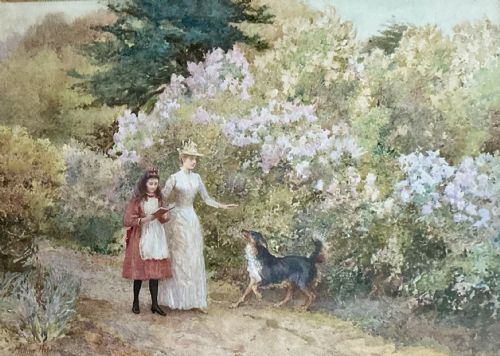


Victorian Genre Watercolour Artwork
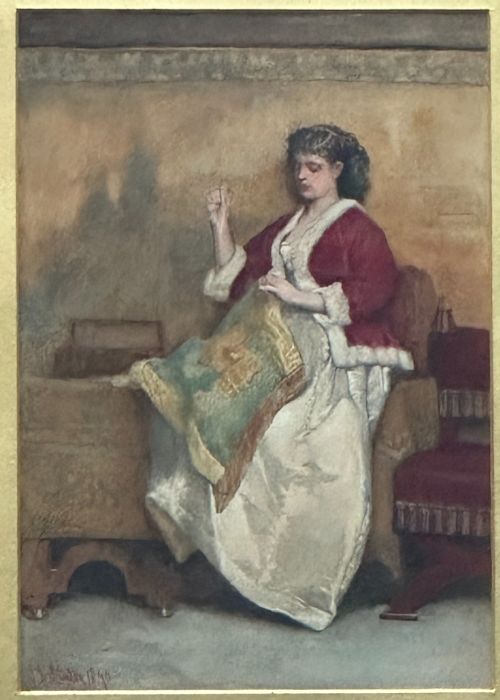
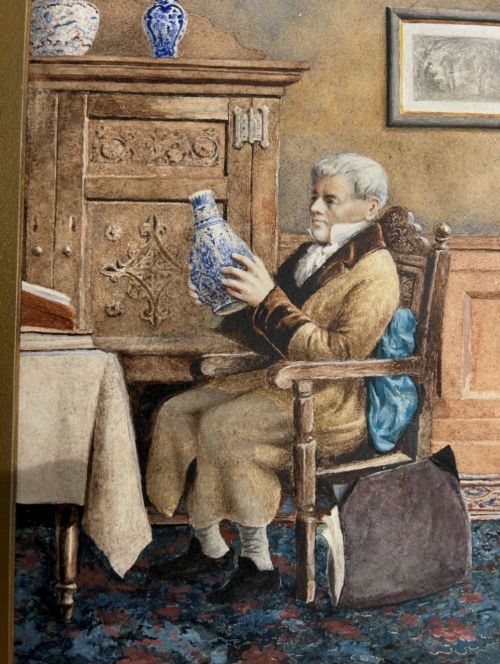
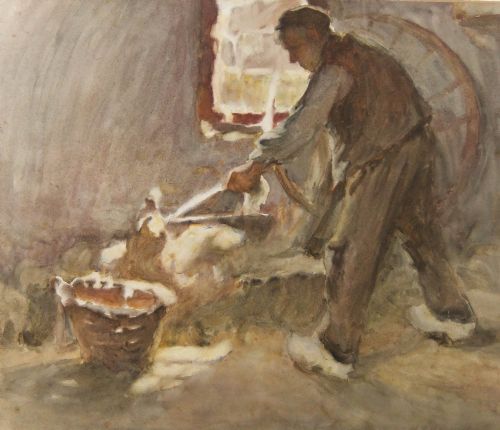
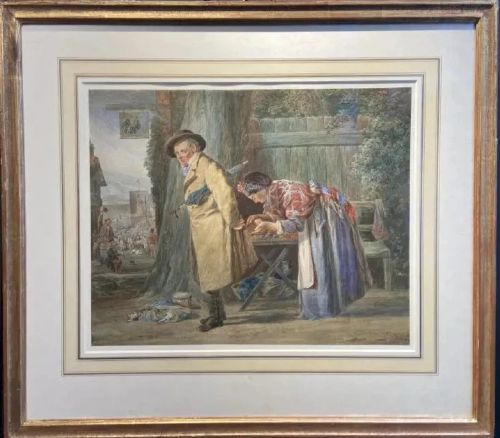
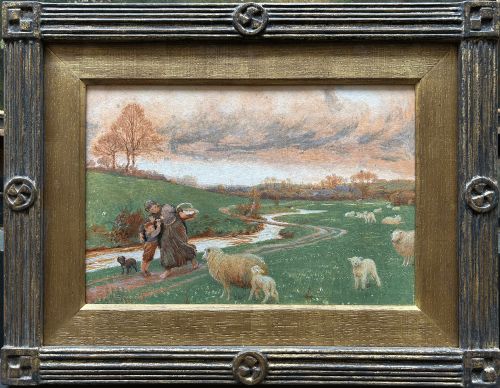
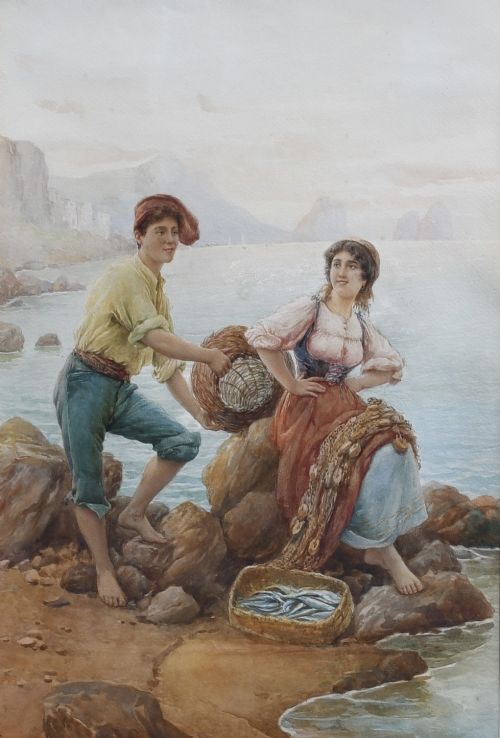
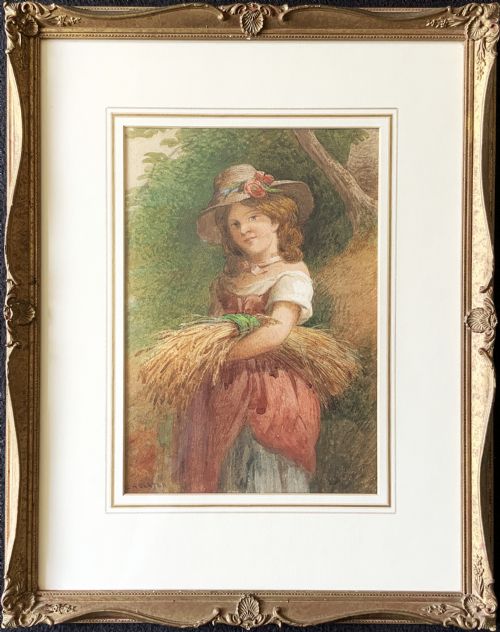
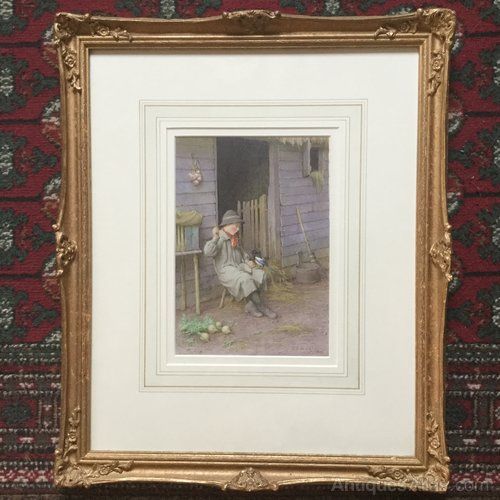
These pieces of victorian genre watercolour artwork capture domestic scenes, rural toil and social life on paper using pigment.
Victorian Genre Watercolour Artwork
Victorian genre watercolour artwork depicts everyday scenes, human figures and narrative moments set in streets, cottages and coastal villages. These pieces belong predominantly to the nineteenth century and the early twentieth century, spanning periods recorded as Victorian, Edwardian and the wider nineteenth century.
The subjects range from British rural life and domestic interiors to Italian and Spanish landscapes populated by fisherfolk and labourers. Painters rendered these subjects as fine art paintings, framed wall art and detailed watercolour paintings on paper.
Buyers encounter works produced by named artists operating within distinct regional schools, including British Impressionism and various strands of genre realism. The surviving examples typically arrive mounted in wood, gilt wood or giltwood frames protected by glass.
How they were made
Makers applied watercolour pigment onto paper using fluid washes and precise brushwork to build tone and narrative detail. Watercolours allowed artists to achieve both luminous light effects and rich chromatic depth within figurative compositions.
Works received contemporary framing using wood and gilt wood or giltwood mouldings to protect the delicate paper surface beneath glass. The combination of water-soluble pigments on paper supported detailed draftsmanship characteristic of nineteenth-century painting techniques.
Listings span the nineteenth century into the 1930s, utilising watercolour pigment on paper housed in wood and gilt wood frames.
What varies in quality
Quality rests in the firmness of the draftsmanship, the expressive control of the watercolour pigment and the complexity of the narrative arrangement. Master practitioners handled light and shadow with subtlety, defining human character and fabric textures with economy.
Condition remains central, determined by the preservation of the paper support and the stability of the original pigments against fading. The presence of period framing in giltwood or wood further distinguishes accomplished examples from simpler works.
Sir James Dromgole Linton·Henry Silkstone Hopwood·Joseph H Barnes·Frederick Walker·Charles Henry Slater·James Hayllar·Charles Edward Wilson·Filipo Indoni·James Hardy of Bath·Helena Maguire·Linnie Watt·Robert Richard Scanlan·Kate E Booth·Leonardo Morello·David Woodlock·Charles H Poingdestre·Ralph Todd·Arturo Orselli·Henry Spernon Tozer·Julian Drummond·John Masey Wright·Henry Sykes·William Lucas·Edward Killingworth Johnson·Madeline Hughes
The Victorian Genre Watercolour Artwork Glossary
- Genre painting
- Painting that depicts aspects of everyday life by portraying ordinary people engaged in common activities. These works focus on narrative and social observation rather than portraiture or historical events.
- Watercolour pigment
- Colouring material ground in a water-soluble binder for use on paper supports. Artists diluted these pigments with water to achieve transparent washes or applied them densely for opaque highlights.
- Giltwood
- Wood carved and covered with a thin layer of gold leaf or gilt. This material formed the decorative frames that historically housed fine nineteenth-century watercolours.
- Victorian realism
- An artistic approach aiming to represent subject matter truthfully without artificiality or supernatural elements. In genre works, this involved careful observation of working-class dress and rural environments.
Victorian Genre Watercolour Artwork: Frequently Asked Questions
What subjects appear in these watercolours?
The compositions show everyday figures, children, labourers, fisherfolk and domestic animals situated in rural villages, coastal ports and interior rooms. Scenes include blacksmith shops, cottage doors and street markets across Britain and continental Europe.
Artists drew inspiration from ordinary social interactions and local trades, creating narrative watercolours that recorded contemporary habits and working environments.
How should these paper artworks be displayed?
These watercolours require placement away from direct sunlight to prevent the pigments from fading over time. Maintaining stable indoor humidity protects both the paper support and the wooden frame.
Glazing with glass shields the delicate painted surface from dust and atmospheric pollutants while allowing the fine brushwork to remain clearly visible.
How do you date a nineteenth century watercolour?
Dating relies upon artist signatures, inscribed dates on the paper mount, and stylistic conventions associated with specific decades. Costume details and architectural elements within the genre scene also offer clues to the period of creation.
Framing materials and backing papers can provide additional chronological evidence, matching the technical standards of periods such as the Victorian and Edwardian eras.
What distinguishes these from oil paintings?
Watercolour employs pigment suspended in a water-soluble binder applied to paper rather than oil paint on canvas or panel. This medium produces luminous, translucent effects through layered washes rather than thick impasto.
Works on paper were often executed outdoors or as preparatory studies, though many nineteenth-century genre pieces functioned as finished gallery artworks framed under glass.