


Edwardian River Scene Watercolour
An edwardian river scene watercolour captures tranquil British waterways through delicate washes on paper, offering a quiet window into past landscapes.
Edwardian River Scene Watercolour
An edwardian river scene watercolour focuses on waterways, coastal pools, and pastoral streams across British locations. These works emerge primarily from the opening decades of the twentieth century, bridging late Victorian sentiment and British impressionism.
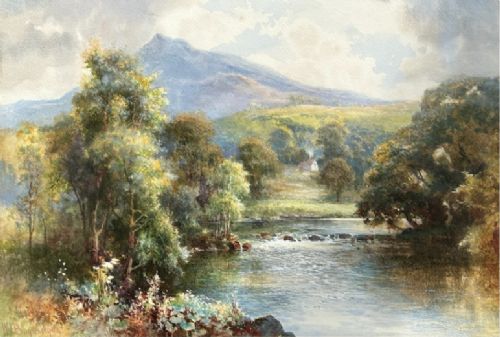
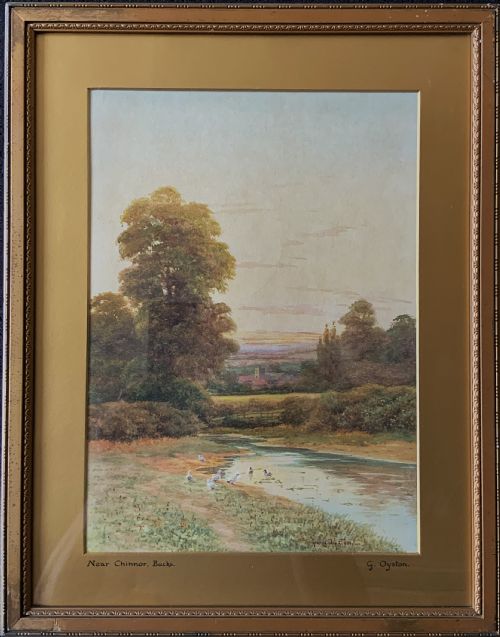
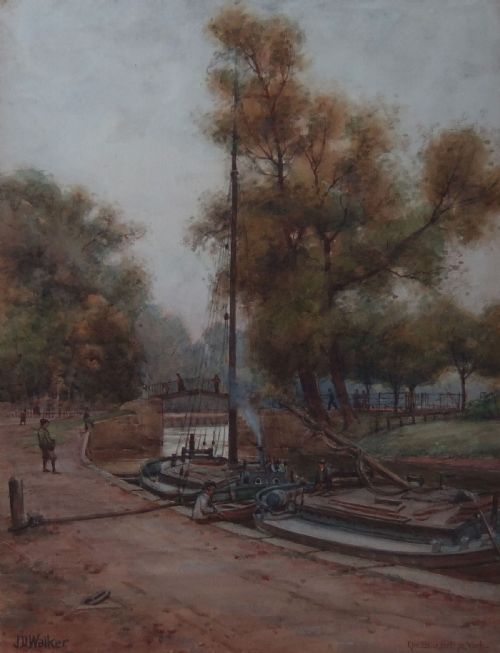
The pieces on this page span rural views in Wales, Yorkshire, and Buckinghamshire alongside urban Thames scenes in London. Traditional British fine art compositions frequently feature cattle watering, boats moored near cities, or children fishing beside streams.
Most examples present framed views behind glass within wooden or gilt surrounds. Collectors encounter works attributed to named artists alongside pieces bearing broader British school attributions.
Factors of distinction
Superior examples demonstrate confident handling of light and atmospheric depth, particularly in the rendering of water surfaces and river mists. Strong compositional structure elevates a scene from a simple topographical record to a compelling work of art.
The reputation of the painter and the clarity of provenance distinguish individual sheets. Signed works by established exhibitors carry stronger attribution than anonymous examples from the broader British school.
Listings span several materials including watercolour pigment, paper, wood, glass, and gilt.
William Joseph Boyes·George Oyston·Alfred Grey RHA·Leslie Rackham·Percy Lancaster·Thomas James Lloyd·Walter Duncan·William Tatton Winter RBA·Frank W. Scarborough·Henry Sykes·Lieutenant Harold E Frecker RNR·Henry John Sylvester Stannard·Frank Wasley·John D. Walker·Herbert John Finn·Thomas Pyne·Henry J. Kinnaird
The Edwardian River Scene Watercolour Glossary
- Watercolour pigment
- Finely ground colour particles suspended in a water-soluble binder, used to create translucent washes on paper.
- British Impressionism
- A painting style adopting loose brushwork and natural light effects, prominent in British art around the turn of the twentieth century.
- Topographical watercolour
- A detailed visual record of a specific geographic location or landmark, popular for recording towns and rivers.
- Gilt surround
- A decorative wooden frame finished with gold leaf or metallic paint, frequently enclosing antique works on paper.
Edwardian River Scene Watercolour: Frequently Asked Questions
How do I care for an antique watercolour?
Keep watercolours away from direct sunlight to prevent the pigments from fading over time. Maintain stable indoor humidity levels to protect both the paper support and the surrounding wooden frame.
Ensure the backing board remains sealed and avoid hanging pieces in damp environments like kitchens or bathrooms.
Are these watercolours signed by the artist?
Many examples feature signatures or initials inscribed by the artist, often located in the lower corners of the sheet. Other pieces remain unsigned but carry strong stylistic attributions to specific regional schools.
Documentation or exhibition labels on the reverse sometimes provide additional confirmation of authorship.
What subjects appear in these river scenes?
The works depict rural Welsh streams, Yorkshire landscapes, and pastoral waterways alongside busy sections of the River Thames in London. Common motifs include moored boats, bridges, cattle watering, and figures fishing at dusk.
Coastal pools and rural mills also feature frequently across the selection.
How do I distinguish Edwardian watercolours from Victorian ones?
Edwardian watercolours often display a lighter palette and looser brushwork influenced by British impressionism compared to earlier Victorian academic styles. The framing and paper types can also offer clues to the active period of the artist.
Artist biographical dates listed on the pieces help anchor the execution firmly within the early twentieth century.