
Victorian Games Console
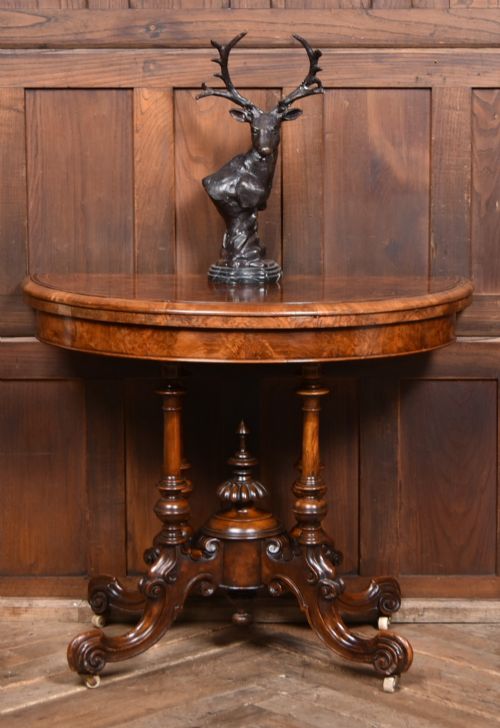
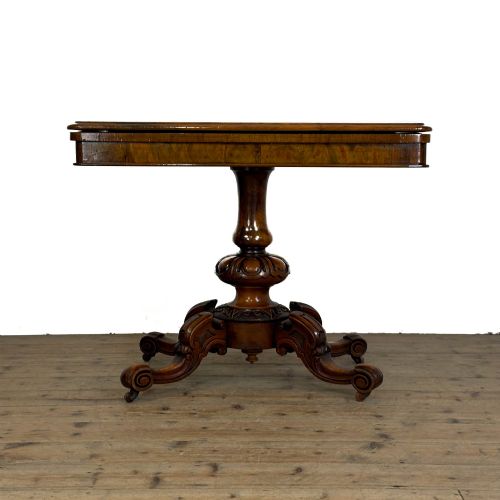
A victorian games console combines the versatility of a fold-over top with the elegance of a pier table for entertaining.
Victorian Games Console
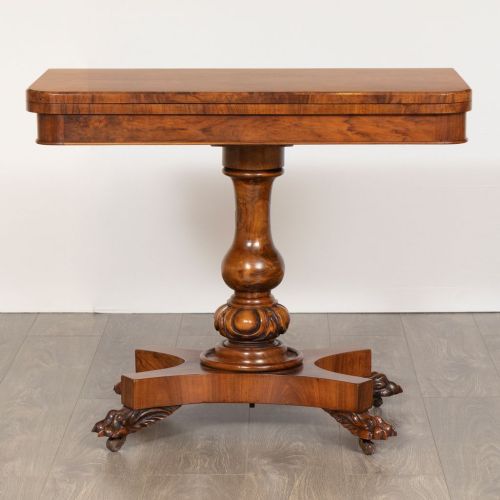
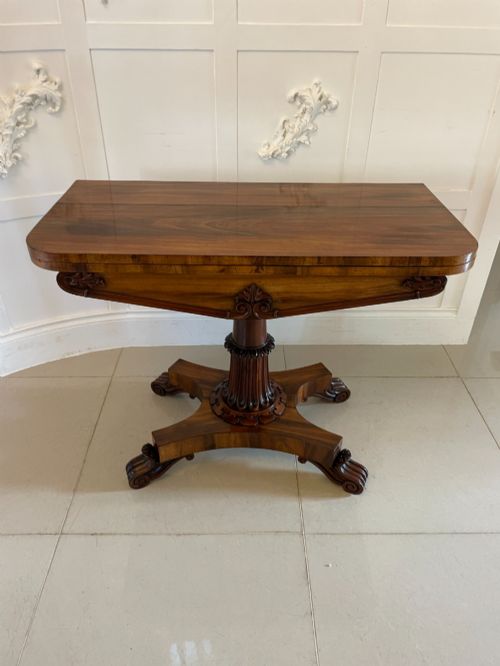
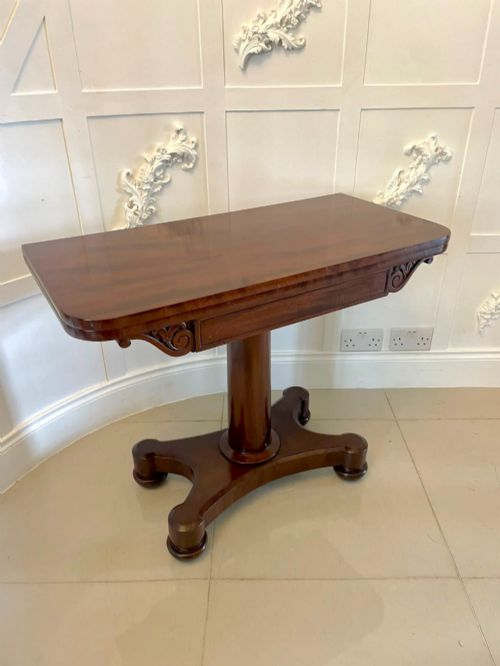
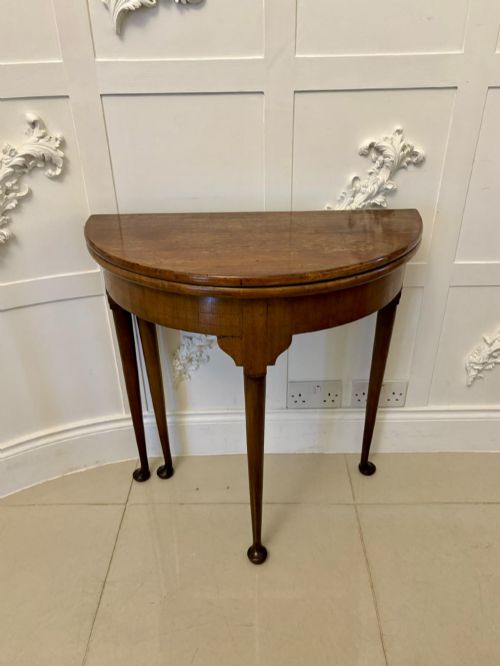
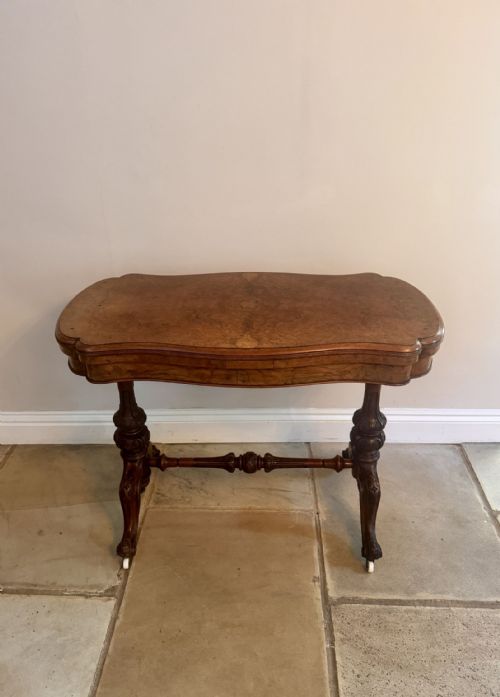
A victorian games console typically appears as a fold-over card table, tea table, or side table designed to stand against a wall when closed. When opened, the hinged top rotates and unfolds to reveal a baize-lined surface intended for card playing or social pastimes.
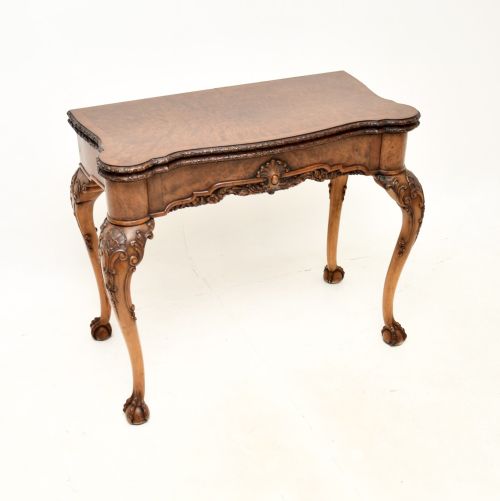
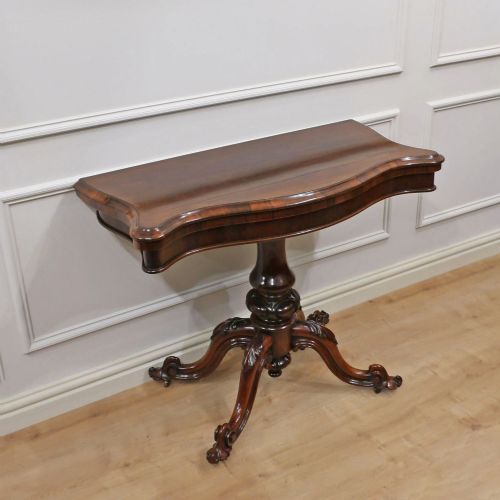
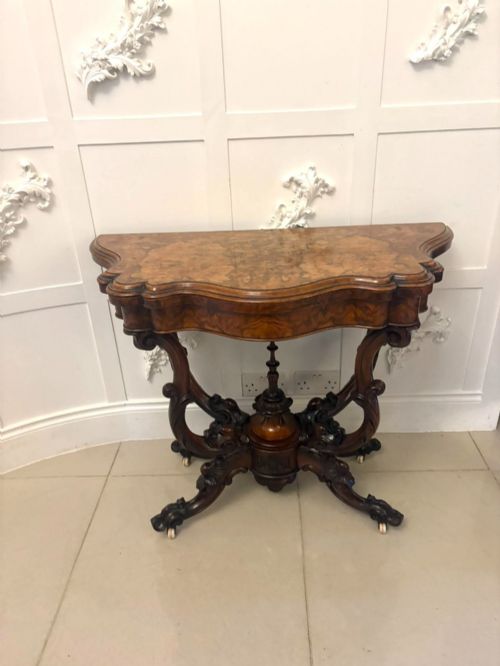
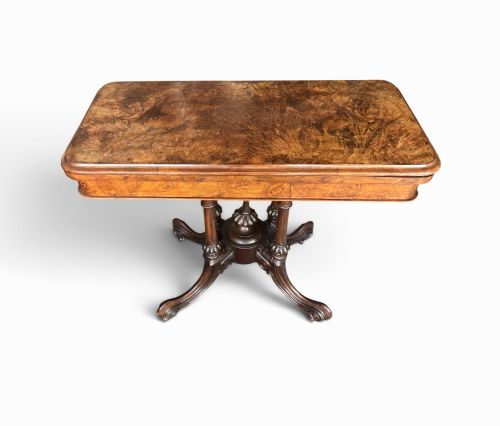
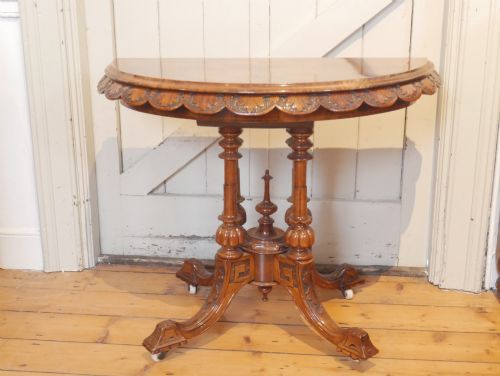
The pieces on this page span the mid to late nineteenth century, predominantly taking the form of burr walnut, mahogany, or rosewood tables. Makers frequently combined the console format with games functionality, producing serpentine fronts, demi-lune shapes, and occasional storage compartments.
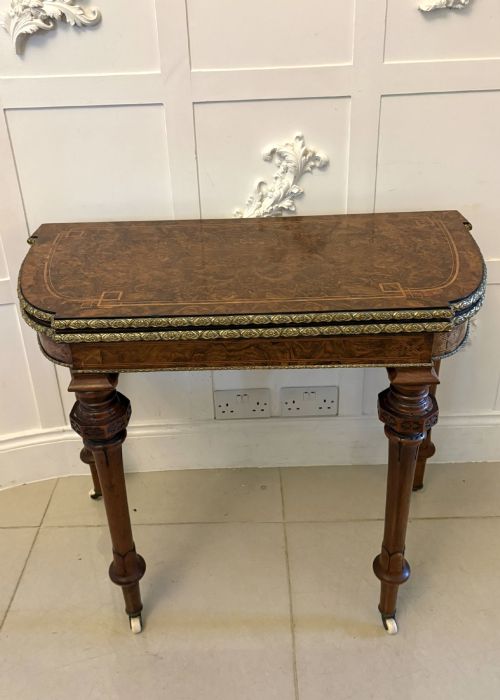
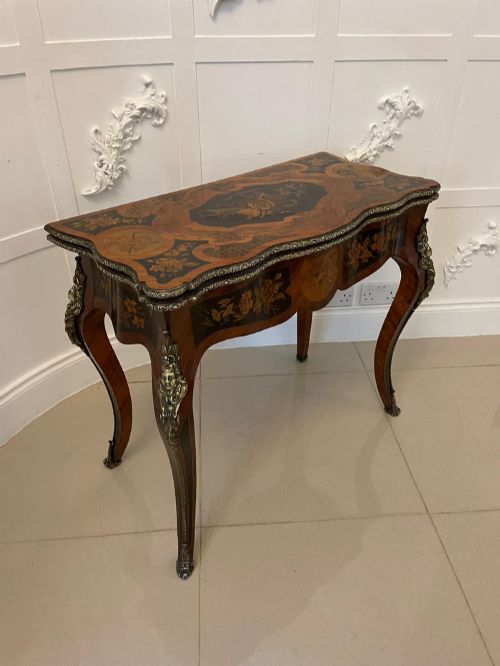
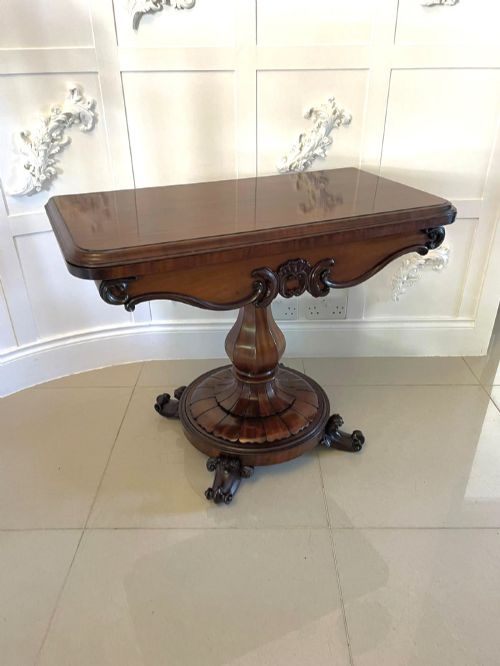
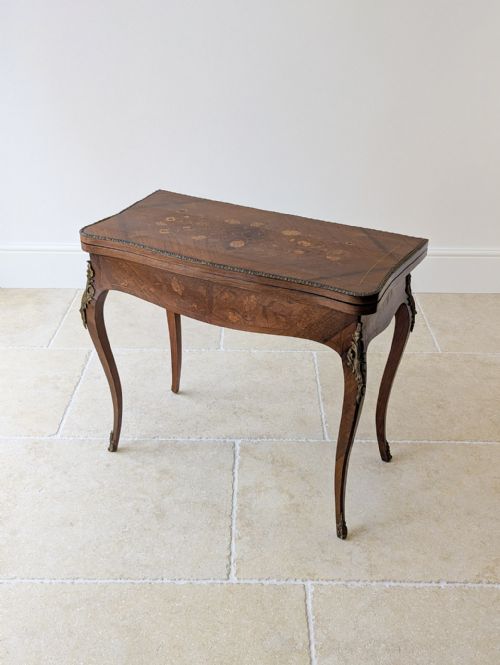
Buyers encounter styles ranging from plain mahogany interpretations to elaborate Louis XV revivals featuring marquetry inlay and ormolu mounts. These pieces served a dual domestic purpose, functioning as decorative console furniture by day and entertainment surfaces by evening.
Materials and construction
Cabinet makers utilised dense primary timbers such as mahogany and rosewood, alongside decorative veneers like burr walnut, kingwood, and satinwood applied to carcases. Marquetry inlay, brass banding, and gilt-bronze ormolu mounts frequently accented the surfaces of higher-end examples.
Structural integrity relied on clever pivoting mechanisms, swivel tops, and fold-over leaf supports that concealed internal storage wells for cards and counters. Carved baskets, pedestals, and pillar supports distributed the weight of the heavy hardwood tops evenly to the base.
Many a Victorian card game was interrupted when guests forgot the table swivelled and attempted to lean on the unsupported fold-over leaf.
Markers of distinction
Quality rests upon the selection of timber veneers, the crispness of hand-carved wooden supports, and the precision of the brass hinges and swivel mechanisms. Superior examples display symmetrical burr walnut grain patterns across the fold-over top and intricate marquetry without lifting or shrinkage cracks.
The refinement of the ormolu mounts, the presence of signed maker stamps, and the rigidity of the folded top when open separate standard production pieces from exhibition-grade commissions. Finer tables maintain tight joinery in the legs and frame, ensuring the leaves meet flush in both configurations.
G T Morant·Edwards & Roberts
The Victorian Games Console Glossary
- Console table
- A table designed to fix against a wall, often supported by ornate brackets or front legs rather than standing independently.
- Fold-over top
- A hinged tabletop construction that doubles the surface area when unfolded and rotated into position.
- Ormolu
- Gilt-bronze decorative mounts applied to furniture to accent corners, friezes, and legs.
- Marquetry
- Decorative patterns formed by fitting contrasting pieces of veneer into a wood background.
- Serpentine
- A furniture front or edge shaped with a central concave curve flanked by two convex curves.
Victorian Games Console: Frequently Asked Questions
How do you open a games table?
The top leaf typically lifts and swivels ninety degrees on a central pivot pin before folding down flat onto the supporting frame. This reveals a concealed well beneath the leaves used for storing playing cards and markers.
Care must be taken to lift the leaf cleanly clear of any locating dowels before turning, avoiding strain on the internal wooden hinge mechanisms.
What is a console table used for?
These tables sat flat against a drawing room wall to display lamps, ornaments, or tea services when not in use for gaming. The dual-purpose design allowed households to maximise floor space in principal entertaining rooms.
Opening the top converted the decorative console into a stable table for cards, board games, or casual dining.
How do you identify burr walnut?
Burr walnut exhibits swirling, knotty grain patterns created from the growths of the tree rather than straight timber boards. Cabinet makers sliced this figured wood into thin veneers to ornament the primary surfaces of tables.
The resulting patterns appear highly decorative, featuring concentric circles and rich amber or brown colour variations.
What is an Aesthetic Movement table?
Aesthetic Movement pieces reject heavy Victorian revival ornamentation in favour of simpler lines, ebonised finishes, and Japanese-inspired design motifs. These tables often incorporate contrasting light and dark woods such as oak and ebony.
The style prioritised artistic design and craftsmanship over historical imitation during the later nineteenth century.