


Victorian Flip Top Table
A victorian flip top table turns from a compact console into a proper gaming or dining surface with a simple pivot and fold.
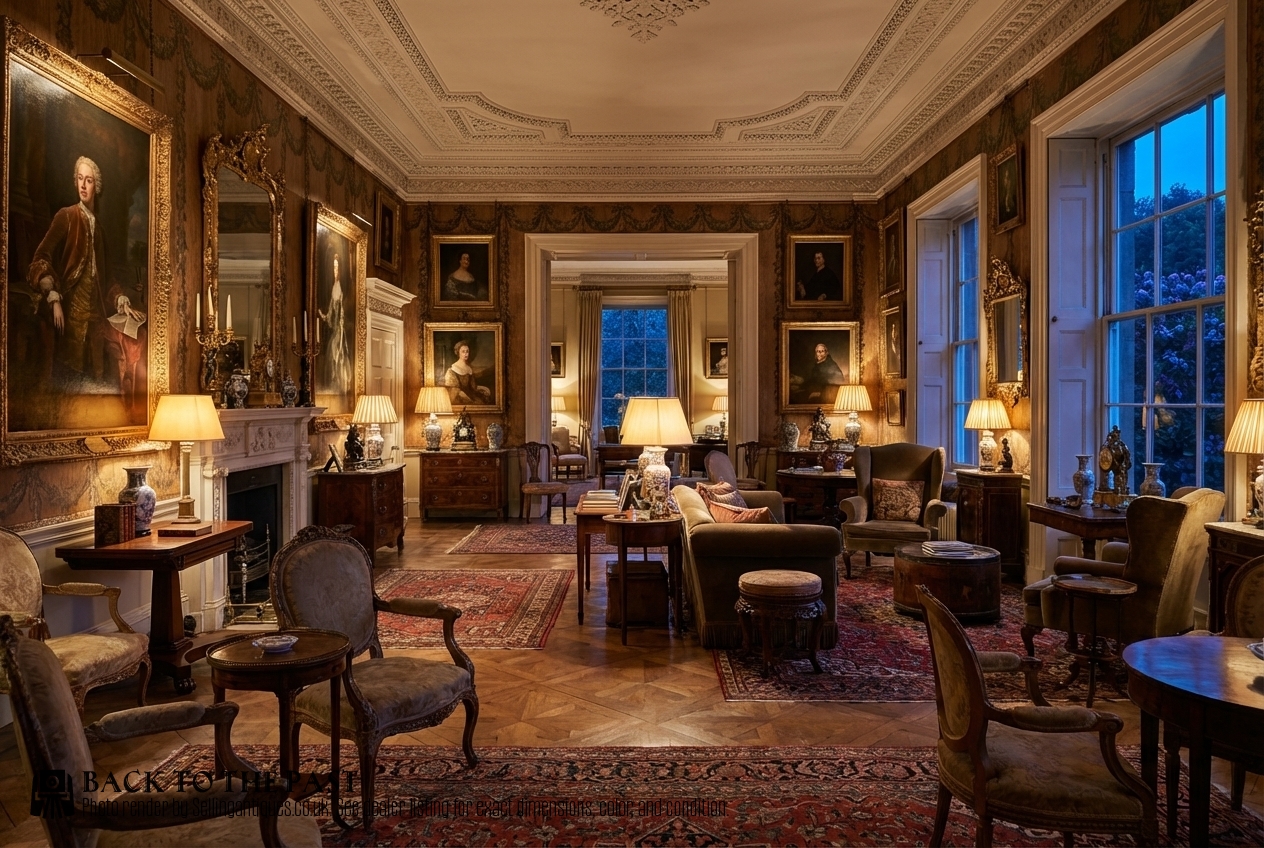
Victorian Flip Top Table
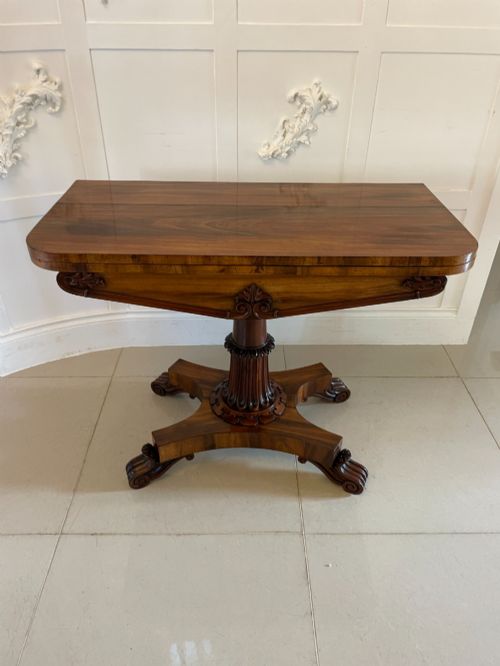
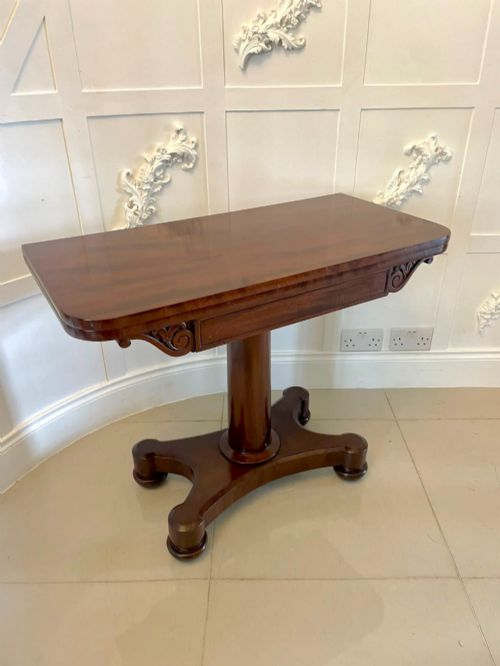
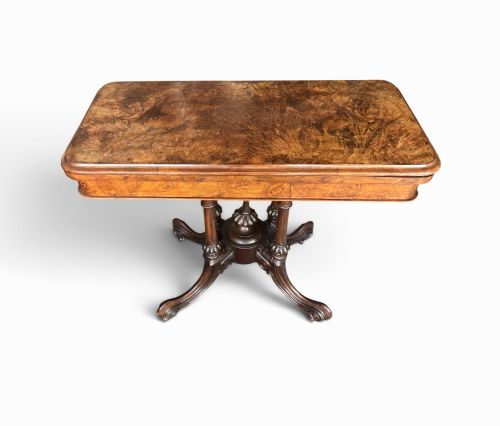
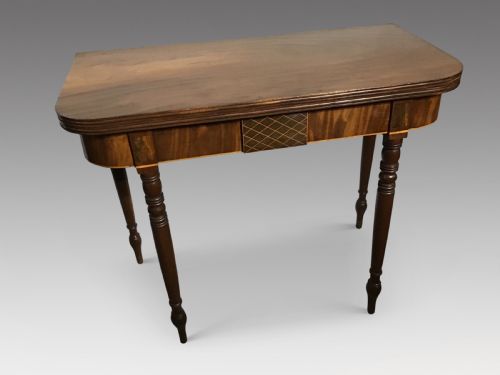
A victorian flip top table serves multiple functions in a nineteenth century interior, pivoting or folding to reveal a finished surface for cards, tea, or dining. The examples you encounter on this page span several decades of the nineteenth century, taking the form of card tables, tea tables, side tables, and tilt top breakfast tables.
The periods and styles represented stretch from Georgian and Regency precursors through William IV and into high Victorian design. You will find forms ranging from rectangular card tables and demi lune tea tables to serpentine foldover designs and tilt top supper tables.
Materials and construction methods
Cabinet makers utilised dense hardwoods like mahogany, rosewood, walnut, burr walnut, and olive wood, frequently applying flame mahogany veneer or figured walnut to the primary surfaces. Exotic woods inlay and marquetry inlay appear on select tops, adding decorative contrast to the timber grain.
Structural elements often incorporate brass fittings, ormolu mounts, and carved detailing on legs and pedestals. Tables designed for card playing or tea service rely on sturdy pivoting mechanisms, folding leaves, and robust pedestals or four swept legs to support the weight when opened.
Mahogany and rosewood dominate the listed pieces, while walnut and burr walnut appear frequently in Victorian card and tea tables.
Distinctions in construction and design
The grade of timber selection largely dictates the visual merit of the piece, with figured walnut, burr walnut, and flame mahogany veneers creating deeper visual movement than plain timbers. Rich grain patterns and precise marquetry inlay demand greater skill from the cabinet maker.
Structural integrity and the smoothness of the turning or folding mechanism separate standard pieces from finer examples. Carved detailing on the legs, the inclusion of exotic woods, and secondary touches like ormolu mounts indicate a higher tier of nineteenth century production.
Gregory and Co
The Victorian Flip Top Table Glossary
- Flip top table
- A table with a hinged top that folds flat to serve as a console or opens out to double its surface area.
- Card table
- A specialised table designed for gaming, typically featuring a foldover top that reveals a baize or polished wood playing surface.
- Tea table
- A small domestic table intended to hold tea service equipment, often built with a foldover top or snap top mechanism.
- Tilt top table
- A table equipped with a mechanism allowing the top to tilt vertically when not in use for convenient storage against a wall.
- Marquetry inlay
- Decorative patterns formed by fitting small pieces of veneered wood into a prepared cavity on the table surface.
Victorian Flip Top Table: Frequently Asked Questions
How do I use a flip top table?
You release any internal catch or pivot the hinged leaf so that it unfolds flat onto the supporting frame.
This doubles the surface area, making a compact side table suitable for playing cards or serving tea.
What is the difference between a card table and a tea table?
A card table frequently includes a lined interior surface intended for games, while a tea table provides a stable wooden top for china and silver.
Both use folding or pivoting mechanisms, though their internal depths and underframe supports reflect their distinct domestic uses.
Where should I place this table in a room?
These tables sit comfortably against a wall as a console or side table when the top is folded shut.
When guests arrive, you pull the piece into the room and unfold the top to create a functional centre or dining surface.
How do I identify a Victorian period table?
You examine the timber species, such as rosewood, walnut, or mahogany, alongside the characteristic cabinet making techniques of the nineteenth century.
Stylistic markers like French Louis XVI influence, William IV proportions, or specific veneer choices help narrow down the date of manufacture.