

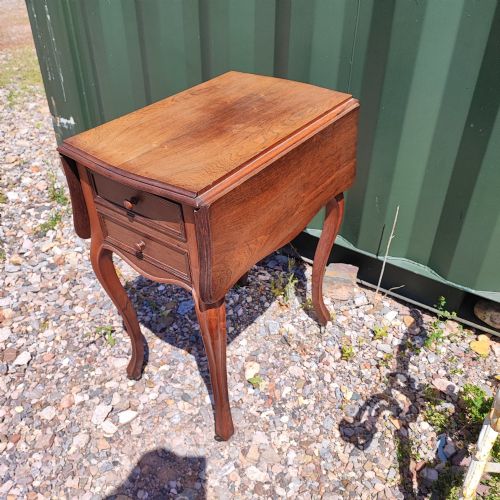
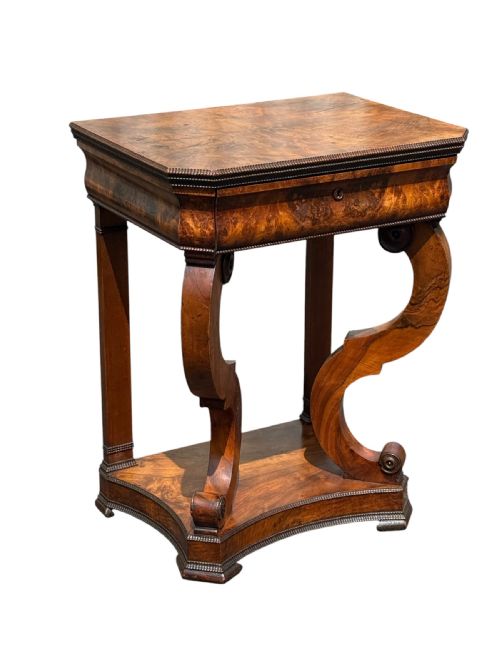
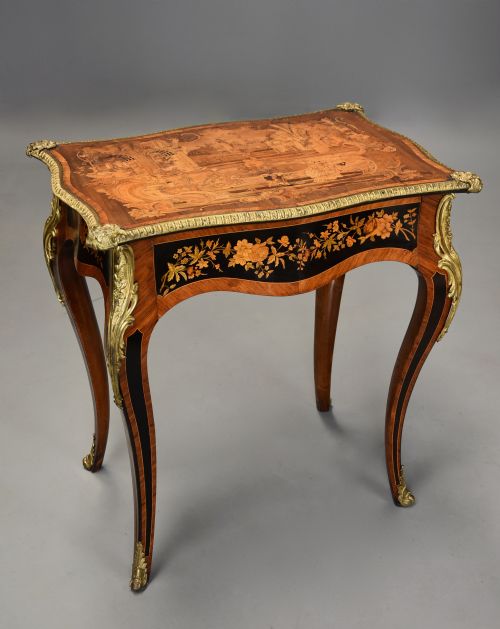
Victorian French Occasional Table
These pieces combine English walnut and burr walnut with French Kingwood and ormolu mounts to form a distinct family of nineteenth-century occasional furniture.
Victorian French Occasional Table
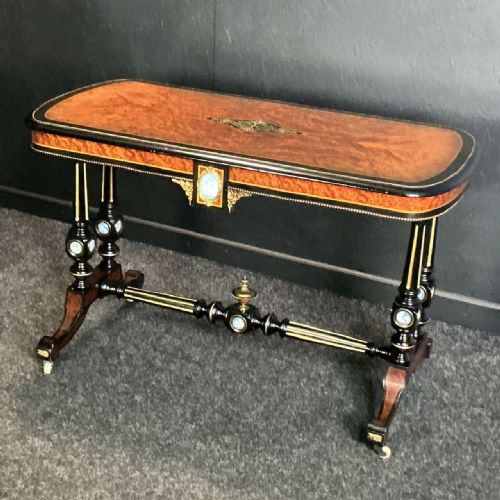
A victorian french occasional table brings together continental revival aesthetics and nineteenth-century English cabinet-making, appearing primarily as freestanding centre tables, lamp tables, and writing desks.
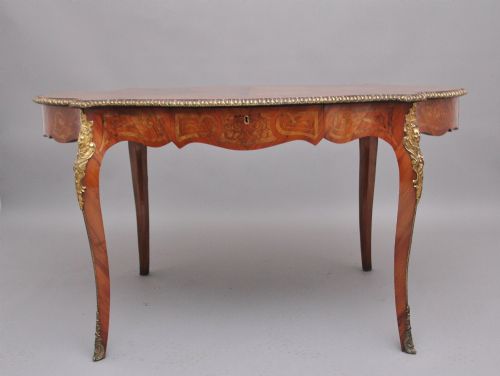
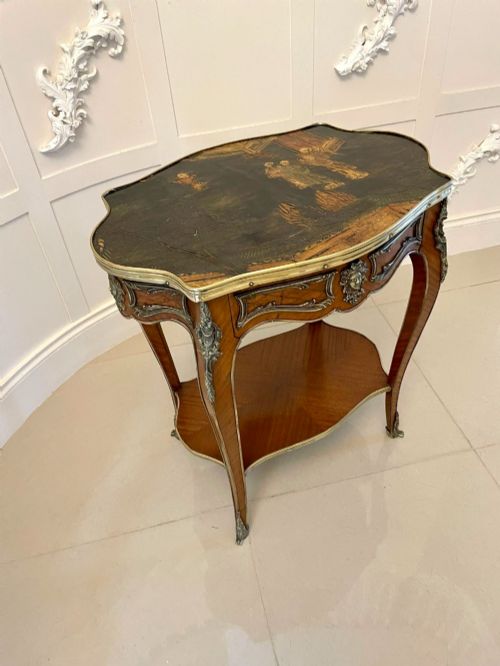
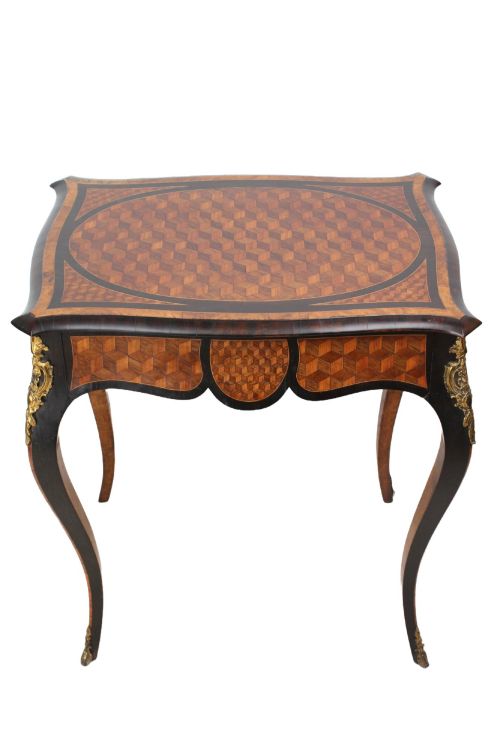
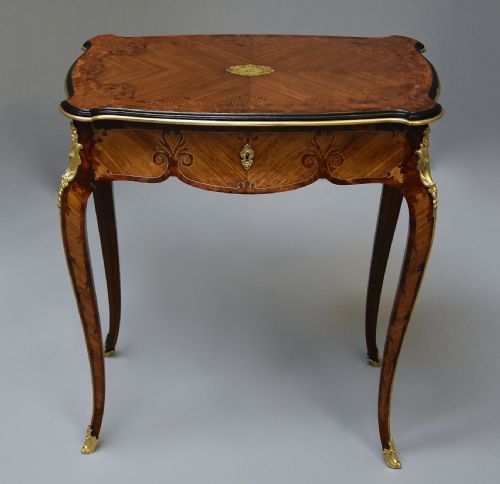
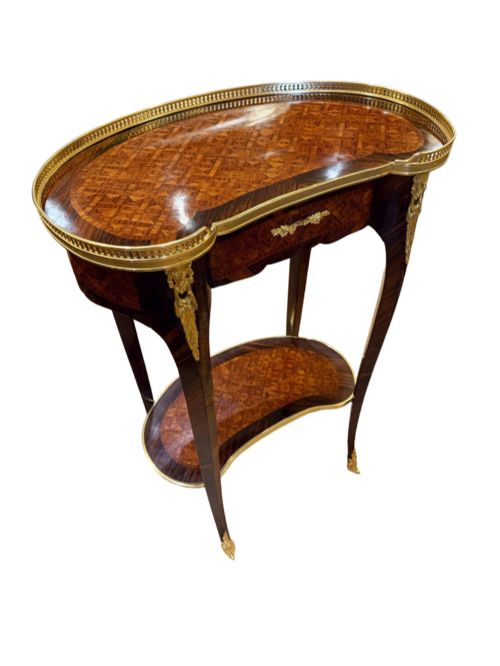
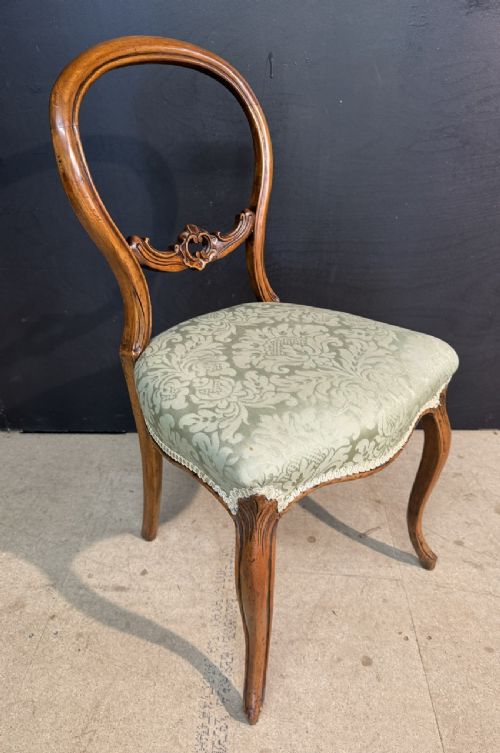
Makers drew on Louis XV revival and Rococo forms, incorporating serpentine shapes, cabriole legs, and kidney or rectangular tops designed to sit in the middle of a principal room.
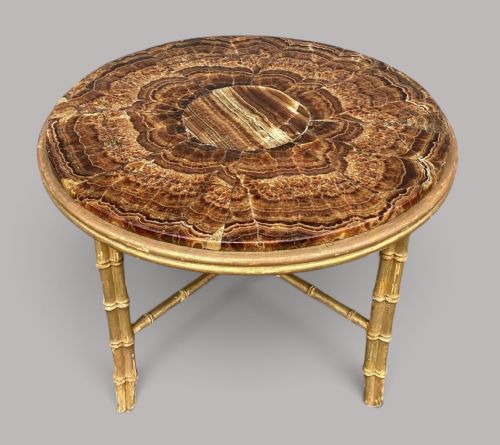
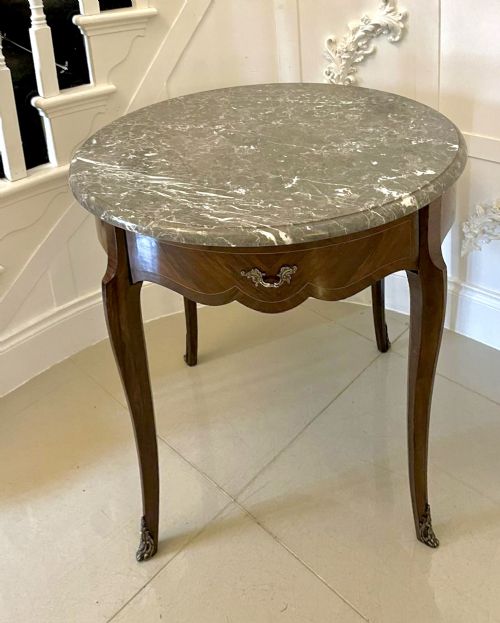
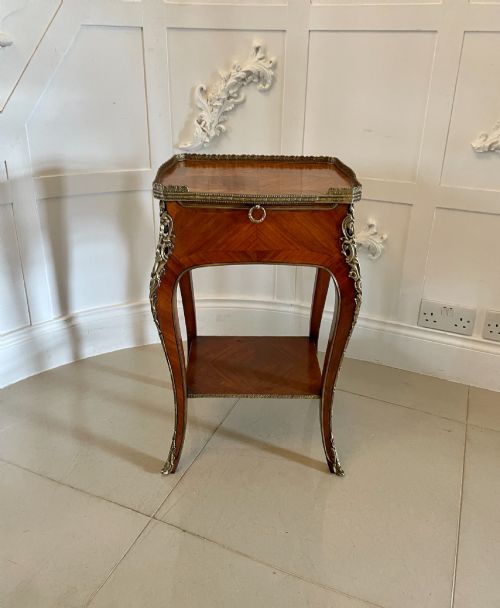
Surviving examples range from elaborate marquetry and parquetry inlaid pieces to simpler walnut and mahogany surfaces fitted with Italian marble tops or gilded brass mounts.
Construction and materials
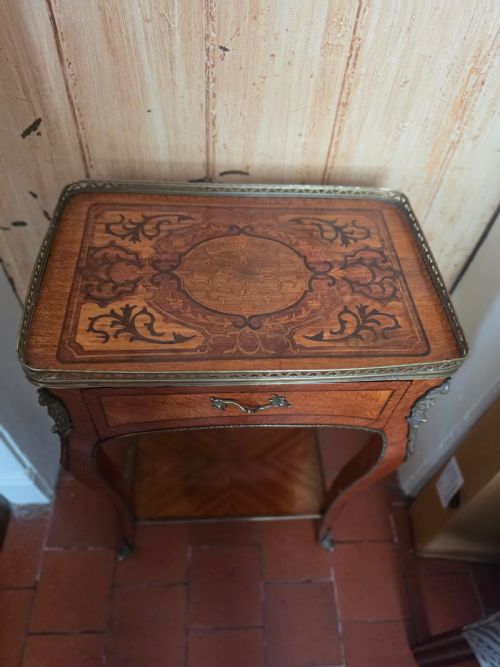
Workshops utilised foundational timbers of walnut, burr walnut, mahogany, and rosewood, often veneered with figured Kingwood, amboyna, or ebonised wood to create geometric parquetry and floral marquetry patterns.
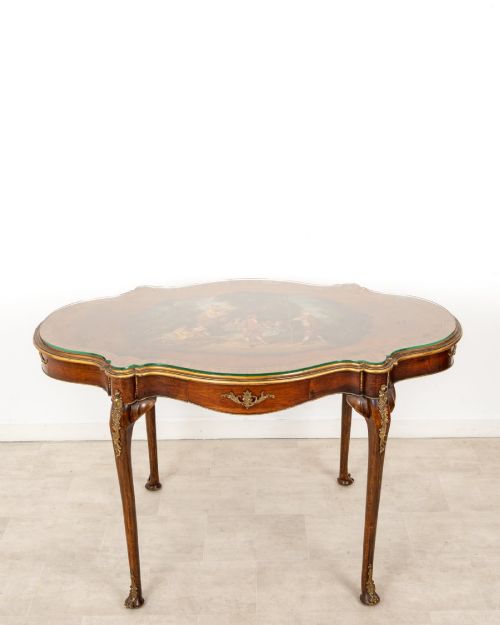
Cast gilt bronze and ormolu mounts, along with gilded brass edgings and handles, accent the curves of cabriole legs and aprons, while specific pieces incorporate inset Italian marble or Sevres style porcelain plaques.
The listings span the nineteenth century, featuring walnut, Kingwood, and mahogany alongside brass, ormolu, and marble.
Degrees of quality
The sophistication of the timber selection and the precision of the parquetry inlay set ambitious London and Parisian workshop output apart from commercial trade alternatives.
The crispness of the chased ormolu mounts and the integration of functional mechanisms, such as writing slides or reversible chess boards, determine the standing of an individual piece.
JAS Shoolbred·Edwards & Roberts·Gillows·Gabriel Viardot
The Victorian French Occasional Table Glossary
- Ormolu
- Gilded bronze used for decorative mounts and accents on furniture. It provides a metallic contrast to dark woods like Kingwood and walnut.
- Marquetry
- Elaborate veneer work forming pictorial or floral designs using various coloured woods. Craftsmen cut contrasting timbers together to fit precisely into the surface.
- Parquetry
- Geometric wood inlay forming patterns such as cubes or chequers. This technique decorates table tops and friezes.
- Cabriole leg
- A furniture leg that curves outward and then tapers inward with an ornamental foot. It derives from animal limbs and defines Louis XV revival forms.
- Vernis Martin
- A type of simulated Japanese lacquer developed in France during the eighteenth century. It employs layered resin varnishes to achieve a glossy finish.
Victorian French Occasional Table: Frequently Asked Questions
Where should a centre table go?
These tables are built to be freestanding, meaning they lack a designated front or back and display finished woodwork on all four sides. Placing them in the middle of a room allows the parquetry, ormolu mounts, and shaped walnut or Kingwood grain to be seen from every angle.
In period interiors, they served as lamp tables, writing desks, or surfaces for decorative objects like urns and jardinieres. Keeping them away from walls preserves their intended role as central decorative focal points.
How do I care for marble tops?
Many nineteenth-century examples feature inset Italian marble slabs designed to provide a cool, durable surface for lamps and ornaments. These stone tops require simple dusting and immediate wiping of moisture to prevent staining.
Underneath the stone, the wooden frames remain sensitive to sudden changes in humidity and temperature. Placing the table away from direct heat sources protects both the polished walnut structure and the delicate brass or ormolu mounts.
What is a games table used for?
Selected tables incorporate dual-purpose tops, featuring reversible panels for chess and draughts alongside fitted drawers for playing sets. These pieces offered Victorian households versatile furniture that shifted easily from formal display to evening recreation.
The mechanical elements inside these designs require gentle handling when opening drawers or pivoting surfaces. Regular use of the internal compartments demonstrates the practical ingenuity of nineteenth-century cabinet-makers.
How do I distinguish revival styles?
Louis XV and Rococo revival pieces rely on asymmetry, sweeping cabriole legs, and scrolling ormolu mounts applied to serpentine walnut or Kingwood frames. Later nineteenth-century interpretations often introduce ebonised wood or eclectic marquetry patterns influenced by Japonisme.
Examining the underlying timber construction and the style of the brass mounts helps date a piece across the Victorian and Edwardian periods. Cabinet-makers adapted traditional French forms to suit changing British interior tastes throughout the century.