




Victorian French Movement Clock
A victorian french movement clock brings heavy marble, polished brass and intricate dials into a room, offering mechanical history alongside striking home decor.

Victorian French Movement Clock
A victorian french movement clock combines robust British or Victorian housing with continental mechanisms, taking the form of mantel clocks, carriage clocks, desk clocks and clock garniture sets. These pieces date across the nineteenth century, with specific examples appearing from eighteen sixty through to nineteen fifty.
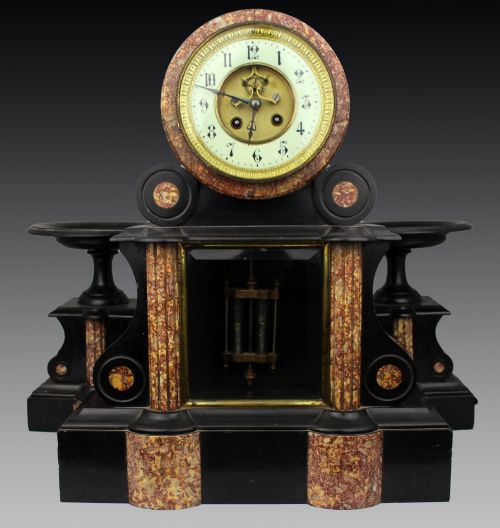
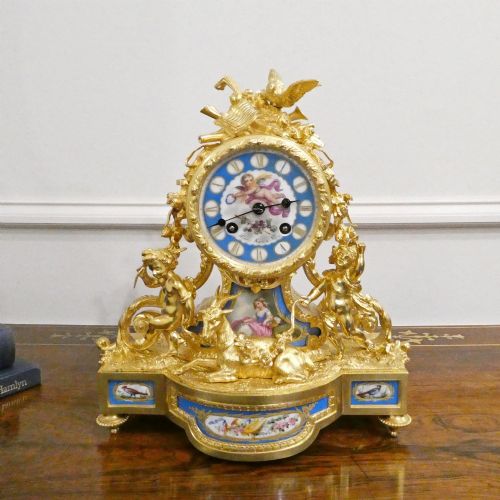
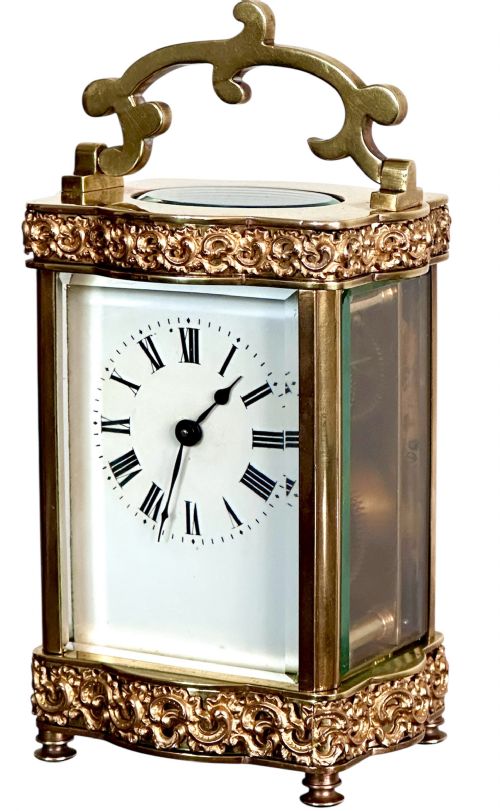
Buyers frequently encounter heavy marble and slate mantel clocks alongside portable brass carriage clocks fitted with glass panels. Styles range through Victorian Classical Revival, French Rococo Revival, Chinoiserie and French Industrial designs, often featuring enamel dials and eight-day movements.
Makers such as Japy Frères, Henry Marc, Philippes Paris, Duverdrey & Bloquel, Charles Frodsham, Holingue Frères, F Marti, and Penlington & Batty appear across the selection. Forms vary from miniature skeleton clocks and lighthouse automata to giant carriage clocks and striking four-glass designs.
Materials and construction
Clock bodies utilise black slate, white or coloured marble, brass, gilt bronze, silvered bronze and figured walnut, paired with glass panels to display the internal mechanics. Enamel feature prominently on the clock faces for clear legibility of the numerals.
Movements are constructed from brass and steel components, often arranged as eight-day systems with repeater functions, date work or grande sonnerie striking capabilities. Gilding is applied to brass and bronze surfaces, while marble and slate cases are polished, carved and occasionally inlaid.
Object types recorded in the inventory span mantel clocks, carriage clocks, desk clocks, and complete garniture sets.
Assessing quality in these clocks
Quality rests in the precision and complexity of the movement, such as whether it includes a repeater function, date work, or complicated striking mechanisms. Makers who signed their work or movements indicate higher workshop standards.
The weight, selection and finish of the housing materials dictate overall grade, distinguishing simple brass cases from heavily carved marble garniture sets or gilt bronze and porcelain combinations. Preservation of the original gilding, enamel dials and glass panels also elevates the piece.
Japy Frères·Henry Marc·Philippes Paris·Duverdrey & Bloquel·Charles Frodsham·Holingue Frères·F Marti·Penlington & Batty
The Victorian French Movement Clock Glossary
- Carriage clock
- A small, portable spring-driven clock designed for travel, featuring a carrying handle and glass panels that reveal the movement.
- Garniture set
- A clock accompanied by matching ornamental side pieces, such as urns or vases, designed to sit together on a mantelpiece.
- Repeater
- A mechanism that chimes the hours or quarters on demand when a lever or button is pressed.
- Skeleton clock
- A timepiece with an open framework that exposes the entire gear train and movement to view.
- Grande Sonnerie
- A complex striking system that chimes both the hours and the quarters automatically as each quarter passes.
Victorian French Movement Clock: Frequently Asked Questions
How do I wind a mechanical clock?
Most pieces utilise a key inserted into specific arbors on the dial face to tension the mainspring.
Care must be taken not to over-wind the movement, stopping as soon as resistance is felt.
What is a carriage clock?
A carriage clock is a portable timepiece fitted with a folding handle and bevelled glass panels designed for travel during the nineteenth century.
They rely on spring-driven 8-day movements rather than pendulums, allowing them to keep time while moving.
Where should I place a heavy marble clock?
Heavy slate and marble mantel clocks require a sturdy, level surface such as a fireplace mantel or a strong sideboard.
Because of their substantial weight, secure placement prevents accidental tipping and protects delicate internal escapements.
How do I identify the maker?
Makers often stamp their names or trademarks onto the brass backplate of the internal movement rather than the dial.
Signatures or retailer names may also appear painted on the enamel clock face itself.