


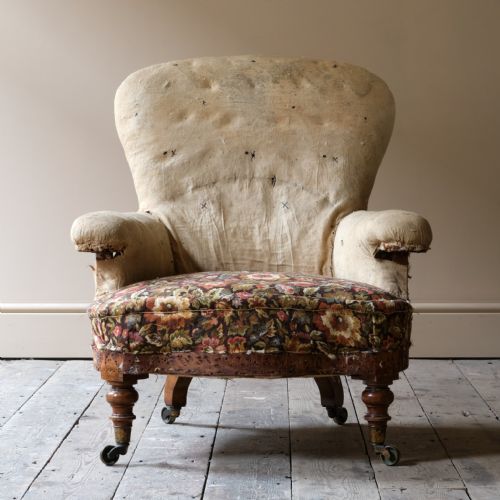


Victorian Floral Tapestry Chair
A victorian floral tapestry chair brings nineteenth-century comfort and botanical needlework directly into a modern interior.
Victorian Floral Tapestry Chair
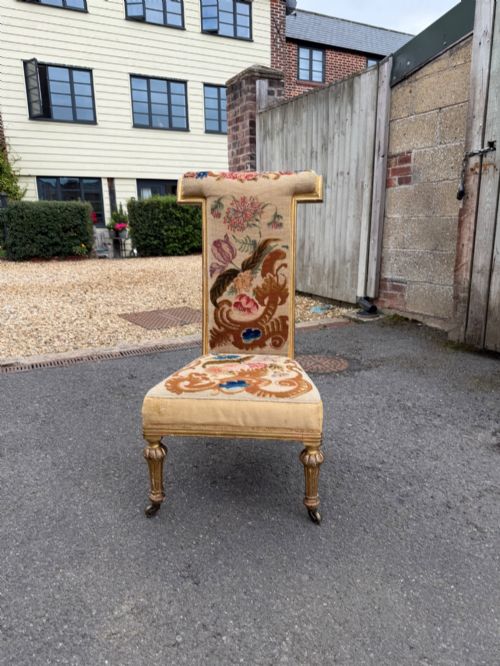
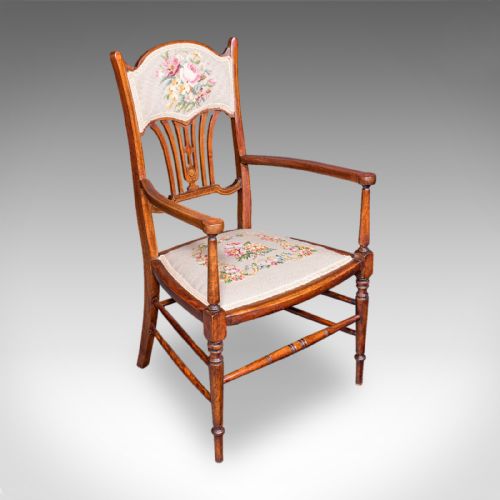
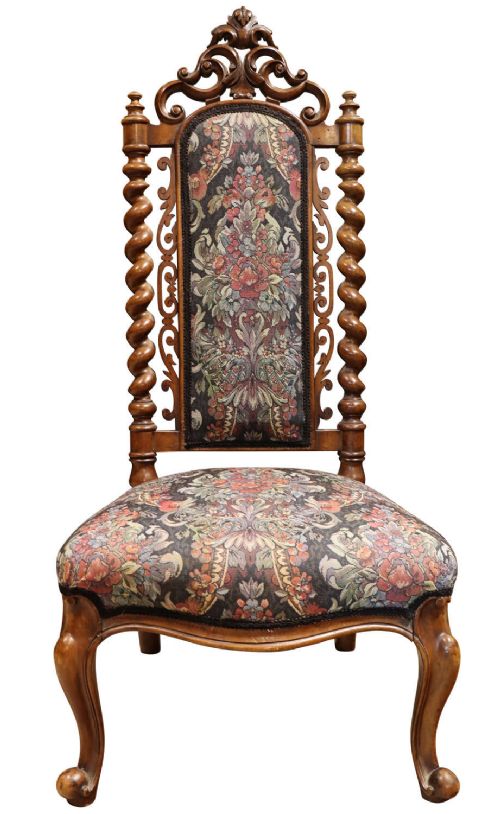
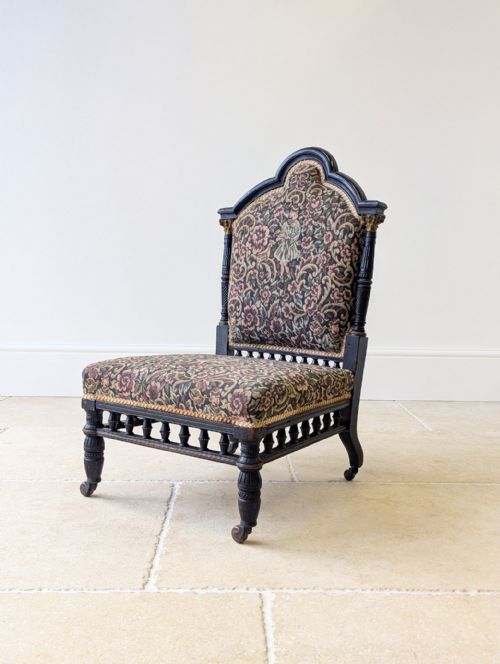
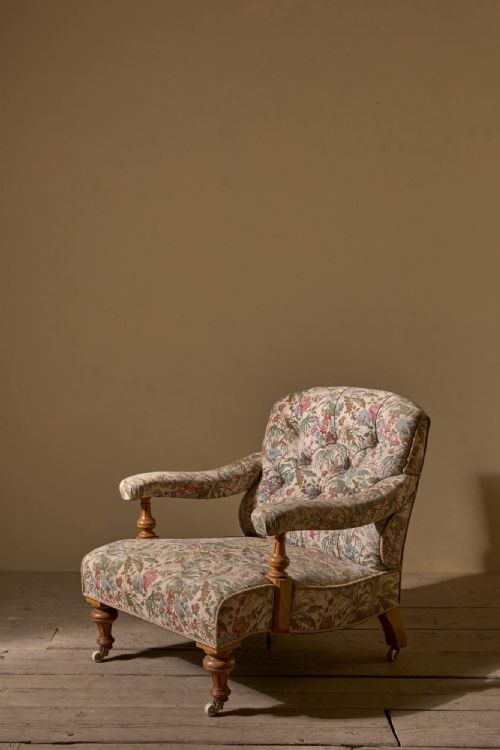
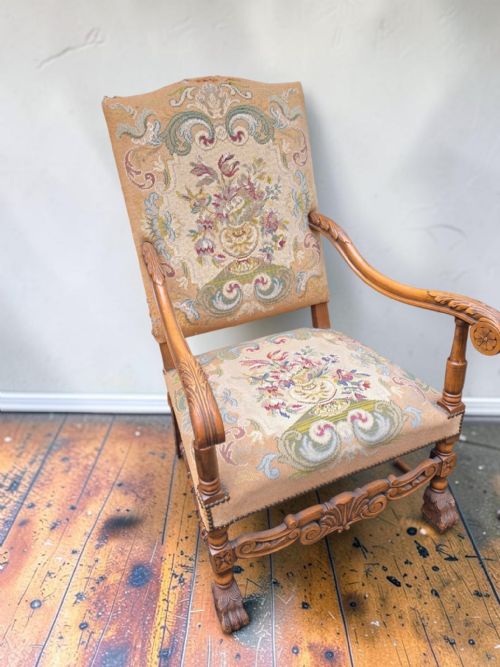
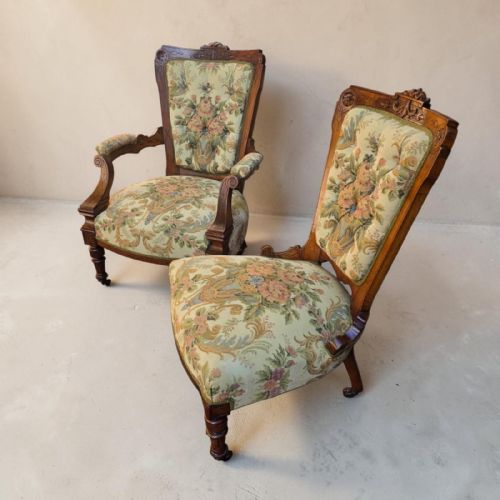
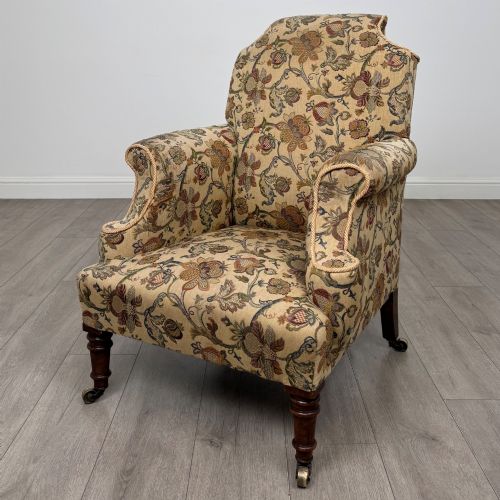
A victorian floral tapestry chair encompasses a range of seating forms produced during the nineteenth century, most frequently appearing as low-slung nursing chairs, parlour armchairs, and side chairs with textile upholstery. The construction spans walnut, mahogany, and rosewood frames, often exhibiting carved detailing typical of the period.
The textile element is central to these pieces, showing floral needlework, wool tapestry, and needlepoint designs that define the visual character. Examples emerge from specific regional workshops and broader domestic traditions, ranging from simple bedroom seating to substantial library armchairs.
How they were made
Frames rely on dense hardwoods such as walnut, mahogany, and rosewood, frequently shaped through steam-bending or robust joinery before receiving hand-carved ornamentation. Ebonised finishes and marquetry inlay also appear across the selection to alter the appearance of the timber.
Upholstery techniques involve traditional stuffing secured over webbing, topped with hand-worked wool and silk tapestry fabrics depicting botanical motifs. Brass tacks frequently secure the perimeter of the textile cover to the wooden frame.
Materials across the listings include walnut, mahogany, rosewood, oak, beech, brass, and textile fabrics.
What varies in quality
The refinement of the timber carving and the architectural balance of the frame set the baseline for quality across these pieces. Substantial walnut or rosewood frames with crisp, deep-relief carving indicate higher workshop standards than simpler beech or plain mahogany equivalents.
The integrity and execution of the needlework upholstery determine the upper tier of the range. Original floral tapestries displaying fine stitch density, subtle colour shading, and minimal wear command greater appreciation than later replacement covers.
Howard and Sons·R Whytock of Edinburgh·Holland and Sons·Gillows·Jas Shoolbred
The Victorian Floral Tapestry Chair Glossary
- Tapestry
- A heavy textile woven or worked with decorative designs, frequently featuring floral or pictorial scenes. In these pieces, the tapestry forms the primary upholstered seat and back panels.
- Nursing chair
- A low-seated chair originally designed for women to sit comfortably while tending to infants or nursing. The reduced height allows for a relaxed posture close to the floor.
- Needlepoint
- A type of canvas work embroidery executed with a yarn threaded through a stiff open-weave canvas. It produces the durable, flat floral surfaces seen on many nineteenth-century seats.
- Prie-dieu
- A devotional chair featuring a low seat and an upper shelf or rail intended for kneeling during prayer. These often incorporate floral needlework on the padded arm rest.
- Rococo revival
- A nineteenth-century decorative style drawing on eighteenth-century French forms, characterised by asymmetrical curves and naturalistic scrollwork. Frames in this style often display elaborate floral carvings.
Victorian Floral Tapestry Chair: Frequently Asked Questions
How do I clean the tapestry upholstery?
Surface dust can be removed gently using a soft brush attachment on a vacuum cleaner, held at a low suction setting. Avoid water or chemical cleaning agents on historic wool fibres.
For stubborn marks, professional textile conservation is recommended to prevent damage to the underlying canvas and traditional stuffing materials.
Can I use these chairs every day?
Most pieces are structurally sound for normal daily sitting, provided the underlying frame and joints remain tight. Periodic inspection of the legs and stretcher joints helps prevent unexpected movement.
Delicate rosewood or heavily carved walnut frames benefit from careful placement away from direct heat sources and heavy traffic areas.
How do I identify a Victorian piece?
Look for timber choices such as walnut, rosewood, and mahogany combined with construction methods like hand-cut joinery and traditional upholstery stuffing. Design motifs often include Gothic revival elements or naturalistic floral carvings.
Maker stamps, brass casters, and specific textile patterns also help establish the nineteenth-century origin of the frame.
What is the difference between a nursing chair and a salon chair?
Nursing chairs feature a notably lower seat height and a compact footprint, designed specifically for domestic comfort in bedrooms and private rooms. Salon chairs generally stand taller with upright backs intended for formal entertaining.
Both types utilise floral tapestry covers, but their proportions reflect different social functions within the historic home.