
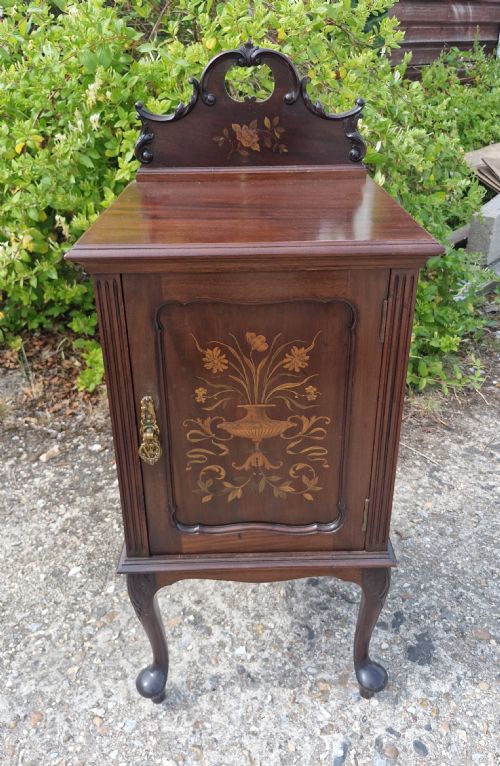


Victorian Floral Inlay Stand
A victorian floral inlay stand brings rich timber, delicate marquetry and botanical motifs together to anchor a traditional room.
Victorian Floral Inlay Stand
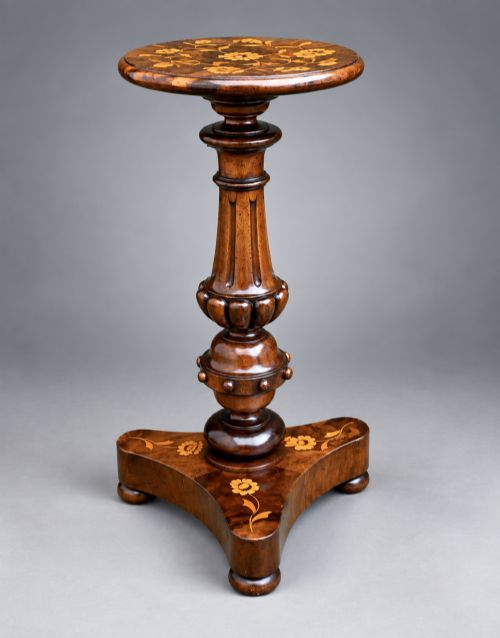
A victorian floral inlay stand encompasses small occasional furniture, lamp tables, plant stands and etageres decorated with botanical marquetry. These pieces surface across the nineteenth century, with walnut, mahogany and rosewood forming the primary bodies.
The selections here span simple tripod lamp tables to elaborate French-style etageres and Dutch marquetry wine tables. Makers utilised diverse woods to render floral patterns on tops and tiers, creating functional display surfaces for plants and objects.
How they were made
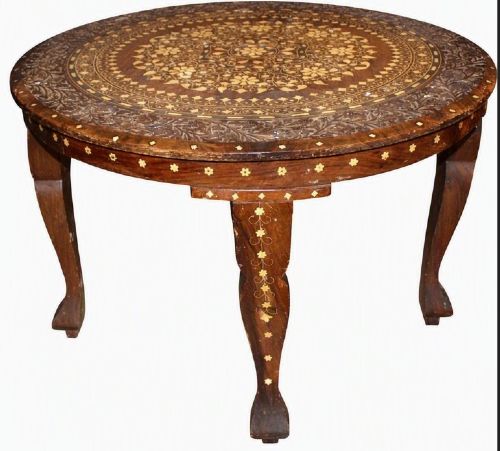
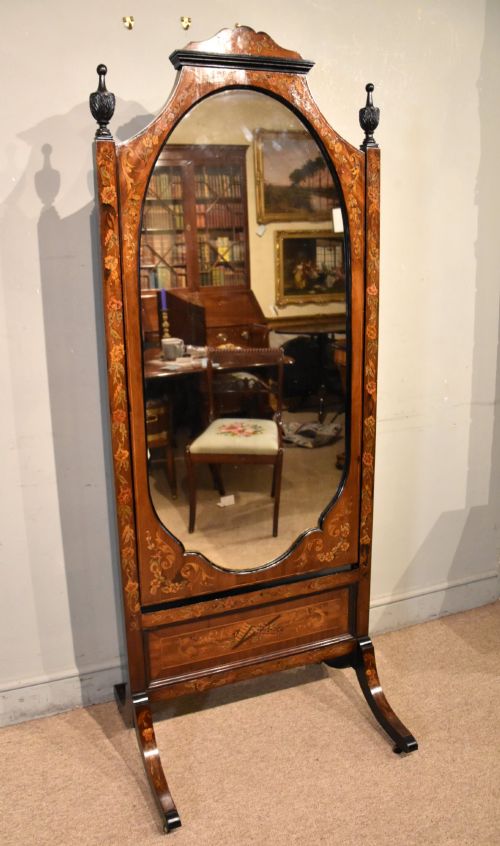
Cabinet makers constructed these stands using dense hardwoods such as walnut, mahogany, rosewood and kingwood as a foundation. They applied decorative marquetry inlay, sometimes combining contrasting timbers with bone or brass mounts to achieve detailed floral motifs.
Finishes relied on French polishing to seal the timber and accentuate the natural grain alongside the intricate multi-wood inlay. Ormolu mounts and gilt metal additions reinforced structural joints while enhancing the aesthetic.
Some floral stands double as wine coolers, keeping refreshments close while looking like ordinary occasional tables.
What varies in quality
Quality depends upon the precision of the marquetry cutter and the choice of contrasting woods used for the floral details. Crisp execution in the botanical motifs separates standard production items from finer workshop pieces.
The selection of primary timber, such as burr walnut or figured mahogany, dictates the visual depth of the stand. Superior examples integrate cast brass or ormolu mounts cleanly into the overall carcass.
Liberty & Co·Edwards & Roberts
The Victorian Floral Inlay Stand Glossary
- Marquetry inlay
- Decorative patterns formed by fitting contrasting veneers into a prepared wooden surface. This technique allows intricate floral and pictorial designs to cover table tops.
- Etagere
- An open tiered piece of furniture designed for displaying small objects or plants. These stands feature multiple levels supported by slender columns.
- Ormolu
- Gilded bronze used for decorative mounts and feet on nineteenth-century furniture. It provides a bright metallic contrast against dark woods like rosewood and walnut.
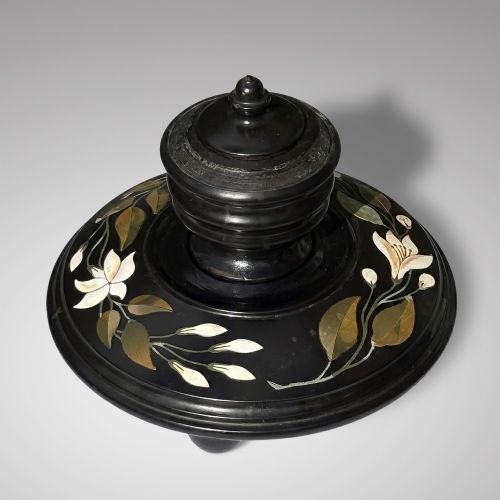
- Ashford Marble
- A polished limestone inlaid with coloured stones to create floral and geometric mosaics. It frequently appears on nineteenth-century desk accessories and stands.
- Secretaire abattant
- A tall cabinet featuring a fall-front writing surface that conceals small drawers and compartments. These pieces often incorporate marquetry panels.
Victorian Floral Inlay Stand: Frequently Asked Questions
What is a victorian floral inlay stand used for?
These stands serve as decorative surfaces for table lamps, flower pots, ornaments and small personal items. Their compact footprints allow them to sit comfortably beside seating or in corners.
Historically, they filled Victorian drawing rooms where displaying collected objects and botanicals reflected social standing. Today, they function in the same capacity within domestic interiors.
How do I identify a victorian floral inlay stand?
Look for nineteenth-century timber framing, typically walnut, mahogany or rosewood, combined with multi-wood floral marquetry on the top surface. Turned legs, tripod bases or tiered structures are common structural indicators.
Construction methods, such as hand-cut dovetails and traditional joinery beneath the top, confirm the period of manufacture. Brass mounts and bone accents often accompany the floral motifs.
Where should I place a floral inlay stand at home?
Position these stands beside armchairs as lamp tables or use them in hallways as focal points for small decorative objects. Their detailed tops deserve clear space where light can catch the marquetry.
Avoid placing them in direct sunlight or near heat sources to protect the delicate wood veneers and traditional polished finishes from drying out.
How do I care for antique marquetry furniture?
Dust the surface regularly with a soft, dry cloth to prevent dirt from settling into the grain and the microscopic gaps of the inlay. Apply a quality beeswax periodically to nourish the timber and maintain the polish.
Keep the environment stable by avoiding excessive moisture and rapid temperature shifts, which can cause the veneer to lift from the core wood.