

Victorian Floor Light
A victorian floor light brings architectural presence and adjustable illumination to a room, drawing the eye with period metalwork and height.
Victorian Floor Light
When you search for a victorian floor light, you encounter tall stands designed to elevate a light source above furniture level. These objects originate primarily from the nineteenth century, including specific decades such as the eighteen-eighties and eighteen-nineties, alongside related Edwardian examples.
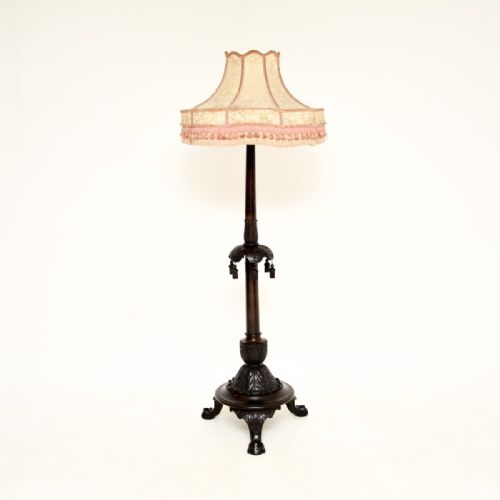
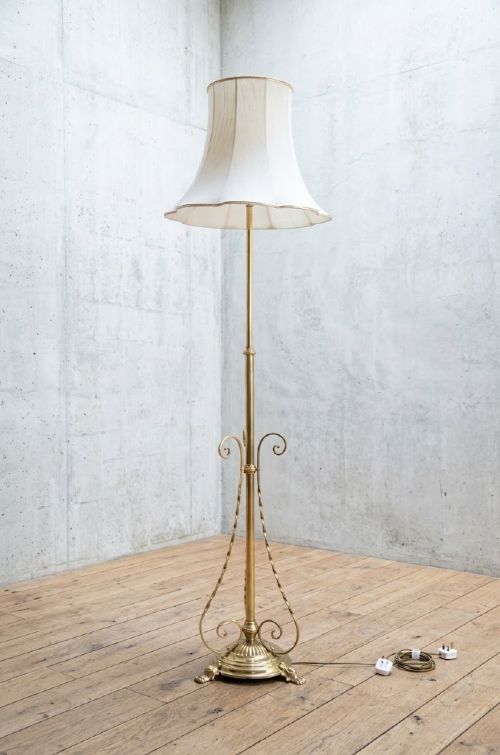
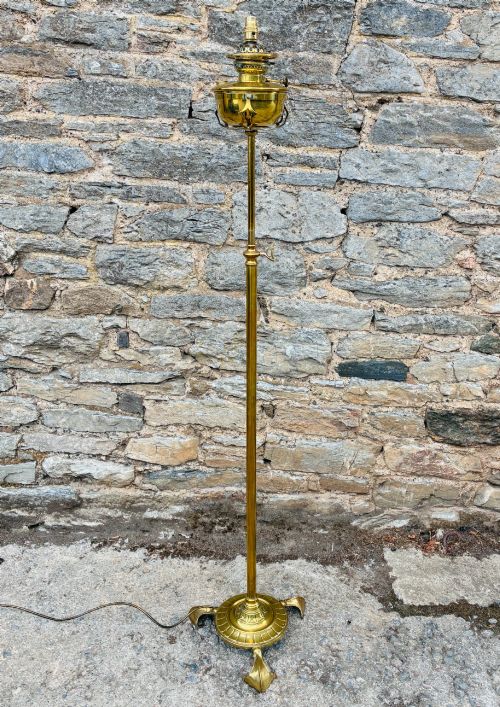
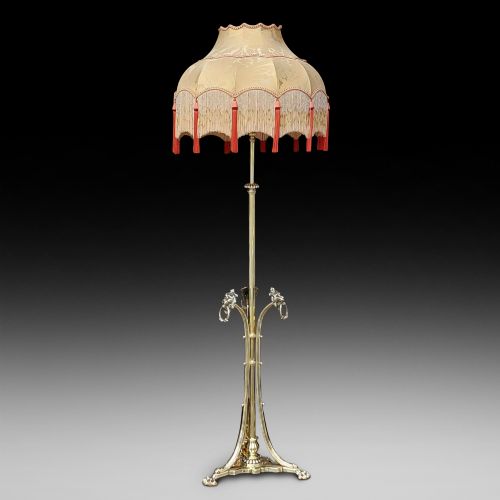
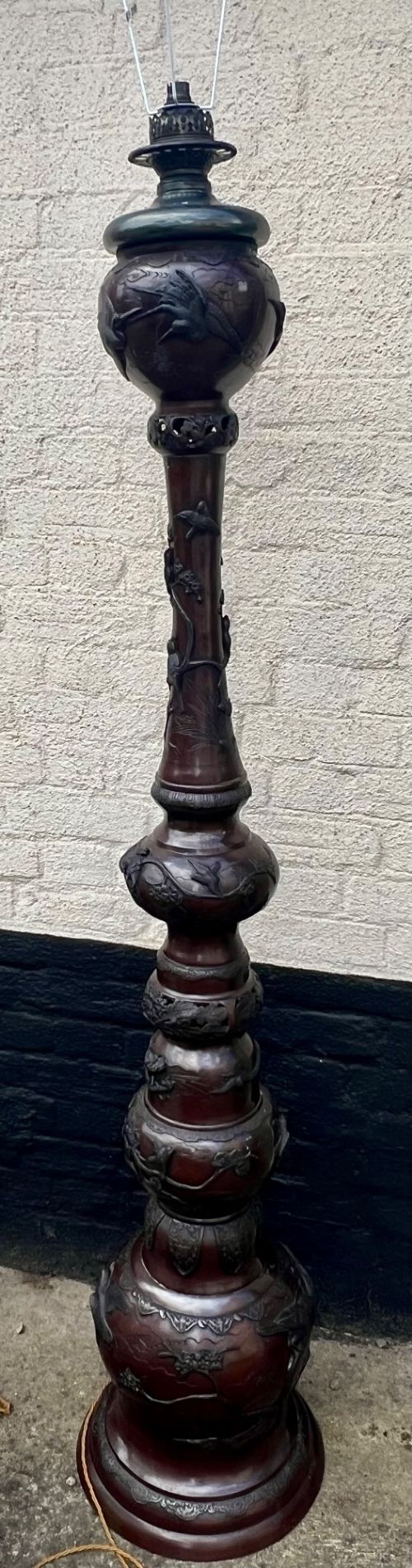
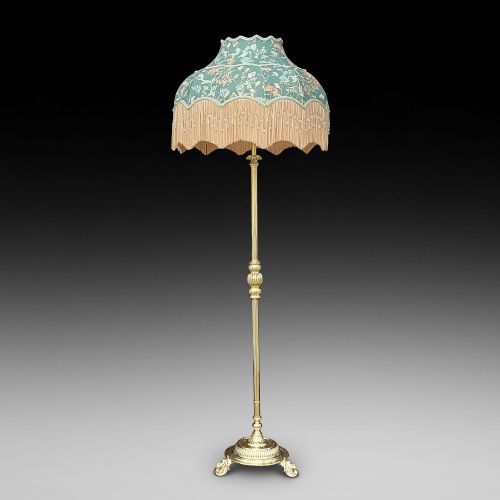
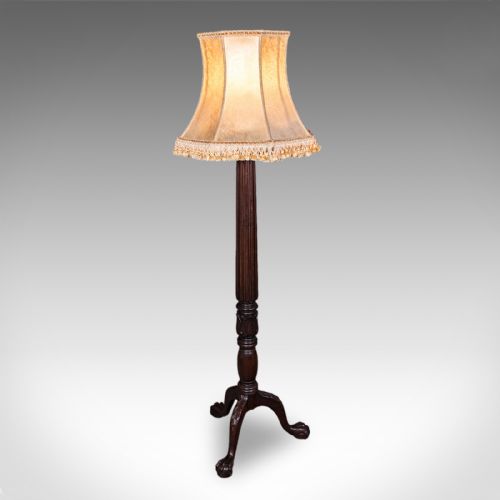
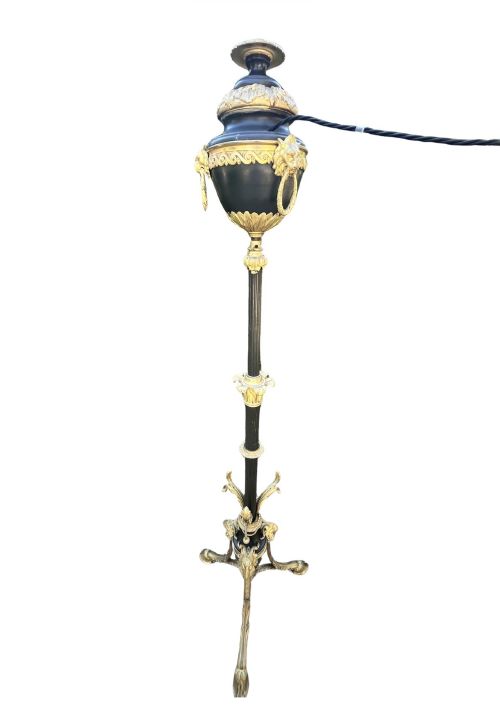
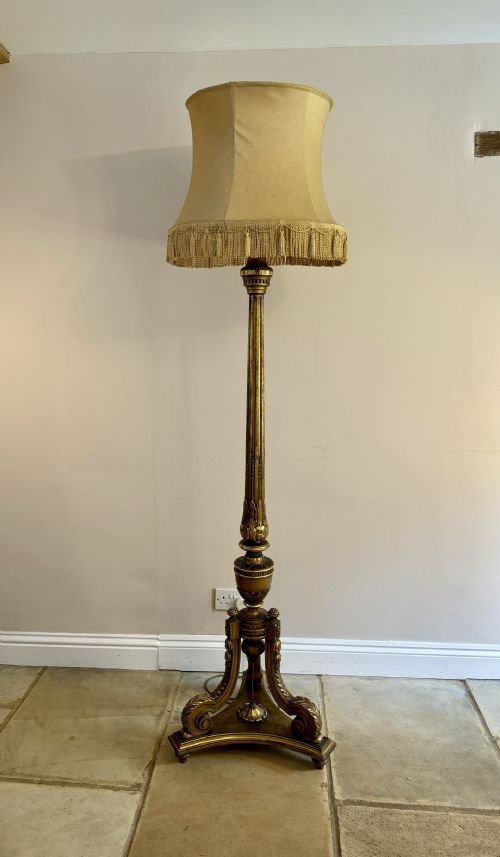
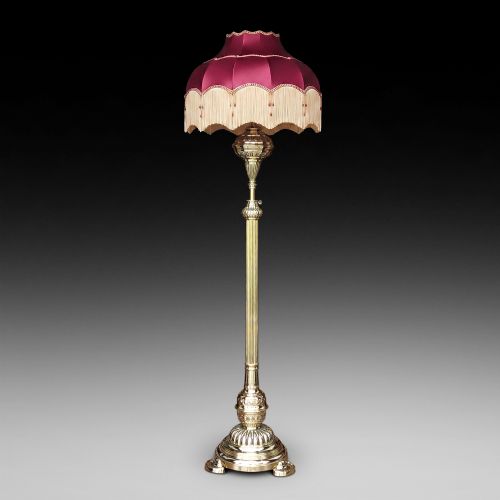
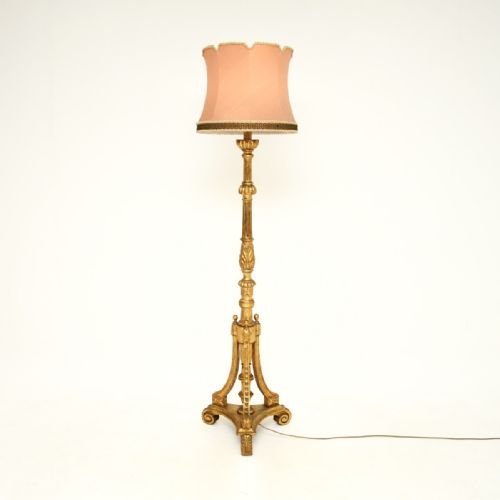
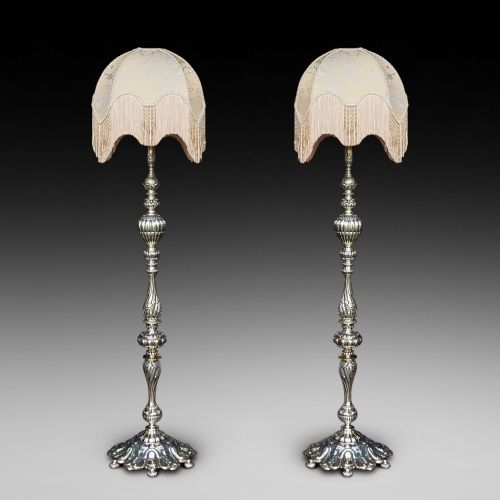
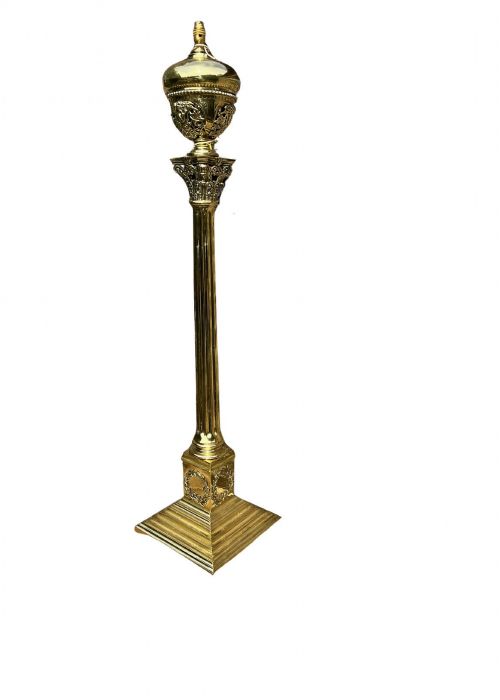
The most common version you meet on this page is the standard brass lamp, often constructed with telescopic mechanisms or Corinthian columns. Alongside these brass pillars, you find variations in cast iron, wrought iron, copper, carved mahogany, and gilt wood, sometimes adapted from earlier oil lamps to electricity.
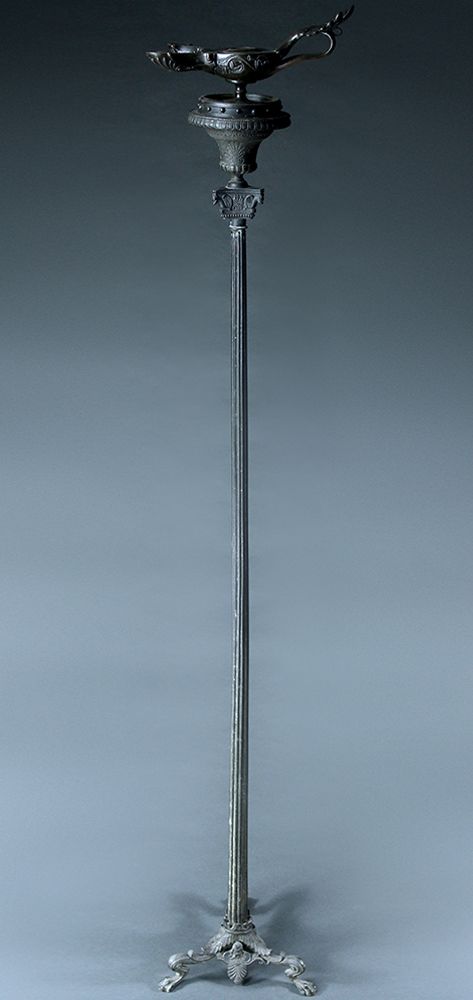
Makers such as Hinks of Birmingham produced practical mechanisms that allowed the height to alter according to need. Other variations span styles from Arts and Crafts and Art Nouveau to Gothic Revival, Neo-Pompeian, and Japanese Meiji periods.
How they were made
Makers utilised cast and spun metals, principally brass, copper, and cast or wrought iron, to build the heavy columns and weighted bases required for stability. Many examples incorporate telescopic extensions, enabling the shaft to rise and fall through internal mechanisms.
Wood versions rely on carved mahogany or gilt wood, demonstrating traditional joinery and hand-carving techniques. Decorative elements often feature floral openwork, bronze patination, or combinations of onyx and ormolu.
Fittings sometimes integrated cranberry glass reservoirs or fabric shades, uniting metal structural frames with delicate glasswork and hand-painted details.
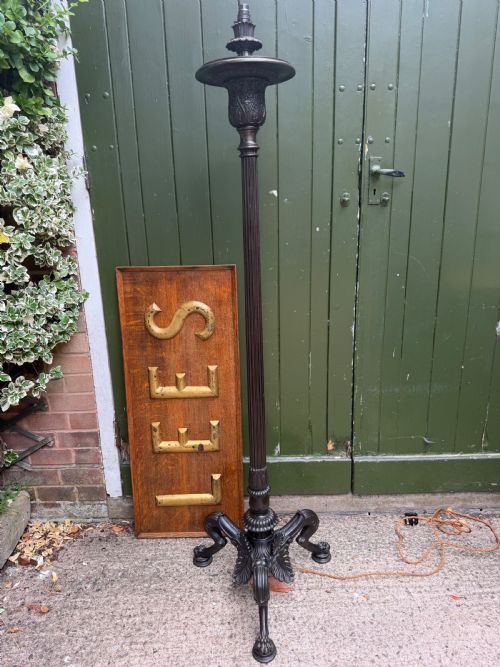
Some tall nineteenth-century candle holders doubled as Masonic lodge equipment before finding new life by the armchair.
What varies in quality
The substance of the metalwork and the weight of the base set apart the finer examples from simpler production. Superior columns display crisp casting to Corinthian capitals or deep, deliberate hand-carving in timber rather than soft moulding.
The integrity of the extending mechanism dictates mechanical success, where smooth adjustment without wobble denotes superior workshop execution. Finer pieces maintain balanced proportions across extended heights, supported by substantial gauge brass or heavy cast iron.
Hinks of B'ham
The Victorian Floor Light Glossary
- Telescopic
- A design permitting the vertical shaft to extend upwards, altering the total height of the standard lamp. This adjustment was especially useful for oil reservoirs and reading positions.
- Corinthian column
- A classical architectural column style featuring an ornate capital decorated with acanthus leaves. It is frequently cast in brass for nineteenth-century floor standards.
- Ormolu
- Gilt bronze ornamentation applied to furniture and metalwork, providing a bright golden contrast against stone or darker metals like onyx.
- Cranberry glass
- A rich red-pink transparent glass created by adding gold chloride to the molten mixture. It frequently appears in nineteenth-century oil lamp fonts.
- Grand Tour
- A cultural journey undertaken by nineteenth-century travellers who collected classical antiquities and neo-classical objects to bring home.
Victorian Floor Light: Frequently Asked Questions
What is a standard lamp?
A standard lamp is a tall floor-standing lighting fixture designed to illuminate a room from an elevated position without resting on furniture.
These pieces use heavy weighted bases to support vertical shafts, which often feature adjustable heights for reading or general ambiance.
How do I use a telescopic floor lamp?
Telescopic lamps allow you to raise or lower the central column by loosening a thumb screw and sliding the inner shaft to the desired level.
Care should be taken to support the weight of the top fitting while adjusting the height to protect the internal brass mechanism.
Were these lamps originally electric?
Many nineteenth-century examples began life as oil lamps or gas lights before receiving later conversions to run on electricity.
Original oil reservoirs, such as those made from cranberry glass or brass, are often retained alongside updated internal wiring.
How do I identify a Victorian standard lamp?
Victorian floor lights typically display period design motifs such as Corinthian capitals, cast iron bases, or heavy brass columns.
Look for nineteenth-century construction methods, including threaded metal components and hand-carved wooden details characteristic of the era.