




Ornate Standing Light
An ornate standing light brings architectural presence and ambient illumination to a room, drawing the eye with sculptural metalwork or carved timber.
Ornate Standing Light
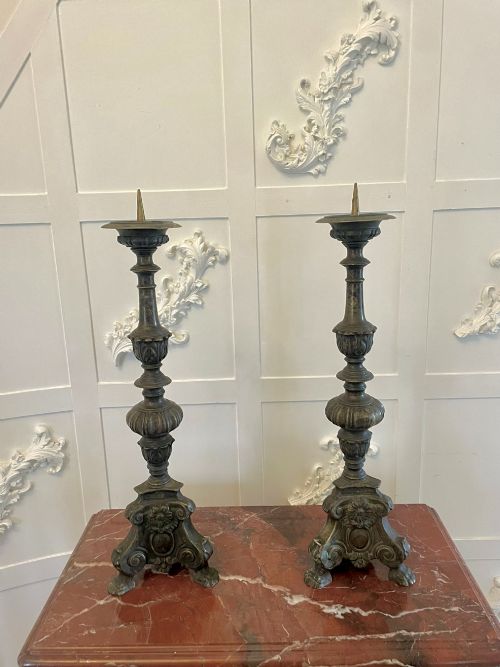
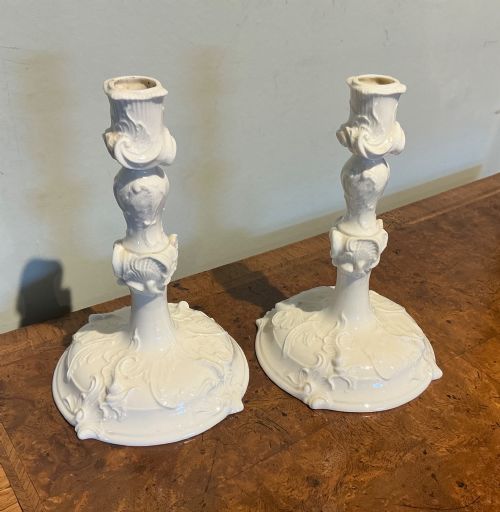
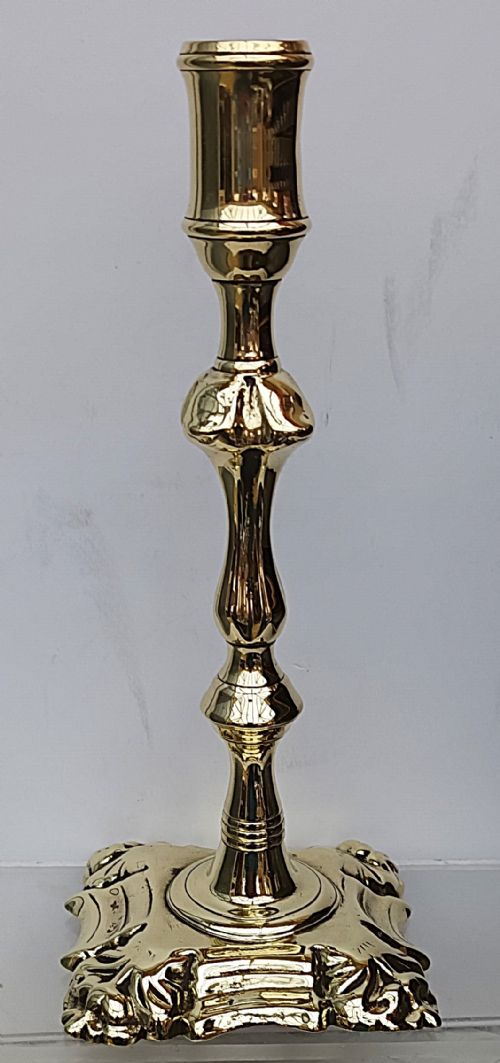
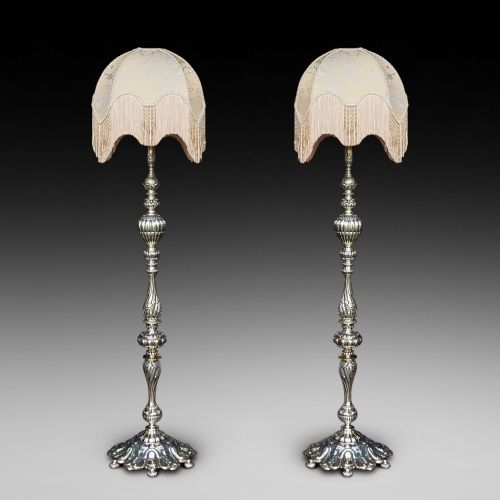
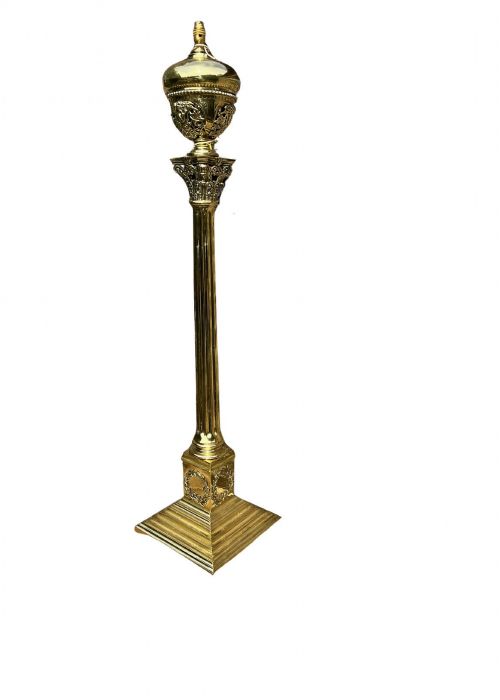
When you search for an ornate standing light, you encounter tall floor lamps, standard lamps and heavy table candelabra designed to command a room. The items gathered here span the Victorian era, the nineteenth century, and the early twentieth century, drawing on French Chateau, Regency, and Art Nouveau design vocabularies.
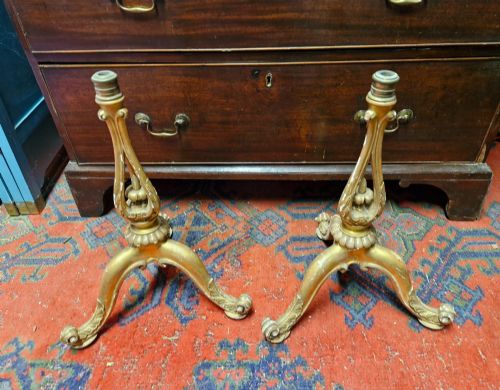
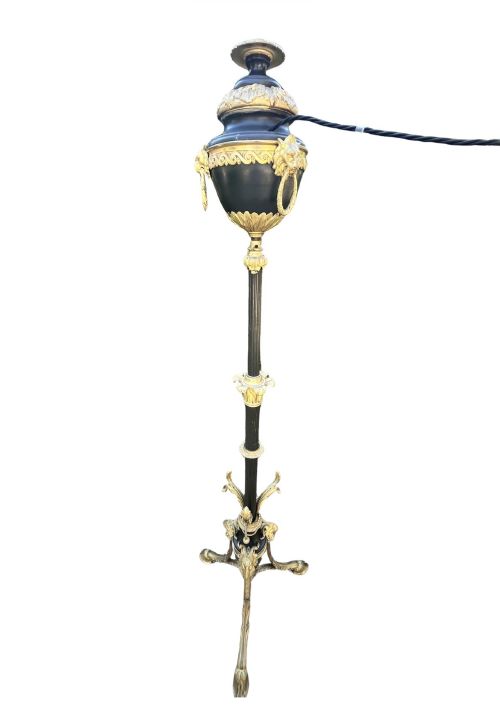
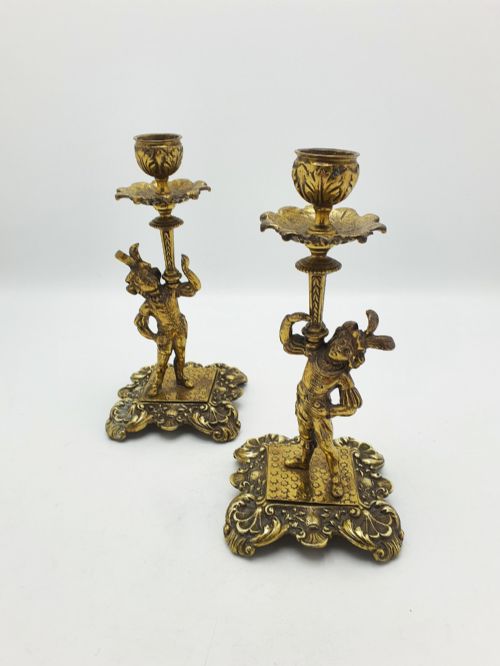
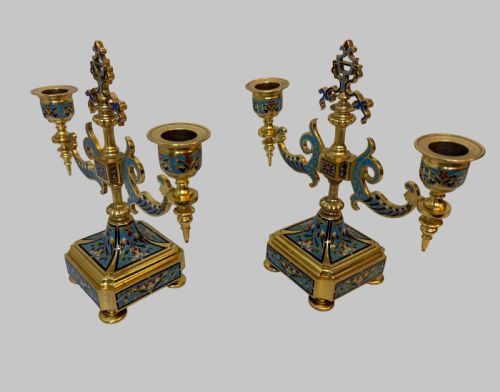
The most common forms on this page are tall floor lamps and standard lamps in cast brass or carved giltwood, alongside multi-armed candelabra in gilt bronze and ormolu. These pieces range from simple scroll-arm floor standards to grand figural and Champleve-enameled compositions.
How they were made
The construction of these pieces relies heavily on cast brass, bronze, and ormolu, often paired with carved giltwood, marble, and onyx bases. Foundries employed lost-wax and sand-casting methods to achieve intricate floral openwork, scroll arms, and figural details.
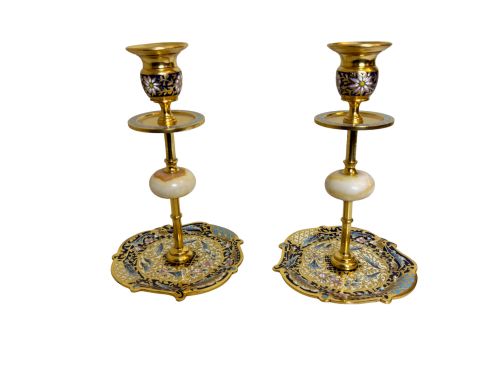
Makers utilised champleve enamel techniques to set coloured glass paste into recessed metal channels on nineteenth-century pieces. Timber standards display hand-carved ornamentation finished with applied gold leaf or gilt paint.
Several brass floor lamps doubling as wine tables ensure your evening drink stays conveniently close to the reading light.
What varies in quality
Quality reveals itself in the crispness of the casting and the depth of the chasing on bronze and brass examples. Superior pieces retain sharp relief in their floral openwork and figural elements, whereas lesser items suffer from softened details and visible mould seams.
In timber and giltwood examples, the fineness of the hand-carving and the integrity of the original gilding dictate the standing of the piece. Weight also serves as an indicator, as substantial gauge metals provide the stability required for tall standards and multi-light candelabra.
Smith & Sissons & Co·Auguste Cain·Nymphenburg
The Ornate Standing Light Glossary
- Ormolu
- Finely ground high-carat gold applied to a bronze base using a mercury amalgamation process. This technique creates a rich, durable surface lustre seen on finer nineteenth-century lighting.
- Champleve
- An enamelling technique where troughs or cells are sunk into the surface of a metal object and filled with vitreous enamel. It appears on decorative nineteenth-century candlesticks.
- Pricket candlestick
- A candle holder featuring a sharp metal spike designed to impale the base of a candle rather than a socket to hold it. This form is common in older ecclesiastical and formal domestic lighting.
- Standard lamp
- A tall floor-standing lamp base designed to support a shade and provide ambient room illumination. These often incorporate heavy weighted bases for stability.
- Giltwood
- Timber, frequently gessoed and carved, that has been coated with thin sheets of gold leaf. It defines many Italian and French decorative floor lamps from the nineteenth and early twentieth centuries.
Ornate Standing Light: Frequently Asked Questions
Where should I place an ornate standing light?
These tall floor lamps and standards suit corners of reception rooms or beside heavy seating where they provide height and ambient light.
Ensure the heavy metal or carved wooden base sits on a stable surface away from heavy foot traffic.
How do I wire an antique floor lamp?
Many standard lamps on this page arrive with historical or updated wiring that requires inspection by a qualified electrician to meet current safety standards.
Rewiring typically involves running modern flex through the existing central brass or wooden column without altering the exterior metalwork.
How do I tell Victorian brass from later pieces?
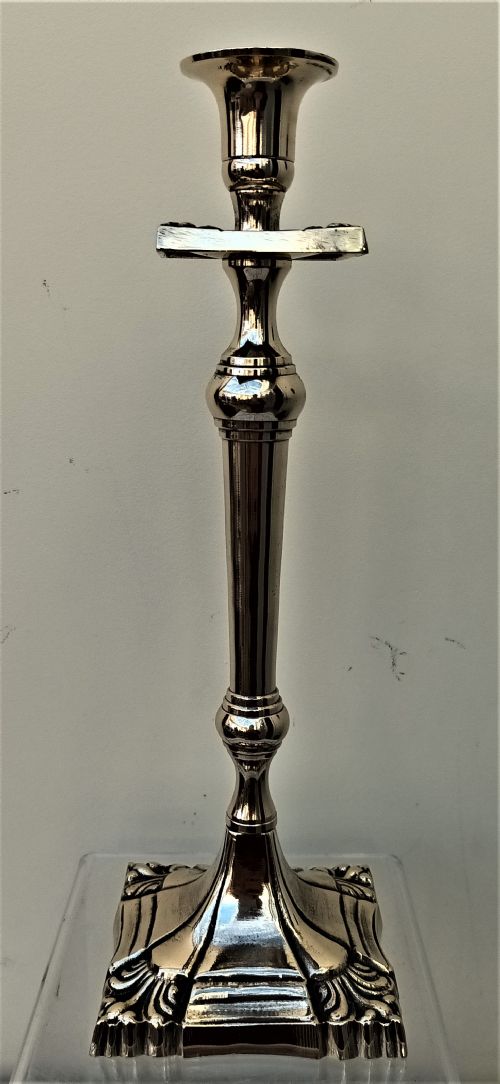
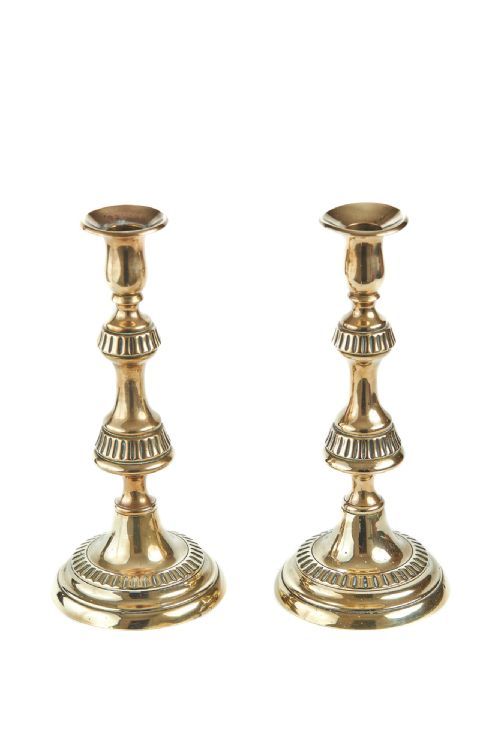
Victorian and nineteenth-century brass standards generally feature heavier gauge metal castings with hand-finished chasing and distinct patination.
Later twentieth-century reproductions often display uniform machine polishing and lighter structural weight.